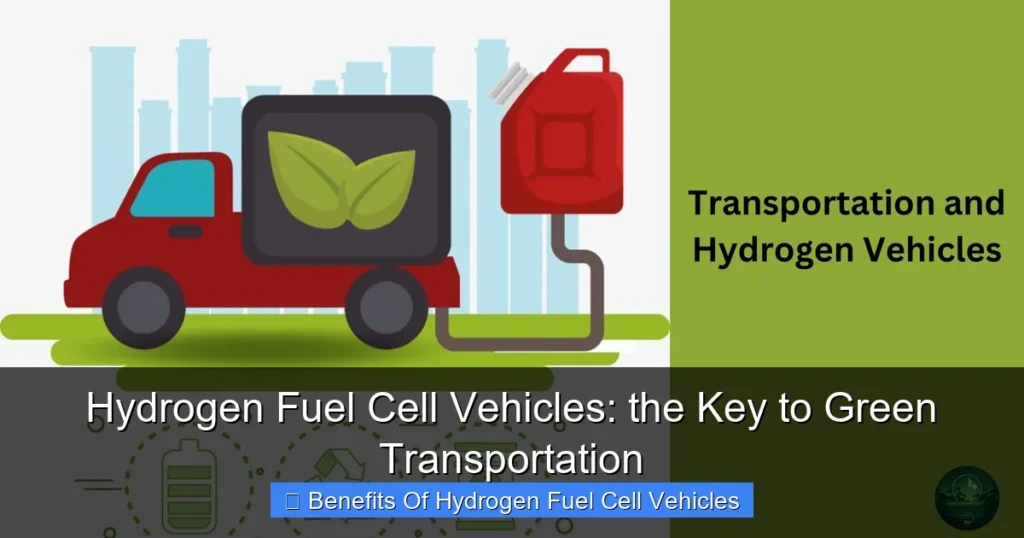
Hydrogen fuel cell vehicles (FCVs) offer a clean, efficient alternative to traditional cars, emitting only water vapor while providing long-range capabilities and quick refueling times. As part of the global push for sustainable transportation, FCVs could play a pivotal role in reducing carbon footprints and combating climate change.
This is a comprehensive guide about Hydrogen fuel cell vehicles: The key to green transportation.
Key Takeaways
- Zero Emissions: FCVs produce only water vapor, eliminating harmful tailpipe pollutants like CO2, NOx, and particulate matter.
- Fast Refueling: Unlike electric cars, FCVs can be refueled in minutes, similar to gasoline vehicles, making them practical for long-distance travel.
- Energy Efficiency: Hydrogen fuel cells convert over 60% of energy into motion, outperforming internal combustion engines (~30%) and even some EVs.
- Scalability: Hydrogen production can leverage renewable energy sources (e.g., solar, wind), ensuring a truly green supply chain.
- Infrastructure Growth: Countries like Japan, Germany, and South Korea are investing heavily in hydrogen stations, expanding accessibility.
- Cost Reduction: Advances in technology are lowering production costs, with FCV prices expected to drop as adoption grows.
—
[FEATURED_IMAGE_PLACEHOLDER]
# Hydrogen Fuel Cell Vehicles: The Key to Green Transportation
## Introduction: Why Are FCVs the Future?
Imagine a car that never needs charging—just minutes to fill up with hydrogen and hit the road again. No smog, no greenhouse gases, just pure efficiency. That’s the promise of hydrogen fuel cell vehicles (FCVs). As climate change accelerates, governments and automakers are betting on FCVs as a cornerstone of green transportation. But what makes them so special? And how do they stack up against electric cars and other alternatives?
In this article, we’ll dive deep into the benefits of hydrogen fuel cell vehicles, from their environmental impact to real-world applications. Whether you’re curious about sustainability or considering an FCV purchase, this guide will give you everything you need to know.
## Environmental Benefits: A Cleaner Tomorrow
### Zero Tailpipe Emissions
Unlike gasoline or diesel cars, FCVs don’t burn fossil fuels at all. Instead, they use hydrogen gas stored in tanks, which combines with oxygen in a fuel cell to generate electricity. Byproducts? Only water vapor—no CO2, no nitrogen oxides (NOx), and no particulate matter. This makes FCVs ideal for urban areas struggling with air pollution.
### Reduced Carbon Footprint
The true environmental benefit depends on how the hydrogen is produced. If made using renewable energy (like electrolysis powered by wind or solar), FCVs achieve a near-zero lifecycle carbon footprint. Even hydrogen derived from natural gas (blue hydrogen) emits less CO2 per mile than conventional cars. For example:
– A Toyota Mirai (FCV) emits ~20g CO2/km, compared to ~150g for a hybrid.
– With green hydrogen, emissions drop to near zero.
## Performance Advantages: Range, Speed, and Practicality
### Long-Range Freedom
Range anxiety is a major hurdle for electric car owners. FCVs, however, typically offer 400–600 miles on a full tank—comparable to gasoline SUVs. Here’s a quick comparison:
| Vehicle Type | Range (approx.) | Refuel Time |
|————-|—————-|————|
| Gasoline Car | 400–500 mi | 5 min |
| Electric Car | 200–350 mi | 8+ hrs (fastest chargers) |
| FCV (Toyota Mirai) | 402 mi | 3–5 min |
### Fast Refueling = Less Hassle
Forget waiting hours at a charging station. FCVs refuel in minutes, making them perfect for road trips. For instance:
– Nissan X-Trail FCV: Takes ~7 minutes to refuel (full capacity).
– Hyundai Nexo: Achieves 379 miles on one fill-up.
## Infrastructure and Accessibility: Is It Ready?
### Growing Hydrogen Stations
While EV chargers are now common, hydrogen refueling lags behind. However, investment is surging:
– Japan: 120+ stations (aiming for 1,000 by 2040).
– Germany: Over 100 stations, with plans to expand.
– USA: California leads with 60+ stations, supported by federal grants.
### Home Refueling Options
Some models (like the Hyundai Nexo) come with home hydrogen kits, allowing owners to store small amounts for daily use. This reduces dependency on public stations.
## Cost and Economics: Breaking Down the Numbers
### Upfront Costs vs. Savings
FCVs are pricier than EVs today due to limited production scale. For example:
– Toyota Mirai (2024): Starts at ~$50,000 (vs. $35,000 for comparable EVs).
But consider these factors:
1. Lower Maintenance: Fewer moving parts mean fewer repairs (no oil changes, brake wear reduction).
2. Fuel Savings: Hydrogen costs ~$13/kg (varies by region), but a single fill-up lasts hundreds of miles.
3. Government Incentives: Many countries offer tax credits (e.g., U.S. federal tax credit up to $4,000).
### Long-Term Price Trends
As demand rises, economies of scale will drive down costs. Analysts predict FCVs could reach price parity with EVs by 2030.
## Real-World Applications: Beyond Personal Cars
### Heavy-Duty Transport
Trucks and buses are early adopters because:
– Higher energy density: Hydrogen stores more power than batteries for heavy loads.
– Quick turnaround: Fleets need rapid refueling (e.g., Kenworth T680 hydrogen truck delivers 500 miles per fill-up).
### Aviation and Shipping
Hydrogen is also being explored for long-haul flights and cargo ships. Projects like Airbus’ ZEROe initiative aim for hydrogen-powered planes by 2035.
## Challenges and Solutions
### Storage and Safety
Hydrogen is light and flammable, but modern designs mitigate risks:
– Compressed hydrogen tanks: Reinforced to withstand extreme conditions.
– Regulations: Strict safety standards (e.g., ISO 19880) ensure passenger protection.
### Production Limitations
Most hydrogen today comes from fossil fuels (“gray hydrogen”). To combat this:
– Green hydrogen projects: Companies like Plug Power are scaling electrolysis plants.
– Policy support: The EU’s “Fit for 55” plan allocates €1 billion for green hydrogen R&D.
## The Road Ahead: What’s Next for FCVs?
### Government Policies Driving Adoption
Countries are setting bold targets:
– South Korea: Aims for 80,000 FCVs on roads by 2030.
– EU: Plans 10 million hydrogen trucks by 2030.
### Technological Breakthroughs
Research is improving:
– Solid oxide fuel cells: More efficient and durable.
– Portable hydrogen stations: Could enable rural access.
### Consumer Mindset Shifts
As awareness grows, more drivers will choose FCVs for their reliability and environmental impact. Early adopters report high satisfaction, especially for:
– Frequent travelers who value speed.
– Eco-conscious buyers prioritizing sustainability.
—
## Conclusion: A Greener Future Starts Now
Hydrogen fuel cell vehicles aren’t just hype—they’re a proven solution for cleaner transport. With zero emissions, unmatched range, and growing infrastructure, FCVs are poised to complement EVs and accelerate the shift away from fossil fuels. While challenges remain, the momentum is unstoppable. Whether you’re a policymaker, business owner, or driver, supporting hydrogen technology today means a brighter tomorrow.
Ready to explore? Visit local dealerships or check out hydrogen incentives in your area. The key to green transportation might be under your hood sooner than you think!
—
### Quick Q&A
Question 1?
How does a hydrogen fuel cell work?
Question 2?
Are hydrogen fuel cells safer than batteries?
Question 3?
What’s the difference between gray, blue, and green hydrogen?
Question 4?
Can I buy a hydrogen car now?
Question 5?
Do FCVs have higher maintenance costs than EVs?
### FAQs
What are the biggest advantages of hydrogen fuel cell vehicles?
FCVs excel in range (400+ miles), fast refueling (minutes), and zero emissions, making them ideal for long trips and urban areas with poor air quality.
How much does hydrogen fuel cost compared to electricity?
Hydrogen costs roughly $13/kg, while home electricity averages $0.14/kWh. However, FCVs use less fuel per mile than EVs due to lower energy loss.
Where can I refuel my FCV?
Stations are expanding in Europe, Japan, and the U.S. Check platforms like AFDC for locations near you.
Are hydrogen cars better for the environment than EVs?
If powered by green hydrogen (renewable energy), FCVs have a smaller carbon footprint than EVs, especially when accounting for battery production and grid electricity sources.
Will hydrogen cars replace electric cars?
No—both will coexist. EVs win in short-range, urban use; FCVs suit long-haul and heavy transport. Governments may subsidize both to diversify clean transport options.
How long do hydrogen fuel cells last?
Modern fuel cells last 200,000+ miles before needing replacement, with warranties often covering 8 years/100,000 miles.
Quick Answers to Common Questions
What is Hydrogen fuel cell vehicles: The key to green transportation?
Hydrogen fuel cell vehicles: The key to green transportation refers to essential knowledge and techniques.
Frequently Asked Questions
What is Hydrogen fuel cell vehicles: The key to green transportation?
Hydrogen fuel cell vehicles: The key to green transportation is an important topic with many practical applications.