< strong > Hydrogen fuel is becoming more competitive with gas, but costs vary widely depending on region, infrastructure, and vehicle type. While hydrogen production and refueling are currently pricier than gasoline, advancements in green hydrogen and economies of scale could make it cheaper in the future. < /strong >
This is a comprehensive guide about Is hydrogen fuel cheaper than gas?.
< h2 >Key Takeaways
< ul >
< li >< strong >Current Costs: Hydrogen fuel is generally 2-3x more expensive per mile than gasoline today due to high production and distribution costs.
< li >< strong >Green Hydrogen Advantage: Renewable-powered electrolysis (green hydrogen) could reduce costs by up to 50% over time.
< li >< strong >Infrastructure Gap: Limited refueling stations and higher upfront EV/hydrogen vehicle prices hinder adoption.
< li >< strong >Government Incentives: Tax credits and subsidies (e.g., U.S. Inflation Reduction Act) are making hydrogen more accessible.
< li >< strong >Long-Term Savings: Lower maintenance and energy efficiency may offset higher fuel costs for fleet operators.
< li >< strong >Regional Differences: Areas with abundant renewable energy (e.g., wind/solar) see cheaper green hydrogen production.
—
[FEATURED_IMAGE_PLACEHOLDER]
Is Hydrogen Fuel Cheaper Than Gas?
Introduction: Why Compare Hydrogen and Gasoline?
As the world shifts toward cleaner transportation, hydrogen fuel cell vehicles (FCEVs) are gaining attention. But a burning question remains: is hydrogen fuel cheaper than gas? The answer isn’t black-and-white—it depends on factors like technology, location, and policy. Let’s break down the economics to help you decide if FCEVs are worth the investment.
Right now, hydrogen is often pricier than gasoline, but that’s changing fast. With breakthroughs in renewable hydrogen (“green hydrogen”) and falling battery-electric vehicle (BEV) costs, the race for affordability heats up. This article explores real-world costs, challenges, and future projections so you can make an informed choice.
1. Current Cost Comparison: Hydrogen vs. Gasoline
The Numbers Today
In 2024, here’s a rough breakdown:
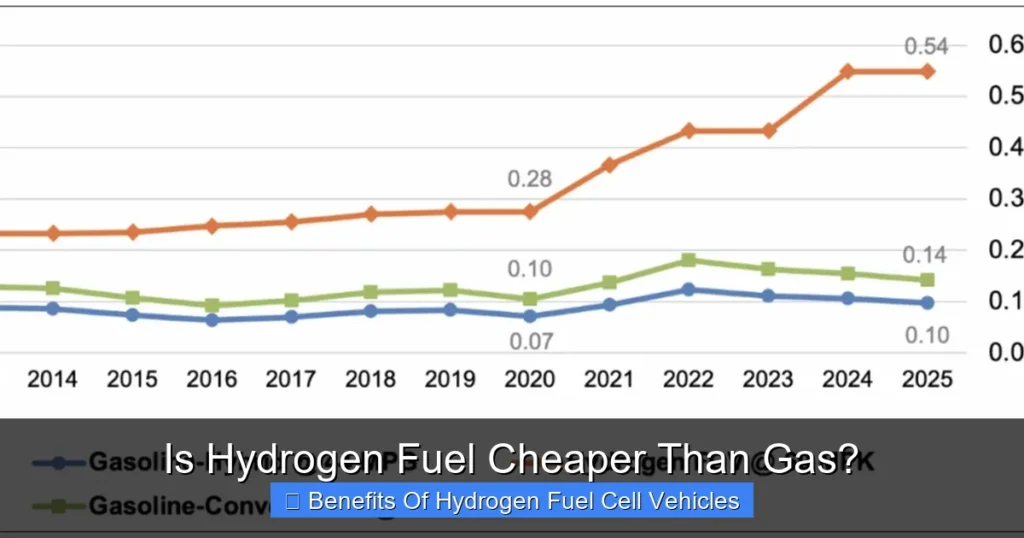
- Gasoline: ~$3–$4 per gallon (or $0.08–$0.12 per mile for typical driving).
- Hydrogen: $16–$20 per kilogram (equivalent to $0.19–$0.25 per mile for a Toyota Mirai). That’s nearly triple the cost!
Why the price gap? Most hydrogen today comes from “gray hydrogen” (steam methane reforming), which emits CO₂ and relies on fossil fuels. Producing one kg of hydrogen requires about 50 kWh of energy—costly compared to gasoline’s refining process.
Practical Example: A Week’s Driving
For a 30-mile daily commute (210 miles/week):
- Gasoline car: ~$7–$8 at $3.50/gallon (25 MPG).
- FCEV: ~$35–$50 at $18/kg (40+ MPGe equivalent).
That’s why hydrogen is still niche—most drivers prefer cheaper gas unless they prioritize emissions or long-term savings.
2. Why Is Hydrogen So Expensive Right Now?
Production Challenges
Hydrogen’s price hinges on how it’s made:
- Gray Hydrogen: Cheap ($1–$2/kg) but polluting.
- Blue Hydrogen: Slightly pricier ($2–$4/kg) with carbon capture.
- Green Hydrogen: Most expensive ($4–$6+/kg) but zero-emissions.
Most hydrogen today is gray, pushing up average prices. Green hydrogen costs have dropped 60% since 2020 but remain high due to expensive renewables and electrolyzers.
Distribution and Refueling
Unlike gasoline, hydrogen requires:
- High-pressure pipelines: Only 4% of global hydrogen uses them.
- Specialized stations: Each station costs $2M–$4M to build.
This limits supply chains and adds to costs. For example, California has 50+ hydrogen stations, but most states have fewer than 10.
3. The Future: Will Hydrogen Become Cheaper?
Green Hydrogen Breakthroughs
The game-changer? Scaling up green hydrogen:
- Renewable energy costs: Solar/wind power has plummeted, reducing green hydrogen’s energy input.
- Electrolyzer tech: New catalysts (like nickel-iron) could cut costs by half.
By 2030, analysts project green hydrogen prices could fall to $2–$3/kg—closer to gasoline’s cost per mile.
Economies of Scale
As demand grows:
- Mass production: More hydrogen plants will spread fixed costs (e.g., land, labor).
- Vehicle adoption: Higher sales pressure automakers to lower FCEV prices (Toyota aims for $30k by 2030).
Think of it like electric cars—initially expensive, now affordable as tech improves.
4. Hidden Costs: Beyond Fuel Price
Vehicle Upfront Costs
FCEVs are pricier than BEVs right now:
- Example: 2024 Toyota Mirai starts at $54,000 vs. $35k for a comparable Tesla Model Y.
- Maintenance: Fewer moving parts mean lower long-term costs (no oil changes, simpler brakes).
However, government incentives (e.g., U.S. $7,500 tax credit) can narrow the gap.
Refueling Time vs. Charging
Fuel-cell cars refuel in 3–5 minutes—same as gasoline! This beats BEV charging times (even with fast chargers).
Pro tip: If you value quick trips (e.g., road trips), hydrogen’s convenience might justify the higher fuel cost.
5. Regional Variations: Where Is Hydrogen Cheapest?
Renewable Energy Hotspots
Green hydrogen thrives where electricity is cheap:
- Australia: Uses solar/wind to produce hydrogen for export (~$1.50/kg projected).
- Germany: Leverages wind farms in North Sea regions.
These areas could lead in affordability, while coal-dependent regions lag.
Policy Influence
Governments shape costs via:
- Carbon taxes: Gray hydrogen becomes less competitive.
- Subsidies: Japan’s $2B hydrogen fund targets $3/kg by 2030.
Stay local—your state’s policies matter!
Conclusion: Is Hydrogen Worth It Yet?
Today, hydrogen fuel is not cheaper than gasoline for most drivers. But for fleets (e.g., trucks, buses), its energy density and fast refueling offer unique advantages. As green hydrogen scales and infrastructure expands, costs will drop significantly—likely within a decade.
If you’re considering an FCEV now, weigh:
- Location: Near hydrogen stations? Great.
- Incentives: Check tax credits.
- Driving habits: Long trips? Faster refueling helps.
The future is bright for hydrogen, but patience pays off. Keep an eye on price trends—you might catch it before gasoline’s days are numbered!
—
QUICK Q&A
Question 1?
Answer: Currently, hydrogen costs ~$16–$20/kg, equating to $0.19–$0.25/mile, while gasoline averages $0.08–$0.12/mile. So, hydrogen is still pricier per mile today.
Question 2?
Answer: Yes! Green hydrogen from renewables could reach $2–$3/kg by 2030, narrowing the gap with gasoline when accounting for maintenance benefits.
Question 3?
Answer: Regions with abundant wind/solar (e.g., Australia, Germany) already produce green hydrogen at lower costs than fossil-dependent areas.
Question 4?
Answer: Government incentives (tax credits, grants) can offset higher FCEV prices. For example, the U.S. offers up to $7,500 in federal credits.
Question 5?
Answer: Fleets benefit from hydrogen’s fast refueling and energy density. For private drivers, wait until costs drop further or check local incentives.
—
FAQS
How much does hydrogen fuel cost per mile?
Currently, hydrogen averages $0.19–$0.25/mile versus gasoline’s $0.08–$0.12/mile. Prices vary by region and hydrogen source (gray vs. green).
Will hydrogen replace gasoline entirely?
Unlikely soon. Hydrogen excels in heavy transport (trucks, ships) and aviation, while BEVs dominate passenger cars due to lower costs.
Are hydrogen cars reliable?
FCEVs have proven reliability in models like the Toyota Mirai (over 100,000 miles reported) and lack complex batteries found in BEVs.
How long until hydrogen is affordable for consumers?
Analysts suggest $3/kg green hydrogen by 2030, which could match gasoline’s cost per mile. Infrastructure expansion is key.
What’s the biggest barrier to hydrogen adoption?
Lack of infrastructure (stations, pipelines) and high production costs. Policy support and tech innovation will drive change.
Can I use hydrogen in my existing gas car?
No. You’d need a dedicated FCEV. However, some companies retrofit trucks/buses to run on both hydrogen and diesel.
Quick Answers to Common Questions
What is Is hydrogen fuel cheaper than gas??
Is hydrogen fuel cheaper than gas? refers to essential knowledge and techniques.
Frequently Asked Questions
What is Is hydrogen fuel cheaper than gas??
Is hydrogen fuel cheaper than gas? is an important topic with many practical applications.