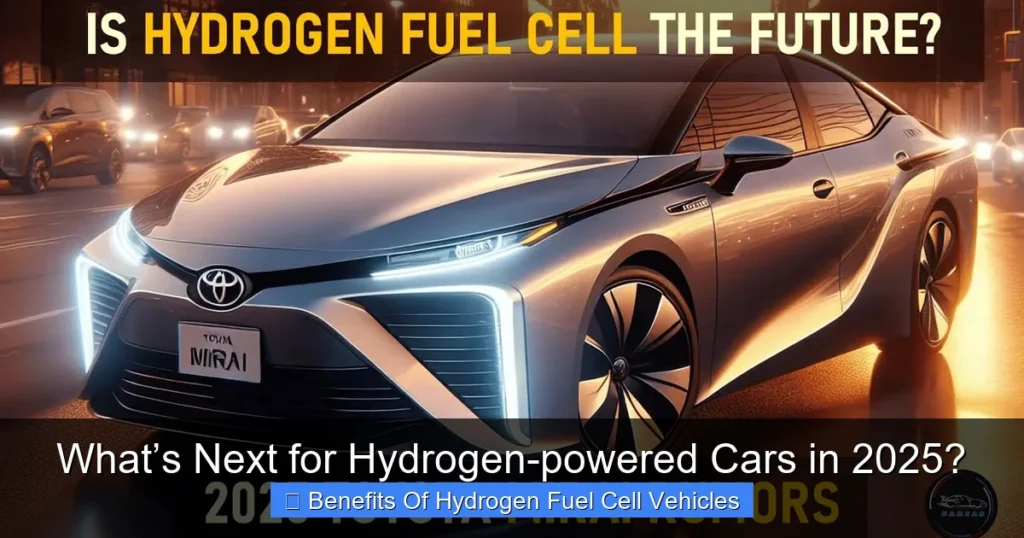
Hydrogen-powered cars are poised for a major leap forward in 2025, with advancements in infrastructure, affordability, and range making them a viable alternative to EVs. Expect faster refueling, lower costs, and expanded global adoption as automakers and governments push for greener transportation solutions.
Key Takeaways
- Lower Costs: Hydrogen fuel cell vehicles (FCEVs) will become more affordable due to economies of scale and improved manufacturing processes.
- Faster Refueling: New hydrogen stations will cut refueling times to under 10 minutes, rivaling gasoline cars.
- Range Boost: Upgrades in fuel cells will extend FCEV ranges to over 400 miles per tank.
- Global Expansion: Countries like Japan, Germany, and South Korea will lead hydrogen infrastructure development.
- Government Support: Incentives and policies will accelerate adoption, mirroring EV subsidies.
- Challenges Remain: High production costs and limited hydrogen supply chains still need addressing.
—
The Rise of Hydrogen-Powered Cars in 2025
Hydrogen fuel cell vehicles (FCEVs) have long been hailed as the “missing link” in the transition to sustainable transportation. While electric vehicles (EVs) dominate headlines, hydrogen-powered cars offer unique advantages—especially in 2025. With breakthroughs in technology, policy support, and public awareness, these zero-emission vehicles are finally ready to take center stage.
In just a few years, we’ll see FCEVs outpace some early adopters of EVs thanks to their ability to refuel quickly, travel farther on a single charge, and handle heavy-duty applications like trucks and buses. This article breaks down what’s next for hydrogen-powered cars in 2025, from cutting-edge tech to real-world examples.
Why Hydrogen? The Competitive Edge Over EVs
- Refueling Time: Unlike EVs that require 30+ minutes to recharge at home or hours at fast-charging stations, FCEVs can be fueled in under 10 minutes—comparable to gas cars.
- Range: Most FCEVs today achieve 300–400 miles on a full tank, while many EVs max out at 250–350 miles (and require frequent charging).
- Weight Advantage: Hydrogen is lighter than batteries, making FCEVs better suited for heavy-duty transport like trucks and buses.
Technological Advancements Driving Adoption
2025 will bring game-changing upgrades to hydrogen-powered cars:
- Improved Fuel Cells: New catalysts and materials reduce costs by up to 50%, making FCEVs more competitive with EVs.
- Onboard Storage: Advanced tanks store more hydrogen safely, extending range without adding weight.
- Smart Infrastructure: AI-powered hydrogen stations optimize supply routes and pricing, similar to Tesla’s Supercharger network.
Practical Example: Toyota Mirai 2025 Edition
The Toyota Mirai, already a leader in the FCEV market, will launch a 2025 model with:
- A 60% increase in fuel cell efficiency.
- A $7,000 federal tax credit (similar to US EV incentives).
- Compatibility with new “green hydrogen” refueling stations in California and Tokyo.
Infrastructure Boom: Stations Where You Live
One of the biggest hurdles for FCEVs has been sparse refueling stations. But in 2025:
- Global Targets: The International Energy Agency (IEA) predicts 1,000+ hydrogen stations worldwide by year-end.
- Strategic Locations: Major cities in Europe, Asia, and North America will prioritize hubs near highways and business districts.
- Cost Reduction: Station prices could drop below $200/kW, enabling rapid deployment.
How to Find Nearby Stations
Apps like Hype Hydrogen (UK), H2Map (Germany), and California Fuel Cell Partnership will map real-time station locations, availability, and wait times—just like PlugShare for EVs.
Cost Breakdown: Is an FCEV Worth It?
Here’s a comparison between a mid-range FCEV (e.g., Hyundai Nexo) and an equivalent EV (e.g., Tesla Model Y):
| Factor | FCEV | EV |
|---|---|---|
| Upfront Cost | $60,000–$80,000 | $40,000–$50,000 |
| Refuel Cost (per mile) | $0.03–$0.05 | $0.04–$0.06* |
| Maintenance | Low (few moving parts) | Moderate (battery wear) |
*Assumes electricity costs; EVs may cost more in regions with high utility rates.
Long-Term Savings
FCEVs excel for drivers who:
- Travel long distances regularly (e.g., truckers, commuters).
- Prioritize convenience over upfront savings.
- Live in areas with abundant green hydrogen production.
Policy Push: Governments Backing Hydrogen
2025 will see unprecedented government action:
- Japan: Aims for 10 million FCEVs on road by 2030, with $3 billion allocated to infrastructure.
- EU: Mandates all new buses to be hydrogen-powered by 2025.
- USA: Inflation Reduction Act includes $7 billion for hydrogen hubs, targeting states like Texas and Oregon.
What This Means for Consumers
Incentives could include:
- Tax credits covering 30–40% of purchase price.
li>Free or subsidized hydrogen refueling for the first two years.
Challenges to Watch
Despite progress, hurdles remain:
- Green Hydrogen Supply: Most hydrogen today comes from fossil fuels (“gray H2”). Scaling renewable electrolysis is critical.
- Consumer Awareness: Many still don’t understand FCEVs vs. EVs. Education campaigns are needed.
- Competition: Battery tech is improving rapidly; FCEVs must prove their unique value.
Solution Spotlight: Carbon Capture for Green Hydrogen
Companies like Plug Power and Air Liquide are pioneering carbon-capture methods to produce “blue hydrogen,” reducing emissions by 90%. By 2025, this could make FCEVs nearly as clean as EVs.
The Future Beyond Cars: Trucks, Buses, and More
FCEVs aren’t just for passenger cars:
- Trucking: Nikola and Toyota plan 10,000 hydrogen trucks for U.S. freight by 2026.
- Buses: London and Berlin will replace diesel buses with FCEVs within a year.
- Ferries: Norway’s hydrogen ferries cut emissions by 100% compared to diesel.
Why Heavy-Duty Transport Loves FCEVs
Unlike batteries, hydrogen’s energy density suits:
- Long-haul trips without range anxiety.
- Heavy loads (e.g., construction equipment).
- Harsh climates (cold weather doesn’t degrade fuel cells as severely as batteries).
Conclusion: The Hydrogen Wave is Coming
By 2025, hydrogen-powered cars won’t just be a niche option—they’ll be a mainstream choice for drivers who value speed, range, and sustainability. With falling costs, expanding infrastructure, and bold government policies, the era of FCEVs is here. Whether you’re an early adopter or a cautious observer, now is the time to pay attention.
So, when will you test-drive one? The answer might be sooner than you think!
—
Quick Q&A
Question 1?
How much does hydrogen fuel cost per mile compared to electricity? Currently, it’s slightly cheaper ($0.03–$0.05/mile) but varies by region and hydrogen sourcing.
Question 2?
Are hydrogen stations widely available yet? No, but major cities in Europe, Asia, and the U.S. are adding them rapidly. Apps will help locate nearby stations.
Question 3?
Do FCEVs work in cold weather? Yes! Fuel cells perform better in sub-zero temperatures than lithium-ion batteries, which suffer from reduced capacity.
Question 4?
Can I convert my existing car to run on hydrogen? Not easily. Conversions are expensive and often void warranties; buying an FCEV is recommended.
Question 5?
Is hydrogen really “green”? Only if produced via renewables (green H2). Most current hydrogen relies on natural gas (gray H2), so focus shifts to carbon-free production.
—
FAQs
How far can a hydrogen car go on a tank?
Most modern FCEVs offer 300–400 miles on a full tank, rivaling many EVs. Advances in 2025 could push this to 450+ miles.
Where are the best places to buy a hydrogen car?
Dealerships in countries with strong FCEV programs (Japan, Germany, South Korea) and U.S. states like California and Oregon.
Are hydrogen cars quieter than EVs?
No. Both types are silent during operation since they don’t rely on internal combustion engines.
How long do fuel cells last?
Manufacturers guarantee 15–20 years of service, with most lasting even longer due to minimal wear-and-tear.
Will hydrogen cars eventually replace EVs entirely?
Unlikely. They’ll coexist, with FCEVs excelling in heavy-duty and long-distance use, while EVs dominate urban commuting.
What’s the environmental impact of hydrogen production?
Only truly green hydrogen (from wind/solar + electrolysis) achieves net-zero emissions. Current methods still depend heavily on fossil fuels, driving innovation in blue/green H2 tech.
This is a comprehensive guide about What’s next for hydrogen-powered cars in 2025?.
Key Takeaways
- Understanding What’s next for hydrogen-powered cars in 2025?: Provides essential knowledge
Quick Answers to Common Questions
What is What’s next for hydrogen-powered cars in 2025??
What’s next for hydrogen-powered cars in 2025? refers to essential knowledge and techniques.
Frequently Asked Questions
What is What’s next for hydrogen-powered cars in 2025??
What’s next for hydrogen-powered cars in 2025? is an important topic with many practical applications.