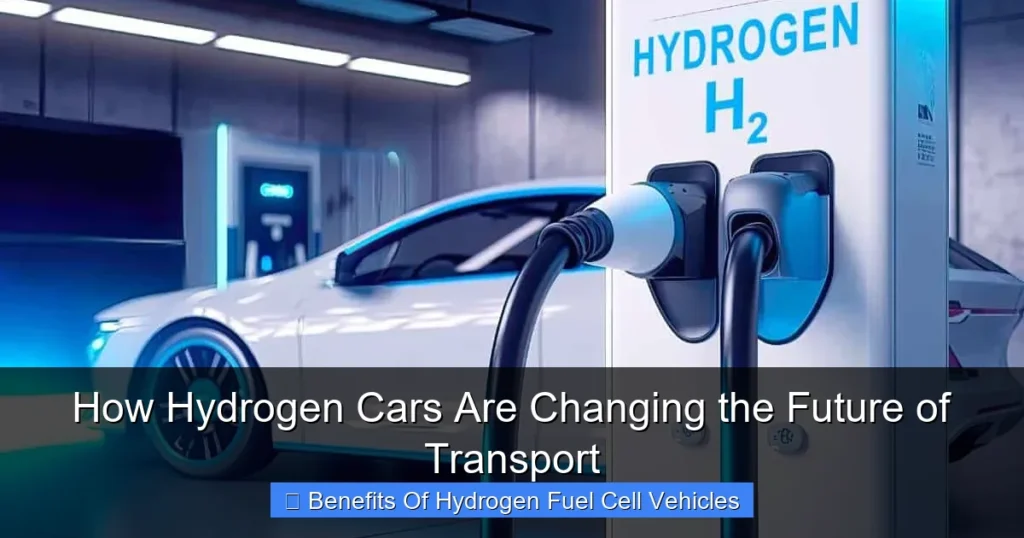
Hydrogen fuel cell vehicles (FCVs) are transforming transportation by offering a clean, efficient, and practical alternative to gasoline cars. With zero tailpipe emissions, rapid refueling times, and longer ranges than many EVs, these vehicles are paving the way for a greener mobility future.
This is a comprehensive guide about How hydrogen cars are changing the future of transport.
Key Takeaways
- Zero Emissions: Hydrogen FCVs produce only water vapor, eliminating harmful CO2 emissions.
- Fast Refueling: Unlike electric cars, hydrogen tanks fill up in minutes, not hours.
- Long Range: Many hydrogen cars offer 300–400 miles per tank, rivaling traditional gas vehicles.
- Sustainability: Green hydrogen (made from renewable energy) ensures a truly eco-friendly lifecycle.
- Growing Infrastructure: More hydrogen stations are being built worldwide, improving accessibility.
- Cost Efficiency: While upfront costs are high, long-term savings on fuel and maintenance are promising.
—
[FEATURED_IMAGE_PLACEHOLDER]
How Hydrogen Cars Are Changing the Future of Transport
The Rise of Hydrogen Fuel Cell Vehicles
In a world grappling with climate change and traffic congestion, hydrogen fuel cell vehicles (FCVs) have emerged as a game-changer. Unlike conventional cars that burn fossil fuels or electric vehicles (EVs) relying on battery power, hydrogen cars use a chemical reaction between hydrogen and oxygen in a fuel cell to generate electricity. This process produces only water vapor as a byproduct—making it one of the cleanest forms of transportation available today.
Countries like Japan, Germany, and South Korea are leading the charge, investing billions in hydrogen infrastructure. Toyota’s Mirai, Hyundai’s Nexo, and Honda’s Clarity are among the first mass-produced models proving FCVs aren’t just sci-fi fantasy. Governments are also incentivizing adoption through tax breaks and subsidies, accelerating their integration into daily life.
Why Hydrogen Over Batteries?
While EVs dominate headlines, hydrogen cars address key limitations:
- Fueling Time: A hydrogen tank fills in 5 minutes, whereas EVs take 30+ minutes for a full charge (and even longer for long trips).
- Range Anxiety: Most FCVs offer 300–400 miles per tank, comparable to gas cars, while most EVs max out at 250–300 miles.
- Weight: Hydrogen tanks are lighter than large batteries, reducing vehicle weight and improving efficiency.
Environmental Benefits of Hydrogen Cars
The environmental advantages of hydrogen FCVs are undeniable:
Zero Tailpipe Emissions
No matter how you drive, FCVs leave behind nothing but water vapor. Even if hydrogen is currently produced from natural gas (“gray hydrogen”), the transition to green hydrogen—made using renewable energy—will make these vehicles carbon-neutral. For context, a single FCV emits less CO2 over its lifetime than an equivalent EV charged via coal-dependent grids.
Reduced Dependence on Fossil Fuels
By diversifying energy sources, hydrogen cars reduce reliance on oil imports and volatile fuel prices. Countries with abundant renewable resources (e.g., Iceland, Australia) can become hydrogen hubs, exporting fuel globally.
Practical Example: Toyota Mirai
The Mirai’s real-world data shows impressive stats:
- Energy Efficiency: Converts 60% of hydrogen’s energy into motion, far exceeding internal combustion engines (~20%).
- Maintenance: Fewer moving parts mean lower wear-and-tear costs compared to gas-powered cars.
The Technology Behind Hydrogen Cars
Understanding how FCVs work demystifies their appeal:
How a Fuel Cell Generates Electricity
- Hydrogen Supply: Gasoline-like tanks store compressed hydrogen (700 bar pressure).
- Electrolysis: Hydrogen and oxygen react in the fuel cell, producing electrons (electricity) and protons.
- Electric Motor: The electricity powers wheels, while excess heat is recycled for cabin warmth.
- Water Output: The only waste product is H2O vapor exiting the tailpipe.
Advantages Over Battery Electric Vehicles (BEVs)
While BEVs excel in urban settings, FCVs shine where range and speed matter:
- Refueling: No need to wait overnight for charging—ideal for long-haul drivers.
- Battery Longevity: No degradation from frequent charging cycles.
- Scalability: Hydrogen can be stored more compactly than lithium-ion batteries.
Challenges and Solutions
No technology is perfect, but progress is steady:
High Upfront Costs
Currently, FCVs cost $50,000–$80,000 due to expensive materials like platinum catalysts. However:
- Economies of Scale: As production ramps up (e.g., Hyundai’s plans for 500,000 units/year), prices will drop.
- Government Support: Subsidies and tax credits make ownership more accessible.
Infrastructure Gaps
Only about 900 hydrogen stations exist globally (mostly in Europe and Asia). Solutions include:
- Public-Private Partnerships: Companies like Shell and Shell are building networks.
- Portable Hydrogen Stations: Smaller, mobile units can expand access.
The Future of Hydrogen Mobility
Experts predict three key developments:
1. Heavy-Duty Transport
Trucks, buses, and ships are ideal candidates for hydrogen due to their high energy needs. Companies like Nikola and Hyundai are already testing hydrogen trucks with 1,000-mile ranges.
2. Urban Integration
Cities will blend FCVs with EVs for a diversified green fleet. For example, London plans to replace diesel buses with hydrogen alternatives by 2030.
3. Policy Acceleration
The EU’s Hydrogen Strategy targets 40 GW of electrolyzer capacity by 2030, signaling massive global investment.
How You Can Get Involved
Even without owning an FCV right now, you can support this shift:
Tips for Early Adopters
- Rent or Test Drive: Some dealerships offer FCV test drives—great for firsthand experience.
- Advocate for Infrastructure: Lobby local governments to fund hydrogen stations.
- Follow Industry News: Track companies like Plug Power and ITM Power advancing tech.
Conclusion
Hydrogen cars are no longer a pipe dream—they’re a tangible solution to decarbonize transport. With advancements in technology, policy, and infrastructure, we’re entering an era where zero-emission travel is faster, easier, and more affordable than ever. Whether you’re a driver, policymaker, or simply curious, understanding FCVs’ role in our future is the first step toward cleaner roads ahead.
—
Question 1?
Are hydrogen cars really better than electric cars? It depends: FCVs win for range and refueling speed, while EVs lead in affordability and urban convenience. Both play vital roles in a sustainable future.
Question 2?
How much does a hydrogen car cost? Prices start around $50,000, dropping as production scales. Government incentives can slash costs by thousands.
Question 3?
Where are hydrogen stations located? They’re concentrated in Europe (Germany, France) and Asia (Japan, South Korea), but expansion is underway in the U.S. and beyond.
Question 4?
What’s the lifespan of a hydrogen fuel cell? Modern cells last 10–15 years, with warranties often covering 150,000–200,000 miles.
Question 5?
Can I use regular gas stations for hydrogen? No—hydrogen requires specialized stations. Look for “hydrogen” labels instead of EV chargers.
—
Question?
How does hydrogen production impact the environment? Gray hydrogen (from natural gas) emits CO2, but green hydrogen (via renewables) is emission-free. The industry is shifting toward the latter.
Question?
Do hydrogen cars need special insurance? Yes, insurers may classify them as high-value tech vehicles, potentially increasing premiums. Always check coverage options.
Question?
What happens to used hydrogen tanks? They’re recyclable or repurposed, minimizing waste. Companies like Linde specialize in hydrogen recovery systems.
Question?
Can hydrogen cars be used off-grid? Not yet, but portable generators and solar-powered electrolysis could enable remote hydrogen production in the future.
Question?
Are hydrogen cars safe? Yes! Hydrogen is highly flammable but stored safely under extreme pressure. Crash tests show tanks withstand impacts better than steel gas tanks.
Quick Answers to Common Questions
What is How hydrogen cars are changing the future of transport?
How hydrogen cars are changing the future of transport refers to essential knowledge and techniques.
Frequently Asked Questions
What is How hydrogen cars are changing the future of transport?
How hydrogen cars are changing the future of transport is an important topic with many practical applications.