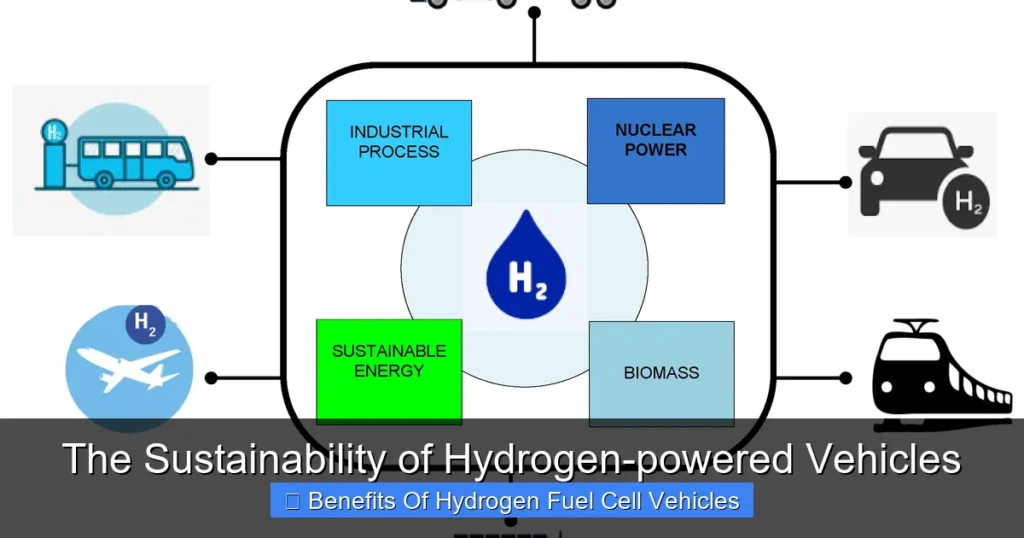
Hydrogen-powered vehicles offer a promising path toward sustainability by producing only water as emissions and reducing reliance on fossil fuels. While challenges like infrastructure costs persist, advancements in fuel cell technology and green hydrogen production are accelerating their adoption.
This is a comprehensive guide about The sustainability of hydrogen-powered vehicles.
Key Takeaways
- Zero Emissions: Hydrogen fuel cell vehicles (FCEVs) emit only water vapor, making them ideal for combating climate change.
- Energy Efficiency: FCEVs convert 60% of energy into motion, outperforming internal combustion engines.
- Fast Refueling: Unlike EVs, FCEVs can refuel in minutes, similar to gasoline cars.
- Infrastructure Gap: Limited hydrogen refueling stations hinder widespread adoption but are growing rapidly.
- Green Hydrogen: Renewable-produced hydrogen is critical for true sustainability; gray/blue hydrogen still relies on fossil fuels.
- Cost Challenges: Higher upfront prices for FCEVs are expected to drop as technology scales up.
—
### MAIN CONTENT
#### Introduction: Why Hydrogen Vehicles Matter
Imagine a world where your car doesn’t spew harmful pollutants into the air—just clean water vapor. That’s the promise of hydrogen-powered vehicles, or FCEVs (fuel cell electric vehicles). As climate change accelerates, governments and automakers worldwide are betting big on hydrogen as a cleaner alternative to gasoline and even some electric vehicles (EVs). But how truly *sustainable* are these vehicles? This article dives deep into their environmental impact, technology, challenges, and why they could play a pivotal role in our low-carbon future.
Hydrogen isn’t new—it’s been used in rockets since the 1950s! Today, it’s finding its way into cars, buses, and even trucks. The magic lies in fuel cells: devices that combine hydrogen with oxygen to generate electricity without burning fuel. The only byproduct? H₂O. But there’s more to the story—let’s unpack it.
#### How Hydrogen Fuel Cell Vehicles Work
At its core, an FCEV operates like a battery-powered EV, but instead of charging from an outlet, it “refuels” with hydrogen gas stored in high-pressure tanks. Here’s a simplified breakdown:
- Hydrogen Supply: You fill up at a hydrogen station (similar to gas pumps).
- Fuel Cell Reaction: Hydrogen enters the fuel cell, reacts with oxygen, and produces electricity to power the motor.
- Water Vapor Out: The only exhaust is water vapor—no CO₂, no smog!
Practical Example: Toyota’s Mirai, one of the first mass-market FCEVs, has driven over 4 million miles with minimal maintenance. Its range (~400 miles per tank) rivals many EVs, but refueling takes just 3–5 minutes.
#### Environmental Benefits: Beyond Zero Tailpipe Emissions
The biggest selling point? No tailpipe emissions. But the sustainability picture gets richer when you consider the entire lifecycle:
– Lower Carbon Footprint: If hydrogen is produced using renewable energy (green hydrogen), FCEVs can achieve near-zero emissions from well-to-wheel.
– Air Quality: Cities like London and Tokyo are testing FCEV fleets to reduce urban pollution. For instance, Hyundai’s XCIENT heavy-duty truck emits zero particulate matter compared to diesel equivalents.
– Energy Independence: Countries reliant on imported oil (e.g., Japan, Germany) see hydrogen as a strategic resource, reducing geopolitical risks.
Tip: Check if your region has incentives for FCEV buyers—some governments offer tax credits or rebates to offset higher purchase costs.
#### Challenges: The Roadblocks to Widespread Adoption
Despite their potential, FCEVs face hurdles:
- Infrastructure: As of 2023, there are ~700 hydrogen stations globally, mostly in North America, Europe, and Asia—far fewer than gas stations or EV chargers.
- Production Costs: Green hydrogen (made via electrolysis) remains expensive due to high energy inputs and rare materials (like platinum) in fuel cells.
- Energy Losses: Producing, transporting, and storing hydrogen consumes energy, often eroding some emission benefits.
Example: In California, the state aims to install 200 hydrogen stations by 2025 to support its FCEV goals—proof that infrastructure gaps are being addressed.
#### The Role of Green Hydrogen
Not all hydrogen is created equal:
– Gray Hydrogen: Made from natural gas, it’s cheap but emits CO₂.
– Blue Hydrogen: Similar to gray, but with carbon capture—still not fully clean.
– Green Hydrogen: Produced via renewables-powered electrolysis. This is the holy grail for sustainable FCEVs.
Statistic: By 2030, green hydrogen could supply 20–30% of global demand, according to the International Energy Agency (IEA). Companies like Plug Power and ITM Power are scaling up electrolyzer production to meet this need.
#### Cost Comparison: FCEVs vs. EVs
| Factor | FCEVs | EVs |
|—————–|—————————|————————–|
| Upfront Cost | $70,000–$100,000 | $35,000–$60,000 |
| Refueling Time | 3–5 minutes | 30+ minutes (fastest) |
| Range | 300–400 miles | 250–350 miles |
| Maintenance | Lower (no engine) | Moderate |
Pro Tip: Total cost of ownership (TCO) may favor FCEVs in regions with abundant hydrogen and lower electricity costs for EVs.
#### The Future: Innovations and Policy Shifts
Automakers and governments aren’t waiting:
– New Models: Mercedes-Benz’s GLC F-Cell and Hyundai’s Nexo are expanding FCEV choices.
– Policy Support: The U.S. Inflation Reduction Act allocates billions for hydrogen hubs, while the EU targets 10 million FCEVs on roads by 2030.
– Tech Advances: Solid oxide fuel cells (SOFCs) and cheaper catalysts (e.g., iron-based) could slash costs.
Case Study: Norway plans to ban new gasoline/diesel cars by 2025, with hydrogen as a backup option for long-haul trucks.
#### Conclusion: A Balanced Perspective
Hydrogen-powered vehicles aren’t a silver bullet—they’re one piece of the puzzle. Their sustainability hinges on:
1. Scaling green hydrogen production.
2. Building affordable infrastructure.
3. Aligning policies with decarbonization goals.
For now, FCEVs excel in specific niches (e.g., heavy transport, remote areas with no EV charge access). As technology evolves and costs drop, they could complement EVs, offering diverse solutions for a greener future. So, will hydrogen cars dominate tomorrow’s road? Maybe—but only if we act fast today.
—
### QUICK Q&A
Question 1?
Do hydrogen vehicles really produce zero emissions? Yes, but only if the hydrogen is made from renewable energy (green hydrogen). Gray hydrogen from fossil fuels still emits CO₂ during production.
Question 2?
How much does a hydrogen car cost? Prices range from $70,000 to $100,000, but subsidies and economies of scale could lower costs over time.
Question 3?
Can I drive a hydrogen car cross-country? Absolutely! With a range of 300–400 miles, it’s comparable to EVs, though hydrogen stations are currently limited.
Question 4?
What’s the difference between hydrogen and EV batteries? FCEVs refuel quickly but require complex storage systems; EVs need charging stations but benefit from mature battery tech.
Question 5?
Are hydrogen stations everywhere? Not yet, but major cities in the U.S., Europe, and Asia are expanding networks. Check [your location’s hydrogen map] for availability.
—
### FAQs
Are hydrogen cars better than electric cars?
FCEVs win in refueling speed and range but lag behind EVs in affordability and infrastructure. The best choice depends on your needs—EVs for daily commuting, FCEVs for long trips.
How long do hydrogen fuel cells last?
The average lifespan is 100,000–150,000 miles, similar to gasoline engines, with proper maintenance.
Is hydrogen dangerous?
Like any compressed gas, hydrogen requires safe handling, but modern FCEVs have leak-proof designs and sensors to prevent accidents.
Where can I buy a hydrogen car?
Models like Toyota Mirai, Hyundai Nexo, and Honda Clarity are available in select markets. Check local dealerships or leasing programs.
Will hydrogen replace gasoline entirely?
Unlikely in the short term, but hydrogen could become crucial for sectors where EVs struggle (e.g., aviation, shipping, and heavy trucks).
How is hydrogen transported?
Mostly via pipelines or high-pressure trucks, which require careful safety measures to avoid leaks or explosions.
Quick Answers to Common Questions
What is The sustainability of hydrogen-powered vehicles?
The sustainability of hydrogen-powered vehicles refers to essential knowledge and techniques.
Frequently Asked Questions
What is The sustainability of hydrogen-powered vehicles?
The sustainability of hydrogen-powered vehicles is an important topic with many practical applications.