Hydrogen cars offer zero-emission driving with quick refueling, but face major hurdles in infrastructure, cost, and efficiency. While promising for long-haul transport and fleets, widespread consumer adoption remains years away due to limited fueling stations and high vehicle prices.
Imagine pulling up to a fuel pump, filling your car in under five minutes, and driving 300+ miles on a single tank—all while emitting only water vapor. That’s the promise of hydrogen fuel cell vehicles (FCEVs), a technology that’s been around for decades but has yet to break into the mainstream. As the world races toward cleaner transportation, hydrogen cars are often mentioned alongside battery electric vehicles (BEVs) as a potential solution. But are they truly ready for everyday drivers? Or are they still a niche option for early adopters and commercial fleets?
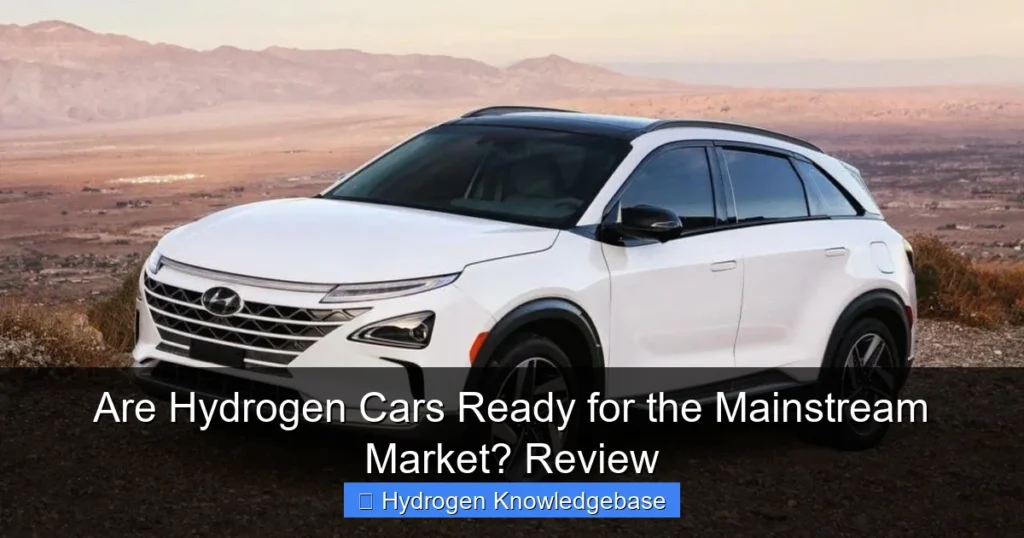
The idea of a hydrogen-powered car isn’t new. The first fuel cell was invented in 1839, and NASA used them in spacecraft during the 1960s. But it wasn’t until the 2000s that automakers like Toyota, Honda, and Hyundai began developing hydrogen cars for public roads. Today, models like the Toyota Mirai and Hyundai NEXO are available for purchase or lease, primarily in California—the only U.S. state with a somewhat functional hydrogen refueling network. Despite the hype, hydrogen cars make up less than 0.1% of new vehicle sales globally. So, what’s holding them back? And could that change in the near future?
Key Takeaways
- Limited infrastructure: Fewer than 200 hydrogen refueling stations exist in the U.S., mostly in California, making long-distance travel difficult.
- High vehicle cost: Hydrogen cars like the Toyota Mirai and Hyundai NEXO start above $60,000, significantly more than comparable EVs.
- Refueling speed advantage: Hydrogen tanks fill in 3–5 minutes, similar to gasoline, unlike EVs that can take 30+ minutes for fast charging.
- Energy inefficiency: Producing, compressing, and transporting hydrogen uses 3–4 times more energy than direct battery charging.
- Strong potential for heavy transport: Trucks, buses, and ships may benefit most from hydrogen due to range and weight constraints.
- Government and industry support growing: Countries like Japan, South Korea, and Germany are investing heavily in hydrogen infrastructure and technology.
- Environmental concerns remain: Most hydrogen today is “gray” (from natural gas), not truly green unless produced using renewable energy.
Quick Answers to Common Questions
Are hydrogen cars safe?
Yes, hydrogen cars are designed with multiple safety features, including reinforced tanks, leak detectors, and automatic shutoff valves. They undergo rigorous testing and are considered as safe as gasoline or electric vehicles.
Can I install a hydrogen refueling station at home?
Not currently. Home hydrogen refueling is technically possible but extremely expensive and not commercially available. Most drivers rely on public stations, which are scarce outside California.
Do hydrogen cars work in cold weather?
Yes, better than many EVs. Hydrogen fuel cells can operate in sub-zero temperatures, though efficiency may drop slightly. Preheating systems help with cold starts.
How long do hydrogen fuel cells last?
Most manufacturers warranty fuel cells for 8 years or 100,000 miles. Real-world data is limited, but early models show good durability with proper maintenance.
Is hydrogen more efficient than batteries?
No. Battery electric vehicles are 2–3 times more energy-efficient than hydrogen cars when you account for production, transport, and conversion losses.
📑 Table of Contents
- How Hydrogen Cars Work: The Basics
- The State of Hydrogen Infrastructure
- Cost and Affordability: Can Average Buyers Afford Hydrogen Cars?
- Environmental Impact: Are Hydrogen Cars Truly Green?
- Performance and Practicality: How Do Hydrogen Cars Drive?
- The Future of Hydrogen: Where Is It Headed?
- Conclusion: Are Hydrogen Cars Ready for the Mainstream?
How Hydrogen Cars Work: The Basics
To understand whether hydrogen cars are ready for the mainstream, it helps to know how they actually work. Unlike battery electric vehicles that store energy in large lithium-ion batteries, hydrogen cars generate electricity on board using a fuel cell stack.
Fuel Cell Technology Explained
At the heart of every hydrogen car is a fuel cell. This device combines hydrogen gas (stored in high-pressure tanks) with oxygen from the air to produce electricity, water, and heat. The electricity powers an electric motor—just like in a BEV—while the only emission is pure water vapor. No combustion, no tailpipe pollutants.
The process is clean and quiet, but it’s not magic. The hydrogen must come from somewhere, and that’s where things get complicated. Most hydrogen today is produced from natural gas through a process called steam methane reforming, which releases carbon dioxide. This “gray hydrogen” undermines the environmental benefits unless paired with carbon capture or replaced with renewable-powered production.
Hydrogen vs. Battery Electric: Key Differences
Hydrogen cars and battery electric vehicles (BEVs) both use electric motors, but they differ in how they store and deliver energy. BEVs charge from the grid and store energy in batteries, while FCEVs generate electricity as needed from hydrogen. This gives hydrogen cars a few advantages: faster refueling, longer range, and lighter weight for large vehicles. However, BEVs are far more energy-efficient—about 77% of the electricity from the grid reaches the wheels, compared to just 25–35% for hydrogen when you account for production, compression, transport, and conversion losses.
The State of Hydrogen Infrastructure
One of the biggest barriers to mainstream adoption is infrastructure. You can’t drive a hydrogen car very far if you can’t refuel it.
Current Refueling Network
As of 2024, there are fewer than 200 hydrogen refueling stations in the United States, and over 90% are located in California. That means if you live outside the Golden State—or even outside major cities like Los Angeles or San Francisco—you’re out of luck. Compare that to over 150,000 public EV charging stations across the country, and the gap is staggering.

Visual guide about Are Hydrogen Cars Ready for the Mainstream Market? Review
Image source: h2mex.org
Even in California, stations are often unreliable. Reports of out-of-service pumps, limited operating hours, and long wait times are common. Building a new hydrogen station costs between $1 million and $3 million—far more than a fast EV charger—due to the need for high-pressure storage, safety systems, and specialized equipment.
Global Comparisons
Other countries are making more progress. Japan has over 160 stations, South Korea has more than 200, and Germany is rapidly expanding its network with support from the European Union. China is also investing heavily, aiming for 1,000 stations by 2030. But even in these nations, hydrogen refueling remains limited to urban corridors and industrial zones, not rural or suburban areas.
Without a reliable, widespread network, most consumers simply won’t consider a hydrogen car—no matter how advanced the technology.
Cost and Affordability: Can Average Buyers Afford Hydrogen Cars?
Another major hurdle is price. Hydrogen cars are significantly more expensive than both gasoline vehicles and most EVs.
Vehicle Pricing
The Toyota Mirai starts at around $60,000, while the Hyundai NEXO begins at about $60,000–$65,000. That’s comparable to luxury EVs like the Tesla Model S or Audi e-tron, but with far fewer charging options and less brand familiarity. In contrast, popular EVs like the Tesla Model 3 or Chevrolet Bolt start under $40,000, and many qualify for federal and state tax credits.
Leasing has been the primary way consumers access hydrogen cars. Toyota, for example, offers the Mirai with $0 down and includes $15,000 in free hydrogen fuel over three years. But this model only works where stations exist, and it doesn’t solve the long-term ownership cost issue.
Fuel Costs
Hydrogen fuel is expensive. As of 2024, it costs about $16 per kilogram in California. A Mirai gets roughly 60–70 miles per kilogram, meaning a full tank (about 5 kg) costs around $80 and delivers 300–350 miles of range. That’s $0.23–$0.27 per mile—far more than electricity for an EV (typically $0.04–$0.08 per mile) and even more than gasoline for efficient hybrids.
While prices may drop as production scales up, current fuel costs make hydrogen cars impractical for budget-conscious drivers.
Environmental Impact: Are Hydrogen Cars Truly Green?
One of the main selling points of hydrogen cars is their zero tailpipe emissions. But that doesn’t tell the whole story.
Types of Hydrogen Production
Hydrogen can be produced in several ways, and not all are clean:
- Gray hydrogen: Made from natural gas without carbon capture. Accounts for about 95% of global hydrogen today. High CO₂ emissions.
- Blue hydrogen: Also from natural gas, but with carbon capture and storage (CCS). Lower emissions, but still relies on fossil fuels.
- Green hydrogen: Produced using renewable electricity (solar, wind) to split water via electrolysis. Zero emissions, but currently expensive and limited in supply.
Unless your hydrogen comes from green sources, the environmental benefit over gasoline or even grid-charged EVs is minimal—or even negative, due to the energy losses in production and transport.
Lifecycle Emissions Comparison
Studies show that a hydrogen car powered by gray hydrogen can have higher lifecycle emissions than a gasoline car. Even with blue hydrogen, emissions are only slightly better. Only with green hydrogen do FCEVs become truly low-carbon—but that requires massive investments in renewable energy and electrolysis capacity.
In contrast, BEVs get cleaner as the electricity grid decarbonizes. A Tesla charged on a coal-heavy grid still emits less over its lifetime than a gasoline car, and far less than a hydrogen car using gray hydrogen.
Performance and Practicality: How Do Hydrogen Cars Drive?
So, if you can find a station and afford the car, how does it actually perform on the road?
Driving Experience
Hydrogen cars are smooth, quiet, and responsive—just like EVs. The Toyota Mirai, for example, accelerates from 0 to 60 mph in about 9 seconds, which is adequate but not thrilling. Range is excellent: the Mirai offers up to 400 miles on a tank, and the NEXO delivers around 350 miles. That’s better than most EVs, especially in cold weather, where battery performance can drop.
Refueling is the biggest advantage. A 3–5 minute fill-up beats the 30+ minutes needed for a fast-charging EV. For long road trips or commercial use, that’s a major benefit.
Maintenance and Reliability
FCEVs have fewer moving parts than internal combustion engines, so maintenance is simpler. No oil changes, spark plugs, or exhaust systems. However, fuel cells are complex and can degrade over time. Toyota and Hyundai offer 8-year/100,000-mile warranties on their fuel cell stacks, but long-term durability data is still limited.
One concern is cold weather performance. While hydrogen cars handle cold better than many EVs, extreme temperatures can still affect fuel cell efficiency and startup times.
The Future of Hydrogen: Where Is It Headed?
Despite the challenges, hydrogen isn’t going away. Governments and industries see it as a key part of the clean energy transition—especially for sectors where batteries fall short.
Heavy Transport and Industry
Hydrogen’s biggest opportunity may not be in passenger cars, but in heavy-duty applications. Trucks, buses, trains, and ships need long range, fast refueling, and high energy density—all areas where hydrogen excels. Companies like Nikola, Hyundai, and Toyota are developing hydrogen-powered semi-trucks, and pilot programs are underway in California, Europe, and Asia.
Industrial uses—like steel production, chemical manufacturing, and backup power—are also driving demand for green hydrogen. As production scales, costs could fall, benefiting the entire hydrogen ecosystem.
Government Support and Investment
The U.S. Department of Energy has launched the “Hydrogen Shot” initiative, aiming to reduce the cost of clean hydrogen to $1 per kilogram within a decade. The Inflation Reduction Act includes tax credits for hydrogen production, which could accelerate adoption.
Globally, the European Union, Japan, and South Korea have national hydrogen strategies. Germany, for example, plans to build 100 hydrogen refueling stations by 2025 and is investing billions in green hydrogen projects.
Technological Advancements
Researchers are working on more efficient fuel cells, cheaper catalysts (replacing platinum), and better storage methods (like liquid organic carriers or metal hydrides). Solid-state hydrogen storage and improved electrolysis could make green hydrogen more viable.
But progress is slow. Breakthroughs are needed not just in the lab, but in manufacturing, distribution, and policy.
Conclusion: Are Hydrogen Cars Ready for the Mainstream?
So, are hydrogen cars ready for the mainstream market? The short answer is: not yet.
While hydrogen fuel cell technology is impressive—offering fast refueling, long range, and zero tailpipe emissions—the ecosystem around it is still too underdeveloped for widespread consumer adoption. Limited refueling infrastructure, high vehicle and fuel costs, and energy inefficiencies make hydrogen cars impractical for most drivers today.
That said, hydrogen has a real role to play in the future of clean transportation—just not necessarily in your driveway. For long-haul trucking, public transit, shipping, and industrial applications, hydrogen could be a game-changer. As green hydrogen production scales and costs fall, we may see a resurgence in interest.
For now, battery electric vehicles remain the more practical, efficient, and accessible choice for most people. But don’t count hydrogen out. With continued investment and innovation, it could still become a mainstream fuel—just not in the next five to ten years.
If you’re passionate about clean tech and live in a hydrogen-friendly region like California, leasing a Mirai or NEXO could be a fun way to support the technology. But for the average driver looking for an affordable, convenient, and truly green car, EVs are still the smarter bet.
The road to a zero-emission future is long, and hydrogen may yet find its lane—just not as the primary vehicle for everyday drivers.
Frequently Asked Questions
What is a hydrogen fuel cell car?
A hydrogen fuel cell car uses hydrogen gas to generate electricity through a chemical reaction in a fuel cell stack. This electricity powers an electric motor, producing only water and heat as byproducts.
How far can a hydrogen car go on a full tank?
Most hydrogen cars offer a range of 300 to 400 miles on a single tank, comparable to gasoline vehicles and better than many EVs.
Where can I refuel a hydrogen car in the U.S.?
As of 2024, hydrogen refueling is mostly limited to California, with fewer than 200 stations nationwide. A few stations exist in Hawaii and the Northeast, but coverage is sparse.
Are hydrogen cars better for the environment than electric cars?
Not necessarily. Only hydrogen produced using renewable energy (green hydrogen) offers a clear environmental advantage. Most hydrogen today is made from natural gas, which increases emissions.
Why are hydrogen cars so expensive?
High costs come from expensive materials (like platinum in fuel cells), low production volumes, and complex storage systems. Infrastructure development also adds to the overall expense.
Will hydrogen cars replace electric cars?
Unlikely in the near term. While hydrogen may dominate in heavy transport, battery electric vehicles are more efficient, cheaper, and better supported by infrastructure for passenger use.