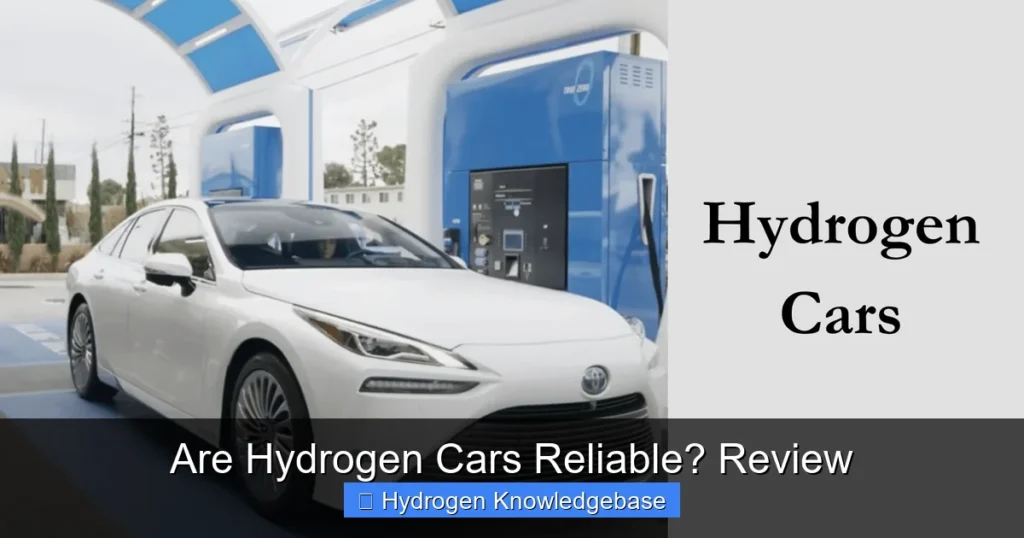
Hydrogen cars are emerging as a promising zero-emission alternative, but are they truly reliable? This review dives into real-world performance, maintenance, durability, and infrastructure challenges to help you decide if a hydrogen-powered vehicle fits your lifestyle.
Key Takeaways
- Hydrogen cars offer excellent reliability in controlled environments: With fewer moving parts than internal combustion engines, fuel cell vehicles (FCVs) have lower mechanical wear and tear.
- Refueling infrastructure remains a major hurdle: Limited hydrogen stations, especially outside California and select global regions, restrict practicality for most drivers.
- Fuel cell durability has improved significantly: Modern FCVs like the Toyota Mirai and Hyundai NEXO now boast fuel cells designed to last over 100,000 miles with proper maintenance.
- Cold weather performance is strong: Unlike some EVs, hydrogen cars start reliably in freezing temperatures and maintain cabin heat efficiently using waste heat from the fuel cell.
- Maintenance is simpler but specialized: While there’s no oil changes or spark plugs, servicing requires trained technicians and access to hydrogen-specific tools.
- Hydrogen production impacts overall sustainability: Most hydrogen today comes from natural gas (grey hydrogen), reducing environmental benefits unless green hydrogen (from renewables) becomes mainstream.
- Resale value and long-term support are uncertain: Limited market adoption means fewer used models and potential challenges in finding parts or service decades down the line.
Quick Answers to Common Questions
Are hydrogen cars reliable in cold weather?
Yes, hydrogen cars perform well in cold weather. They start reliably in freezing temperatures and use waste heat from the fuel cell to warm the cabin, unlike some EVs that lose range in the cold.
How long do hydrogen fuel cells last?
Modern fuel cells are designed to last over 100,000 miles, with some models like the Hyundai NEXO rated for up to 150,000 miles under normal driving conditions.
Can I refuel a hydrogen car at home?
No, home refueling is not currently practical. Hydrogen requires high-pressure storage and specialized equipment, so refueling is only available at public stations.
Are hydrogen cars more reliable than electric cars?
Hydrogen cars are reliable in performance and refueling speed, but EVs have better infrastructure and lower operating costs, making them more practical for most drivers.
Do hydrogen cars require a lot of maintenance?
No, maintenance is minimal—no oil changes or exhaust systems. However, servicing requires specialized technicians and access to hydrogen-certified service centers.
📑 Table of Contents
- Are Hydrogen Cars Reliable? A Deep Dive into the Future of Clean Driving
- How Do Hydrogen Cars Work? Understanding the Technology Behind the Wheel
- Real-World Performance: How Hydrogen Cars Hold Up on the Road
- Maintenance and Longevity: Are Hydrogen Cars Easy to Maintain?
- Comparing Hydrogen Cars to EVs and Gas Cars: Where Do They Stand?
- Infrastructure and Practicality: The Biggest Barrier to Reliability
- The Future of Hydrogen Cars: Is Reliability Improving?
- Conclusion: Are Hydrogen Cars Reliable? The Verdict
Are Hydrogen Cars Reliable? A Deep Dive into the Future of Clean Driving
Imagine pulling up to a fuel pump, filling your car in under five minutes, and driving 300–400 miles on a single tank—all while emitting nothing but water vapor. That’s the promise of hydrogen fuel cell vehicles (FCVs), and it sounds almost too good to be true. But as exciting as the technology is, the real question on every eco-conscious driver’s mind is: Are hydrogen cars reliable?
Hydrogen cars aren’t science fiction anymore. Models like the Toyota Mirai, Hyundai NEXO, and Honda Clarity Fuel Cell are already on the road, offering a zero-emission alternative to both gasoline cars and battery electric vehicles (BEVs). But reliability isn’t just about whether the car starts in the morning—it’s about long-term performance, maintenance ease, durability, and real-world usability. So, let’s cut through the hype and examine what it really means to own and drive a hydrogen-powered vehicle today.
Unlike electric cars that rely on large, heavy battery packs, hydrogen cars generate electricity on-board using a fuel cell stack. Hydrogen gas from the tank combines with oxygen from the air, producing electricity to power the motor—and water as the only byproduct. This process is clean, quiet, and efficient. But does it hold up over time? Can it handle extreme weather, daily commutes, and long road trips? And perhaps most importantly, can you actually refuel it when you need to?
In this comprehensive review, we’ll explore the reliability of hydrogen cars from every angle: how they perform in real-world conditions, how they compare to EVs and gas cars, what maintenance looks like, and whether the infrastructure can support widespread adoption. Whether you’re considering a hydrogen car for your next purchase or just curious about the future of clean transportation, this guide will give you the facts you need.
How Do Hydrogen Cars Work? Understanding the Technology Behind the Wheel
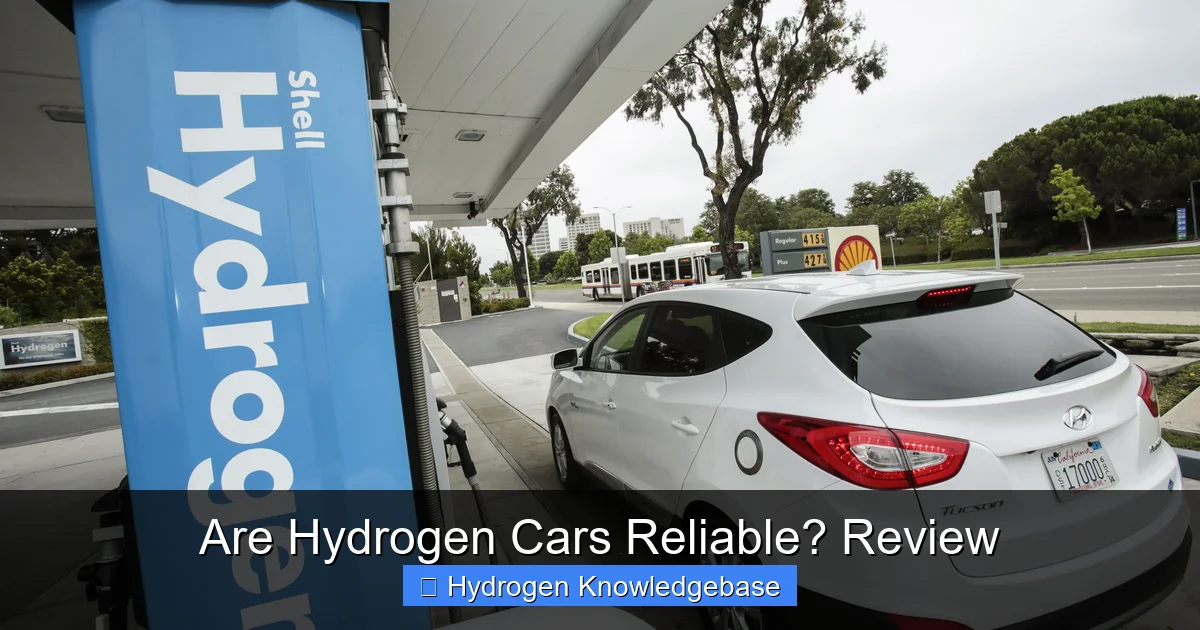
Visual guide about Are Hydrogen Cars Reliable? Review
Image source: static.politico.com
Before we can assess reliability, it helps to understand how hydrogen cars actually work. At their core, fuel cell vehicles use a process called electrochemical conversion to generate electricity. Here’s a simplified breakdown:
Hydrogen gas (H₂) is stored in high-pressure tanks—usually at 700 bar (10,000 psi)—within the vehicle. When you press the accelerator, hydrogen flows into the fuel cell stack, where it passes through a membrane coated with a platinum catalyst. At the same time, oxygen from the air enters the other side of the membrane. The hydrogen molecules split into protons and electrons. The protons move through the membrane, while the electrons are forced to travel through an external circuit, creating an electric current. This electricity powers the motor, and when the protons and electrons reunite with oxygen, they form water (H₂O)—which drips out as exhaust.
This system has several advantages over traditional engines. There are no combustion explosions, no pistons, no crankshafts—just quiet, smooth electric propulsion. And because the electricity is generated on demand, there’s no need for a massive battery pack, which reduces weight and complexity.
Key Components of a Hydrogen Fuel Cell System
A hydrogen car isn’t just a fuel cell and a tank. It includes several critical components that must work together reliably:
– Fuel Cell Stack: The heart of the system, where hydrogen and oxygen react to produce electricity. Modern stacks are more durable and efficient than earlier versions, with some lasting over 100,000 miles.
– Hydrogen Storage Tanks: Made from carbon fiber composites, these tanks are designed to withstand extreme pressure and impact. They’re rigorously tested and include safety valves to prevent over-pressurization.
– Electric Motor: Similar to those in EVs, these motors provide instant torque and smooth acceleration.
– High-Voltage Battery: A small lithium-ion battery stores excess energy and assists during acceleration. It’s much smaller than in a BEV because the fuel cell generates power continuously.
– Air and Cooling Systems: The fuel cell must stay at optimal temperature and receive clean, dry air to function efficiently. Filters and cooling loops manage this.
One of the biggest reliability advantages? Fewer moving parts. No oil changes, no transmission fluid, no exhaust system—just clean, quiet operation. But that doesn’t mean hydrogen cars are maintenance-free. We’ll dive into that next.
Real-World Performance: How Hydrogen Cars Hold Up on the Road
So, how do hydrogen cars actually perform in everyday driving conditions? Let’s look at real-world data and owner experiences.
Take the Toyota Mirai, for example. Since its launch in 2015, thousands of Mirais have been driven across California—the only U.S. state with a semi-functional hydrogen refueling network. Owners report smooth, quiet rides, strong acceleration, and a driving experience nearly identical to a premium EV. The latest Mirai (2021 and newer) has a range of over 400 miles, which rivals many gasoline cars and exceeds most EVs.
But reliability isn’t just about range. It’s about consistency. Can you rely on your hydrogen car in extreme heat or cold? What about long-distance travel?
Cold Weather Performance: A Surprising Strength
One area where hydrogen cars shine is cold weather. Unlike some EVs, which can lose 20–40% of their range in freezing temperatures due to battery inefficiency, hydrogen cars maintain consistent performance. Why? Because the fuel cell generates heat as a byproduct, which can be used to warm the cabin and keep the system at optimal operating temperature.
In fact, Toyota and Hyundai have tested their FCVs in Arctic conditions, and they start reliably even at -30°C (-22°F). The Mirai, for instance, uses waste heat from the fuel cell to warm the cabin, reducing the need for electric heaters that drain the battery in EVs.
This makes hydrogen cars particularly appealing for drivers in colder climates—like Canada, Scandinavia, or the northern U.S.—where EV range anxiety is a real concern.
Heat and Humidity: No Major Issues
High temperatures and humidity also don’t pose significant problems. The fuel cell stack is designed to operate efficiently in a wide range of climates. Cooling systems manage heat buildup, and air filters prevent moisture and contaminants from entering the stack.
However, one caveat: in extremely hot and dusty environments, air filters may need more frequent replacement to ensure clean airflow. But this is a minor maintenance item, not a reliability flaw.
Long-Distance Driving: Feasibility Depends on Infrastructure
Here’s where hydrogen cars face their biggest practical challenge: refueling. While a full tank takes just 3–5 minutes—faster than charging an EV—finding a hydrogen station is another story.
As of 2024, there are fewer than 60 hydrogen refueling stations in the United States, and nearly all are in California. This makes long road trips outside the state nearly impossible. In contrast, Europe and parts of Asia (especially Japan and South Korea) are building out hydrogen networks more aggressively.
For example, in South Korea, Hyundai has partnered with the government to install over 100 hydrogen stations, making FCVs a more viable option for daily use and travel. In Germany, the H2 Mobility initiative aims to have 100 stations by 2025.
So while the car itself is reliable, your ability to use it over long distances depends heavily on where you live.
Maintenance and Longevity: Are Hydrogen Cars Easy to Maintain?
One of the biggest selling points of hydrogen cars is their simplicity. With no internal combustion engine, there’s no need for oil changes, spark plugs, timing belts, or exhaust systems. That translates to lower routine maintenance costs and fewer things that can go wrong.
But “lower maintenance” doesn’t mean “no maintenance.” Let’s break down what you can expect.
Routine Maintenance: Minimal but Specialized
Hydrogen cars still require regular check-ups, but the tasks are different:
– Air Filter Replacement: The fuel cell needs clean, dry air to operate. Air filters should be inspected every 15,000–30,000 miles and replaced as needed.
– Coolant System Checks: The fuel cell and battery require cooling. Coolant levels and condition should be checked annually.
– Hydrogen Tank Inspections: Tanks are designed to last the life of the vehicle, but they must be inspected every 3–5 years for signs of damage or wear.
– Battery Maintenance: The small lithium-ion battery still needs monitoring, though it’s less stressed than in a full EV.
The good news? Most of these tasks are quick and inexpensive. The bad news? They require specialized knowledge. Not every mechanic knows how to service a fuel cell system. You’ll need to visit a certified dealership or service center, which may not be convenient depending on your location.
Fuel Cell Durability: How Long Do They Last?
Early fuel cells degraded quickly, losing efficiency after just 50,000 miles. But modern systems have made huge strides. Toyota claims the Mirai’s fuel cell can last over 100,000 miles with proper care. Hyundai says the NEXO’s stack is designed for 150,000 miles.
Real-world data supports this. Fleet operators in California—like taxi and ride-share companies—have reported consistent performance after 80,000+ miles with minimal degradation. Some early Mirai models are still on the road with original fuel cells intact.
That said, extreme conditions—like frequent short trips without full cooldowns or exposure to contaminants—can accelerate wear. But under normal use, fuel cells are proving to be durable and reliable.
Warranty and Support: What’s Covered?
Most manufacturers offer strong warranties to back up their reliability claims. The Toyota Mirai, for example, comes with an 8-year/100,000-mile warranty on the fuel cell system. Hyundai offers a similar 10-year/100,000-mile warranty on the NEXO’s fuel cell.
This level of coverage gives buyers confidence that the manufacturer stands behind the technology. It also reflects the improving maturity of fuel cell systems.
Comparing Hydrogen Cars to EVs and Gas Cars: Where Do They Stand?
To truly assess reliability, we need to compare hydrogen cars to the alternatives: battery electric vehicles (BEVs) and internal combustion engine (ICE) vehicles.
Hydrogen vs. Electric Cars
Both hydrogen and electric cars produce zero tailpipe emissions and offer smooth, quiet driving. But they differ in key ways:
– Refueling Time: Hydrogen wins. 3–5 minutes vs. 30+ minutes for a fast charge (and hours for a full charge at home).
– Range: Hydrogen cars often have longer ranges—400+ miles vs. 250–350 for most EVs.
– Infrastructure: EVs dominate. There are over 150,000 public charging stations in the U.S. vs. fewer than 60 hydrogen stations.
– Reliability in Cold Weather: Hydrogen cars maintain range better in cold weather, while EVs can lose significant range.
– Maintenance: Both are simpler than gas cars, but EVs have even fewer components (no fuel cell, no hydrogen system).
So, hydrogen cars are more reliable in terms of consistent performance and refueling speed, but EVs are more practical due to infrastructure.
Hydrogen vs. Gas Cars
Compared to gasoline vehicles, hydrogen cars are far cleaner and have fewer mechanical parts. No oil changes, no transmission issues, no exhaust repairs. But gas cars win on availability—every corner has a gas station, and mechanics are everywhere.
Reliability-wise, modern gas cars are very dependable, but they require more frequent maintenance and are prone to more wear and tear over time. Hydrogen cars, while still niche, offer a cleaner, simpler alternative—if you can refuel them.
Infrastructure and Practicality: The Biggest Barrier to Reliability
Here’s the elephant in the room: even the most reliable car is useless if you can’t fuel it.
Hydrogen refueling infrastructure is the weakest link in the hydrogen car ecosystem. Building a hydrogen station costs $1–2 million—far more than a gas station or EV charger. And because demand is low, private companies are hesitant to invest.
California is the exception. Thanks to state incentives and automaker partnerships, it has the most hydrogen stations in the U.S. But even there, stations are concentrated in urban areas like Los Angeles and San Francisco. Rural drivers are out of luck.
In other countries, progress is mixed. Japan and South Korea are leading the way, with government-backed hydrogen strategies. Europe is building a network, but it’s still in early stages. The U.S. lags behind.
This lack of infrastructure directly impacts reliability. A car is only as reliable as your ability to use it when and where you need it. If you can’t refuel, your hydrogen car becomes a very expensive paperweight.
Hydrogen Production: Is It Really Clean?
Another reliability factor—environmental reliability. Most hydrogen today is produced from natural gas through a process called steam methane reforming (SMR). This “grey hydrogen” still emits CO₂, undermining the car’s green credentials.
“Blue hydrogen” captures and stores the CO₂, reducing emissions. “Green hydrogen,” made using renewable energy to split water, is the ideal—but it’s expensive and not yet widely available.
Until green hydrogen becomes mainstream, the environmental benefits of hydrogen cars are limited. This affects their long-term reliability as a sustainable solution.
The Future of Hydrogen Cars: Is Reliability Improving?
Despite current challenges, the future looks promising. Automakers are investing heavily in fuel cell technology. Toyota plans to expand Mirai production and reduce costs. Hyundai aims to make hydrogen vehicles mainstream by 2030. Even trucking and aviation are exploring hydrogen as a clean fuel.
Advances in fuel cell durability, hydrogen storage, and production methods are making the technology more reliable and scalable. Governments are also stepping in—California offers rebates of up to $15,000 for FCV purchases, and the U.S. Department of Energy is funding hydrogen research.
But for hydrogen cars to become truly reliable for the average driver, two things must happen: infrastructure must expand, and green hydrogen must become affordable.
Until then, hydrogen cars remain a niche option—reliable in performance, but limited in practicality.
Conclusion: Are Hydrogen Cars Reliable? The Verdict
So, are hydrogen cars reliable? The answer is nuanced.
In terms of mechanical performance, durability, and driving experience, hydrogen cars are highly reliable. They start in cold weather, require minimal maintenance, and offer smooth, quiet operation. Modern fuel cells are built to last over 100,000 miles, and manufacturers back them with strong warranties.
But reliability isn’t just about the car—it’s about the ecosystem. And right now, the hydrogen ecosystem is fragile. Limited refueling stations, high production costs, and reliance on non-renewable hydrogen sources reduce the overall reliability of owning and operating a hydrogen car.
For early adopters in California or parts of Europe and Asia, hydrogen cars are a viable, reliable option. For most drivers, however, EVs currently offer a more practical and accessible path to zero-emission driving.
As infrastructure improves and green hydrogen becomes more available, hydrogen cars could become a major player in the clean transportation revolution. But for now, they’re a promising—but not yet fully reliable—alternative.
If you’re considering a hydrogen car, ask yourself: Can I refuel it easily? Do I have access to service? Am I prepared for the limitations? If the answer is yes, you might just be driving the future.
Frequently Asked Questions
How safe are hydrogen cars?
Hydrogen cars are designed with multiple safety features, including leak detection, automatic shut-off valves, and reinforced tanks. They undergo rigorous testing and are considered as safe as conventional vehicles.
Can hydrogen cars explode?
While hydrogen is flammable, the risk of explosion is extremely low. Tanks are built to withstand high pressure and impact, and safety systems prevent leaks and ignition under normal conditions.
Where can I refuel a hydrogen car?
As of 2024, hydrogen refueling is mostly available in California, with limited stations in Europe, Japan, and South Korea. Check local hydrogen station maps before planning long trips.
Are hydrogen cars expensive to maintain?
Routine maintenance costs are lower than gas cars due to fewer mechanical parts, but specialized service and parts can be more expensive and less accessible.
Do hydrogen cars have a future?
Hydrogen cars have potential, especially for long-haul transport and regions with strong infrastructure support. However, widespread adoption depends on cost reductions and green hydrogen availability.
Can I convert my gas car to run on hydrogen?
No, converting a gasoline car to hydrogen is not practical or safe. Fuel cell systems require specialized engineering and are only available in factory-built hydrogen vehicles.