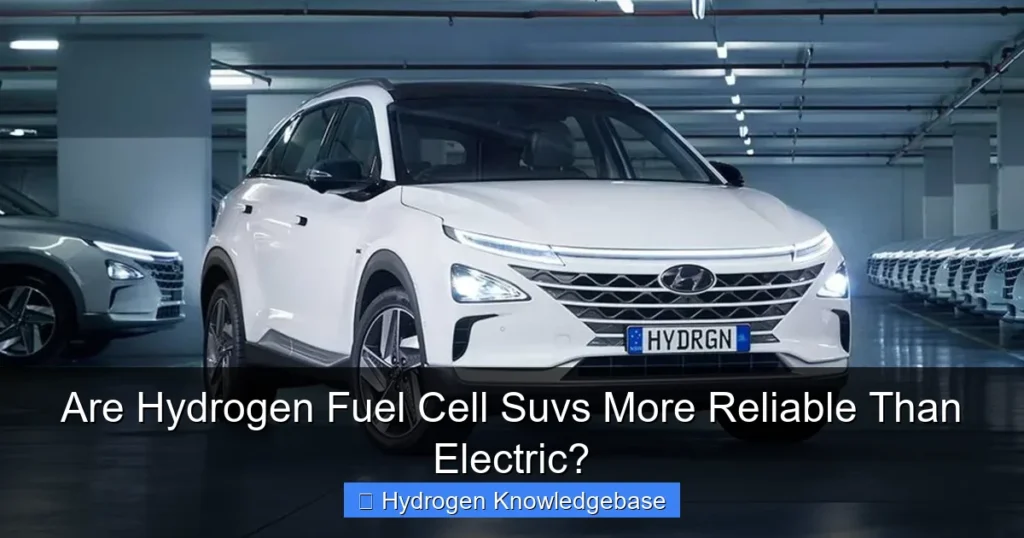
Hydrogen fuel cell SUVs and electric SUVs each offer unique reliability advantages depending on infrastructure, climate, and usage patterns. While EVs dominate in efficiency and charging convenience, hydrogen vehicles shine in refueling speed and cold-weather performance—but infrastructure remains a major hurdle.
Key Takeaways
- Refueling Speed: Hydrogen SUVs refuel in 3–5 minutes, similar to gasoline, while most EVs take 30+ minutes for fast charging.
- Range Consistency: Hydrogen fuel cells maintain stable range in cold weather, whereas EV range can drop by 20–40% in freezing temperatures.
- Infrastructure Limitations: EV charging stations are widespread; hydrogen refueling stations are rare, with fewer than 100 in the U.S. as of 2024.
- Maintenance Simplicity: Both powertrains have fewer moving parts than ICE vehicles, but hydrogen systems require specialized servicing.
- Energy Efficiency: EVs convert 77–80% of grid energy to motion; hydrogen vehicles only achieve 25–35% due to production and compression losses.
- Longevity Concerns: Fuel cell stacks may degrade faster than EV batteries, though both are improving with newer models.
- Environmental Impact: EVs currently have a lower carbon footprint unless hydrogen is produced using renewable energy.
Quick Answers to Common Questions
Are hydrogen SUVs faster to refuel than electric SUVs?
Yes. Hydrogen SUVs refuel in 3–5 minutes, similar to gasoline, while most electric SUVs take 20–40 minutes for a fast charge.
Do hydrogen SUVs lose range in cold weather?
No, not significantly. Hydrogen fuel cells maintain stable range in cold climates, unlike electric SUVs, which can lose 20–40% range in freezing temperatures.
Are hydrogen SUVs more expensive to maintain?
Potentially. While both have fewer moving parts than gas vehicles, hydrogen systems require specialized servicing and may need fuel cell stack replacements over time.
Can I charge an electric SUV at home?
Yes. Most EV owners charge at home using a Level 2 charger, which provides a full charge overnight.
Is hydrogen production environmentally friendly?
Not yet. Most hydrogen is made from natural gas, which emits CO₂. Green hydrogen from renewables is cleaner but still rare and costly.
📑 Table of Contents
- Introduction: The Future of Clean SUVs
- Understanding the Technology: How They Work
- Reliability in Real-World Conditions
- Maintenance and Long-Term Durability
- Energy Efficiency and Environmental Impact
- Cost of Ownership and Resale Value
- The Future Outlook: Which Path Will Dominate?
- Conclusion: Reliability Depends on Your Needs
Introduction: The Future of Clean SUVs
The race toward sustainable transportation is heating up, and SUVs—long criticized for their environmental impact—are now at the forefront of innovation. As consumers demand greener options without sacrificing performance or convenience, two technologies have emerged as serious contenders: battery electric vehicles (BEVs) and hydrogen fuel cell electric vehicles (FCEVs). Both promise zero tailpipe emissions, but they take very different paths to get there. The big question on many minds: Are hydrogen fuel cell SUVs more reliable than electric?
Reliability isn’t just about how often a vehicle breaks down. It’s about consistency, ease of use, long-term durability, and how well a vehicle performs under real-world conditions. For SUV buyers—who often prioritize range, towing capacity, and all-weather capability—these factors are critical. While electric SUVs like the Tesla Model Y, Ford Mustang Mach-E, and Hyundai Ioniq 5 have gained massive popularity, hydrogen-powered models such as the Toyota Mirai (available in SUV form in some markets) and the Hyundai Nexo offer an alternative that feels more familiar to traditional drivers. But does that familiarity translate to greater reliability?
Understanding the Technology: How They Work
Electric SUVs: Power from the Plug
Battery electric SUVs store electricity in large lithium-ion battery packs, which power one or more electric motors. When you plug in, energy from the grid charges the battery. During driving, the motor converts that stored energy into motion. Regenerative braking helps recapture some energy during deceleration, improving efficiency.
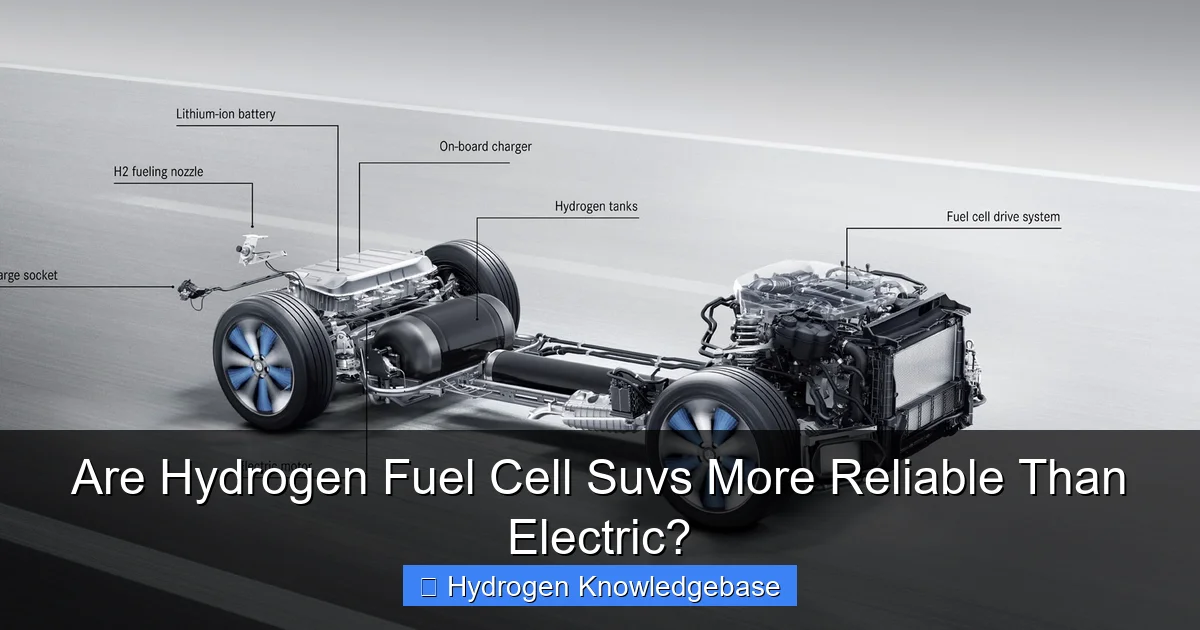
Visual guide about Are Hydrogen Fuel Cell Suvs More Reliable Than Electric?
Image source: images.hgmsites.net
EVs are remarkably simple under the hood. No engine, no transmission, no exhaust system—just a battery, motor, and power electronics. This simplicity reduces the number of potential failure points. For example, Tesla reports that its drivetrains are designed to last over a million miles with minimal maintenance.
Hydrogen Fuel Cell SUVs: Power from the Tank
Hydrogen fuel cell SUVs generate electricity on board using a chemical reaction between hydrogen and oxygen. Hydrogen gas is stored in high-pressure tanks and fed into a fuel cell stack, where it combines with oxygen from the air to produce electricity, water, and heat. That electricity then powers an electric motor—just like in a BEV.
The key difference? Instead of storing electricity, FCEVs store fuel and generate electricity as needed. This means they can refuel quickly, much like a gasoline vehicle. However, the fuel cell stack contains delicate membranes and catalysts (often platinum), which can degrade over time and require specialized care.
Reliability in Real-World Conditions
Cold Weather Performance
One area where hydrogen fuel cell SUVs may have an edge is cold weather reliability. Electric SUVs suffer from reduced range in freezing temperatures. Studies show that at -6°C (20°F), EV range can drop by 20–40% due to battery chemistry limitations and the energy needed to heat the cabin.
In contrast, hydrogen fuel cells are less affected by cold. The chemical reaction inside the fuel cell works efficiently even in low temperatures, and waste heat from the process can be used to warm the cabin. The Hyundai Nexo, for example, maintains over 90% of its rated range in cold climates, according to real-world testing in Norway and Canada.
Refueling and Downtime
Refueling time is a major factor in reliability for long-distance drivers. Charging an electric SUV takes time—even with a fast charger, a 10–80% charge typically takes 20–40 minutes. Level 2 home charging can take 6–12 hours for a full charge. This can be a dealbreaker for road trips or commercial use.
Hydrogen SUVs, on the other hand, refuel in 3–5 minutes, matching the convenience of gasoline. For fleet operators or frequent travelers, this reduces downtime and increases operational reliability. However, this advantage is only useful if hydrogen stations are available—which brings us to the next point.
Infrastructure and Accessibility
As of 2024, the U.S. has over 60,000 public EV charging stations, with thousands more added each year. In contrast, there are fewer than 100 hydrogen refueling stations nationwide, mostly concentrated in California. This lack of infrastructure severely limits the practical reliability of hydrogen SUVs for most drivers.
Imagine needing gas but only finding one station within 200 miles. That’s the reality for hydrogen drivers outside California. Even in urban areas, station outages are common due to maintenance or supply issues. EVs, while not perfect, offer far greater charging flexibility—home charging, workplace stations, and expanding public networks.
Maintenance and Long-Term Durability
Fewer Moving Parts, Fewer Problems
Both electric and hydrogen SUVs have fewer mechanical components than internal combustion engine (ICE) vehicles. No oil changes, no spark plugs, no timing belts—this reduces routine maintenance and the risk of mechanical failure.
However, hydrogen systems introduce unique maintenance challenges. Fuel cell stacks require periodic inspection and potential replacement after 100,000–150,000 miles, depending on usage and environmental conditions. High-pressure hydrogen tanks must be inspected regularly for leaks or damage, and the system includes complex sensors and valves that can fail.
EVs, by contrast, have proven remarkably durable. Tesla, Rivian, and other manufacturers report battery degradation of only 10–15% after 200,000 miles. Most EV batteries are warrantied for 8 years or 100,000–150,000 miles, with many lasting much longer.
Service Network and Expertise
Another reliability factor is access to qualified technicians. EV repair networks are growing rapidly, with dealerships and independent shops increasingly trained in high-voltage systems. Major automakers like Ford, GM, and Hyundai offer certified EV service programs.
Hydrogen servicing, however, is still niche. Only a handful of dealerships in California are equipped to handle FCEV repairs. Specialized tools, safety protocols, and certified technicians are required. This scarcity can lead to longer repair times and higher costs—directly impacting reliability for owners outside major metro areas.
Energy Efficiency and Environmental Impact
The Efficiency Gap
When it comes to energy use, electric SUVs are far more efficient. According to the U.S. Department of Energy, EVs convert about 77–80% of electrical energy from the grid to power at the wheels. In contrast, hydrogen fuel cell vehicles are only 25–35% efficient when you account for hydrogen production, compression, transport, and conversion in the fuel cell.
This means that for the same amount of renewable energy, an EV can travel 2–3 times farther than a hydrogen SUV. This efficiency translates to lower operating costs and reduced strain on the energy grid.
Green Hydrogen: The Missing Link
The environmental benefit of hydrogen depends entirely on how it’s produced. Currently, over 95% of hydrogen is made from natural gas through a process called steam methane reforming, which emits CO₂. This “gray hydrogen” undermines the clean image of FCEVs.
“Green hydrogen,” produced using renewable energy to split water molecules, is the ideal—but it’s expensive and accounts for less than 1% of global production. Until green hydrogen becomes mainstream, EVs have a clear advantage in sustainability.
That said, hydrogen could play a role in decarbonizing hard-to-electrify sectors like heavy transport and aviation. But for passenger SUVs, the efficiency and infrastructure advantages of EVs are hard to ignore.
Cost of Ownership and Resale Value
Upfront and Operating Costs
Hydrogen fuel cell SUVs are significantly more expensive to buy. The Hyundai Nexo starts around $60,000, while the Toyota Mirai (sedan) is priced similarly. In comparison, the Tesla Model Y starts at $47,000, and the Ford Mustang Mach-E at $43,000. Federal and state incentives can reduce these costs, but hydrogen vehicles often have fewer rebates available.
Fuel costs also favor EVs. Electricity averages $0.15 per kWh, giving most EVs a cost of $0.04–$0.06 per mile. Hydrogen currently costs $12–$16 per kilogram, and since FCEVs get about 60–70 miles per kg, that’s $0.17–$0.27 per mile—4–7 times more expensive than electricity.
Resale and Depreciation
Resale value is another reliability concern. EVs have seen strong resale markets, especially for popular models like Tesla and Rivian. However, hydrogen vehicles face steep depreciation due to limited demand and infrastructure concerns. A 2023 study by iSeeCars found that FCEVs lose value faster than BEVs, with some models depreciating over 60% in three years.
This depreciation reflects consumer skepticism about long-term viability. If hydrogen infrastructure doesn’t expand, resale values will continue to suffer—making ownership less reliable from a financial standpoint.
The Future Outlook: Which Path Will Dominate?
Technological Advancements
Both technologies are evolving rapidly. Solid-state batteries promise faster charging, longer range, and improved safety for EVs. Meanwhile, researchers are working on cheaper, more durable fuel cells using non-precious metals and advanced membranes.
Hyundai and Toyota are investing billions in hydrogen infrastructure and next-gen FCEVs. The Hyundai XCIENT Fuel Cell trucks are already operating in Switzerland and California, proving the technology works at scale. But for passenger SUVs, the momentum still favors EVs.
Policy and Investment Trends
Governments worldwide are backing electrification. The U.S. Inflation Reduction Act includes $7.5 billion for EV charging infrastructure. The European Union has banned new ICE vehicle sales by 2035. China leads in both EV production and battery technology.
Hydrogen receives support too—especially in Japan, South Korea, and parts of Europe—but funding and policy focus remain secondary to battery electrification. Without massive investment in hydrogen production and distribution, FCEVs will struggle to achieve mainstream reliability.
Conclusion: Reliability Depends on Your Needs
So, are hydrogen fuel cell SUVs more reliable than electric? The answer isn’t black and white—it depends on your driving habits, location, and priorities.
If you live in a cold climate, frequently drive long distances, and have access to hydrogen stations, an FCEV like the Hyundai Nexo could offer superior convenience and consistent performance. The quick refueling and stable range are compelling advantages.
However, for the vast majority of drivers, electric SUVs are the more reliable choice today. They’re more efficient, cheaper to operate, supported by a growing charging network, and backed by stronger market momentum. With improving battery technology and falling prices, EVs are becoming the default for sustainable SUV ownership.
Hydrogen isn’t going away—it may find a niche in commercial fleets or regions with abundant renewable energy. But for now, when it comes to reliability, electric SUVs hold the lead. The future is electric, but hydrogen could still play a supporting role in a diversified clean transportation ecosystem.
Frequently Asked Questions
How long do hydrogen fuel cells last?
Most fuel cell stacks are designed to last 100,000–150,000 miles, though durability is improving with newer models. Regular maintenance and proper operation can extend their life.
Are hydrogen SUVs safe in a crash?
Yes. Hydrogen tanks are rigorously tested and built to withstand high pressure and impact. FCEVs undergo the same safety standards as other vehicles and have performed well in crash tests.
Can I convert my gas SUV to hydrogen?
No. Converting a gasoline SUV to hydrogen is not practical or safe. The fuel system, engine, and safety controls are entirely different and require a purpose-built design.
Do electric SUVs have enough range for road trips?
Yes, most modern electric SUVs offer 250–350 miles of range, and fast-charging networks are expanding rapidly, making long-distance travel increasingly convenient.
Will hydrogen stations become more common?
Possibly, but growth is slow. Major investments are needed in production, transport, and distribution. For now, expansion is limited to regions like California and parts of Europe.
Which is better for towing: electric or hydrogen SUV?
Electric SUVs currently have the edge. Models like the Rivian R1S and Ford F-150 Lightning offer strong towing capacity (up to 10,000 lbs) with regenerative braking to help manage battery drain.