Hydrogen fuel cell SUVs offer zero-emission driving with quick refueling and long range, making them a promising alternative to battery electric vehicles. However, limited infrastructure, high costs, and production challenges raise questions about their widespread adoption.
Key Takeaways
- Zero tailpipe emissions: Hydrogen fuel cell SUVs emit only water vapor, making them environmentally friendly during operation.
- Fast refueling times: Refilling a hydrogen tank takes 3–5 minutes, similar to gasoline, unlike hours needed for EV charging.
- Long driving range: Most hydrogen SUVs offer 300–400 miles per tank, ideal for long-distance travel.
- Limited refueling infrastructure: As of 2024, fewer than 100 public hydrogen stations exist in the U.S., mostly in California.
- High upfront and fuel costs: Hydrogen SUVs are expensive to buy, and hydrogen fuel can cost 2–3 times more per mile than electricity.
- Energy-intensive production: Most hydrogen is currently made from natural gas, reducing its green credentials unless renewable-powered.
- Niche but growing market: Automakers like Toyota, Hyundai, and Honda are investing in fuel cell tech, signaling long-term interest.
Quick Answers to Common Questions
How do hydrogen fuel cell SUVs compare to electric SUVs in terms of range?
Hydrogen fuel cell SUVs typically offer 300–400 miles per tank, which is comparable to or slightly better than many battery electric SUVs. However, EV ranges are improving rapidly with new battery tech.
Can I refuel a hydrogen SUV at home?
No, home refueling is not currently available. Hydrogen must be dispensed at specialized stations due to safety and pressure requirements.
Are hydrogen fuel cell SUVs safe in a crash?
Yes. Hydrogen tanks are rigorously tested and designed to withstand impacts, fires, and punctures. Safety systems automatically shut off fuel flow in an accident.
What happens if I run out of hydrogen?
Like running out of gas, the vehicle will stop. However, roadside assistance and mobile refueling services are being developed for hydrogen vehicles.
Will hydrogen SUVs ever be cheaper than electric SUVs?
Possibly, if green hydrogen production scales up and infrastructure improves. But for now, battery electric SUVs remain more affordable to buy and operate.
📑 Table of Contents
Are Hydrogen Fuel Cell SUVs the Future of Transportation?
Imagine pulling up to a fueling station, topping off your SUV in under five minutes, and driving 350 miles—all while emitting nothing but clean water vapor. Sounds like science fiction, right? But this isn’t a scene from a futuristic movie. It’s the reality of hydrogen fuel cell SUVs, a technology that’s quietly gaining traction as a potential game-changer in the clean transportation revolution.
As the world races to reduce carbon emissions and combat climate change, electric vehicles (EVs) have dominated headlines. But while battery electric SUVs like the Tesla Model Y and Ford Mustang Mach-E are stealing the spotlight, hydrogen fuel cell vehicles (FCEVs) are emerging as a compelling alternative—especially for larger, heavier vehicles like SUVs and trucks. These vehicles use hydrogen gas to generate electricity on board, powering an electric motor without burning fossil fuels. The result? A smooth, quiet, zero-emission ride that refuels faster than most EVs charge.
But are hydrogen fuel cell SUVs truly the future of transportation? Or are they a niche solution with too many hurdles to overcome? The answer isn’t black and white. While the technology holds immense promise, it also faces significant challenges—from infrastructure limitations to production costs and environmental concerns. In this article, we’ll dive deep into the world of hydrogen fuel cell SUVs, exploring how they work, their benefits and drawbacks, real-world examples, and what the future might hold. Whether you’re a car enthusiast, an eco-conscious driver, or just curious about the next big thing in mobility, this guide will give you the full picture.
How Hydrogen Fuel Cell SUVs Work
Visual guide about Are Hydrogen Fuel Cell Suvs the Future of Transportation?
Image source: thumbs.dreamstime.com
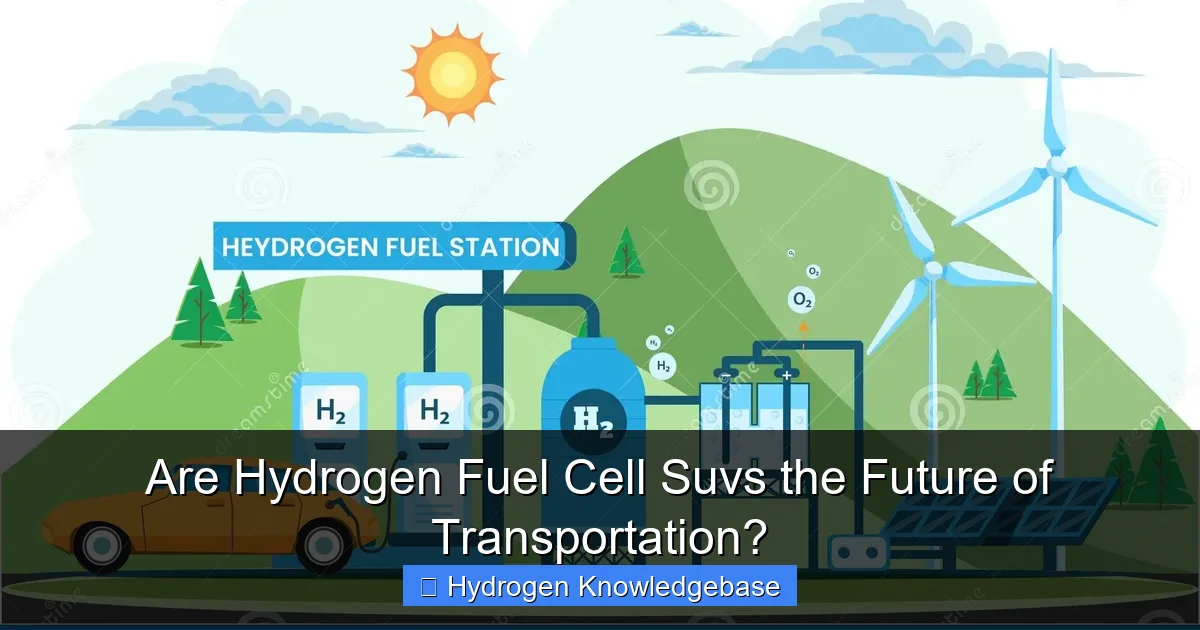
To understand why hydrogen fuel cell SUVs are generating buzz, it helps to know how they actually work. Unlike traditional gasoline-powered SUVs that burn fuel in an internal combustion engine, or battery electric SUVs that store electricity in large lithium-ion packs, hydrogen fuel cell vehicles generate their own electricity on the go.
At the heart of every hydrogen fuel cell SUV is a fuel cell stack. This stack combines hydrogen gas (stored in high-pressure tanks) with oxygen from the air. The chemical reaction between hydrogen and oxygen produces electricity, water, and heat. The electricity powers the vehicle’s electric motor, while the only byproduct released from the tailpipe is pure water vapor—no carbon dioxide, no nitrogen oxides, no particulate matter.
The Fuel Cell Process Explained
Here’s a simplified breakdown of the process:
1. Hydrogen storage: Compressed hydrogen gas is stored in reinforced carbon-fiber tanks, typically located under the vehicle floor. These tanks can hold 5–10 kg of hydrogen, depending on the model.
2. Electrochemical reaction: When the driver presses the accelerator, hydrogen is fed into the fuel cell stack. Inside the stack, hydrogen molecules are split into protons and electrons using a catalyst (usually platinum).
3. Electricity generation: The protons pass through a proton exchange membrane (PEM), while the electrons are forced to travel through an external circuit, creating an electric current. This current powers the motor and recharges a small buffer battery.
4. Water emission: The protons and electrons recombine with oxygen from the air on the other side of the membrane, forming water (H₂O), which exits through the tailpipe.
This entire process happens silently and efficiently, delivering instant torque and smooth acceleration—just like a battery EV, but without the need for long charging stops.
Key Components of a Hydrogen Fuel Cell SUV
A hydrogen fuel cell SUV isn’t just a fuel cell and a motor. It’s a complex system with several critical components:
– Fuel cell stack: The core power generator, made up of hundreds of individual fuel cells layered together.
– Hydrogen storage tanks: High-strength tanks designed to safely hold hydrogen at pressures up to 10,000 psi.
– Electric motor: Powers the wheels, similar to those in battery EVs.
– Traction battery: A small lithium-ion battery that stores excess energy and provides extra power during acceleration.
– Power control unit: Manages the flow of electricity between the fuel cell, battery, and motor.
– Thermal management system: Keeps the fuel cell at optimal operating temperature.
One of the biggest advantages of this setup is that the vehicle doesn’t rely on a massive battery. That means less weight, fewer rare earth minerals, and potentially lower environmental impact from battery production.
Advantages of Hydrogen Fuel Cell SUVs
So why are automakers investing in hydrogen fuel cell technology, especially for SUVs? The answer lies in several key advantages that make FCEVs particularly well-suited for larger vehicles.
1. Zero Tailpipe Emissions
The most obvious benefit is environmental. Hydrogen fuel cell SUVs produce no harmful emissions during operation. Unlike gasoline or diesel vehicles that spew CO₂, NOx, and particulates, FCEVs emit only water vapor. This makes them ideal for urban areas struggling with air pollution and for drivers who want to reduce their carbon footprint without sacrificing performance or space.
Even when compared to battery electric SUVs, hydrogen vehicles have a potential edge in certain scenarios. For example, in cold climates, battery performance can drop significantly, reducing range and efficiency. Hydrogen fuel cells, on the other hand, are less affected by temperature, maintaining consistent performance in winter conditions.
2. Fast Refueling
One of the biggest pain points for EV owners is charging time. Even with fast chargers, recharging a large SUV battery can take 30 minutes to an hour for an 80% charge. And that’s if you can find a working charger.
Hydrogen fuel cell SUVs, by contrast, refuel in just 3 to 5 minutes—about the same time it takes to fill a gas tank. This makes them far more convenient for long road trips, ride-sharing services, or commercial fleets that can’t afford downtime. Imagine driving from Los Angeles to San Francisco, stopping once to refuel in under five minutes, and continuing on your way. That’s the promise of hydrogen.
3. Long Driving Range
Range anxiety is real—especially for SUV drivers who need to carry passengers, cargo, and tow trailers. Most hydrogen fuel cell SUVs offer a range of 300 to 400 miles on a single tank. For example, the 2024 Hyundai NEXO boasts an EPA-estimated range of 380 miles, while the Toyota Mirai XLE reaches up to 402 miles.
Compare that to many battery electric SUVs, which often max out around 300 miles—and less when towing or driving in cold weather. For drivers who frequently travel long distances or live in areas with sparse charging infrastructure, hydrogen offers a compelling alternative.
4. Suitable for Heavy-Duty Use
SUVs are often used for more than just commuting. They’re workhorses—used for towing, off-roading, and family adventures. The heavier the vehicle, the more energy it needs. Battery electric SUVs require massive, heavy batteries to deliver adequate range, which can reduce efficiency and increase wear on tires and brakes.
Hydrogen fuel cell SUVs, with their lighter energy storage and higher energy density, are better suited for heavy-duty applications. This is why the technology is also being explored for trucks, buses, and even trains. In fact, companies like Nikola and Hyundai are already testing hydrogen-powered semi-trucks for freight transport.
5. Reduced Battery Dependency
Battery production is resource-intensive. Mining lithium, cobalt, and nickel has significant environmental and ethical concerns, including water pollution, habitat destruction, and labor issues. Hydrogen fuel cell vehicles use much smaller batteries, reducing demand for these materials.
Additionally, hydrogen can be produced using renewable energy sources like wind, solar, or hydroelectric power. When hydrogen is made this way—called “green hydrogen”—the entire lifecycle of the vehicle becomes nearly carbon-neutral.
Challenges and Limitations
Despite their advantages, hydrogen fuel cell SUVs face serious obstacles that have slowed their adoption. Let’s take a closer look at the biggest challenges.
1. Lack of Refueling Infrastructure
The single biggest barrier to widespread adoption is infrastructure. As of 2024, there are fewer than 100 public hydrogen refueling stations in the United States—and over 70% are located in California. That means if you live in Texas, New York, or Florida, finding a place to refuel your hydrogen SUV could be nearly impossible.
Compare that to over 150,000 public EV charging stations across the country, with thousands more added each year. Even in California, hydrogen stations are often out of service due to maintenance issues or supply problems. Without a reliable network, consumers simply won’t buy hydrogen vehicles.
2. High Cost of Vehicles and Fuel
Hydrogen fuel cell SUVs are expensive. The 2024 Toyota Mirai starts at around $50,000, and the Hyundai NEXO is priced similarly. That’s significantly more than comparable battery electric SUVs like the Tesla Model Y or Ford Mustang Mach-E, which start around $40,000–$45,000.
But the real cost issue is fuel. Hydrogen is currently expensive to produce, transport, and dispense. The average cost to refuel a hydrogen SUV is about $16 per kilogram. Since most SUVs use around 1 kg per 60–70 miles, that translates to roughly $0.23–$0.27 per mile. In comparison, driving a battery electric SUV costs about $0.04–$0.08 per mile, depending on electricity rates.
Even with government incentives and free fuel offers (like Toyota’s $15,000 fuel credit for Mirai buyers), the long-term cost of ownership remains high.
3. Energy-Intensive Hydrogen Production
Not all hydrogen is created equal. Currently, about 95% of hydrogen is produced using natural gas in a process called steam methane reforming (SMR). This method releases carbon dioxide, undermining the environmental benefits of fuel cell vehicles.
Only a small fraction of hydrogen is “green”—produced via electrolysis using renewable energy. Scaling up green hydrogen production requires massive investments in renewable infrastructure and electrolyzer technology. Until then, hydrogen fuel cell SUVs may not be as clean as they seem.
4. Safety and Storage Concerns
Hydrogen is the lightest and most flammable element on the periodic table. While modern hydrogen tanks are rigorously tested and designed to withstand crashes, fires, and punctures, public perception of safety remains a hurdle.
Storing hydrogen at high pressures (up to 10,000 psi) also presents engineering challenges. Tanks must be lightweight yet incredibly strong, which increases manufacturing costs. And because hydrogen molecules are so small, they can leak through materials that contain larger gases like gasoline vapors.
5. Competition from Battery EVs
Battery electric vehicles are advancing rapidly. New battery technologies, such as solid-state batteries, promise longer ranges, faster charging, and lower costs. Charging infrastructure is expanding quickly, with federal and private investments pouring in.
As EVs become more affordable and convenient, the window of opportunity for hydrogen fuel cell SUVs is narrowing. Many experts believe hydrogen will play a role—but likely in niche markets like long-haul trucking, aviation, or industrial applications—rather than in mainstream passenger vehicles.
Real-World Examples of Hydrogen Fuel Cell SUVs
Despite the challenges, several automakers are pushing ahead with hydrogen fuel cell SUVs. Here are the most notable models currently on the market or in development.
Toyota Mirai
The Toyota Mirai is one of the most well-known hydrogen vehicles. The second-generation Mirai, launched in 2021, is a sleek, midsize sedan—but Toyota has hinted at expanding the platform to SUVs. With a range of up to 402 miles and a luxurious interior, the Mirai proves that hydrogen vehicles can be both practical and premium.
Hyundai NEXO
The Hyundai NEXO is currently the only hydrogen fuel cell SUV available in the U.S. market. It offers 380 miles of range, advanced driver-assistance features, and a futuristic design. Hyundai has been a leader in fuel cell technology, also supplying hydrogen buses and trucks globally.
Honda CR-V Fuel Cell (Upcoming)
Honda has announced plans to launch a hydrogen fuel cell version of its popular CR-V SUV by 2025. This model will likely use a next-generation fuel cell system and may offer plug-in capability, allowing it to run on both hydrogen and electricity—a hybrid approach that could address range and infrastructure limitations.
BMW iX5 Hydrogen (Prototype)
BMW is testing a hydrogen version of its iX5 SUV, developed in partnership with Toyota. While not yet available to consumers, the iX5 Hydrogen demonstrates how luxury automakers are exploring hydrogen as a complement to their electric lineups.
These examples show that major manufacturers are serious about hydrogen—but they’re proceeding cautiously, focusing on limited markets and pilot programs.
The Future of Hydrogen in Transportation
So, are hydrogen fuel cell SUVs the future? The answer depends on who you ask—and what part of the transportation ecosystem you’re looking at.
Short-Term Outlook (2024–2030)
In the near term, hydrogen fuel cell SUVs will likely remain a niche product. They’ll be sold primarily in regions with hydrogen infrastructure, like California, and targeted at early adopters, fleets, and government agencies. Automakers will continue refining the technology, reducing costs, and improving efficiency.
Government support will be critical. The U.S. Department of Energy’s Hydrogen Shot initiative aims to reduce the cost of clean hydrogen to $1 per kilogram by 2031. If achieved, this could make hydrogen fuel competitive with gasoline and electricity.
Long-Term Potential (2030 and Beyond)
Looking further ahead, hydrogen could play a bigger role—especially if green hydrogen production scales up and infrastructure expands. In a future powered entirely by renewables, hydrogen could serve as a clean energy carrier, storing excess solar and wind power for use in transportation, industry, and homes.
For SUVs specifically, hydrogen may find its place in long-range, heavy-duty applications where battery weight and charging time are limiting factors. Think overlanding, emergency response vehicles, or remote-area travel.
But for everyday city driving and short commutes, battery electric SUVs will likely dominate due to their lower operating costs and growing charging network.
Global Perspectives
Other countries are moving faster than the U.S. on hydrogen. Japan and South Korea have national hydrogen strategies, with thousands of fuel cell vehicles on the road and plans for hydrogen-powered cities. Europe is investing heavily in hydrogen infrastructure, particularly for trucks and trains.
China, the world’s largest auto market, is also exploring hydrogen, though it remains focused on battery EVs for now.
The global race for clean transportation is far from over—and hydrogen is still in the running.
Conclusion
Hydrogen fuel cell SUVs represent a bold vision for the future of transportation: clean, fast-refueling, long-range vehicles that don’t rely on massive batteries or lengthy charging stops. They offer real benefits, especially for drivers who need performance, range, and convenience.
But the road ahead is steep. Limited infrastructure, high costs, and energy-intensive production are significant hurdles. And with battery electric vehicles advancing rapidly, hydrogen must prove it can compete on price, convenience, and sustainability.
For now, hydrogen fuel cell SUVs are not the mainstream future—but they could be a vital part of it. As technology improves and the world transitions to renewable energy, hydrogen may find its niche in a diversified clean transportation ecosystem. Whether they become common on American roads or remain a specialized solution, one thing is clear: the future of transportation won’t be one-size-fits-all. And hydrogen fuel cell SUVs are here to stay—at least for the foreseeable future.
Frequently Asked Questions
What is a hydrogen fuel cell SUV?
A hydrogen fuel cell SUV is a vehicle that uses hydrogen gas to generate electricity through a chemical reaction in a fuel cell stack. This electricity powers an electric motor, producing zero tailpipe emissions—only water vapor.
How long does it take to refuel a hydrogen SUV?
Refueling a hydrogen SUV takes about 3 to 5 minutes, similar to filling a gasoline tank. This is much faster than charging a battery electric SUV, which can take 30 minutes to several hours.
Where can I refuel a hydrogen fuel cell SUV?
As of 2024, public hydrogen refueling stations are mostly located in California, with fewer than 100 across the U.S. Availability is limited outside the West Coast.
Are hydrogen fuel cell SUVs better for the environment than electric SUVs?
It depends on how the hydrogen is produced. If made using renewable energy (green hydrogen), they can be very clean. But most hydrogen today comes from natural gas, which reduces environmental benefits.
Why aren’t hydrogen SUVs more popular?
The main reasons are high vehicle and fuel costs, limited refueling infrastructure, and competition from rapidly improving battery electric vehicles.
Will hydrogen SUVs replace electric SUVs?
Unlikely. While hydrogen has advantages for long-range and heavy-duty use, battery electric SUVs are advancing quickly and have broader infrastructure support. Both technologies will likely coexist in the future.