Hydrogen fuel cell SUVs offer zero-emission driving with quick refueling, but limited infrastructure and high costs raise questions about their value. While promising for long-range and heavy-duty use, they may not yet be practical for most drivers compared to EVs or hybrids.
Key Takeaways
- Zero tailpipe emissions: Hydrogen fuel cell SUVs only emit water vapor, making them environmentally friendly during operation.
- Fast refueling time: Refilling a hydrogen tank takes 3–5 minutes, similar to gasoline, unlike hours needed for most EVs.
- Limited refueling infrastructure: As of 2024, hydrogen stations are scarce, mostly concentrated in California and parts of Europe.
- Higher upfront cost: Hydrogen SUVs like the Toyota Mirai or Hyundai NEXO cost significantly more than comparable electric or hybrid models.
- Efficiency concerns: Hydrogen production and conversion lose more energy than direct battery charging, reducing overall efficiency.
- Strong government support in select regions: Incentives and subsidies in places like California can offset some costs and encourage adoption.
- Best suited for specific use cases: Ideal for fleet operators or long-haul drivers where fast refueling and range matter most.
Quick Answers to Common Questions
How long does it take to refuel a hydrogen SUV?
Refueling a hydrogen SUV takes about 3 to 5 minutes, similar to filling up a gasoline vehicle.
Where can I find hydrogen refueling stations?
Most hydrogen stations are in California, with a few in Hawaii and the Northeast. Use apps like H2.Live or the Department of Energy’s Alternative Fuels Data Center to locate them.
Are hydrogen SUVs safe in a crash?
Yes. Hydrogen tanks are reinforced and designed to withstand impacts. Vehicles include multiple safety systems to detect leaks and shut down the system if needed.
Can I convert my gas SUV to run on hydrogen?
No. Hydrogen fuel cell systems require specialized components and cannot be retrofitted to conventional vehicles.
Do hydrogen SUVs work in cold weather?
Yes. Unlike EVs, hydrogen SUVs maintain consistent range and performance in cold temperatures, making them suitable for winter climates.
📑 Table of Contents
- Are Hydrogen Fuel Cell SUVs Worth the Investment?
- How Hydrogen Fuel Cell SUVs Work
- Environmental Impact: Clean Driving or Hidden Costs?
- Cost Analysis: Upfront Price, Fuel, and Maintenance
- Infrastructure and Refueling: The Biggest Hurdle
- Real-World Performance and Driving Experience
- Who Should Consider a Hydrogen Fuel Cell SUV?
- The Future of Hydrogen SUVs: What’s Next?
- Conclusion: Are Hydrogen Fuel Cell SUVs Worth It?
Are Hydrogen Fuel Cell SUVs Worth the Investment?
Imagine pulling up to a fuel pump, filling your SUV in under five minutes, and driving off with nothing but water dripping from the tailpipe. Sounds futuristic, right? That’s exactly what hydrogen fuel cell SUVs promise. These vehicles use hydrogen gas to generate electricity on board, powering an electric motor without burning fossil fuels. No emissions. No noise. Just clean, quiet driving.
But here’s the catch: while the technology sounds impressive, the real-world experience is more complicated. Hydrogen fuel cell SUVs are still a niche market, with limited availability, high prices, and a sparse refueling network. So, are they worth the investment? The answer isn’t a simple yes or no—it depends on your driving habits, location, budget, and environmental goals.
In this article, we’ll break down everything you need to know about hydrogen fuel cell SUVs. From how they work to their real-world performance, costs, and environmental impact, we’ll help you decide whether this cutting-edge technology fits your lifestyle. Whether you’re an eco-conscious commuter, a long-distance traveler, or just curious about the future of clean transportation, read on to find out if a hydrogen SUV is right for you.
How Hydrogen Fuel Cell SUVs Work
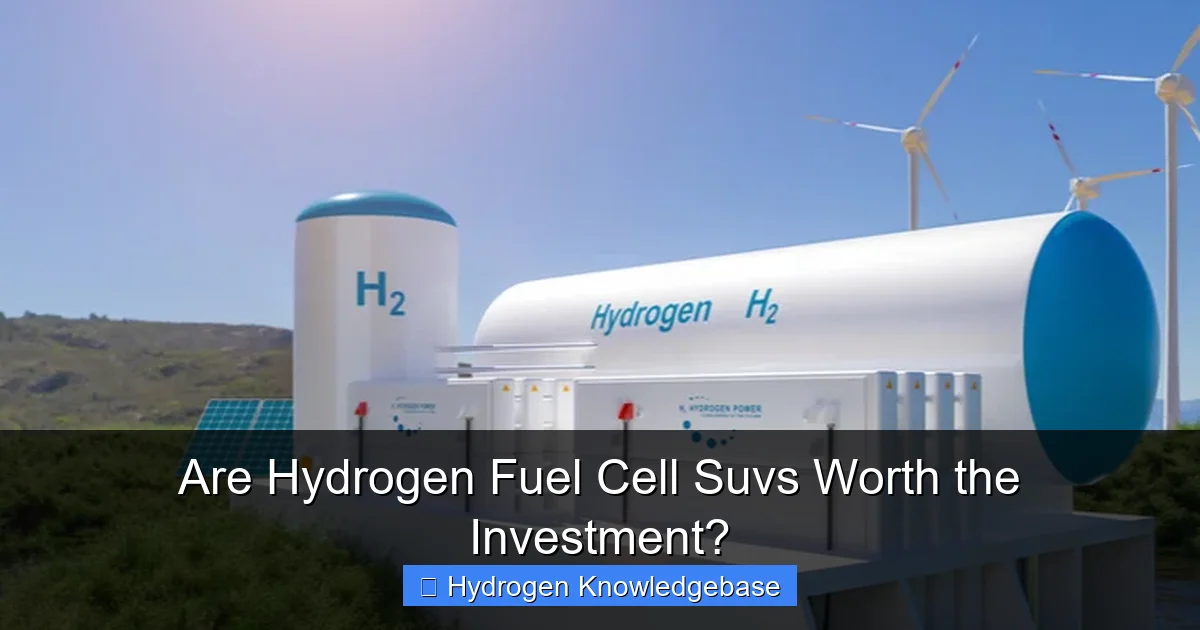
Visual guide about Are Hydrogen Fuel Cell Suvs Worth the Investment?
Image source: investmentu.com
Before diving into whether hydrogen SUVs are worth it, let’s understand how they actually function. At first glance, they might seem like electric vehicles (EVs), and in many ways, they are. Both use electric motors to drive the wheels and produce zero tailpipe emissions. But the way they generate and store electricity is fundamentally different.
The Science Behind the Fuel Cell
Hydrogen fuel cell SUVs rely on a device called a proton exchange membrane (PEM) fuel cell. Here’s how it works in simple terms: hydrogen gas (H₂) is fed into the fuel cell stack from an onboard high-pressure tank. At the same time, oxygen from the air enters the system. Inside the fuel cell, a catalyst—usually platinum—splits the hydrogen atoms into protons and electrons.
The protons pass through a special membrane, while the electrons are forced to travel through an external circuit, creating an electric current. This electricity powers the vehicle’s motor and charges a small battery that assists during acceleration. When the protons and electrons reunite on the other side of the membrane, they combine with oxygen to form water (H₂O), which is the only emission released—just a few drops of clean water vapor.
Hydrogen Storage and Safety
One of the biggest challenges with hydrogen vehicles is storing the fuel safely and efficiently. Hydrogen is the lightest element and highly flammable, so it must be compressed to extremely high pressures—typically 5,000 to 10,000 psi—and stored in reinforced carbon-fiber tanks. These tanks are designed to withstand crashes and leaks, and modern hydrogen SUVs undergo rigorous safety testing.
Despite concerns about explosions (fueled by images of the Hindenburg disaster), hydrogen is actually safer than gasoline in many ways. It’s lighter than air, so it disperses quickly if leaked, reducing the risk of pooling and ignition. Plus, hydrogen vehicles are equipped with multiple safety sensors that shut off the system if a leak is detected.
Comparison to Battery Electric Vehicles
So how do hydrogen SUVs stack up against battery electric vehicles (BEVs) like the Tesla Model Y or Ford Mustang Mach-E? Both are electric, but their energy sources differ.
BEVs store electricity in large lithium-ion batteries and must be recharged from an external power source, which can take anywhere from 30 minutes (at a fast charger) to several hours (at home). Hydrogen SUVs, on the other hand, generate electricity on demand and only need a quick fill-up—similar to gasoline cars.
However, BEVs are far more energy-efficient. Charging a battery and using that energy to power a motor loses only about 10–15% of the original energy. In contrast, producing hydrogen, compressing it, transporting it, and converting it back to electricity in a fuel cell can lose up to 60% of the original energy. That means hydrogen vehicles require more total energy to go the same distance.
Environmental Impact: Clean Driving or Hidden Costs?
One of the biggest selling points for hydrogen fuel cell SUVs is their environmental appeal. They produce zero tailpipe emissions, making them a seemingly perfect solution for reducing air pollution and greenhouse gases. But the full picture is more nuanced.
Zero Tailpipe Emissions
When you drive a hydrogen SUV, the only thing coming out of the exhaust is water vapor. No carbon dioxide (CO₂), no nitrogen oxides (NOx), no particulate matter. For city dwellers concerned about smog and respiratory health, this is a major advantage. In urban areas with poor air quality, hydrogen vehicles can contribute to cleaner air—just like electric cars.
The Source of Hydrogen Matters
Here’s the catch: while the vehicle itself is clean, the environmental impact depends heavily on how the hydrogen is produced. Currently, about 95% of hydrogen is made through a process called steam methane reforming (SMR), which uses natural gas and releases CO₂. This “gray hydrogen” undermines the environmental benefits of fuel cell vehicles.
However, “green hydrogen”—produced using renewable energy like wind or solar to split water via electrolysis—is gaining traction. When hydrogen is made this way, the entire lifecycle becomes nearly carbon-neutral. Some countries, like Germany and Japan, are investing heavily in green hydrogen infrastructure.
In the U.S., California leads the way with incentives for low-carbon hydrogen. The state’s Low Carbon Fuel Standard (LCFS) encourages the use of cleaner hydrogen, and some stations now offer hydrogen made from renewable sources.
Lifecycle Emissions Compared to EVs
When you consider the full lifecycle—from production to disposal—battery electric vehicles still have a lower carbon footprint than hydrogen SUVs, especially if the electricity used to charge them comes from renewables. A 2023 study by the International Council on Clean Transportation (ICCT) found that even with current grid mixes, BEVs emit 60–70% less CO₂ over their lifetime than hydrogen fuel cell vehicles using gray hydrogen.
But if green hydrogen becomes widespread, that gap could shrink. For now, though, hydrogen SUVs are not the cleanest option unless you’re in a region with strong renewable hydrogen production.
Cost Analysis: Upfront Price, Fuel, and Maintenance
Let’s talk money. Are hydrogen fuel cell SUVs worth the investment from a financial standpoint? The short answer: not for most people—yet.
High Purchase Price
Hydrogen SUVs are expensive. Take the Hyundai NEXO, for example. The 2024 model starts at around $60,000, and the Toyota Mirai is similarly priced at about $58,000. That’s significantly more than comparable electric SUVs like the Tesla Model Y (starting around $47,000) or the Ford Mustang Mach-E (around $43,000). Even luxury gas-powered SUVs like the Lexus RX or BMW X5 often cost less.
Why the high price? Fuel cell technology is still in its early stages, with limited production volumes and expensive materials like platinum catalysts. As demand grows and manufacturing scales up, prices may come down—but we’re not there yet.
Fuel Costs: Hydrogen vs. Electricity
Refueling a hydrogen SUV isn’t cheap. As of 2024, hydrogen costs around $16 per kilogram in California, the only state with a significant number of public stations. The Hyundai NEXO has a range of about 380 miles and holds roughly 6 kg of hydrogen, so a full tank costs around $96. That’s about $0.25 per mile.
Compare that to an electric SUV like the Tesla Model Y, which costs about $0.04–$0.06 per mile to charge at home (depending on electricity rates). Even at public fast chargers, the cost rarely exceeds $0.20 per mile. So, hydrogen fuel is currently 3–4 times more expensive per mile than electricity.
Maintenance and Repairs
One advantage hydrogen SUVs share with EVs is lower maintenance. No oil changes, no spark plugs, no exhaust systems. The electric motor and fuel cell have fewer moving parts than internal combustion engines, so wear and tear is reduced.
However, fuel cell systems are complex and not yet widely serviced. If something goes wrong, you’ll likely need to visit a certified dealer, and repairs can be costly. Battery degradation is also a concern over time, though modern fuel cells are designed to last 100,000–150,000 miles with proper care.
Incentives and Rebates
The good news? There are financial incentives that can help offset the cost. In California, buyers of new hydrogen vehicles may qualify for a $5,000 state rebate, plus a federal tax credit of up to $8,000 (as of 2024). Some utility companies also offer additional rebates or free hydrogen for the first few years.
These incentives can make a big difference, especially when combined with low fuel costs during promotional periods. But they’re not guaranteed long-term, and availability varies by state.
Infrastructure and Refueling: The Biggest Hurdle
Even if you’re sold on the technology and can afford the price tag, there’s a major practical issue: where do you fill up?
Scarcity of Hydrogen Stations
As of mid-2024, there are fewer than 100 public hydrogen refueling stations in the United States—and over 70 of them are in California. That means if you live outside the Golden State, your options are extremely limited. In contrast, there are over 150,000 public EV charging stations across the country.
This lack of infrastructure makes hydrogen SUVs impractical for most drivers. You can’t rely on them for road trips or daily commuting unless you live near a station. And even in California, stations can be spaced far apart, especially outside major cities like Los Angeles and San Francisco.
Reliability and Downtime
Another issue is station reliability. Hydrogen pumps are complex and require regular maintenance. It’s not uncommon for stations to be temporarily out of service due to technical issues or supply shortages. Some drivers report arriving at a station only to find it closed or out of hydrogen.
Compare that to EV charging, where even if one station is down, there are usually alternatives nearby. Apps like PlugShare and A Better Routeplanner help EV drivers find available chargers in real time—something that’s still developing for hydrogen.
Home Refueling: A Future Possibility?
Could you refuel at home? In theory, yes—some companies are developing home hydrogen refueling units that use electrolysis to produce hydrogen from water and electricity. But these systems are expensive (often $20,000 or more), require a lot of space, and are not yet commercially available for consumers.
For now, home refueling remains a dream. Most hydrogen SUV owners must rely on public stations, which limits convenience and flexibility.
Real-World Performance and Driving Experience
So, how do hydrogen fuel cell SUVs actually drive? Are they fun, comfortable, and capable?
Smooth and Quiet Operation
Like all electric vehicles, hydrogen SUVs deliver instant torque and smooth acceleration. The Hyundai NEXO, for example, goes from 0 to 60 mph in about 8.5 seconds—not sports car fast, but more than adequate for daily driving. The ride is quiet and refined, with minimal vibration or noise.
The electric motor provides a responsive feel, and regenerative braking helps recover energy during deceleration. Overall, the driving experience is similar to a high-end EV, with a focus on comfort and efficiency.
Range and Refueling Convenience
One of the biggest advantages of hydrogen SUVs is their range. The NEXO offers up to 380 miles on a full tank, and the Toyota Mirai delivers around 400 miles. That’s competitive with many gas-powered SUVs and better than some EVs, especially in cold weather (where battery performance can drop).
And refueling is fast—just 3 to 5 minutes at a hydrogen station. No waiting around for hours like with some EV chargers. For drivers who value time and convenience, this is a major plus.
Cold Weather Performance
Hydrogen vehicles perform well in cold climates. Unlike EVs, which can lose 20–40% of their range in freezing temperatures, hydrogen SUVs maintain consistent performance. The fuel cell generates its own heat, so the cabin warms up quickly, and range isn’t significantly affected.
This makes hydrogen SUVs a strong option for drivers in northern states or mountainous regions where winter range anxiety is a concern for EV owners.
Who Should Consider a Hydrogen Fuel Cell SUV?
Given the high cost, limited infrastructure, and efficiency concerns, hydrogen fuel cell SUVs aren’t for everyone. But they do make sense for certain drivers.
Fleet Operators and Commercial Use
One of the most promising applications for hydrogen vehicles is in fleets. Delivery companies, taxi services, and public transit agencies benefit from fast refueling and long range. For example, the Toyota Sora hydrogen bus is already in use in Japan, and several U.S. cities are testing hydrogen-powered shuttles.
Fleet operators can install private refueling stations, avoiding public infrastructure limitations. And with predictable routes and centralized maintenance, they can maximize efficiency.
Long-Distance Travelers
If you frequently drive long distances—especially in areas with sparse EV charging—hydrogen SUVs could be a viable option. The quick refueling time means less downtime on road trips, and the range rivals that of gasoline vehicles.
However, this only works if you live in or travel through regions with hydrogen stations. Right now, that’s mostly California and parts of Europe.
Early Adopters and Tech Enthusiasts
For some, the appeal isn’t just practical—it’s about being part of the future. If you’re passionate about clean technology and want to support innovation, a hydrogen SUV lets you do that. You’ll be driving a vehicle that represents the next step in sustainable transportation, even if it’s not yet mainstream.
Government and Corporate Fleets
With increasing pressure to reduce emissions, government agencies and corporations are turning to hydrogen as a way to meet sustainability goals. Some cities are replacing diesel buses with hydrogen models, and companies like Amazon and Walmart are testing hydrogen-powered delivery trucks.
These large-scale adoptions help drive demand and improve infrastructure, paving the way for broader consumer use.
The Future of Hydrogen SUVs: What’s Next?
So, is hydrogen the future of clean transportation? It’s too early to say for sure, but the signs are promising—especially for specific applications.
Technological Advancements
Researchers are working to make fuel cells cheaper and more efficient. New catalysts that use less or no platinum could reduce costs. Solid-state hydrogen storage and improved electrolysis methods may make green hydrogen more accessible.
Automakers are also investing heavily. Toyota, Hyundai, and Honda continue to refine their hydrogen models, and General Motors has partnered with Honda to develop next-generation fuel cells. Even luxury brands like BMW and Mercedes are exploring hydrogen options.
Infrastructure Expansion
Governments and private companies are slowly expanding hydrogen infrastructure. The U.S. Department of Energy’s H2@Scale initiative aims to make hydrogen production and distribution more affordable. In Europe, the Hydrogen Strategy for a Climate-Neutral Europe plans to install thousands of refueling stations by 2030.
California is leading the charge in the U.S., with plans to have 200 hydrogen stations by 2025. While progress is slow, the trend is upward.
Competition with EVs and Hybrids
Hydrogen SUVs won’t replace EVs anytime soon. Battery technology is advancing rapidly, with longer ranges, faster charging, and lower prices. Solid-state batteries, expected in the next 5–10 years, could make EVs even more appealing.
But hydrogen has a role to play—especially in heavy-duty transport, aviation, and shipping, where batteries are less practical. For passenger SUVs, the competition is fierce, and hydrogen will need to overcome significant hurdles to gain widespread adoption.
Conclusion: Are Hydrogen Fuel Cell SUVs Worth It?
So, are hydrogen fuel cell SUVs worth the investment? The honest answer is: it depends.
If you live in California, drive long distances, value fast refueling, and can afford the high upfront cost, a hydrogen SUV like the Hyundai NEXO or Toyota Mirai could be a smart, eco-friendly choice. The driving experience is excellent, emissions are zero, and incentives can help offset the price.
But for most drivers—especially those outside California—the limited refueling network, high fuel costs, and lower efficiency make hydrogen SUVs a tough sell compared to electric or hybrid alternatives. Unless you’re a fleet operator, early adopter, or have specific needs, you’re probably better off with a battery EV or plug-in hybrid for now.
Hydrogen technology is still evolving. With continued investment in green hydrogen and infrastructure, fuel cell SUVs could become more viable in the next decade. But as of 2024, they remain a niche option—innovative, promising, but not yet practical for the average consumer.
If you’re curious, take one for a test drive. Experience the quiet power, the quick fill-up, and the futuristic feel. Just be sure to check the map for hydrogen stations before you commit. The future of clean driving is exciting—and hydrogen is part of it. But whether it’s worth your investment today? That’s a decision only you can make.
Frequently Asked Questions
How much does it cost to fuel a hydrogen SUV?
As of 2024, hydrogen costs about $16 per kilogram in California. A full tank for a Hyundai NEXO costs around $96 and provides up to 380 miles of range.
Are hydrogen fuel cell SUVs better for the environment than electric SUVs?
Not necessarily. While both produce zero tailpipe emissions, battery electric SUVs are more energy-efficient overall, especially when charged with renewable electricity.
Can I charge a hydrogen SUV at home?
No. Home hydrogen refueling systems are not yet available for consumers. You must use public stations, which are limited in number.
How long do hydrogen fuel cells last?
Modern fuel cells are designed to last 100,000 to 150,000 miles with proper maintenance, similar to the lifespan of a conventional engine.
Are there tax incentives for buying a hydrogen SUV?
Yes. In the U.S., buyers may qualify for a federal tax credit of up to $8,000 and a California state rebate of $5,000, depending on eligibility.
Will hydrogen SUVs replace electric SUVs?
Unlikely in the near term. While hydrogen has advantages for long-range and heavy-duty use, EVs are more efficient and have far greater infrastructure support.