Hydrogen-powered SUVs offer zero-emission driving and fast refueling, but limited infrastructure and high costs raise concerns. While promising for long-haul and fleet use, they may not yet be the best personal investment in 2025.
Key Takeaways
- Zero tailpipe emissions: Hydrogen SUVs emit only water vapor, making them ideal for eco-conscious drivers.
- Fast refueling times: Refill in 3–5 minutes, similar to gasoline vehicles—much faster than most EVs.
- Limited fueling infrastructure: Fewer than 150 hydrogen stations in the U.S. as of 2024, mostly in California.
- High upfront and fuel costs: Vehicles and hydrogen fuel are significantly more expensive than EVs or gas-powered SUVs.
- Growing government and industry support: Incentives and investments are increasing, especially in Europe and Asia.
- Best suited for specific use cases: Ideal for fleets, long-distance travel, or regions with hydrogen infrastructure.
- Technology still evolving: Efficiency and production methods are improving, but widespread adoption remains years away.
Quick Answers to Common Questions
Are hydrogen-powered SUVs available in 2025?
Yes, but options are limited. The Hyundai NEXO is the only hydrogen SUV widely available in the U.S., primarily in California. Other models are in development but not yet on the market.
How much does it cost to refuel a hydrogen SUV?
Hydrogen fuel costs around $16 per kilogram in California, which is roughly equivalent to $16 per gallon of gasoline. This makes it significantly more expensive than electricity for EVs.
Can I install a hydrogen refueling station at home?
Not currently. Home hydrogen refueling is not practical or safe for most consumers. Public stations are required, and they are scarce outside urban centers.
Do hydrogen SUVs qualify for tax credits?
Yes, in some regions. The U.S. offers federal tax credits for FCEVs, and California provides rebates of up to $15,000 through the Clean Vehicle Rebate Project.
Are hydrogen SUVs safer than gasoline vehicles?
Modern hydrogen SUVs are designed with multiple safety features, including reinforced tanks and automatic shutoff valves. They are considered safe, though public perception lags behind the technology.
📑 Table of Contents
Are Hydrogen-powered SUVs a Good Investment for 2025?
Imagine pulling up to a fueling station, topping off your SUV in under five minutes, and driving 300 miles—all while emitting nothing but clean water vapor. Sounds like the future, right? That’s the promise of hydrogen-powered SUVs. As we head into 2025, these vehicles are gaining attention as a potential alternative to electric and gasoline-powered SUVs. But are they really a smart investment?
Hydrogen fuel cell vehicles (FCEVs) use hydrogen gas to generate electricity on board, powering an electric motor. Unlike battery electric vehicles (BEVs), which rely on large, heavy batteries, FCEVs refuel quickly and offer long range—traits that make them especially appealing for larger vehicles like SUVs. With automakers like Toyota, Hyundai, and Honda leading the charge, and governments pushing for cleaner transportation, hydrogen SUVs are no longer just a sci-fi dream.
But before you start shopping for a hydrogen-powered ride, it’s important to weigh the pros and cons. While the technology is impressive, real-world challenges—like sparse fueling stations, high costs, and energy inefficiencies—could make hydrogen SUVs a tough sell for the average consumer in 2025. This article dives deep into whether hydrogen-powered SUVs are worth your money, time, and environmental goals this year.
How Hydrogen-powered SUVs Work

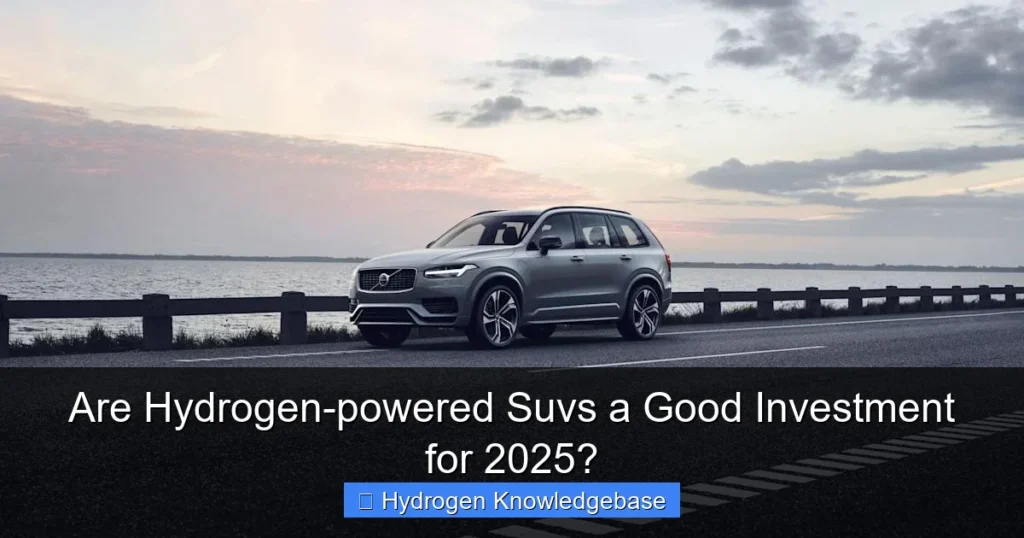
Visual guide about Are Hydrogen-powered Suvs a Good Investment for 2025?
Image source: img-s-msn-com.akamaized.net
To understand whether hydrogen SUVs are a good investment, it helps to know how they actually work. At their core, hydrogen-powered SUVs are electric vehicles—but instead of drawing power from a plug-in battery, they generate electricity using a fuel cell.
The Fuel Cell System
Inside the vehicle, hydrogen gas is stored in high-pressure tanks, typically made of carbon fiber for safety and durability. When you press the accelerator, hydrogen flows into the fuel cell stack, where it reacts with oxygen from the air. This chemical reaction produces electricity, which powers the electric motor. The only byproduct? Water vapor—clean, harmless, and released through the exhaust.
This process is incredibly efficient at converting fuel into motion, especially compared to internal combustion engines, which waste a lot of energy as heat. Fuel cells can convert up to 60% of the energy in hydrogen into usable power, while gasoline engines typically max out around 30%.
Refueling vs. Charging
One of the biggest advantages of hydrogen SUVs is refueling speed. While most electric SUVs take 30 minutes to several hours to recharge—even at fast-charging stations—hydrogen vehicles can be refilled in just 3 to 5 minutes. That’s a game-changer for road trips, busy families, or commercial fleets that can’t afford downtime.
For example, the Hyundai NEXO, one of the few hydrogen SUVs currently available, offers a range of about 380 miles and refuels in under five minutes. Compare that to a Tesla Model Y, which might take 25–30 minutes to charge from 10% to 80% at a Supercharger—and even longer at slower public stations.
Energy Source and Production
Here’s where things get tricky. While the SUV itself emits nothing, the environmental impact depends heavily on how the hydrogen is produced. Currently, about 95% of hydrogen is made from natural gas through a process called steam methane reforming, which releases carbon dioxide. This “gray hydrogen” undermines the green benefits.
However, “green hydrogen”—produced using renewable energy like wind or solar to split water molecules—is growing. Countries like Germany, Japan, and Australia are investing heavily in green hydrogen infrastructure. In 2025, we’re likely to see more green hydrogen entering the market, but it still makes up a small fraction of total production.
So, while hydrogen SUVs are clean at the tailpipe, their overall sustainability depends on the energy mix behind the fuel. For truly eco-friendly driving, you’ll want to ensure your hydrogen comes from renewable sources—something that may not be easy to verify yet.
Pros of Investing in a Hydrogen-powered SUV in 2025
Despite the challenges, hydrogen-powered SUVs offer several compelling benefits that make them worth considering—especially for certain drivers and use cases.
Zero Tailpipe Emissions
The most obvious advantage is environmental. Hydrogen SUVs produce no harmful emissions—no CO2, no nitrogen oxides, no particulate matter. Just pure water vapor. For drivers in cities with strict emissions regulations or those committed to reducing their carbon footprint, this is a major win.
In places like California, where air quality is a top concern, driving a hydrogen SUV can help you meet zero-emission vehicle (ZEV) requirements and even qualify for carpool lane access.
Long Range and Fast Refueling
Range anxiety is a real concern for EV owners, especially on long road trips. Hydrogen SUVs typically offer 300–400 miles per tank—comparable to gas-powered SUVs—and refuel in minutes. This makes them ideal for travelers, salespeople, or families who frequently drive long distances.
Imagine driving from Los Angeles to San Francisco (about 380 miles) and only needing one quick stop to refuel. With current EV charging networks, that same trip might require two or more charging stops, adding an hour or more to your journey.
Quiet and Smooth Driving Experience
Like all electric vehicles, hydrogen SUVs are whisper-quiet and deliver instant torque for smooth, responsive acceleration. The Hyundai NEXO, for example, accelerates from 0 to 60 mph in about 8.5 seconds—respectable for a midsize SUV—and glides silently down the highway.
This quiet operation is not just a luxury; it also reduces noise pollution in urban areas, contributing to a more peaceful environment.
Potential for Government Incentives
In 2025, several governments are offering incentives to encourage hydrogen vehicle adoption. In the U.S., the Inflation Reduction Act includes tax credits for FCEVs, and California offers rebates of up to $15,000 for new hydrogen vehicles through the Clean Vehicle Rebate Project (CVRP).
Additionally, some states provide free or discounted hydrogen fuel for a limited time, helping offset the high cost of refueling. These incentives can significantly reduce the total cost of ownership, especially in the early years.
Ideal for Fleets and Commercial Use
While personal buyers may hesitate, hydrogen SUVs are gaining traction in commercial and government fleets. Delivery companies, taxi services, and public transit agencies value the fast refueling and long range, which minimize downtime and maximize efficiency.
For example, the city of Copenhagen has deployed hydrogen-powered buses and SUVs for municipal use, taking advantage of local hydrogen infrastructure. In 2025, we may see more cities and companies following suit, especially as green hydrogen becomes more available.
Cons of Hydrogen-powered SUVs in 2025
Despite their promise, hydrogen-powered SUVs come with significant drawbacks that could make them a poor investment for many consumers.
Limited Fueling Infrastructure
The biggest hurdle is infrastructure. As of 2024, there are fewer than 150 hydrogen refueling stations in the entire United States—and over 80% are in California. If you live outside the Golden State, finding a place to refuel could be nearly impossible.
Even in California, stations are concentrated in urban areas like Los Angeles and San Francisco. Rural drivers or those who frequently travel out of state will struggle to keep their SUV fueled. Compare that to over 150,000 public EV charging stations across the U.S., and the gap is clear.
High Upfront and Operating Costs
Hydrogen SUVs are expensive. The Hyundai NEXO starts at around $60,000, and the Toyota Mirai (a sedan, but indicative of pricing) is similarly priced. That’s significantly more than comparable electric SUVs like the Tesla Model Y ($50,000+) or the Ford Mustang Mach-E ($45,000+).
Fuel costs are even steeper. Hydrogen currently costs around $16 per kilogram in California. Since one kilogram of hydrogen provides roughly the same energy as one gallon of gasoline, that’s equivalent to paying $16 per gallon of gas. Even with occasional free fuel promotions, long-term costs add up fast.
Energy Inefficiency
Here’s a hard truth: hydrogen is less energy-efficient than batteries. Producing, compressing, transporting, and converting hydrogen into electricity loses a lot of energy along the way. Studies show that only about 30–35% of the original energy from renewable sources makes it to the wheels of a hydrogen vehicle.
In contrast, battery electric vehicles are about 77% efficient—meaning they deliver far more usable energy per kilowatt-hour. For drivers who care about maximizing energy use and minimizing waste, this inefficiency is a major downside.
Limited Vehicle Choices
In 2025, your options are slim. Only a handful of hydrogen SUVs are available, and most are sold in limited quantities. The Hyundai NEXO is the only dedicated hydrogen SUV on the U.S. market, and it’s not even sold in all states.
Other manufacturers, like BMW and General Motors, have announced plans for hydrogen SUVs, but production is still years away. This lack of competition keeps prices high and innovation slow.
Storage and Safety Concerns
Hydrogen is the lightest and most volatile element, which raises safety questions. While modern hydrogen tanks are rigorously tested and designed to withstand crashes, fires, and punctures, public perception lags behind. Many consumers still associate hydrogen with the Hindenburg disaster—even though today’s technology is far safer.
Additionally, hydrogen requires high-pressure storage (up to 10,000 psi), which adds complexity and cost to the vehicle design. This also limits cargo space, as the tanks take up room under the floor or in the trunk.
Hydrogen vs. Electric SUVs: Which Is Better in 2025?
When deciding whether to invest in a hydrogen-powered SUV, it’s essential to compare it directly with battery electric SUVs (BEVs), which are far more common and accessible.
Range and Refueling
Hydrogen SUVs win on refueling speed and range consistency. No matter the weather or battery age, a hydrogen tank delivers the same performance. BEVs, on the other hand, can lose range in cold weather and degrade over time.
However, BEVs are catching up. Newer models like the Lucid Air and Mercedes EQS offer over 400 miles of range, and ultra-fast chargers can add 200 miles in 15 minutes. For most daily driving, this is more than enough.
Cost of Ownership
BEVs are cheaper to buy and operate. Electricity costs far less than hydrogen, and home charging eliminates the need for public stations. Over time, the savings on fuel and maintenance (no oil changes, fewer moving parts) make BEVs a better financial choice for most people.
Hydrogen SUVs may benefit from incentives, but those are often temporary. Once free fuel programs end, the cost gap widens.
Infrastructure and Convenience
This is where BEVs dominate. With charging stations at homes, workplaces, malls, and highways, EV owners rarely worry about running out of juice. Apps like PlugShare make it easy to find and pay for charging.
Hydrogen drivers, by contrast, must plan trips around station locations. A missed turn or closed station could leave you stranded.
Environmental Impact
Both are cleaner than gas vehicles, but BEVs have the edge—especially if charged with renewable energy. Hydrogen’s environmental benefit depends on how it’s made, and green hydrogen is still rare.
In 2025, unless you live in a region with abundant green hydrogen, a BEV is likely the greener choice.
Use Case Matters
For city dwellers with short commutes and home charging, a BEV is ideal. For long-haul drivers, fleet operators, or those in areas with hydrogen infrastructure, a hydrogen SUV might make more sense.
Think of it this way: hydrogen is like a sports car—exciting and powerful, but not practical for everyone. BEVs are like reliable sedans—efficient, affordable, and widely available.
The Future of Hydrogen-powered SUVs
So, are hydrogen-powered SUVs a good investment in 2025? The answer depends on your priorities, location, and driving habits.
Short-Term Outlook (2025–2027)
In the next few years, hydrogen SUVs will remain a niche product. Infrastructure will grow slowly, with most new stations in California, Europe, and parts of Asia. Vehicle availability will stay limited, and costs will remain high.
However, government policies and corporate investments could accelerate adoption. The European Union’s Hydrogen Strategy aims to install 1,000 hydrogen refueling stations by 2030. Japan and South Korea are also pushing hard for hydrogen mobility.
If you’re an early adopter, live in a hydrogen-friendly region, or work in a field that benefits from fast refueling (like logistics or emergency services), a hydrogen SUV could be a smart choice—especially with available incentives.
Long-Term Potential (2030 and Beyond)
Looking further ahead, hydrogen has strong potential—especially for heavy-duty transport. Trucks, buses, and even airplanes may rely on hydrogen because batteries are too heavy and slow to charge.
For SUVs, the future is less certain. As battery technology improves and charging networks expand, BEVs may satisfy most needs. But hydrogen could still play a role in remote areas, extreme climates, or applications where downtime is unacceptable.
Green hydrogen production is also expected to scale up, driven by falling renewable energy costs. By 2030, we could see hydrogen become truly sustainable and cost-competitive.
Tips for Potential Buyers
If you’re considering a hydrogen-powered SUV in 2025, here are a few tips:
- Check local infrastructure: Use apps like H2stations.org to find nearby refueling stations. If there are fewer than three within 100 miles, think twice.
- Calculate total cost of ownership: Include vehicle price, fuel costs, insurance, and maintenance. Compare with a comparable BEV.
- Look for incentives: Research federal, state, and local rebates. California offers the most generous programs.
- Consider your driving patterns: If you drive long distances frequently, hydrogen’s fast refueling could be a major advantage.
- Rent or lease first: Try a hydrogen SUV through a short-term rental or lease program to test it in real-world conditions.
Conclusion
Hydrogen-powered SUVs are an exciting piece of the clean transportation puzzle. They offer zero emissions, long range, and lightning-fast refueling—qualities that make them stand out in a crowded market. For the right driver, in the right location, they could be a worthwhile investment in 2025.
But for most people, the high costs, limited infrastructure, and energy inefficiencies make them a risky bet. Battery electric SUVs are more practical, affordable, and accessible today. As technology evolves, hydrogen may find its place—especially in commercial and heavy-duty applications—but for personal use, BEVs still lead the pack.
If you’re passionate about innovation and live in a hydrogen-friendly area, go ahead and explore your options. But if you’re looking for a reliable, cost-effective, and eco-friendly SUV, a battery electric model is likely the smarter choice—at least for now.
The future of hydrogen is bright, but it’s still unfolding. In 2025, it’s not yet the mainstream solution—but it’s definitely one to watch.
Frequently Asked Questions
How far can a hydrogen-powered SUV go on a full tank?
Most hydrogen SUVs offer a range of 300 to 400 miles, similar to gasoline vehicles. The Hyundai NEXO, for example, has an EPA-estimated range of 380 miles.
Is hydrogen fuel renewable?
It can be. “Green hydrogen” is produced using renewable energy to split water molecules and is fully sustainable. However, most hydrogen today is made from natural gas and is not renewable.
Can hydrogen SUVs be charged at home?
No. Unlike electric vehicles, hydrogen SUVs cannot be charged at home. They require specialized high-pressure refueling stations, which are not available for residential use.
Are hydrogen SUVs more expensive to maintain?
Maintenance costs are generally lower than gasoline vehicles due to fewer moving parts, but repairs can be costly due to specialized components. Fuel cell replacements are particularly expensive.
Will hydrogen SUVs replace electric SUVs?
Unlikely in the near term. While hydrogen has advantages for specific uses, electric SUVs are more efficient, cheaper to operate, and supported by a growing charging network.
Where can I buy a hydrogen-powered SUV?
Currently, the Hyundai NEXO is sold in select dealerships in California. Availability is limited, and most buyers must order the vehicle directly from the manufacturer.