Hydrogen-powered vehicles offer zero-emission driving with fast refueling and long range, but face challenges in infrastructure, cost, and production efficiency. While promising for heavy transport and long-haul travel, widespread adoption depends on scaling green hydrogen and building refueling networks.
Key Takeaways
- Zero Tailpipe Emissions: Hydrogen vehicles emit only water vapor, making them environmentally friendly during operation.
- Fast Refueling: Unlike electric vehicles, hydrogen cars can be refueled in 3–5 minutes, similar to gasoline vehicles.
- Long Driving Range: Most hydrogen vehicles offer ranges of 300–400 miles per tank, ideal for long-distance travel.
- Infrastructure Challenges: Limited hydrogen refueling stations restrict current usability, especially outside urban centers.
- High Production Costs: Most hydrogen today is produced from natural gas, which undermines environmental benefits unless “green hydrogen” scales up.
- Best Suited for Heavy Transport: Trucks, buses, and trains benefit more from hydrogen than passenger cars due to energy density and refueling needs.
- Government Support Growing: Countries like Japan, Germany, and South Korea are investing heavily in hydrogen infrastructure and technology.
Quick Answers to Common Questions
What is a hydrogen-powered vehicle?
A hydrogen-powered vehicle uses a fuel cell to convert hydrogen gas into electricity, which powers an electric motor. The only emission is water vapor.
How long does it take to refuel a hydrogen car?
Refueling a hydrogen car takes about 3 to 5 minutes, similar to filling up a gasoline vehicle.
Are hydrogen cars safe?
Yes, hydrogen cars are designed with high-strength tanks and safety systems. Hydrogen disperses quickly if leaked, reducing fire risk.
Where can I refuel a hydrogen vehicle?
Currently, most hydrogen stations are in California, with limited networks in Europe and Asia. Infrastructure is still developing.
Is hydrogen better than electric for trucks?
Hydrogen may be better for long-haul trucks due to its high energy density and fast refueling, unlike heavy, slow-charging batteries.
📑 Table of Contents
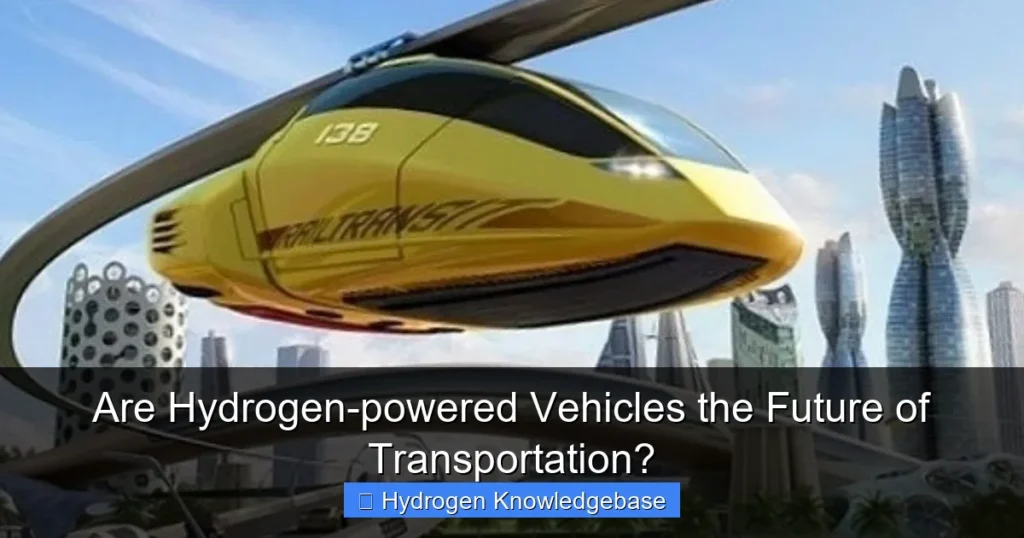
- Are Hydrogen-powered Vehicles the Future of Transportation?
- How Do Hydrogen-Powered Vehicles Work?
- Environmental Impact: Clean Driving, But What About Production?
- Hydrogen vs. Electric Vehicles: Which Is Better?
- Real-World Examples of Hydrogen Vehicles in Action
- Challenges to Widespread Adoption
- The Road Ahead: Can Hydrogen Win?
- Conclusion: A Piece of the Puzzle
Are Hydrogen-powered Vehicles the Future of Transportation?
Imagine driving a car that runs on clean energy, refuels in minutes, and leaves nothing behind but water vapor. Sounds like science fiction, right? But it’s not. Hydrogen-powered vehicles are real, and they’re already on the road in select markets around the world. From sleek sedans to massive freight trucks, hydrogen fuel cell technology is quietly gaining momentum as a potential game-changer in the quest for sustainable transportation.
But here’s the big question: Are hydrogen-powered vehicles truly the future of transportation? Or are they just a niche solution overshadowed by the rapid rise of battery electric vehicles (EVs)? The answer isn’t black and white. While EVs dominate headlines and sales charts today, hydrogen offers unique advantages—especially for certain types of vehicles and use cases. However, it also faces serious hurdles, from production methods to infrastructure gaps.
In this article, we’ll dive deep into the world of hydrogen-powered vehicles. We’ll explore how they work, where they shine, and why they’re not yet mainstream. We’ll also look at real-world examples, compare them to electric vehicles, and examine whether hydrogen could one day power the majority of our cars, trucks, and even trains.
How Do Hydrogen-Powered Vehicles Work?
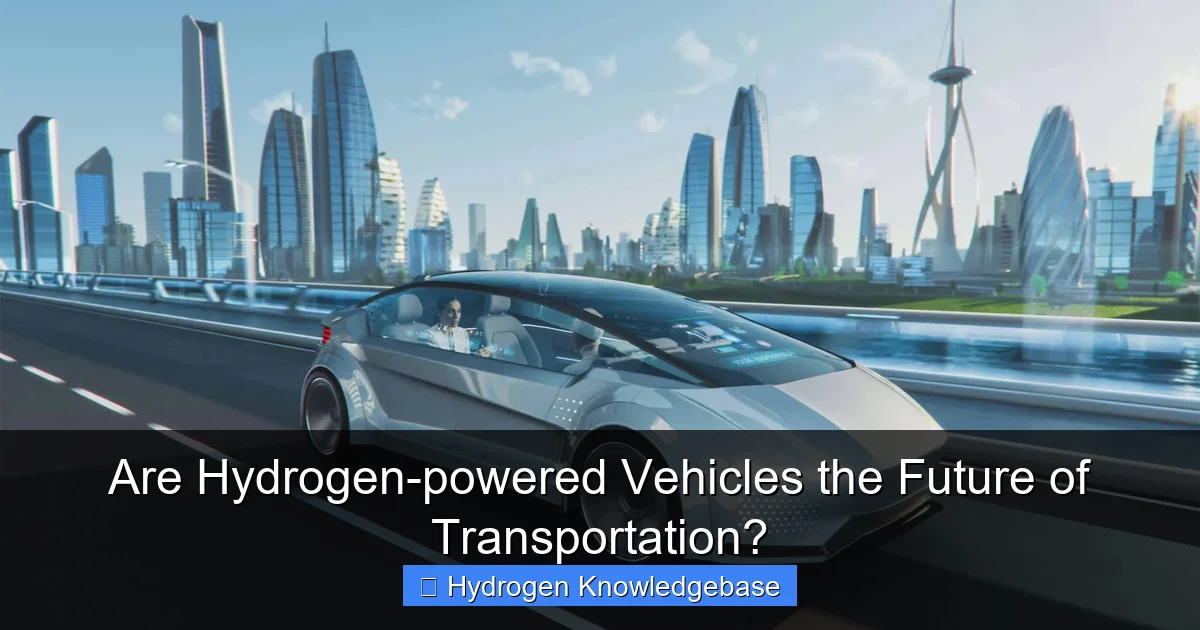
Visual guide about Are Hydrogen-powered Vehicles the Future of Transportation?
Image source: latinbusinesstoday.com
At first glance, hydrogen vehicles might seem like magic. But the science behind them is both elegant and well-understood. These vehicles use a device called a fuel cell to convert hydrogen gas into electricity, which then powers an electric motor—just like in a battery EV. The key difference? Instead of storing electricity in a large battery, hydrogen vehicles generate it on demand.
The Fuel Cell: The Heart of the System
The fuel cell stack is the core component of a hydrogen-powered vehicle. It’s made up of multiple individual fuel cells layered together, each containing an anode, a cathode, and an electrolyte membrane. When hydrogen gas is fed into the anode, it splits into protons and electrons. The protons pass through the membrane to the cathode, while the electrons are forced to travel through an external circuit—creating an electric current that powers the car’s motor.
Meanwhile, oxygen from the air enters the cathode and combines with the protons and electrons to form water—the only byproduct. That’s right: the exhaust from a hydrogen car is literally clean water. No carbon dioxide, no nitrogen oxides, no particulate matter. Just H₂O.
Hydrogen Storage: Safe and Efficient
One of the biggest concerns people have about hydrogen vehicles is safety. After all, hydrogen is highly flammable. But modern hydrogen cars are designed with safety as a top priority. The hydrogen is stored in high-strength carbon fiber tanks that can withstand extreme pressure—typically around 10,000 psi. These tanks are rigorously tested for impact, fire, and puncture resistance.
For example, the Toyota Mirai, one of the most popular hydrogen cars, has undergone crash tests and fire simulations to ensure the tanks remain intact even in severe accidents. Plus, hydrogen is lighter than air, so if it does leak, it quickly disperses upward—unlike gasoline fumes, which pool near the ground.
Refueling: Quick and Convenient
One of the biggest advantages of hydrogen vehicles is refueling time. While a typical EV might take 30 minutes to an hour to fast-charge, a hydrogen car can be refueled in just 3 to 5 minutes—about the same as filling up a gas tank. This makes hydrogen especially appealing for drivers who need to get back on the road quickly, such as taxi drivers, delivery fleets, or long-haul truckers.
Refueling is also simple. Drivers pull up to a hydrogen pump, connect a nozzle to the car’s fuel port, and the system automatically fills the tank. No need to wait, no need to monitor charging levels. Just fill and go.
Environmental Impact: Clean Driving, But What About Production?
On the road, hydrogen vehicles are undeniably clean. But the environmental story doesn’t end there. The real question is: Where does the hydrogen come from? And how is it made?
Grey, Blue, and Green Hydrogen: What’s the Difference?
Not all hydrogen is created equal. The color labels—grey, blue, and green—refer to the method used to produce it.
– Grey hydrogen is made by reforming natural gas (methane) using steam. This process releases carbon dioxide, making it far from clean. Currently, about 95% of the world’s hydrogen is grey.
– Blue hydrogen also uses natural gas, but the CO₂ emissions are captured and stored (or reused) through carbon capture and storage (CCS) technology. It’s cleaner than grey, but not entirely emission-free.
– Green hydrogen is produced by splitting water into hydrogen and oxygen using renewable electricity—like solar or wind power. This method emits no greenhouse gases and is considered the gold standard for sustainable hydrogen.
For hydrogen vehicles to truly be “green,” they need green hydrogen. Without it, the environmental benefits are significantly reduced.
The Lifecycle Emissions Challenge
Even with green hydrogen, there are energy losses at every stage: producing the hydrogen, compressing it, transporting it, and converting it back to electricity in the fuel cell. Studies show that hydrogen vehicles are currently less energy-efficient than battery EVs—often by a factor of two or more. That means more renewable energy is needed to power a hydrogen car than an electric one.
However, this efficiency gap narrows when considering heavy-duty applications. For large trucks or buses, the weight and charging time of batteries become major drawbacks. Hydrogen’s high energy density makes it a better fit for these vehicles, even with lower overall efficiency.
Hydrogen vs. Electric Vehicles: Which Is Better?
The debate between hydrogen and electric vehicles is heating up. Both aim to reduce emissions and dependence on fossil fuels, but they take different paths. So, which one is the better choice?
Refueling Time and Range
Hydrogen vehicles clearly win in terms of refueling speed and range. A Toyota Mirai can travel up to 400 miles on a single tank and refuel in minutes. Most EVs, even with fast charging, take longer and may require multiple stops on long trips.
But EVs are catching up. Newer models like the Tesla Model S and Lucid Air offer ranges over 400 miles, and ultra-fast chargers can add 200 miles of range in 15 minutes. Still, hydrogen remains faster for full refueling.
Infrastructure and Accessibility
This is where EVs have a massive advantage. There are over 100,000 public charging stations in the U.S. alone, and millions more private chargers in homes and workplaces. In contrast, there are fewer than 100 hydrogen refueling stations nationwide—most of them in California.
Building a hydrogen network is expensive. Each station can cost $1–2 million to build, compared to $50,000–$100,000 for a fast EV charger. Plus, hydrogen requires specialized delivery and storage, which adds complexity.
Cost and Affordability
Hydrogen vehicles are still very expensive. The Toyota Mirai starts around $50,000, and the Honda Clarity Fuel Cell (now discontinued) was similarly priced. In contrast, many EVs are now available under $40,000, with tax incentives bringing the effective price even lower.
Hydrogen fuel is also costly—around $16 per kilogram, which is roughly equivalent to a gallon of gasoline. With a Mirai getting about 70 miles per kilogram, that’s over $0.20 per mile in fuel costs. EVs, on the other hand, cost about $0.04–$0.06 per mile to charge at home.
Use Case: Passenger Cars vs. Heavy Transport
For everyday drivers, EVs are currently the more practical choice. They’re cheaper, easier to charge, and supported by a growing network. But for heavy-duty applications—like long-haul trucks, buses, and trains—hydrogen has a strong case.
Trucks need to carry heavy loads over long distances without frequent stops. Batteries are too heavy and take too long to charge. Hydrogen, with its high energy density and quick refueling, is a better fit. Companies like Hyundai, Toyota, and Nikola are already testing hydrogen-powered trucks in real-world logistics operations.
Real-World Examples of Hydrogen Vehicles in Action
Hydrogen vehicles aren’t just概念—they’re already on the road. Here are some real-world examples showing how they’re being used today.
Toyota Mirai: Leading the Passenger Market
The Toyota Mirai is the most well-known hydrogen car. First launched in 2014, it’s now in its second generation with improved range, efficiency, and design. It’s available in the U.S., Japan, and parts of Europe, primarily in regions with hydrogen infrastructure.
Toyota has also partnered with companies like Amazon and UPS to test hydrogen-powered delivery vans. These pilot programs help gather data on performance, maintenance, and real-world usability.
Hyundai NEXO: A Rival to the Mirai
Hyundai’s NEXO is another hydrogen-powered SUV that competes directly with the Mirai. It offers a range of over 380 miles and advanced driver-assistance features. Hyundai is also investing heavily in hydrogen trucks, with its XCIENT Fuel Cell trucks already operating in Switzerland and California.
Hydrogen Buses and Trains
Cities like London, Berlin, and Shanghai are testing hydrogen-powered buses. These vehicles can run all day on a single tank and emit zero pollutants—making them ideal for urban environments.
In Germany, hydrogen trains (like the Coradia iLint by Alstom) are already in service on non-electrified rail lines. They offer a clean alternative to diesel trains and can travel up to 600 miles on one tank.
Nikola and the Future of Hydrogen Trucks
Nikola Motor Company is building hydrogen-powered semi-trucks designed for long-haul freight. Their Nikola Tre and Two models aim to compete with diesel trucks while offering zero emissions. While the company has faced challenges, it continues to partner with logistics firms to deploy test fleets.
Challenges to Widespread Adoption
Despite the promise, hydrogen vehicles face several major obstacles that must be overcome before they can go mainstream.
Limited Refueling Infrastructure
The biggest barrier is infrastructure. Without a network of hydrogen stations, consumers won’t buy the cars. Building this network requires massive investment and coordination between governments, energy companies, and automakers.
California is the only U.S. state with a significant number of stations, and even there, coverage is sparse outside major cities. In Europe and Asia, countries like Germany, Japan, and South Korea are making progress, but global adoption remains slow.
High Production and Distribution Costs
Producing green hydrogen is expensive. Electrolyzers—the machines that split water into hydrogen and oxygen—are still costly and energy-intensive. Scaling up renewable energy to power them will take time and investment.
Transporting hydrogen is also tricky. It’s a small, light molecule that can leak through pipes and requires high pressure or cryogenic temperatures for storage. Building a hydrogen pipeline network or tanker fleet is a long-term project.
Competition from Battery EVs
Battery electric vehicles are advancing rapidly. Costs are falling, ranges are increasing, and charging networks are expanding. Many consumers and policymakers see EVs as the faster, more practical path to decarbonization.
For passenger cars, the momentum is clearly with EVs. Hydrogen may never catch up in this segment unless costs drop dramatically and infrastructure improves.
Public Awareness and Perception
Most people have never seen a hydrogen car, let alone driven one. There’s also lingering fear about safety, despite the robust engineering. Educating the public and building trust will be essential for adoption.
The Road Ahead: Can Hydrogen Win?
So, are hydrogen-powered vehicles the future of transportation? The answer is: it depends.
For passenger cars, the future still belongs to battery EVs—at least in the near to medium term. They’re cheaper, more efficient, and better supported by infrastructure. But for heavy transport, aviation, shipping, and industrial applications, hydrogen has a strong role to play.
Governments are starting to take notice. The U.S. Department of Energy has launched the “Hydrogen Shot” initiative, aiming to reduce the cost of clean hydrogen to $1 per kilogram within a decade. The European Union has a comprehensive hydrogen strategy, and Japan has long been a leader in fuel cell technology.
Private companies are also investing. Shell, BP, and TotalEnergies are building hydrogen refueling networks. Automakers like Toyota, Hyundai, and BMW are continuing development, even if progress is slow.
The key to hydrogen’s success will be scaling green hydrogen production and building a reliable distribution system. If that happens, hydrogen could become a vital part of a diversified clean energy future—not as a replacement for EVs, but as a complement.
Conclusion: A Piece of the Puzzle
Hydrogen-powered vehicles are not a silver bullet, but they are a promising piece of the transportation puzzle. They offer fast refueling, long range, and zero emissions—qualities that make them ideal for certain applications, especially in heavy-duty and long-haul sectors.
However, challenges in infrastructure, cost, and production efficiency mean they won’t replace battery EVs anytime soon. Instead, the future of transportation will likely be a mix: EVs for daily driving, hydrogen for trucks and buses, and renewable energy powering it all.
The journey toward clean transportation is complex, and no single technology will solve it alone. But with continued innovation, investment, and collaboration, hydrogen could play a crucial role in building a cleaner, greener future on the road.
Frequently Asked Questions
How efficient are hydrogen-powered vehicles compared to electric vehicles?
Hydrogen vehicles are less energy-efficient than battery EVs because of energy losses in production, compression, and conversion. EVs typically use 3–4 times less energy per mile.
Can I produce hydrogen at home to fuel my car?
While small-scale electrolyzers exist, producing enough hydrogen at home for a car is impractical and expensive. Most hydrogen is produced at industrial facilities.
Why aren’t hydrogen cars more popular?
Limited refueling stations, high vehicle and fuel costs, and competition from EVs have slowed adoption. Infrastructure and affordability are the main barriers.
Will hydrogen vehicles ever be as common as electric cars?
Unlikely for passenger cars, but hydrogen could become common in trucks, buses, and trains where battery technology falls short.
What countries are leading in hydrogen vehicle development?
Japan, South Korea, Germany, and the U.S. (especially California) are leading in hydrogen technology, infrastructure, and policy support.
Is green hydrogen available today?
Green hydrogen is being produced in pilot projects and small-scale facilities, but it’s not yet widely available or cost-competitive with grey hydrogen.