Hydrogen SUVs and electric cars each offer unique advantages, but reliability depends on infrastructure, technology maturity, and usage patterns. While hydrogen vehicles boast quick refueling and long range, electric cars currently lead in reliability, maintenance, and widespread support.
Key Takeaways
- Electric cars are more reliable today: With fewer moving parts and mature technology, EVs generally require less maintenance and have proven long-term durability.
- Hydrogen SUVs face infrastructure challenges: Limited refueling stations and high production costs make hydrogen vehicles less practical for most drivers.
- Refueling speed favors hydrogen: Hydrogen SUVs can refuel in under 10 minutes, similar to gasoline vehicles, while EVs take longer even with fast charging.
- Environmental impact varies: EVs charged with renewable energy are cleaner, but hydrogen’s footprint depends on how the hydrogen is produced.
- Maintenance costs are lower for EVs: Electric motors have fewer components than hydrogen fuel cells, reducing the risk of mechanical failure.
- Technology is still evolving for hydrogen: While promising, hydrogen fuel cell systems are less proven over time compared to EV batteries.
- Consumer adoption favors electric: With more models, better range, and growing charging networks, EVs are the more reliable choice for most buyers today.
Quick Answers to Common Questions
Are hydrogen SUVs more reliable than electric cars?
No, electric cars are currently more reliable due to simpler design, lower maintenance, and proven long-term performance.
How long does it take to refuel a hydrogen SUV?
Hydrogen SUVs can refuel in 5–10 minutes, similar to gasoline vehicles.
Do electric cars require a lot of maintenance?
No, EVs have fewer moving parts and require less maintenance than gasoline or hydrogen vehicles.
Are hydrogen stations widely available?
No, hydrogen stations are rare, with most located in California, Japan, and parts of Europe.
Which is cheaper to operate: an EV or a hydrogen SUV?
Electric cars are significantly cheaper to operate, with lower fuel and maintenance costs.
📑 Table of Contents
- Are Hydrogen SUVs More Reliable Than Electric Cars?
- Understanding the Technology: How Hydrogen and Electric Vehicles Work
- Reliability in Practice: Maintenance and Longevity
- Infrastructure and Practicality: The Hidden Factor in Reliability
- Environmental Impact and Sustainability
- The Future: Can Hydrogen Catch Up?
- Conclusion: Which Is More Reliable?
Are Hydrogen SUVs More Reliable Than Electric Cars?
Imagine pulling up to a fueling station, topping off your vehicle in under five minutes, and driving 300 miles—no waiting, no range anxiety. That’s the promise of hydrogen-powered SUVs. But is that promise matched by real-world reliability? On the other hand, electric cars have surged in popularity, praised for their simplicity, low running costs, and environmental benefits. So, when it comes to reliability—how consistently a vehicle performs over time with minimal breakdowns or maintenance—which technology comes out on top?
The debate between hydrogen SUVs and electric cars isn’t just about fuel type. It’s about engineering, infrastructure, long-term durability, and real-world usability. While both aim to reduce emissions and move us away from fossil fuels, they take very different paths. Electric vehicles (EVs) run on batteries charged from the grid, while hydrogen SUVs use fuel cells that convert hydrogen gas into electricity to power the motor. Each has strengths, but reliability—how dependable and trouble-free a vehicle is over years of use—depends on more than just the power source.
In this article, we’ll dive deep into the reliability of hydrogen SUVs versus electric cars. We’ll look at maintenance needs, technology maturity, real-world performance, and the practical challenges each faces. Whether you’re considering your next vehicle purchase or just curious about the future of green transportation, this comparison will help you understand which option offers the most dependable ride.
Understanding the Technology: How Hydrogen and Electric Vehicles Work
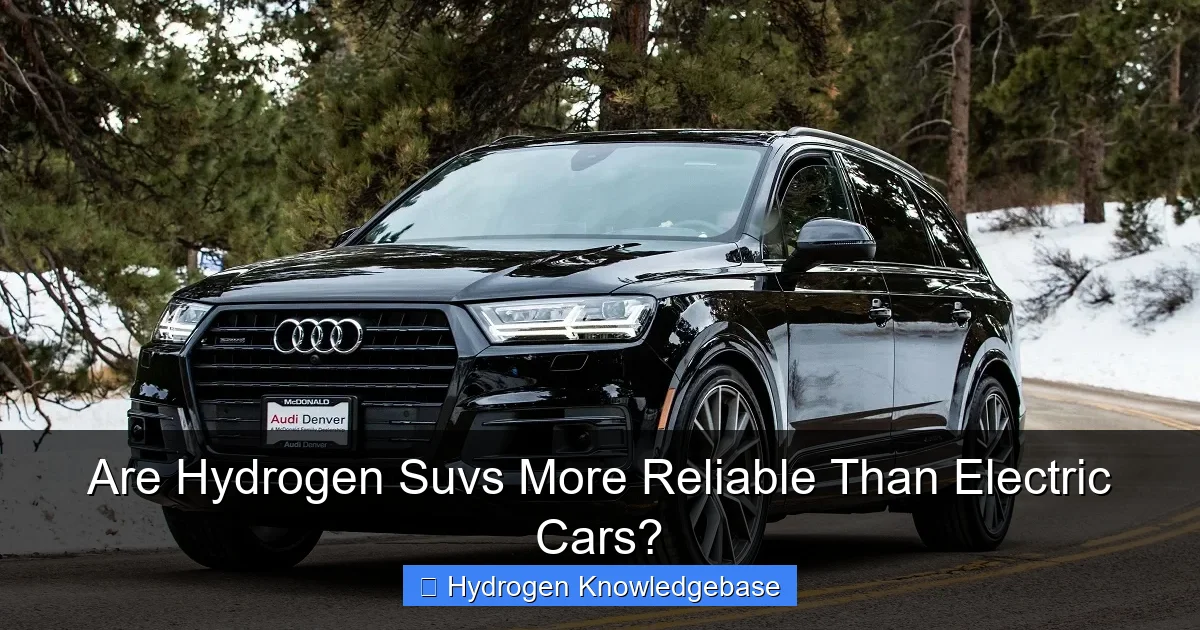
Visual guide about Are Hydrogen Suvs More Reliable Than Electric Cars?
Image source: motorbiscuit.com
To judge reliability, we first need to understand how these vehicles operate. Let’s break down the core technologies behind hydrogen SUVs and electric cars.
Electric Cars: Simplicity at the Core
Electric cars are powered by rechargeable lithium-ion batteries that store electricity. When you press the accelerator, the battery sends power to an electric motor, which turns the wheels. There’s no engine, no exhaust, and no complex transmission. This simplicity is a major factor in their reliability.
EVs have far fewer moving parts than traditional gasoline or hydrogen vehicles. For example, an internal combustion engine has hundreds of components that can wear out—pistons, valves, timing belts, and more. In contrast, an electric motor has one main moving part: the rotor. Fewer parts mean fewer things can go wrong.
Charging an EV can be done at home using a standard outlet or a dedicated Level 2 charger, or at public fast-charging stations. While charging times vary, newer models like the Tesla Model 3 or Hyundai Ioniq 5 can recharge from 10% to 80% in under 30 minutes using ultra-fast chargers.
Hydrogen SUVs: The Fuel Cell Advantage
Hydrogen SUVs, like the Toyota Mirai or Hyundai NEXO, use a different approach. They store compressed hydrogen gas in high-pressure tanks. When you drive, the hydrogen flows into a fuel cell stack, where it reacts with oxygen from the air to produce electricity. This electricity powers the motor, and the only byproduct is water vapor.
The fuel cell system is more complex than a battery. It includes pumps, valves, humidifiers, and sensors to manage the chemical reaction. While this allows for quick refueling—similar to gasoline—it also introduces more potential points of failure.
Refueling a hydrogen SUV takes about 5 to 10 minutes at a hydrogen station, which is a major advantage over most EVs. However, hydrogen stations are rare, especially outside of California, Japan, and parts of Europe. This limits the practicality of hydrogen vehicles for many drivers.
Key Differences in Design and Operation
The fundamental difference lies in energy storage and conversion. EVs store energy chemically in batteries and release it as electricity. Hydrogen SUVs store energy as gas and convert it to electricity on demand.
This affects reliability in several ways. Batteries degrade over time, especially with frequent fast charging or extreme temperatures. However, modern EV batteries are designed to last 10–15 years or more, and many manufacturers offer 8-year warranties.
Hydrogen fuel cells also degrade, but the process is less understood because the technology is newer. Components like the membrane inside the fuel cell can wear out, and contaminants in the hydrogen supply can damage the system. Plus, the high-pressure tanks and valves require regular inspection to ensure safety.
In short, electric cars benefit from simpler, more proven technology. Hydrogen SUVs offer faster refueling but come with more complex systems that are still being refined.
Reliability in Practice: Maintenance and Longevity
When it comes to reliability, real-world performance matters more than theoretical advantages. Let’s look at how hydrogen SUVs and electric cars stack up in terms of maintenance, longevity, and common issues.
Maintenance Needs: EVs Win on Simplicity
One of the biggest advantages of electric cars is low maintenance. There’s no oil to change, no spark plugs to replace, and no exhaust system to worry about. Brake wear is also reduced thanks to regenerative braking, which uses the motor to slow the car and recharge the battery.
Most EV owners report spending significantly less on maintenance than gasoline car owners. According to a 2022 study by Consumer Reports, EV owners spend about half as much on maintenance and repairs over the life of the vehicle.
Common EV maintenance includes tire rotations, cabin air filter replacements, and occasional brake fluid checks. Battery health is monitored by the car’s software, and most manufacturers provide long-term warranties.
Hydrogen SUV Maintenance: More Complex, Less Proven
Hydrogen SUVs require more maintenance due to their complex fuel cell systems. The fuel cell stack, hydrogen tanks, and associated plumbing need regular inspection. Moisture management is critical—too much or too little humidity can damage the fuel cell.
Additionally, hydrogen systems are sensitive to impurities. If the hydrogen fuel isn’t pure, it can contaminate the fuel cell and reduce efficiency or cause failure. This means hydrogen stations must maintain strict quality control, which isn’t always guaranteed.
There’s also the issue of cold weather performance. Hydrogen fuel cells can struggle in freezing temperatures, requiring pre-heating systems that add complexity. In contrast, modern EVs handle cold weather better, especially with heat pump technology.
Longevity and Real-World Data
Electric cars have been on the road in large numbers since the early 2010s. Models like the Nissan Leaf and Tesla Model S have proven their durability. Many high-mileage EVs still retain 80–90% of their original battery capacity after 100,000 miles.
Hydrogen vehicles, on the other hand, are still relatively new. The Toyota Mirai, for example, was first sold in 2015. While early reports are positive, there’s limited long-term data on fuel cell degradation or tank integrity over decades of use.
In fleet testing, hydrogen vehicles have shown promise, but consumer adoption remains low. Without widespread use, it’s hard to assess true reliability over time.
Warranty and Support
Most EV manufacturers offer strong warranties. Tesla, for instance, provides an 8-year battery and drive unit warranty. Hyundai and Kia offer 10-year/100,000-mile warranties on their EV batteries.
Hydrogen vehicles often come with similar warranties, but the support network is thinner. Fewer dealerships are trained to service fuel cell systems, and replacement parts can be expensive and hard to find.
In summary, electric cars currently have the edge in reliability due to simpler design, lower maintenance, and proven longevity. Hydrogen SUVs are improving but still face challenges in complexity and real-world durability.
Infrastructure and Practicality: The Hidden Factor in Reliability
Reliability isn’t just about the vehicle—it’s also about how easy it is to keep it running. Infrastructure plays a huge role in this. A car is only as reliable as the support system behind it.
Charging vs. Refueling: Accessibility Matters
Electric cars benefit from a rapidly growing charging network. In the U.S. alone, there are over 150,000 public charging ports, with thousands more added each year. Home charging is also convenient—most EV owners charge overnight in their garage or driveway.
Fast-charging networks like Tesla Superchargers, Electrify America, and EVgo allow long-distance travel with minimal downtime. While charging still takes longer than refueling, the gap is narrowing.
Hydrogen refueling, by contrast, is extremely limited. As of 2024, there are fewer than 100 hydrogen stations in the entire United States, and nearly all are in California. This makes hydrogen SUVs impractical for most drivers, especially outside urban areas.
Even in California, hydrogen stations can be unreliable. Some have been known to run out of fuel or experience technical issues. A 2023 report by the California Fuel Cell Partnership found that station uptime averaged around 85%, meaning one in six stations was out of service at any given time.
Cost of Ownership and Fuel
Electricity is generally cheaper than hydrogen. The average cost to drive an EV 100 miles is about $4–$6, depending on local electricity rates. Hydrogen, however, costs around $12–$16 per kilogram, and most SUVs use about 1 kg per 60–70 miles. That means a 300-mile trip could cost $60 or more.
Hydrogen is also expensive to produce. Most hydrogen today is made from natural gas, a process that emits carbon. “Green hydrogen,” produced using renewable energy, is cleaner but far more costly and not widely available.
EVs, especially when charged with solar or wind power, have a much lower carbon footprint. Even when charged from the grid, they’re typically cleaner than gasoline or hydrogen vehicles.
Resale Value and Market Confidence
Reliability also affects resale value. EVs like the Tesla Model 3 and Chevrolet Bolt hold their value well, thanks to strong demand and proven performance. Battery degradation is a concern, but modern EVs are designed to minimize it.
Hydrogen SUVs, however, have limited resale markets. Few used hydrogen vehicles are available, and buyers are hesitant due to infrastructure concerns. This lack of market confidence can make hydrogen vehicles a riskier long-term investment.
In practical terms, infrastructure and cost make electric cars the more reliable choice for most people. You can charge at home, find public chargers almost anywhere, and enjoy lower running costs. Hydrogen SUVs, while impressive in theory, are held back by real-world limitations.
Environmental Impact and Sustainability
Reliability isn’t just mechanical—it’s also environmental. A truly reliable vehicle should be sustainable over its lifetime, from production to disposal.
Carbon Footprint: EVs Have the Edge
Electric cars produce zero tailpipe emissions. Even when charged from a grid that uses fossil fuels, they’re generally cleaner than gasoline or hydrogen vehicles. Studies show that over their lifetime, EVs emit 50–70% less CO2 than comparable gasoline cars.
When charged with renewable energy, EVs are nearly carbon-neutral. Home solar panels can power an EV with minimal environmental impact.
Hydrogen’s footprint depends on how it’s made. “Grey hydrogen,” produced from natural gas, emits significant CO2. “Blue hydrogen” captures some of that carbon, but it’s not widely used. Only “green hydrogen,” made with renewable energy, is truly clean—but it accounts for less than 1% of global hydrogen production.
Resource Use and Recycling
EV batteries use materials like lithium, cobalt, and nickel, which raise environmental and ethical concerns. However, recycling programs are improving, and new battery technologies aim to reduce reliance on rare materials.
Hydrogen production requires large amounts of energy and water. Electrolysis, the process of splitting water into hydrogen and oxygen, is energy-intensive. Plus, fuel cells use platinum, a rare and expensive metal.
Both technologies have sustainability challenges, but EVs currently have a clearer path to improvement. Battery recycling is advancing, and renewable charging is becoming more common. Hydrogen needs breakthroughs in production and infrastructure to become truly sustainable.
Long-Term Viability
For a vehicle to be reliable in the long term, the technology must be viable. EVs are already mainstream, with major automakers investing billions in new models and battery factories. Charging networks are expanding globally.
Hydrogen, while promising for heavy transport and industrial use, remains niche for passenger vehicles. Without major investment and policy support, it may never achieve the scale needed to compete with EVs.
In terms of environmental reliability—how consistently a vehicle supports a sustainable future—EVs are currently the better choice.
The Future: Can Hydrogen Catch Up?
Hydrogen SUVs aren’t going away. Automakers like Toyota, Hyundai, and BMW continue to invest in fuel cell technology. Advances in hydrogen production, storage, and fuel cell efficiency could improve reliability and reduce costs.
Potential Breakthroughs
Researchers are working on cheaper, more durable fuel cells that use less platinum. New methods of hydrogen storage, such as liquid organic carriers or metal hydrides, could make refueling safer and more convenient.
Green hydrogen production is also scaling up, with projects in Europe, Australia, and the Middle East aiming to produce hydrogen using solar and wind power.
Challenges Remain
Even with progress, hydrogen faces steep hurdles. Building a nationwide refueling network would cost tens of billions of dollars. Safety concerns around high-pressure hydrogen tanks also persist.
Meanwhile, EVs are advancing rapidly. Solid-state batteries, expected in the next 5–10 years, could offer faster charging, longer range, and improved safety. Charging speeds are already reaching 350 kW, enabling 10–80% charges in under 15 minutes.
A Niche Role for Hydrogen?
Hydrogen may find its place in specific applications—long-haul trucking, buses, or remote areas where battery weight and charging time are limiting factors. For everyday SUVs, however, EVs are likely to remain the more reliable and practical option.
Conclusion: Which Is More Reliable?
So, are hydrogen SUVs more reliable than electric cars? The answer, based on current technology and real-world use, is no—electric cars are more reliable today.
EVs benefit from simpler mechanics, lower maintenance, proven longevity, and widespread infrastructure. They’re easier to own, cheaper to operate, and better supported by manufacturers and governments.
Hydrogen SUVs offer impressive refueling speed and zero emissions, but they’re held back by complex systems, limited infrastructure, high costs, and uncertain long-term durability. While the technology holds promise, it’s not yet ready to compete with EVs in terms of reliability.
For most drivers, an electric SUV like the Tesla Model Y, Ford Mustang Mach-E, or Hyundai Ioniq 5 offers the best combination of performance, convenience, and dependability. Hydrogen may have a role in the future, but for now, electric cars are the more reliable choice.
Frequently Asked Questions
What is a hydrogen SUV?
A hydrogen SUV is a vehicle powered by a fuel cell that converts hydrogen gas into electricity to drive the motor. The only emission is water vapor.
How does a hydrogen fuel cell work?
A fuel cell combines hydrogen and oxygen to produce electricity, water, and heat. The electricity powers the motor, while water vapor exits through the tailpipe.
Are hydrogen SUVs safe?
Yes, hydrogen SUVs are designed with multiple safety features, including high-strength tanks and leak detection systems. However, hydrogen is flammable and requires careful handling.
Can I charge an EV at home?
Yes, most EV owners charge at home using a standard outlet or a dedicated Level 2 charger installed in their garage or driveway.
Do electric car batteries degrade over time?
Yes, EV batteries lose some capacity over time, but modern batteries are designed to last 10–15 years and often retain 80% or more of their original capacity.
Will hydrogen SUVs become more common?
Hydrogen SUVs may grow in niche markets, but widespread adoption depends on infrastructure development, cost reduction, and technological advances.