Hydrogen SUVs offer zero-emission driving with quick refueling and long range, but limited infrastructure and high costs raise practical concerns for daily use. While promising for the future, current challenges like sparse fueling stations and vehicle affordability make them less viable for most commuters today.
Key Takeaways
- Limited hydrogen refueling infrastructure: Most regions have very few hydrogen stations, making refueling inconvenient for daily commuters.
- Long driving range and fast refueling: Hydrogen SUVs can travel 300–400 miles on a tank and refuel in under 10 minutes—similar to gasoline vehicles.
- Higher upfront and fuel costs: Hydrogen SUVs are expensive to buy, and hydrogen fuel currently costs more per mile than electricity or gasoline.
- Zero tailpipe emissions: These vehicles emit only water vapor, making them environmentally friendly during operation.
- Government incentives and pilot programs: Some areas offer tax credits and support for hydrogen vehicles, but availability varies widely.
- Ideal for specific use cases: Hydrogen SUVs may suit fleet operators or regions with strong hydrogen infrastructure, but not yet mainstream commuters.
- Future potential depends on infrastructure growth: Widespread adoption hinges on building more refueling stations and lowering production costs.
Quick Answers to Common Questions
Can I charge a hydrogen SUV at home?
No, you cannot charge a hydrogen SUV at home like an electric vehicle. Hydrogen refueling requires specialized high-pressure pumps and storage systems, which are not available for residential use. Some experimental home refueling units exist but are not practical for most homeowners.
How far can a hydrogen SUV go on a full tank?
Most hydrogen SUVs offer a range of 300 to 400 miles on a full tank. For example, the Toyota Mirai has an EPA-estimated range of 402 miles, while the Hyundai Nexo achieves around 380 miles. This is comparable to many gasoline SUVs.
Are hydrogen SUVs safe in a crash?
Yes, hydrogen SUVs are designed with safety in mind. The hydrogen tanks are made of strong, lightweight materials and are rigorously tested for impact resistance. Hydrogen disperses quickly if leaked, reducing fire risk. These vehicles meet or exceed all safety standards.
How much does it cost to refuel a hydrogen SUV?
Refueling a hydrogen SUV costs between $60 and $80 for a full tank, depending on location and station pricing. With prices around $12–$16 per kilogram and a typical tank holding 5–6 kg, the cost per mile is higher than electricity or gasoline.
Where can I find hydrogen refueling stations?
As of 2024, most public hydrogen stations are in California, with a few in Hawaii and the Northeast. Use apps like Hydrogen Station Locator or PlugShare to find nearby stations. Outside the U.S., Japan, South Korea, and parts of Europe have more extensive networks.
📑 Table of Contents
- Are Hydrogen SUVs Practical for Daily Commuting?
- How Hydrogen SUVs Work: The Basics
- Refueling: The Biggest Hurdle for Daily Use
- Cost Analysis: Are Hydrogen SUVs Affordable?
- Environmental Impact: Clean Driving, But at What Cost?
- Who Should Consider a Hydrogen SUV?
- The Road Ahead: Will Hydrogen SUVs Become Mainstream?
- Conclusion: Practical for Now? Not Quite—But Promising
Are Hydrogen SUVs Practical for Daily Commuting?
Imagine pulling up to a fueling station, topping off your SUV in under ten minutes, and driving 350 miles on a single tank—all while emitting nothing but clean water vapor. That’s the promise of hydrogen-powered SUVs. With growing concerns about climate change and air pollution, many drivers are looking beyond electric vehicles (EVs) for greener alternatives. Hydrogen fuel cell vehicles (FCEVs), especially SUVs, are emerging as a potential solution. But are they truly practical for daily commuting?
At first glance, hydrogen SUVs seem like a dream come true. They combine the spaciousness and versatility of traditional SUVs with the environmental benefits of zero-emission driving. Unlike battery-electric SUVs, which can take 30 minutes to several hours to recharge, hydrogen models refuel almost as quickly as gasoline-powered vehicles. And with ranges often exceeding 300 miles, they rival conventional SUVs in long-distance capability.
Yet, despite these advantages, hydrogen SUVs remain a niche option. The reality is that practicality depends on more than just vehicle performance. Infrastructure, cost, availability, and real-world usability all play critical roles. For most daily commuters, the decision to go hydrogen isn’t just about how the car drives—it’s about whether they can reliably fuel it, afford it, and integrate it into their lifestyle.
In this article, we’ll explore whether hydrogen SUVs are a smart choice for everyday driving. We’ll break down the technology, examine the current state of hydrogen infrastructure, compare costs, and weigh the pros and cons. Whether you’re considering a hydrogen SUV or just curious about the future of clean transportation, this guide will help you understand what it really takes to commute with hydrogen power.
How Hydrogen SUVs Work: The Basics

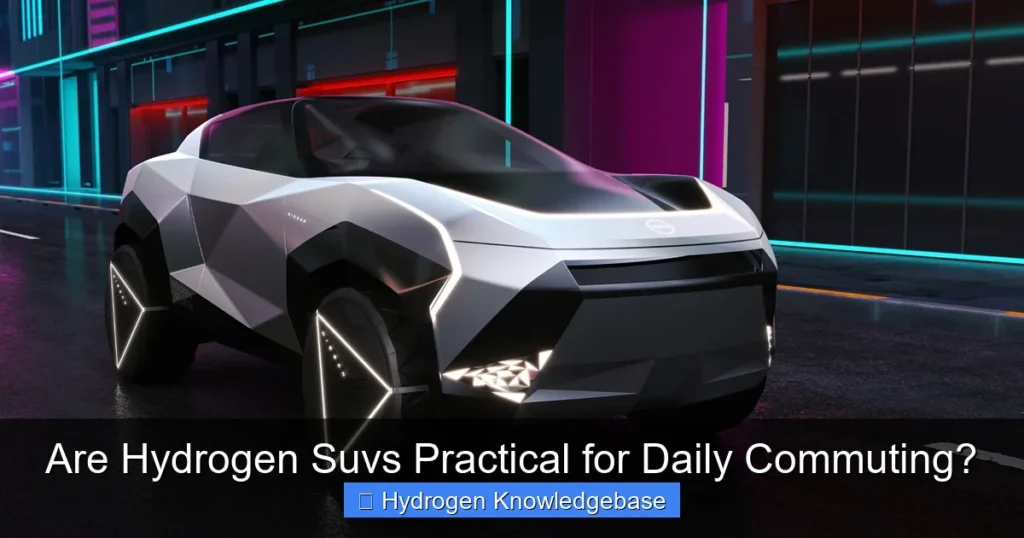
Visual guide about Are Hydrogen Suvs Practical for Daily Commuting?
Image source: images.autodaily.com.au
To understand whether hydrogen SUVs are practical, it helps to know how they work. Unlike gasoline engines that burn fuel or electric vehicles that rely on batteries, hydrogen SUVs use a fuel cell to generate electricity on demand.
The Fuel Cell System
At the heart of every hydrogen SUV is a fuel cell stack. This system combines hydrogen gas from the onboard tank with oxygen from the air. The chemical reaction produces electricity, which powers the electric motor. The only byproduct? Pure water vapor—hence the “zero-emission” label.
This process is quiet, efficient, and doesn’t involve combustion. It’s similar to how a battery works, but instead of storing electricity, the vehicle generates it as needed. That means no long charging times and no range anxiety from a drained battery.
Hydrogen Storage and Safety
Hydrogen is stored in high-pressure tanks, typically made of carbon fiber, located beneath the vehicle. These tanks are designed to withstand crashes and extreme conditions. In fact, hydrogen is lighter than air, so if it leaks, it quickly disperses upward—unlike gasoline fumes, which pool near the ground.
Automakers like Toyota, Hyundai, and Honda have rigorously tested their hydrogen SUVs for safety. The Mirai, Nexo, and Clarity Fuel Cell all meet strict safety standards. While hydrogen has a reputation for being volatile (think of the Hindenburg), modern storage and handling make it as safe as—or safer than—gasoline.
Performance and Driving Experience
Hydrogen SUVs deliver smooth, quiet acceleration thanks to their electric motors. The Hyundai Nexo, for example, goes from 0 to 60 mph in about 8.5 seconds—comparable to many gas-powered SUVs. The Toyota Mirai offers a refined ride with minimal noise and vibration.
Because they’re electric, hydrogen SUVs provide instant torque, making them responsive in city driving. They also handle well, with low centers of gravity due to the placement of the fuel cell and tanks. For daily commuting, the driving experience is comfortable and familiar, even if the power source is cutting-edge.
Refueling: The Biggest Hurdle for Daily Use
One of the most compelling advantages of hydrogen SUVs is refueling speed. But this benefit only matters if you can actually find a station to refuel at.
Current State of Hydrogen Infrastructure
As of 2024, there are fewer than 100 public hydrogen refueling stations in the United States—most of them concentrated in California. That’s a stark contrast to over 150,000 gas stations and more than 60,000 public EV charging ports nationwide.
For daily commuters, this lack of infrastructure is a major barrier. If you live outside California or a few select regions in Europe and Asia, finding a hydrogen station may be nearly impossible. Even in California, stations are often spaced far apart, especially outside urban centers.
Refueling Time vs. Convenience
When a hydrogen station is available, refueling takes just 5 to 10 minutes—about the same as filling up a gas tank. That’s a huge advantage over Level 2 EV charging, which can take hours, or even fast DC charging, which still requires 30–45 minutes for an 80% charge.
But convenience isn’t just about speed—it’s about access. Imagine needing to drive 30 miles out of your way just to refuel. For most people, that’s not practical for daily use. And if a station is out of service—a common issue due to maintenance or supply problems—your options shrink even further.
Home Refueling: A Future Possibility?
Some companies are developing home hydrogen refueling systems, like the H2Home by Ivys Energy Solutions. These units produce hydrogen from natural gas or water electrolysis and store it for personal use. However, they’re expensive, require significant space, and are not yet widely available.
For now, home refueling remains a niche solution. Most hydrogen SUV owners rely entirely on public stations, which limits flexibility and increases dependency on a fragile network.
Cost Analysis: Are Hydrogen SUVs Affordable?
Even if you can find a hydrogen station, the cost of owning and operating a hydrogen SUV may give you pause.
Upfront Vehicle Cost
Hydrogen SUVs are significantly more expensive than their gasoline or electric counterparts. The Toyota Mirai starts around $50,000, and the Hyundai Nexo is priced similarly. In comparison, a Tesla Model Y starts at about $47,000, and a gas-powered Toyota RAV4 begins under $30,000.
Why the high price? Fuel cell technology is still in its early stages. Production volumes are low, and components like the fuel cell stack and hydrogen tanks are costly to manufacture. As demand grows and production scales up, prices may fall—but for now, hydrogen SUVs are a premium purchase.
Fuel Cost per Mile
Hydrogen fuel is expensive. In California, where most hydrogen is sold, prices range from $12 to $16 per kilogram. A hydrogen SUV like the Mirai gets about 70 miles per kilogram, meaning fuel costs around $0.17 to $0.23 per mile.
Compare that to electricity: a Tesla Model Y costs about $0.04 to $0.06 per mile to charge at home. Even gasoline, at $3.50 per gallon and 30 mpg, comes out to about $0.12 per mile. So hydrogen is currently more expensive to fuel than both electricity and gasoline.
Maintenance and Incentives
On the plus side, hydrogen SUVs have fewer moving parts than internal combustion engines, so maintenance is simpler. No oil changes, spark plugs, or exhaust systems to worry about. However, fuel cell systems are complex and may require specialized servicing.
Government incentives can help offset costs. In the U.S., buyers may qualify for federal tax credits up to $8,000, and California offers additional rebates. Some states also provide access to carpool lanes and reduced registration fees. But these incentives are not guaranteed long-term and vary by location.
Environmental Impact: Clean Driving, But at What Cost?
Hydrogen SUVs are often marketed as “green” vehicles—and for good reason. They produce zero tailpipe emissions, making them ideal for reducing urban air pollution.
Well-to-Wheel Emissions
However, the environmental benefit depends on how the hydrogen is produced. Currently, about 95% of hydrogen is made from natural gas through a process called steam methane reforming. This method emits carbon dioxide, undermining the vehicle’s green credentials.
Only a small fraction of hydrogen is “green hydrogen,” produced using renewable energy to split water into hydrogen and oxygen. This process is clean but expensive and energy-intensive.
So while the SUV itself emits nothing, the overall carbon footprint depends on the hydrogen source. In regions where green hydrogen is available, the environmental impact is minimal. Elsewhere, it may be comparable to or worse than gasoline.
Lifecycle and Sustainability
Hydrogen fuel cells use platinum as a catalyst, a rare and expensive metal. Mining and processing platinum have environmental and ethical concerns. Recycling programs are improving, but the supply chain remains a challenge.
Battery production for EVs also has environmental costs, but as battery technology advances and recycling improves, the gap is narrowing. For now, both hydrogen and electric vehicles have trade-offs when it comes to sustainability.
Who Should Consider a Hydrogen SUV?
Given the current limitations, hydrogen SUVs are not for everyone. But they may be a good fit for certain drivers.
Fleet Operators and Commercial Use
Hydrogen SUVs shine in fleet applications. Delivery companies, taxi services, and government agencies can centralize refueling at dedicated stations. The fast refill time and long range make them ideal for high-mileage use.
For example, a city bus or delivery van that drives 200+ miles a day benefits from quick refueling without the downtime of charging. Some cities are already testing hydrogen-powered buses and trucks.
Early Adopters in Hydrogen-Friendly Regions
If you live in California, Japan, South Korea, or parts of Europe, you may have access to hydrogen infrastructure. In these areas, owning a hydrogen SUV is more feasible. Early adopters who value innovation and sustainability may find the trade-offs acceptable.
Some drivers also appreciate the novelty and conversation-starting appeal of hydrogen technology. For them, the experience outweighs the practical challenges.
Future-Proofing and Long-Term Vision
Investing in a hydrogen SUV today could be seen as future-proofing. As infrastructure expands and green hydrogen production scales up, these vehicles may become more practical. For environmentally conscious buyers willing to pay a premium, it’s a bet on the future of clean transportation.
The Road Ahead: Will Hydrogen SUVs Become Mainstream?
The future of hydrogen SUVs depends on several factors: infrastructure growth, cost reductions, and policy support.
Infrastructure Expansion Plans
Governments and private companies are investing in hydrogen infrastructure. California aims to have 200 hydrogen stations by 2025. The European Union has launched the Hydrogen Strategy, targeting 1,000 stations by 2030. Japan and South Korea are also expanding their networks.
But progress is slow. Building hydrogen stations is expensive—each one costs $1–2 million—and requires reliable hydrogen supply chains. Without widespread adoption, it’s hard to justify the investment.
Technological Advancements
Researchers are working to reduce the cost of fuel cells, improve hydrogen storage, and increase efficiency. Solid-state hydrogen storage and cheaper catalysts could make hydrogen SUVs more affordable and practical.
Green hydrogen production is also scaling up. Solar and wind farms are being paired with electrolyzers to produce clean hydrogen at lower costs. As renewable energy becomes cheaper, so will green hydrogen.
Competition from Electric Vehicles
Hydrogen SUVs face stiff competition from battery-electric vehicles. EVs are becoming more affordable, with longer ranges and faster charging. Tesla, Ford, GM, and others are expanding their electric SUV lineups.
For most daily commuters, EVs offer a more practical solution today. They can charge at home, benefit from growing public charging networks, and cost less to operate.
Conclusion: Practical for Now? Not Quite—But Promising
So, are hydrogen SUVs practical for daily commuting? The short answer is: not for most people—yet.
While hydrogen SUVs offer impressive range, fast refueling, and zero emissions, the lack of infrastructure and high costs make them a tough sell for everyday drivers. Unless you live in a region with strong hydrogen support and don’t mind the premium price, a battery-electric SUV or hybrid may be a more practical choice today.
That said, hydrogen technology holds long-term promise. As infrastructure improves and production costs fall, hydrogen SUVs could become a viable alternative—especially for fleets, long-haul transport, and regions with abundant renewable energy.
For now, hydrogen SUVs are best suited for early adopters, fleet operators, and environmentally driven buyers in supportive markets. They’re not yet ready for the mainstream, but they’re an important piece of the clean transportation puzzle.
If you’re passionate about sustainability and willing to embrace innovation, a hydrogen SUV might be worth considering. But for the average commuter, the road to hydrogen-powered driving still has a few bumps ahead.
Frequently Asked Questions
Are hydrogen SUVs better for the environment than electric SUVs?
It depends on how the hydrogen is produced. If made from renewable energy (green hydrogen), hydrogen SUVs have a lower environmental impact. But most hydrogen today comes from natural gas, which emits CO₂. Electric SUVs charged with clean energy are generally cleaner overall.
Can hydrogen SUVs be used in cold weather?
Yes, hydrogen SUVs perform well in cold climates. Unlike some electric vehicles, which lose range in winter, hydrogen fuel cells are not significantly affected by low temperatures. The Hyundai Nexo and Toyota Mirai are rated for cold-weather operation.
Do hydrogen SUVs require special maintenance?
Hydrogen SUVs have fewer mechanical parts than gasoline vehicles, so routine maintenance is simpler. However, fuel cell systems require specialized knowledge and tools. Owners should use certified service centers, which are currently limited in number.
Will hydrogen SUV prices come down in the future?
Yes, as production scales up and technology improves, prices are expected to decrease. Government incentives and competition may also help lower costs. However, widespread affordability is likely still years away.
Can I convert my gasoline SUV to run on hydrogen?
No, converting a gasoline SUV to hydrogen is not practical or safe. Hydrogen requires specialized fuel cells, high-pressure tanks, and safety systems. Retrofitting is complex, expensive, and not supported by manufacturers.
Are there any tax incentives for buying a hydrogen SUV?
Yes, in the U.S., buyers may qualify for a federal tax credit of up to $8,000. California offers additional rebates through the Clean Vehicle Rebate Project. Incentives vary by state and country, so check local programs before purchasing.