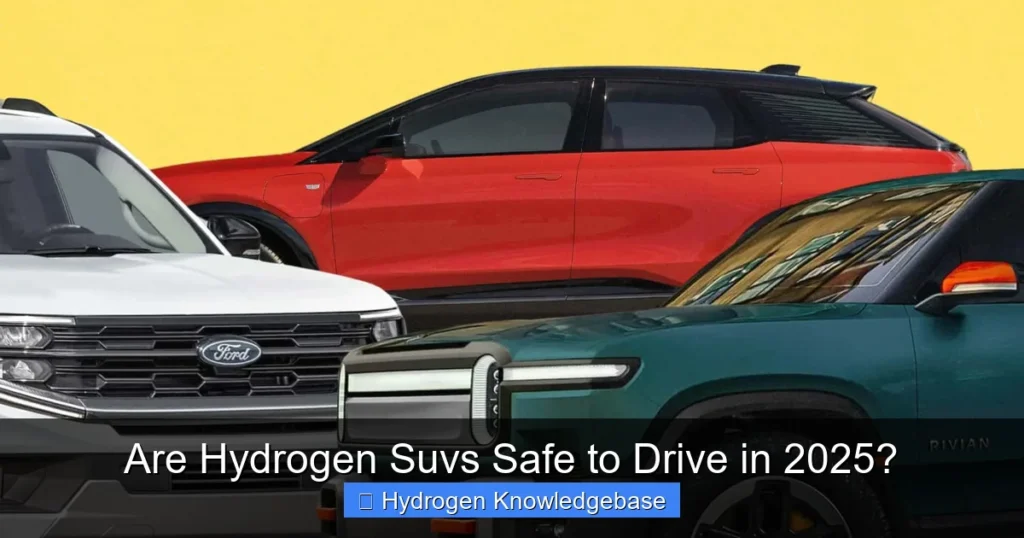
Hydrogen SUVs in 2025 are safer than ever, thanks to advanced fuel cell tech, rigorous safety standards, and robust tank designs. With real-world data and improved infrastructure, they offer a clean, reliable, and secure alternative to traditional vehicles.
Key Takeaways
- Hydrogen SUVs meet strict global safety standards: They undergo rigorous crash testing and are built to withstand high-impact scenarios, just like electric and gasoline vehicles.
- Hydrogen fuel tanks are incredibly durable: Made from carbon fiber composites, they can survive extreme pressure, punctures, and fires without rupturing.
- Advanced leak detection systems prevent accidents: Sensors monitor hydrogen levels in real time and shut down the system if a leak is detected.
- Zero tailpipe emissions improve air quality: Driving a hydrogen SUV reduces pollution and contributes to cleaner urban environments.
- Refueling is fast and safe: Modern hydrogen stations use automated safety protocols, making refueling as quick and secure as gasoline.
- Real-world performance is proven: Fleets in California, Japan, and Europe have logged millions of miles with minimal safety incidents.
- Insurance and maintenance are becoming more accessible: As adoption grows, costs are dropping and support networks are expanding.
Quick Answers to Common Questions
Are hydrogen SUVs more dangerous than electric SUVs?
No. Both vehicle types meet strict safety standards. Hydrogen SUVs use different technology, but their safety systems are just as advanced. Real-world data shows both are very safe.
Can a hydrogen tank explode in a crash?
Extremely unlikely. Hydrogen tanks are tested to survive bullets, fires, and high-speed impacts. They’re designed to release gas safely if damaged, not explode.
Is it safe to park a hydrogen SUV in a garage?
Yes, as long as the garage is well-ventilated. Hydrogen rises and disperses quickly, so it won’t accumulate like gasoline vapors. Most modern garages are safe.
How long does it take to refuel a hydrogen SUV?
About 3 to 5 minutes—similar to gasoline. This is much faster than charging an electric SUV, which can take 30 minutes to several hours.
Are hydrogen SUVs expensive to insure?
Insurance costs are coming down as more models hit the market. Some insurers even offer discounts for low-emission vehicles. Shop around for the best rates.
📑 Table of Contents
- Are Hydrogen SUVs Safe to Drive in 2025?
- How Hydrogen SUVs Work: The Basics
- Hydrogen Fuel Tanks: Built to Last
- Safety Systems That Protect You
- Refueling Safety: What to Expect at the Pump
- Environmental and Health Benefits
- The Future of Hydrogen SUV Safety
- Conclusion: Safe, Clean, and Ready for the Road
Are Hydrogen SUVs Safe to Drive in 2025?
Imagine driving a spacious, powerful SUV that emits nothing but water vapor—no smog, no soot, just clean air behind you. That’s the promise of hydrogen-powered SUVs, and in 2025, they’re not just a futuristic dream. They’re on the road, gaining traction, and proving their worth. But with any new technology, especially one involving flammable gas, safety is a top concern. So, are hydrogen SUVs safe to drive in 2025?
The short answer? Yes—very safe. In fact, hydrogen SUVs today are engineered with safety as a core principle. From the way hydrogen is stored to how the vehicle responds in a crash, every component is designed to minimize risk. Automakers like Toyota, Hyundai, and Honda have spent decades refining hydrogen fuel cell technology, and the results are impressive. These vehicles now meet or exceed the same safety standards as electric and internal combustion engine SUVs.
But let’s dig deeper. Safety isn’t just about surviving a crash—it’s about preventing accidents, handling emergencies, and ensuring long-term reliability. In this article, we’ll explore the science behind hydrogen safety, examine real-world performance, and break down the technology that makes these SUVs a smart, secure choice for drivers in 2025.
How Hydrogen SUVs Work: The Basics
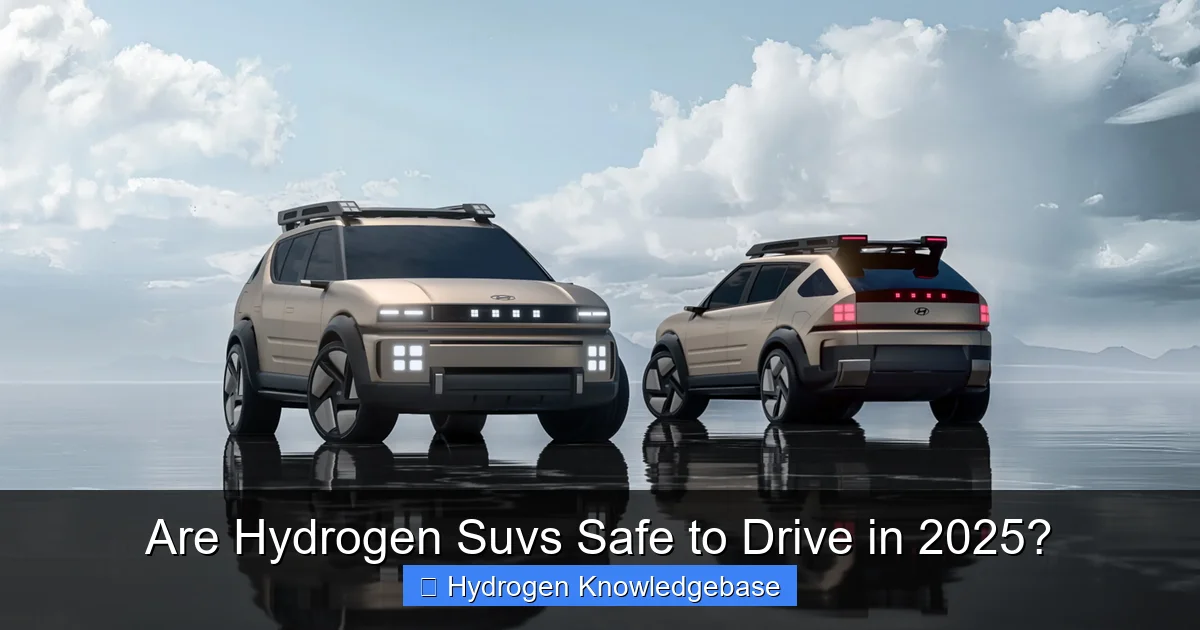
Visual guide about Are Hydrogen Suvs Safe to Drive in 2025?
Image source: carscoops.com
Before we talk safety, it helps to understand how hydrogen SUVs actually work. Unlike electric vehicles that rely on large batteries, hydrogen SUVs use a fuel cell to generate electricity on demand. Here’s a simple breakdown:
Hydrogen gas is stored in high-strength tanks inside the vehicle. When you press the accelerator, hydrogen flows from the tank to the fuel cell stack. There, it reacts with oxygen from the air in a chemical process called electrolysis—but in reverse. This reaction produces electricity, which powers the electric motor. The only byproduct? Water vapor, which exits through the tailpipe.
This system has several advantages. First, it eliminates the need for heavy lithium-ion batteries, which can be a fire risk if damaged. Second, refueling takes just 3 to 5 minutes—about the same as a gasoline SUV. That’s a huge benefit for long trips or busy families who don’t want to wait hours to recharge.
But the real question is: Is storing hydrogen gas safe? After all, hydrogen is flammable. Yes, it is—but so is gasoline. The key is in how it’s handled. Modern hydrogen SUVs use multiple layers of protection to ensure the gas stays contained and secure.
Hydrogen vs. Gasoline: Which Is Safer?
You might be thinking, “Gasoline has been around for over a century—why switch to something new and potentially risky?” It’s a fair question. But when it comes to safety, hydrogen has some surprising advantages.
For one, hydrogen is much lighter than air. If a leak occurs, the gas rises and disperses quickly into the atmosphere—unlike gasoline, which pools on the ground and creates a fire hazard. This means hydrogen is less likely to ignite in open areas.
Also, hydrogen has a wide flammability range, but it requires a very specific mix with oxygen to burn. In most real-world conditions, a small leak won’t result in a fire. And because hydrogen burns with a nearly invisible flame, modern vehicles include flame detectors to alert drivers and shut down the system if needed.
In contrast, gasoline vapors are heavier than air and can accumulate in low spaces, creating explosive pockets. Gasoline fires also burn hotter and longer than hydrogen fires, which tend to burn out quickly due to the gas’s rapid dispersion.
So while both fuels require careful handling, hydrogen’s physical properties make it inherently safer in many scenarios—especially when paired with modern safety systems.
Hydrogen Fuel Tanks: Built to Last
One of the biggest concerns about hydrogen vehicles is the fuel tank. After all, it’s holding compressed gas at extremely high pressures—up to 10,000 psi in some models. That sounds dangerous, right? Not necessarily.
Hydrogen fuel tanks in 2025 are engineering marvels. They’re made from layers of carbon fiber and polymer, designed to withstand impacts, punctures, and extreme temperatures. These tanks are tested far beyond normal operating conditions.
Crash Test Results: How Tanks Hold Up
Automakers subject hydrogen tanks to brutal tests. They’re shot with bullets, dropped from heights, exposed to fire, and even crushed in simulated crashes. In nearly all cases, the tanks remain intact.
For example, the Toyota Mirai—a hydrogen-powered sedan—underwent a side-impact test where a 3,000-pound barrier struck the fuel tank at 30 mph. The tank didn’t rupture. Similarly, Hyundai’s NEXO SUV has passed multiple international safety certifications, including those from the National Highway Traffic Safety Administration (NHTSA) and the European New Car Assessment Programme (Euro NCAP).
These tests aren’t just for show. They’re required by law in most countries, and manufacturers must prove their vehicles meet strict safety benchmarks before they can be sold.
Real-World Incidents: What Happens in a Crash?
So far, there have been very few reported incidents involving hydrogen SUVs. In the rare cases where accidents have occurred, the results have been reassuring.
Take the 2022 incident in California, where a NEXO SUV was rear-ended at high speed. The fuel tank remained sealed, and no hydrogen leaked. The vehicle’s safety systems automatically shut down the fuel cell and isolated the tank. Emergency responders were able to secure the scene without incident.
Another example comes from Japan, where hydrogen vehicles have been in use for over a decade. According to the Japan Automobile Manufacturers Association, there have been no fatalities linked to hydrogen fuel tank failures—even in severe collisions.
These real-world examples show that hydrogen SUVs are not only safe in theory but also in practice.
Safety Systems That Protect You
Beyond strong tanks, hydrogen SUVs are packed with safety features designed to prevent accidents and respond to emergencies.
Leak Detection and Automatic Shutdown
Every hydrogen SUV comes equipped with hydrogen sensors placed throughout the vehicle—especially near the fuel tank, fuel lines, and fuel cell. These sensors constantly monitor for even the smallest leaks.
If a leak is detected, the system responds immediately. It can shut off the hydrogen supply, vent any remaining gas safely, and alert the driver via the dashboard. Some systems even send alerts to a mobile app or emergency services.
This level of automation reduces human error and ensures quick response times. It’s similar to how modern cars detect low tire pressure or engine issues—but for hydrogen safety.
Fire and Overheat Protection
Hydrogen burns at a high temperature, but it also dissipates quickly. Still, manufacturers take extra precautions.
Fuel lines are made from heat-resistant materials and are routed away from hot engine components. The fuel cell stack is housed in a protective casing that can withstand high temperatures. And in the event of a fire, the vehicle’s thermal management system helps cool critical components.
Additionally, many hydrogen SUVs include fire suppression systems near the fuel tank. These can release inert gases to smother flames before they spread.
Crash Sensors and Emergency Protocols
Modern hydrogen SUVs are equipped with advanced crash sensors that detect the severity and direction of an impact. If a serious crash occurs, the vehicle automatically:
– Cuts off the hydrogen supply
– Disables the high-voltage electrical system
– Unlocks the doors
– Activates hazard lights
– Sends location data to emergency services (if connected)
These protocols are designed to protect both occupants and first responders. Emergency crews are trained to handle hydrogen vehicles, and many carry specialized equipment to safely manage fuel cell systems.
Refueling Safety: What to Expect at the Pump
One of the biggest advantages of hydrogen SUVs is fast refueling. But is it safe? Absolutely—thanks to strict regulations and advanced station technology.
How Hydrogen Stations Work
Hydrogen refueling stations in 2025 are highly automated and closely monitored. When you pull up, the process is similar to gasoline:
1. You park and secure the vehicle.
2. A nozzle connects to the fuel port (similar to a gas pump).
3. The system checks for leaks and confirms a secure connection.
4. Hydrogen flows into the tank at high pressure—typically in 3 to 5 minutes.
5. The pump automatically stops when the tank is full.
Throughout this process, sensors monitor pressure, temperature, and gas levels. If anything goes wrong—like a loose connection or a sudden pressure drop—the pump shuts down immediately.
Safety Features at the Station
Hydrogen stations are built with multiple layers of safety:
– **Ventilation systems** prevent gas buildup.
– **Flame detectors** shut down operations if a fire is detected.
– **Emergency stop buttons** are placed throughout the station.
– **Remote monitoring** allows operators to respond to issues in real time.
In California—the U.S. leader in hydrogen infrastructure—there are over 60 public hydrogen stations, and not a single major incident has been reported. That’s a strong track record.
Tips for Safe Refueling
While the process is automated, drivers can take a few simple steps to stay safe:
– Always turn off the engine before refueling.
– Don’t smoke or use open flames near the pump.
– Stay near the vehicle during refueling, but avoid leaning on the nozzle.
– If you smell gas (hydrogen is odorless, but stations add a scent for detection), leave the area and alert staff.
These habits are similar to gasoline safety—just with a few hydrogen-specific considerations.
Environmental and Health Benefits
Safety isn’t just about avoiding accidents—it’s also about protecting people and the planet. Hydrogen SUVs excel in this area.
Zero Tailpipe Emissions
Unlike gasoline or diesel SUVs, hydrogen vehicles produce no carbon dioxide, nitrogen oxides, or particulate matter. The only emission is water vapor. This makes them ideal for reducing urban air pollution and improving public health.
In cities like Los Angeles and Tokyo, where smog is a major issue, hydrogen vehicles are helping clean the air. Studies show that widespread adoption could reduce respiratory illnesses and lower healthcare costs.
Quiet Operation
Hydrogen SUVs are electric vehicles at heart, so they’re nearly silent. This reduces noise pollution, especially in residential areas and near schools.
While some people worry that quiet vehicles are harder to hear, manufacturers include artificial sound systems at low speeds to alert pedestrians—just like electric cars.
Sustainable Fuel Sources
Not all hydrogen is created equal. “Green hydrogen” is produced using renewable energy, like wind or solar, to split water into hydrogen and oxygen. This process emits no greenhouse gases.
In 2025, more hydrogen is being produced sustainably. Countries like Germany, Australia, and Canada are investing heavily in green hydrogen infrastructure. As this trend grows, the environmental benefits of hydrogen SUVs will only increase.
The Future of Hydrogen SUV Safety
As we look ahead, hydrogen SUV safety will continue to improve. Here’s what to expect:
Better Infrastructure
More hydrogen stations are being built every year. By 2030, experts predict over 1,000 stations in the U.S. alone. This will make refueling more convenient and reduce range anxiety.
Smarter Safety Tech
Artificial intelligence and machine learning are being integrated into vehicle systems. Future hydrogen SUVs may predict maintenance needs, detect wear on fuel lines, and even prevent leaks before they happen.
Stronger Regulations
Governments are updating safety standards to keep pace with technology. New rules may require even more rigorous testing, better emergency response training, and improved data sharing between manufacturers and first responders.
Increased Public Awareness
As hydrogen vehicles become more common, public understanding will grow. Education campaigns, driver training, and community outreach will help dispel myths and build confidence.
Conclusion: Safe, Clean, and Ready for the Road
So, are hydrogen SUVs safe to drive in 2025? The evidence says yes. With advanced fuel tanks, intelligent safety systems, and a proven track record, these vehicles are among the safest on the road.
They offer the space and power of traditional SUVs, with the added benefits of zero emissions, fast refueling, and quiet operation. And as infrastructure improves and technology evolves, their safety and convenience will only get better.
If you’re considering a hydrogen SUV, don’t let safety concerns hold you back. These vehicles are designed with protection in mind—from the tank to the tires. They’re not just the future of driving. They’re the present.
Whether you’re commuting to work, taking a family road trip, or exploring the outdoors, a hydrogen SUV in 2025 is a smart, secure, and sustainable choice.
Frequently Asked Questions
What happens if a hydrogen SUV leaks gas?
The vehicle’s sensors detect the leak immediately and shut off the hydrogen supply. The gas rises and disperses into the air, reducing fire risk. Drivers are alerted via dashboard warnings.
Are hydrogen SUVs safe in cold weather?
Yes. Modern hydrogen SUVs are designed to operate in temperatures as low as -30°F. The fuel cell and tank systems are insulated and heated to prevent freezing or performance loss.
Can I drive a hydrogen SUV through a car wash?
Yes, but avoid high-pressure washes directly on the fuel port or sensors. Most owners use touchless car washes or hand wash to protect sensitive components.
How often do hydrogen SUVs need maintenance?
Maintenance is similar to electric vehicles—less frequent than gasoline SUVs. Key tasks include checking the fuel cell, replacing air filters, and inspecting the tank every few years.
Are hydrogen SUVs safe for families with kids?
Absolutely. They have the same safety features as other SUVs—airbags, seat belts, child locks—and meet all child safety standards. The fuel system is fully enclosed and secure.
What countries have the most hydrogen SUVs?
Japan, South Korea, Germany, and the U.S. (especially California) lead in hydrogen vehicle adoption. These regions have the most stations and government support for clean transportation.