Hydrogen SUVs offer zero-emission driving with quick refueling and long range, but face challenges like limited infrastructure and high upfront costs. While promising for eco-conscious drivers, their value depends on location, usage, and long-term sustainability goals.
Key Takeaways
- Zero tailpipe emissions: Hydrogen SUVs emit only water vapor, making them a clean alternative to gasoline and diesel vehicles.
- Fast refueling: Refill a hydrogen tank in 3–5 minutes, similar to gas cars, unlike the longer charging times of electric vehicles.
- Limited fueling stations: Hydrogen infrastructure is sparse, with most stations concentrated in California and parts of Europe.
- Higher upfront cost: Hydrogen SUVs are more expensive than EVs and traditional SUVs due to advanced fuel cell technology.
- Long driving range: Most hydrogen SUVs offer 300–400 miles per tank, ideal for long-distance travel.
- Government incentives: Tax credits and rebates may offset initial costs, especially in the U.S. and Europe.
- Emerging technology: The hydrogen market is growing, but widespread adoption depends on infrastructure and cost reductions.
Quick Answers to Common Questions
How far can a hydrogen SUV go on one tank?
Most hydrogen SUVs offer a range of 300 to 400 miles, with models like the Toyota Mirai reaching up to 402 miles.
How long does it take to refuel a hydrogen SUV?
Refueling takes just 3 to 5 minutes, similar to filling a gas tank.
Are hydrogen SUVs safe?
Yes, hydrogen SUVs are designed with safety in mind. Their tanks are crash-tested and hydrogen disperses quickly if leaked.
Where can I find hydrogen refueling stations?
Most stations are in California, with growing networks in Europe, Japan, and South Korea. Use apps like PlugShare to locate them.
Do hydrogen SUVs qualify for tax credits?
Yes, in the U.S., buyers may qualify for federal and state incentives, including up to $15,000 in free hydrogen in California.
📑 Table of Contents
- Are Hydrogen SUVs Worth the Investment?
- How Hydrogen SUVs Work: The Science Simplified
- Environmental Benefits: Are They Truly Green?
- Cost Analysis: Upfront Price, Fuel, and Maintenance
- Infrastructure Challenges: Where Can You Refuel?
- Who Should Consider a Hydrogen SUV?
- The Future of Hydrogen SUVs: What’s Next?
- Conclusion: Are Hydrogen SUVs Worth It?
Are Hydrogen SUVs Worth the Investment?
Imagine driving a spacious, powerful SUV that emits nothing but clean water vapor—no smog, no engine noise, and no guilt about your carbon footprint. That’s the promise of hydrogen SUVs. As the world shifts toward greener transportation, hydrogen fuel cell vehicles (FCEVs) are gaining attention as a potential game-changer. But are they really worth the investment?
Hydrogen SUVs are not just a futuristic concept—they’re already on the road. Models like the Toyota Mirai SUV, Hyundai NEXO, and the upcoming Honda CR-V Fuel Cell are leading the charge. These vehicles use hydrogen gas stored in high-pressure tanks to power an electric motor through a fuel cell. The result? A smooth, quiet ride with zero tailpipe emissions. But beyond the environmental appeal, there are practical considerations: cost, infrastructure, performance, and long-term viability. So, before you trade in your gas guzzler or even your electric SUV, let’s dive deep into whether hydrogen SUVs are a smart financial and environmental choice.
How Hydrogen SUVs Work: The Science Simplified
To understand whether hydrogen SUVs are worth it, you first need to know how they work. Unlike battery electric vehicles (BEVs) that store electricity in large batteries, hydrogen SUVs generate their own electricity on board using a fuel cell stack.

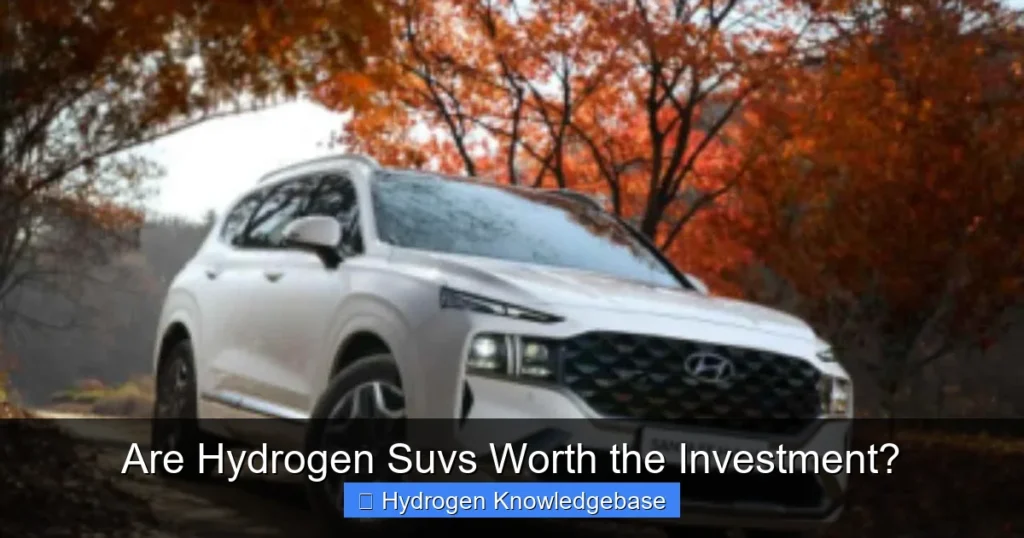
Visual guide about Are Hydrogen Suvs Worth the Investment?
Image source: newsflowhub.com
Fuel Cell Technology Explained
At the heart of every hydrogen SUV is a fuel cell. This device takes hydrogen gas (H₂) from the vehicle’s tank and combines it with oxygen from the air. The chemical reaction produces electricity, water, and heat. The electricity powers the electric motor, while the only emission is water vapor—literally clean enough to drink.
This process is called electrochemical conversion, and it’s incredibly efficient. Modern fuel cells convert about 60% of the hydrogen’s energy into usable electricity, compared to around 20–30% for internal combustion engines. That means less wasted energy and more miles per kilogram of hydrogen.
Hydrogen Storage and Safety
Hydrogen is stored in high-strength carbon-fiber tanks at pressures up to 10,000 psi (pounds per square inch). These tanks are designed to withstand extreme conditions, including crashes and fires. In fact, hydrogen tanks are rigorously tested and often safer than gasoline tanks because hydrogen is lighter than air and disperses quickly if leaked.
For example, the Hyundai NEXO’s hydrogen tanks are wrapped in carbon fiber and have passed over 30 safety tests, including gunfire and high-pressure impact tests. So, while hydrogen might sound volatile, modern engineering makes it a safe fuel option.
Performance and Driving Experience
Hydrogen SUVs deliver a driving experience similar to electric vehicles: instant torque, smooth acceleration, and quiet operation. The Toyota Mirai, for instance, accelerates from 0 to 60 mph in about 9 seconds—decent for a midsize SUV. The Hyundai NEXO is slightly quicker, hitting 60 mph in under 8 seconds.
But what really stands out is the range. Most hydrogen SUVs offer 300 to 400 miles on a single tank. The NEXO boasts an EPA-estimated range of 380 miles, while the Mirai offers up to 402 miles. That’s competitive with many gasoline SUVs and far exceeds the average range of early electric SUVs.
Environmental Benefits: Are They Truly Green?
One of the biggest selling points of hydrogen SUVs is their environmental impact—or lack thereof. But it’s not as simple as “zero emissions.” The real question is: how green is the hydrogen itself?
Zero Tailpipe Emissions
When you drive a hydrogen SUV, the only thing coming out of the tailpipe is water. No carbon dioxide (CO₂), no nitrogen oxides (NOx), no particulate matter. This makes hydrogen SUVs ideal for improving urban air quality and reducing smog in cities.
For environmentally conscious buyers, this is a major advantage. If you live in a city with poor air quality, driving a hydrogen SUV can make a real difference in local pollution levels.
The Source of Hydrogen Matters
Here’s the catch: not all hydrogen is created equal. Currently, about 95% of hydrogen is produced from natural gas through a process called steam methane reforming (SMR). This method releases CO₂, which undermines the environmental benefits.
However, “green hydrogen”—produced using renewable energy like wind or solar to split water into hydrogen and oxygen—is growing. This method is truly carbon-free but currently makes up less than 1% of global hydrogen production due to high costs and energy demands.
So, while hydrogen SUVs are clean at the tailpipe, their overall environmental impact depends on how the hydrogen is made. In regions where green hydrogen is available, these vehicles are a sustainable choice. In areas relying on fossil-fuel-based hydrogen, the benefits are more limited.
Lifecycle Emissions Compared to EVs
When comparing hydrogen SUVs to battery electric SUVs, lifecycle emissions are a key factor. Studies show that battery EVs generally have lower total emissions over their lifetime, especially when charged with renewable energy.
For example, a 2022 study by the International Council on Clean Transportation (ICCT) found that battery EVs produce 60–68% fewer lifecycle emissions than gasoline cars in Europe. Hydrogen FCEVs, when using green hydrogen, reduce emissions by about 50–60%. But if the hydrogen comes from natural gas, the reduction drops to just 20–30%.
That said, hydrogen has an edge in certain scenarios. For long-haul trucking or heavy-duty transport, hydrogen may be more practical than batteries due to weight and charging time. For SUVs, though, the environmental advantage depends heavily on the energy mix of your region.
Cost Analysis: Upfront Price, Fuel, and Maintenance
Now let’s talk money. Are hydrogen SUVs a good financial investment? The answer isn’t straightforward—it depends on several factors, including purchase price, fuel costs, maintenance, and incentives.
High Initial Purchase Price
Hydrogen SUVs are significantly more expensive than comparable gasoline or electric SUVs. The 2024 Hyundai NEXO starts at around $60,000, while the Toyota Mirai SUV is priced at approximately $58,000. In comparison, a Tesla Model Y starts at about $50,000, and a gas-powered Honda CR-V is under $30,000.
This high price is due to the cost of fuel cell technology, hydrogen storage systems, and limited production scale. Unlike EVs, which benefit from mass production and falling battery costs, hydrogen vehicles are still niche products.
Fuel Costs: Hydrogen vs. Gas and Electricity
Hydrogen fuel is currently expensive. In the U.S., the average price is about $16 per kilogram. Since one kilogram of hydrogen provides roughly the same energy as one gallon of gasoline, this means fueling a hydrogen SUV costs about $16 per “gasoline gallon equivalent” (GGE).
For a vehicle with a 380-mile range and a 5.6 kg tank, a full refill costs around $90. That’s more than double the cost of filling a gas SUV and significantly higher than charging an EV. For example, charging a Tesla Model Y for 300 miles might cost $15–$20, depending on electricity rates.
However, some states offer free or discounted hydrogen fuel for the first few years. California, for instance, provides up to $15,000 in free hydrogen for new FCEV buyers through the Clean Vehicle Rebate Project (CVRP). This can help offset the high fuel costs in the short term.
Maintenance and Longevity
One area where hydrogen SUVs shine is maintenance. They have fewer moving parts than gasoline engines and don’t require oil changes, spark plugs, or exhaust systems. The electric motor and fuel cell require minimal upkeep.
Hyundai and Toyota offer generous warranties on their fuel cell systems—up to 10 years or 100,000 miles. This gives buyers peace of mind about long-term reliability.
That said, repairs can be costly if something goes wrong. Fuel cells are complex and require specialized technicians. If a fuel cell fails, replacement can cost $10,000 or more. But such failures are rare, and manufacturers are improving durability with each new model.
Resale Value and Depreciation
Hydrogen SUVs currently suffer from high depreciation due to limited demand and infrastructure. A 2023 study by iSeeCars found that the Toyota Mirai loses about 60% of its value in the first three years—worse than most EVs and gas cars.
This is partly because resale buyers are hesitant to adopt a technology with limited fueling options. As infrastructure improves and awareness grows, resale values may stabilize. But for now, early adopters should expect a significant drop in value.
Infrastructure Challenges: Where Can You Refuel?
Perhaps the biggest hurdle for hydrogen SUVs is infrastructure. Without convenient refueling options, even the cleanest, most efficient vehicle isn’t practical for daily use.
Current State of Hydrogen Stations
As of 2024, there are fewer than 100 public hydrogen refueling stations in the U.S., with over 90% located in California. Europe has a slightly better network, with around 200 stations across Germany, France, and the UK. Japan and South Korea also have growing networks.
This means that unless you live in or near a major city with hydrogen infrastructure, owning a hydrogen SUV may not be feasible. For example, if you live in Texas or Florida, you’ll struggle to find a station within a reasonable distance.
Refueling Time and Convenience
When you do find a station, refueling is quick and easy. It takes just 3 to 5 minutes to fill a hydrogen tank—about the same as pumping gas. This is a major advantage over EVs, which can take 30 minutes to several hours to recharge, depending on the charger type.
Hydrogen dispensers are similar to gas pumps, so there’s no learning curve. You simply connect the nozzle, fill the tank, and go. No need to worry about charging cables or outlet compatibility.
The Future of Hydrogen Infrastructure
Governments and private companies are investing in hydrogen infrastructure. The U.S. Department of Energy has allocated $8 billion for hydrogen hubs, aiming to build a national network. California plans to have 200 hydrogen stations by 2025.
Automakers are also partnering with fuel providers. Toyota and Shell have collaborated on new stations, while Hyundai is working with Air Liquide to expand access in Europe.
But progress is slow. Building hydrogen stations is expensive—each one costs $1–$2 million—and requires significant space and safety measures. Until the network expands, hydrogen SUVs will remain a regional option rather than a national solution.
Who Should Consider a Hydrogen SUV?
Hydrogen SUVs aren’t for everyone. But for certain drivers, they could be a perfect fit.
Ideal Buyers: Early Adopters and Eco-Enthusiasts
If you’re passionate about cutting-edge technology and reducing your carbon footprint, a hydrogen SUV might be worth the investment. These vehicles represent the future of clean transportation, and owning one puts you at the forefront of innovation.
They’re also ideal for drivers who want zero emissions but can’t deal with EV charging times. If you frequently take long road trips or live in an area with unreliable electricity, hydrogen’s quick refueling is a major plus.
Fleet Operators and Commercial Use
Hydrogen SUVs make sense for fleets, especially in urban areas with access to hydrogen stations. Police departments, government agencies, and delivery services can benefit from zero-emission vehicles without range anxiety.
For example, the Los Angeles Police Department has tested hydrogen SUVs for patrol use. Their long range and quick refueling make them suitable for high-mileage operations.
Regional Limitations
If you live in California, parts of Europe, or South Korea, hydrogen SUVs are a more viable option. In other regions, the lack of infrastructure makes them impractical for daily use.
Before buying, check the location of nearby hydrogen stations using apps like Hydrogen Fuel Cell Partnership or PlugShare. If there are fewer than three stations within a 100-mile radius, you may want to reconsider.
The Future of Hydrogen SUVs: What’s Next?
The hydrogen SUV market is still in its infancy, but the future looks promising. Advances in technology, falling production costs, and government support could make hydrogen vehicles more accessible in the coming decade.
Technological Improvements
Researchers are working on more efficient fuel cells, cheaper catalysts (like replacing platinum with iron), and better hydrogen storage methods. Solid-state hydrogen storage, for example, could allow for smaller, safer tanks with higher energy density.
Automakers are also integrating hydrogen with other technologies. The upcoming Honda CR-V Fuel Cell will offer plug-in capability, allowing it to run on both hydrogen and electricity—giving drivers more flexibility.
Policy and Incentives
Governments are pushing for hydrogen adoption through subsidies and regulations. The U.S. Inflation Reduction Act includes tax credits for hydrogen production and vehicle purchases. The European Union’s Green Deal supports hydrogen as a key part of its climate strategy.
These policies could lower costs and accelerate infrastructure development. If hydrogen becomes cheaper and more widely available, SUVs could become a mainstream option.
Competition with EVs
Hydrogen SUVs will continue to compete with battery electric SUVs. While EVs dominate the market today, hydrogen has advantages in range, refueling speed, and weight—especially for larger vehicles.
The two technologies aren’t mutually exclusive. In the long term, we may see a split: EVs for city driving and short trips, hydrogen for long-distance and heavy-duty use.
Conclusion: Are Hydrogen SUVs Worth It?
So, are hydrogen SUVs worth the investment? The answer depends on your priorities, location, and driving habits.
If you live in a region with hydrogen infrastructure, value zero emissions, and don’t mind paying a premium for cutting-edge technology, a hydrogen SUV could be a smart choice. They offer long range, quick refueling, and a clean driving experience that rivals electric vehicles.
However, for most consumers, the high upfront cost, expensive fuel, and limited refueling options make hydrogen SUVs a tough sell—at least for now. Battery electric SUVs remain more practical, affordable, and widely supported.
But the future is uncertain. As green hydrogen production scales up and infrastructure expands, hydrogen SUVs could become a viable alternative. For early adopters and eco-conscious drivers, they represent a bold step toward a cleaner, more sustainable transportation future.
In the end, hydrogen SUVs aren’t just about the vehicle—they’re about being part of a movement. If you’re ready to embrace innovation and help drive change, the investment might be worth it.
Frequently Asked Questions
What is a hydrogen SUV?
A hydrogen SUV is a sport utility vehicle powered by a fuel cell that converts hydrogen gas into electricity to drive an electric motor. It emits only water vapor and offers zero tailpipe emissions.
How much does it cost to fuel a hydrogen SUV?
Hydrogen fuel costs about $16 per kilogram in the U.S., making a full tank refill around $80–$100. This is more expensive than gasoline or electricity for EVs.
Can I charge a hydrogen SUV at home?
No, hydrogen SUVs cannot be charged at home. They require specialized hydrogen refueling stations, which are not available for residential use.
Are hydrogen SUVs better for the environment than electric SUVs?
It depends on how the hydrogen is produced. Green hydrogen makes FCEVs very clean, but most hydrogen today comes from natural gas, reducing environmental benefits compared to EVs.
How long do hydrogen fuel cells last?
Modern fuel cells are designed to last 10 years or 100,000 miles, with manufacturers offering warranties to cover degradation and failures.
Will hydrogen SUVs replace electric SUVs?
Unlikely in the near term. EVs dominate due to lower costs and better infrastructure, but hydrogen may complement them for long-range and heavy-duty applications.