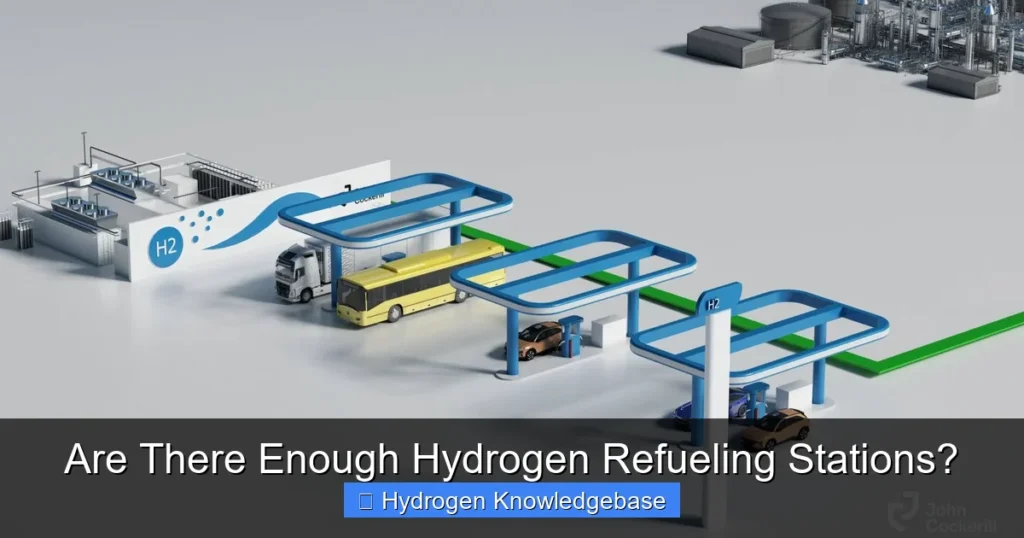
Hydrogen refueling stations are still limited compared to EVs, but growth is accelerating. While infrastructure lags in most regions, strategic investments and government support are expanding access—especially in California, Japan, and Europe.
Key Takeaways
- Global hydrogen station count is growing steadily: As of 2024, over 1,000 hydrogen refueling stations operate worldwide, with rapid expansion in key markets like California, Japan, and Germany.
- Infrastructure remains concentrated in urban hubs: Most stations are located in major cities or along transportation corridors, limiting rural and long-distance travel for fuel cell vehicles.
- Government policies drive station deployment: Subsidies, mandates, and clean energy goals in countries like South Korea and Germany are accelerating station rollout.
- Private sector investment is increasing: Companies like Toyota, Hyundai, Shell, and Air Liquide are partnering to build and operate hydrogen networks.
- Challenges include high costs and low utilization: Building stations is expensive, and low vehicle adoption can make them underused—creating a “chicken-and-egg” problem.
- Future outlook is optimistic: With projected growth to 5,000+ stations by 2030, hydrogen infrastructure is expected to become more accessible for consumers and fleets.
Quick Answers to Common Questions
How many hydrogen refueling stations are there in the U.S.?
As of 2024, there are over 100 hydrogen refueling stations in the U.S., with more than 90% located in California.
Which country has the most hydrogen stations?
South Korea currently has the highest number of hydrogen refueling stations, with over 230 operational as of 2024.
Can I refuel a hydrogen car at home?
No, hydrogen cannot be safely or legally refueled at home. It requires specialized high-pressure equipment and safety systems only available at commercial stations.
How long does it take to refuel a hydrogen car?
Refueling a hydrogen vehicle takes 3 to 5 minutes—similar to gasoline—making it faster than most EV charging options.
Are hydrogen stations safe?
Yes, hydrogen stations are designed with multiple safety features, including leak detection, ventilation, and automatic shut-offs. They are as safe as conventional fuel stations when properly maintained.
📑 Table of Contents
- Are There Enough Hydrogen Refueling Stations?
- Current State of Hydrogen Refueling Infrastructure
- Barriers to Expanding Hydrogen Refueling Networks
- Drivers of Growth: What’s Helping Hydrogen Stations Expand?
- The Future of Hydrogen Refueling: What to Expect by 2030
- Tips for Hydrogen Vehicle Owners and Enthusiasts
- Conclusion
Are There Enough Hydrogen Refueling Stations?
Imagine pulling up to a fuel pump, filling your car in minutes, and driving off with nothing but water vapor coming out the tailpipe. That’s the promise of hydrogen fuel cell vehicles (FCEVs)—clean, fast refueling, and long-range capability. But there’s a catch: unlike electric vehicles (EVs), which can charge at home or at a growing network of public chargers, FCEVs depend entirely on a sparse and unevenly distributed network of hydrogen refueling stations.
So, are there enough hydrogen refueling stations? The short answer is no—not yet. But the longer answer is more nuanced. While the infrastructure is still in its early stages, it’s growing faster than ever, thanks to government support, private investment, and rising interest in zero-emission transportation. In this article, we’ll explore the current state of hydrogen refueling infrastructure, where it’s expanding, what’s holding it back, and what the future might look like for hydrogen-powered mobility.
Whether you’re considering a hydrogen car, curious about clean energy trends, or just want to understand the challenges of alternative fuels, this guide will give you a clear picture of where hydrogen refueling stands today—and where it’s headed.
Current State of Hydrogen Refueling Infrastructure
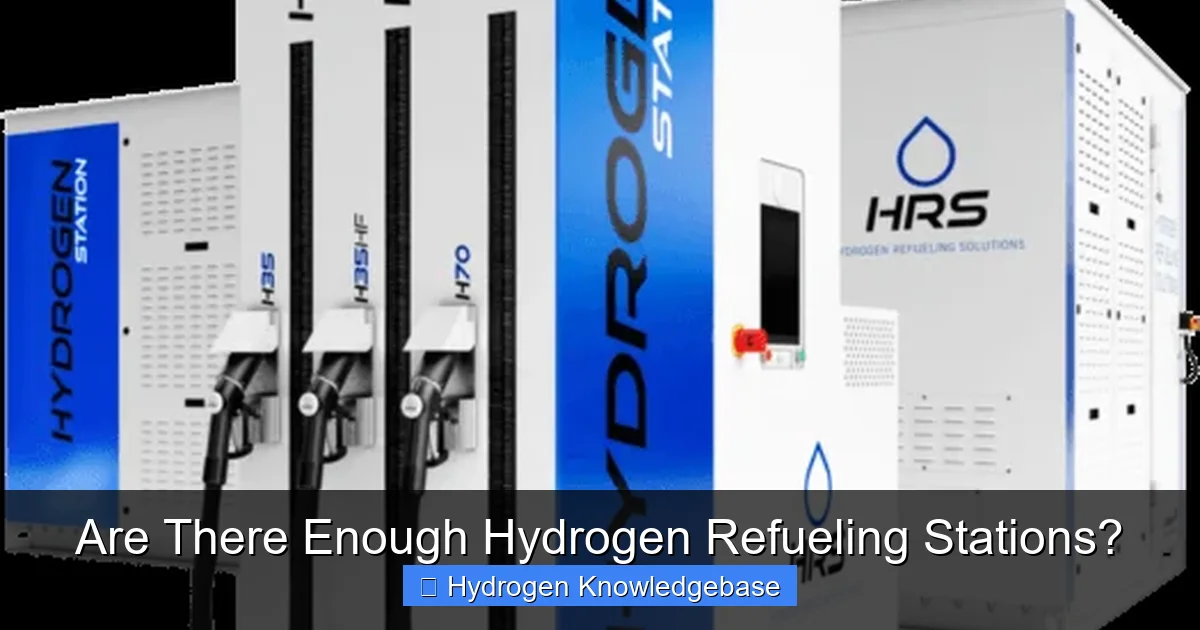
Visual guide about Are There Enough Hydrogen Refueling Stations?
Image source: hydrogen-refueling-solutions.fr
As of 2024, there are approximately 1,050 hydrogen refueling stations operating globally, according to the International Energy Agency (IEA) and the Hydrogen Council. That might sound like a lot, but when you compare it to the over 2.7 million public EV charging points worldwide, the gap becomes stark. Hydrogen stations are not only fewer in number but also highly concentrated in a handful of countries and regions.
The United States leads in North America, with over 100 stations—nearly all of them in California. Japan and South Korea are global leaders, with around 160 and 230 stations respectively. Europe is catching up quickly, with Germany, France, and the UK investing heavily in hydrogen corridors. China, meanwhile, is scaling up rapidly, aiming for 1,000 stations by 2030 as part of its national hydrogen strategy.
Despite this growth, the distribution is uneven. Most stations are located in urban centers or along major highways, leaving large swaths of rural and suburban areas without access. This limits the practicality of hydrogen vehicles for everyday drivers who need reliable refueling options.
Regional Breakdown of Hydrogen Stations
Let’s take a closer look at where hydrogen refueling stations are concentrated:
– California, USA: Home to more than 90% of U.S. hydrogen stations, California has built a network of over 60 public stations, primarily in the Los Angeles and San Francisco Bay areas. The state’s Zero Emission Vehicle (ZEV) mandate and generous incentives have driven both vehicle adoption and infrastructure development.
– Japan: A pioneer in hydrogen technology, Japan has invested heavily in its “Hydrogen Society” vision. With stations in Tokyo, Osaka, and other major cities, the country supports a growing fleet of Toyota Mirai and Honda Clarity vehicles.
– South Korea: The government has set ambitious targets, aiming for 1,200 stations by 2040. Hyundai’s NEXO SUV is a key driver, and the country has already surpassed 200 operational stations.
– Germany: Part of the European Hydrogen Backbone initiative, Germany has over 100 stations and plans to expand to 1,000 by 2030. Stations are often co-located with gas stations or industrial sites.
– China: While still in early stages, China is scaling fast. Major cities like Beijing, Shanghai, and Guangzhou are building stations to support hydrogen buses and trucks, with plans to integrate them into long-haul freight networks.
This regional focus highlights a key challenge: hydrogen infrastructure is not yet national or global. It’s regional, and often tied to government policy and industrial strategy.
Types of Hydrogen Refueling Stations
Not all hydrogen stations are created equal. They vary in size, technology, and purpose:
– Retail Stations: These are the most visible—standalone pumps where consumers can refuel their cars, similar to gas stations. Most are located in urban areas and serve light-duty vehicles like the Toyota Mirai or Hyundai NEXO.
– Fleet Stations: Often located at bus depots, logistics centers, or industrial parks, these stations serve commercial vehicles like hydrogen-powered buses, trucks, or forklifts. They’re typically larger and refuel multiple vehicles daily.
– Mobile Refuelers: Some companies use trailer-mounted hydrogen tanks to deliver fuel to remote locations or events. These are temporary solutions but can help bridge gaps in infrastructure.
– On-Site Production Stations: Instead of receiving hydrogen via pipeline or truck, these stations produce hydrogen on location using electrolysis (splitting water with electricity) or steam methane reforming. On-site production can reduce transportation costs and emissions, especially when powered by renewable energy.
Each type plays a role in building a resilient hydrogen ecosystem, but retail stations are critical for consumer adoption.
Barriers to Expanding Hydrogen Refueling Networks
Despite progress, several major barriers prevent hydrogen refueling stations from becoming as common as gas pumps or EV chargers. Understanding these challenges is key to seeing why the network remains limited—and what needs to change.
High Capital and Operating Costs
Building a hydrogen refueling station is expensive. Costs can range from $1 million to $3 million per station, depending on size and technology. That’s significantly more than a fast EV charger, which might cost $50,000 to $150,000.
Why so expensive? Hydrogen is tricky to handle. It’s the smallest and lightest molecule, so it leaks easily and requires high-pressure storage (typically 350 or 700 bar). Stations need specialized compressors, storage tanks, dispensers, and safety systems. Plus, hydrogen is often delivered by truck, adding transportation costs.
Operating costs are also high. Stations require regular maintenance, safety inspections, and trained personnel. Many stations operate at low utilization rates—sometimes serving only a few vehicles per day—making it hard to break even.
Limited Vehicle Adoption
There’s a classic “chicken-and-egg” problem: people won’t buy hydrogen cars if there are no stations, and companies won’t build stations if there are no cars.
As of 2024, there are fewer than 30,000 hydrogen fuel cell vehicles on the road in the U.S., compared to over 4 million EVs. Globally, the number is under 100,000. With such low demand, it’s hard to justify large-scale infrastructure investments.
This is especially true for individual consumers. While fleets (like buses or delivery trucks) can justify dedicated stations, private drivers need widespread, convenient access—something that doesn’t exist outside a few cities.
Energy and Environmental Concerns
Not all hydrogen is created equal. The environmental benefits depend on how it’s produced.
– Grey hydrogen: Made from natural gas via steam methane reforming, it emits CO₂—up to 10 kg of CO₂ per kg of hydrogen. This is the most common method today.
– Blue hydrogen: Same process as grey, but with carbon capture and storage (CCS) to reduce emissions.
– Green hydrogen: Produced using renewable electricity to split water (electrolysis). This is the cleanest option, but also the most expensive and least common.
Most hydrogen stations today use grey or blue hydrogen, which undermines the environmental argument for FCEVs. Until green hydrogen becomes more affordable and scalable, the sustainability benefits remain limited.
Regulatory and Safety Challenges
Hydrogen is flammable and requires strict safety protocols. Building codes, permitting processes, and zoning laws can delay or block station construction. In some areas, local opposition—often due to safety concerns—has stalled projects.
Additionally, regulations vary by country and even by city, creating a patchwork of standards. This makes it harder for companies to scale operations across regions.
Drivers of Growth: What’s Helping Hydrogen Stations Expand?
Despite the challenges, momentum is building. Several factors are driving the expansion of hydrogen refueling infrastructure:
Government Policies and Incentives
Governments around the world are stepping up. The U.S. Inflation Reduction Act includes tax credits for hydrogen production and infrastructure. California offers rebates of up to $200,000 per station and additional funding for low-carbon hydrogen.
In Europe, the EU’s Hydrogen Strategy aims for 40 GW of electrolyzer capacity by 2030. Germany’s H2 Mobility initiative has funded over 100 stations. Japan and South Korea have national roadmaps with clear targets and funding.
These policies reduce financial risk for private investors and accelerate deployment.
Private Sector Investment and Partnerships
Major energy and automotive companies are investing heavily. Shell, TotalEnergies, and BP are building hydrogen stations in Europe and the U.S. Toyota and Hyundai are not only selling FCEVs but also funding infrastructure.
Joint ventures are common. For example, Air Liquide, Shell, and Toyota partnered to build stations in California. In Germany, H2 Mobility—a consortium of energy and auto companies—operates a growing network.
These partnerships share costs and risks, making expansion more feasible.
Focus on Heavy-Duty and Fleet Applications
While passenger cars have been slow to adopt hydrogen, heavy-duty vehicles are a promising use case. Hydrogen offers fast refueling and long range—key for trucks, buses, and ships that can’t afford long charging stops.
Ports, airports, and logistics hubs are ideal locations for hydrogen stations. For example, the Port of Los Angeles is developing a hydrogen fueling network for drayage trucks. In Europe, hydrogen-powered trains and buses are already in service.
Fleets can justify dedicated infrastructure, creating anchor demand that supports broader expansion.
Technological Advancements
Innovation is reducing costs and improving efficiency. New electrolyzers are more efficient and cheaper to produce. High-pressure storage and compression technologies are improving. Some stations now use solar or wind power to produce hydrogen on-site, cutting emissions and operating costs.
Modular station designs allow for faster deployment and scalability. Mobile refuelers and containerized stations can be deployed quickly in new markets.
The Future of Hydrogen Refueling: What to Expect by 2030
Looking ahead, the outlook for hydrogen refueling stations is optimistic—but not without hurdles.
The Hydrogen Council and IEA project that global hydrogen station numbers could reach 5,000 to 10,000 by 2030, depending on policy support and technology costs. Key growth areas include:
– North America: Expansion beyond California into states like New York, Texas, and Washington. The U.S. Department of Energy’s H2Hubs program is funding regional hydrogen centers.
– Europe: Cross-border hydrogen corridors connecting major cities and industrial zones. The EU aims for 1,000 stations by 2030.
– Asia: China, Japan, and South Korea will continue leading, with China potentially surpassing 500 stations by 2025.
– Emerging Markets: Countries like Australia, Canada, and Chile are investing in green hydrogen production, which could support domestic refueling networks.
For consumers, this means more options—but likely still limited to urban areas and specific vehicle types. Hydrogen will probably remain a niche solution for passenger cars, while playing a bigger role in commercial transport, aviation, and shipping.
Will Hydrogen Ever Be as Common as Gas Pumps?
Probably not—at least not for passenger vehicles. EVs have a massive head start in infrastructure, cost, and consumer adoption. But hydrogen has a role to play, especially in sectors where batteries fall short.
The goal isn’t to replace gas stations, but to complement them. A future with diverse clean energy options—EVs, hydrogen, biofuels—is more realistic than one dominated by a single technology.
Tips for Hydrogen Vehicle Owners and Enthusiasts
If you’re considering a hydrogen fuel cell vehicle or already own one, here are some practical tips:
– Check station availability: Use apps like H2.Live or the Toyota Mirai app to find nearby stations and check real-time status.
– Plan your routes: Unlike EVs, you can’t “top off” hydrogen at home. Always plan trips around station locations.
– Join owner communities: Online forums and local groups can share tips, station updates, and advocacy efforts.
– Advocate for infrastructure: Support policies and incentives that expand hydrogen networks. Your voice can help drive change.
– Consider fleet or commercial use: If you’re a business, hydrogen may make sense for delivery vans, buses, or forklifts—especially with government grants available.
Conclusion
So, are there enough hydrogen refueling stations? Not yet—but the infrastructure is growing, and the foundation is being laid for a cleaner, more diverse transportation future. While challenges like high costs, low vehicle adoption, and energy sourcing remain, government support, private investment, and technological progress are pushing the industry forward.
Hydrogen won’t replace gasoline or dominate the passenger car market overnight. But in specific applications—especially heavy transport and industrial use—it has real potential. For now, hydrogen refueling stations are a work in progress, but one worth watching.
As the world seeks solutions to climate change and air pollution, hydrogen is part of the puzzle. With continued effort, we may one day see hydrogen pumps as common as electric chargers—offering drivers another clean, fast, and convenient way to fuel up.
Frequently Asked Questions
Why are there so few hydrogen refueling stations?
Hydrogen stations are expensive to build and operate, and low vehicle adoption makes it hard to justify investment. Additionally, hydrogen is difficult to transport and store, requiring specialized infrastructure.
Will hydrogen stations become more common?
Yes, growth is expected due to government incentives, private investment, and increasing focus on clean transportation. However, expansion will likely be gradual and concentrated in key regions.
Can hydrogen stations use renewable energy?
Yes, some stations produce hydrogen on-site using solar or wind power through electrolysis, creating “green hydrogen” with minimal emissions.
Are hydrogen cars better for the environment than EVs?
It depends on how the hydrogen is produced. Green hydrogen is very clean, but most hydrogen today comes from fossil fuels. EVs generally have lower lifecycle emissions when charged with clean electricity.
Do hydrogen stations serve only cars?
No, many stations also serve buses, trucks, forklifts, and other fleet vehicles. Heavy-duty applications are a major focus for hydrogen infrastructure.
How much does it cost to refuel a hydrogen car?
Refueling costs vary by region, but in California, it typically ranges from $12 to $16 per kilogram. A full tank (5–6 kg) can cost $60–$100 and provide 300–400 miles of range.