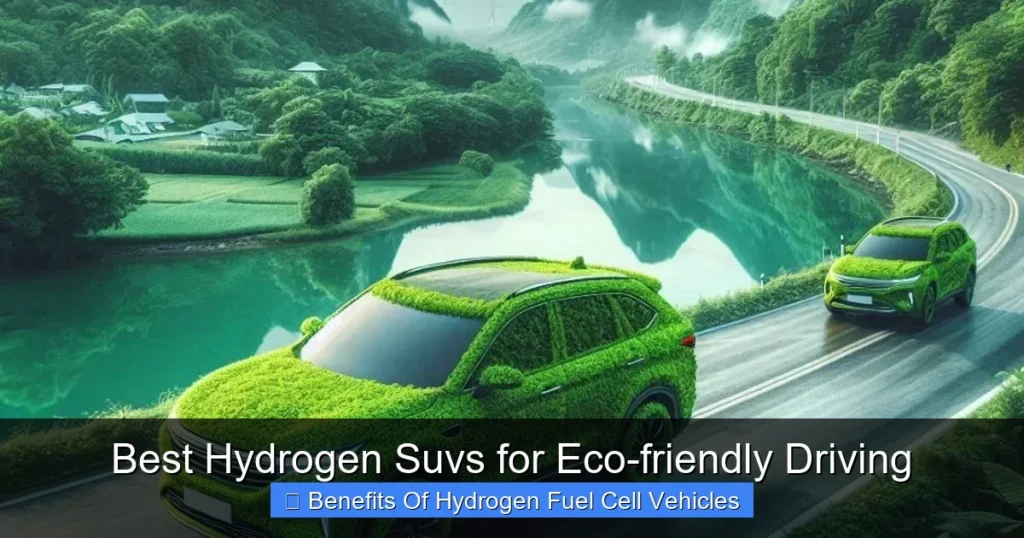
Hydrogen SUVs offer a clean, efficient alternative to gas and electric vehicles. With zero tailpipe emissions, quick refueling, and impressive range, they’re ideal for eco-conscious drivers who want performance and sustainability. Explore the top models leading the hydrogen revolution.
Key Takeaways
- Zero Emissions: Hydrogen SUVs emit only water vapor, making them truly eco-friendly and ideal for reducing your carbon footprint.
- Fast Refueling: Unlike battery EVs, hydrogen vehicles refuel in 3–5 minutes, similar to gasoline cars, saving time on long trips.
- Long Driving Range: Most hydrogen SUVs offer 300–400 miles per tank, outperforming many electric SUVs and reducing range anxiety.
- Quiet and Smooth Ride: Fuel cell technology delivers a quiet, vibration-free driving experience with instant torque and responsive acceleration.
- Growing Infrastructure: While still limited, hydrogen refueling stations are expanding, especially in California, Japan, and parts of Europe.
- Government Incentives: Many regions offer tax credits, rebates, and HOV lane access to encourage adoption of hydrogen vehicles.
- Future-Proof Technology: As green hydrogen production grows, these SUVs will become even cleaner and more sustainable over time.
📑 Table of Contents
Why Hydrogen SUVs Are the Future of Eco-Friendly Driving
Imagine driving a spacious, powerful SUV that leaves no carbon footprint—no smog, no greenhouse gases, just pure, clean energy. That’s the promise of hydrogen fuel cell vehicles (FCEVs), and they’re no longer a futuristic dream. Today’s best hydrogen SUVs are redefining what it means to drive green, combining the practicality of an SUV with the environmental benefits of zero-emission technology.
Unlike traditional gas-powered SUVs that spew pollutants into the air, hydrogen SUVs run on fuel cells that convert hydrogen gas into electricity. This process powers the motor and produces only water vapor as a byproduct. It’s a game-changer for eco-conscious drivers who want to reduce their environmental impact without sacrificing performance, space, or convenience.
But hydrogen SUVs aren’t just about being green. They also solve some of the biggest pain points of electric vehicles (EVs). While EVs require hours to recharge—even with fast chargers—hydrogen SUVs refuel in just 3 to 5 minutes, just like filling up at a gas station. Plus, they offer longer driving ranges, often exceeding 300 miles on a single tank. For families, road trippers, and commuters alike, that means fewer stops and more freedom.
How Hydrogen Fuel Cell Technology Works
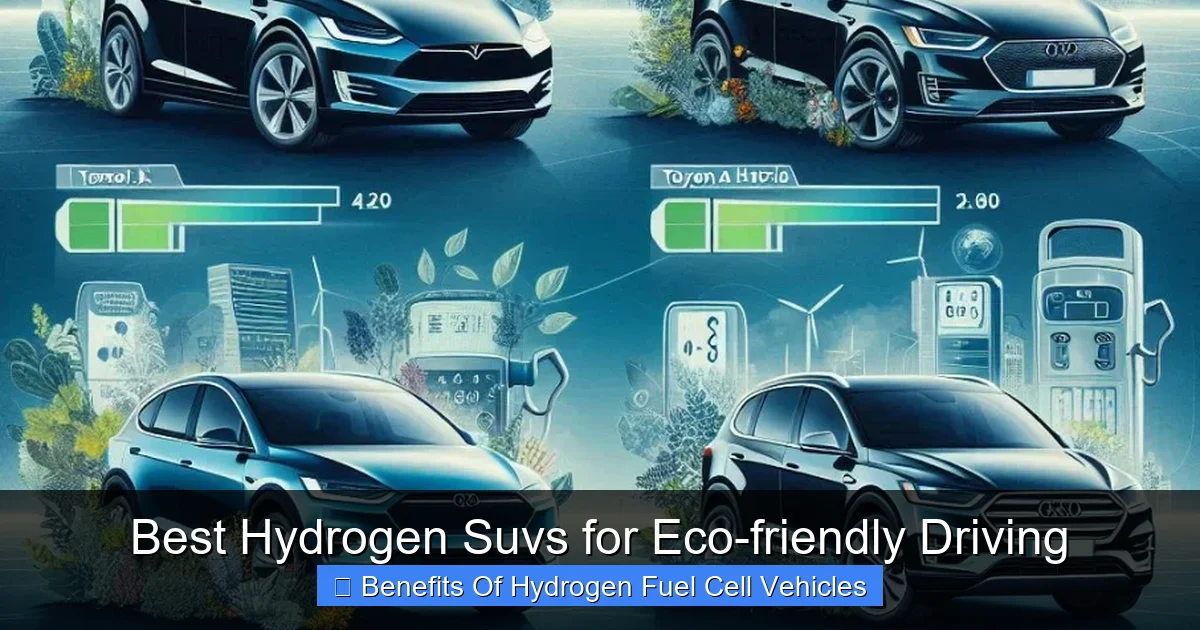
Visual guide about Best Hydrogen Suvs for Eco-friendly Driving
Image source: static.overfuel.com
To understand why hydrogen SUVs are so impressive, it helps to know how they work. At the heart of every hydrogen SUV is a fuel cell stack—a series of electrochemical cells that combine hydrogen and oxygen to produce electricity. Here’s a simple breakdown of the process:
The Science Behind the Power
Hydrogen gas is stored in high-pressure tanks within the vehicle. When you press the accelerator, hydrogen flows into the fuel cell stack, where it meets oxygen from the air. Inside the fuel cell, a catalyst—usually platinum—splits the hydrogen atoms into protons and electrons. The protons pass through a membrane, while the electrons are forced to travel through an external circuit, creating an electric current. This electricity powers the motor, turning the wheels.
Meanwhile, the protons and electrons reunite on the other side of the membrane, combining with oxygen to form water—H₂O—which exits the vehicle as harmless water vapor. No combustion, no emissions, just clean energy.
Why It’s Better Than Battery EVs in Some Ways
While battery electric vehicles (BEVs) are also eco-friendly, hydrogen SUVs have distinct advantages. First, refueling is much faster. Charging a large EV battery can take 30 minutes to several hours, even with a fast charger. Hydrogen refueling? Just a few minutes. Second, hydrogen SUVs are lighter than battery-heavy EVs, which can improve handling and efficiency. Third, they perform better in cold weather—hydrogen fuel cells don’t lose range in winter like lithium-ion batteries do.
That said, hydrogen technology isn’t perfect. The biggest challenge is infrastructure. There are far fewer hydrogen refueling stations than EV chargers, especially outside of California, Japan, and parts of Europe. But as demand grows and green hydrogen production increases, that’s changing fast.
Top Hydrogen SUVs You Can Buy Today
While the hydrogen vehicle market is still niche, a few standout models are leading the charge. These SUVs combine cutting-edge technology, impressive performance, and real-world practicality. Here are the best hydrogen SUVs available now.
Toyota Mirai – The Pioneer of Hydrogen Driving
The Toyota Mirai is arguably the most well-known hydrogen vehicle on the road. Now in its second generation, the Mirai has evolved from a compact sedan into a sleek, midsize luxury SUV. With a driving range of up to 402 miles on a single tank, it outperforms many EVs and gas-powered SUVs.
The Mirai features a refined interior with premium materials, a 12.3-inch touchscreen, and advanced safety features like adaptive cruise control and lane-keeping assist. It accelerates from 0 to 60 mph in about 9 seconds—not blistering fast, but smooth and quiet. Toyota also offers generous incentives, including up to $15,000 in free hydrogen fuel for three years in California.
Hyundai NEXO – The Tech-Savvy Eco SUV
Hyundai’s NEXO is a compact SUV that blends futuristic design with advanced technology. It boasts a range of up to 380 miles and features a unique air purification system that actually cleans the air as you drive. The NEXO can filter out 99.9% of fine dust and particulate matter, making it one of the cleanest vehicles on the planet—literally.
Inside, the NEXO offers a minimalist cabin with dual 12.3-inch displays, wireless charging, and a heads-up display. It also includes Hyundai’s SmartSense safety suite, with features like blind-spot monitoring and highway driving assist. While the NEXO is only available in select markets—mainly California—it’s a strong contender for tech lovers who want innovation and sustainability.
BMW iX5 Hydrogen – Luxury Meets Zero Emissions
BMW is entering the hydrogen space with the iX5 Hydrogen, a luxury SUV based on the popular X5 platform. While not yet widely available, the iX5 Hydrogen is being tested in real-world conditions across Europe and North America.
This SUV combines BMW’s signature driving dynamics with hydrogen fuel cell technology. It features a dual-motor setup delivering over 400 horsepower, with a top speed of 115 mph. The interior is packed with premium materials, ambient lighting, and BMW’s latest iDrive infotainment system. BMW is also working on a next-generation fuel cell that’s smaller, lighter, and more efficient—hinting at a future where hydrogen luxury SUVs become mainstream.
Benefits of Driving a Hydrogen SUV
Switching to a hydrogen SUV isn’t just about going green—it’s about enjoying a better driving experience. Here are the top benefits that make these vehicles worth considering.
Zero Tailpipe Emissions
The most obvious benefit is environmental. Hydrogen SUVs produce no harmful emissions. No CO₂, no nitrogen oxides, no particulate matter—just water vapor. This makes them ideal for cities struggling with air pollution and for drivers who want to do their part in fighting climate change.
Even when you factor in how the hydrogen is produced, FCEVs are still cleaner than gas vehicles. If the hydrogen comes from renewable sources—like wind or solar-powered electrolysis—the entire lifecycle emissions are minimal. As green hydrogen production scales up, these vehicles will become even cleaner.
Fast and Convenient Refueling
One of the biggest frustrations with EVs is charging time. Even with a fast charger, you’re looking at 30–45 minutes for an 80% charge. With a hydrogen SUV, you can refuel in 3–5 minutes—just like a gas car. This is a huge advantage for road trips, busy families, or anyone who values their time.
Plus, hydrogen stations are designed to mimic gas stations. You pull up, connect the nozzle, and fill up—no waiting for a charging spot or dealing with tangled cables.
Long Range and Consistent Performance
Most hydrogen SUVs offer a range of 300–400 miles, which is competitive with gas vehicles and better than many EVs. And unlike battery EVs, hydrogen SUVs don’t lose range in cold weather. The fuel cell operates efficiently in all temperatures, so you can count on consistent performance year-round.
This makes hydrogen SUVs ideal for long-distance travel, rural areas, and regions with extreme climates.
Quiet and Smooth Driving Experience
Hydrogen fuel cells are incredibly quiet. There’s no engine noise, no vibration, and no gear shifts—just smooth, silent acceleration. This creates a peaceful cabin environment, perfect for relaxation or conversation.
The instant torque from the electric motor also means responsive acceleration. Whether you’re merging onto a highway or climbing a hill, the power is always there when you need it.
Government Incentives and Perks
Many governments are encouraging the adoption of hydrogen vehicles with financial incentives. In the U.S., California offers a Clean Vehicle Rebate Project (CVRP) rebate of up to $5,000 for hydrogen vehicles. Some states also provide tax credits, reduced registration fees, and access to carpool lanes—even with a single occupant.
In Europe, countries like Germany and France offer purchase subsidies and funding for hydrogen infrastructure. Japan has long been a leader in hydrogen technology, with strong government support and a growing network of refueling stations.
Challenges and Considerations
While hydrogen SUVs have many advantages, they’re not without challenges. Understanding these limitations can help you make an informed decision.
Limited Refueling Infrastructure
The biggest hurdle is access to hydrogen stations. As of 2024, there are fewer than 100 public hydrogen stations in the U.S., with most concentrated in California. Outside of major cities, finding a place to refuel can be difficult.
However, this is changing. Companies like Shell, Air Liquide, and Toyota are investing in new stations. California alone plans to have 200 stations by 2025. In Europe and Asia, the network is more developed, with countries like Germany and South Korea leading the way.
Higher Upfront Cost
Hydrogen SUVs are currently more expensive than comparable gas or electric SUVs. The Toyota Mirai starts around $50,000, and the Hyundai NEXO is similarly priced. This is due to the high cost of fuel cell components and limited production scale.
But prices are expected to drop as technology improves and production ramps up. Government incentives can also help offset the cost.
Hydrogen Production and Sustainability
Not all hydrogen is created equal. Most hydrogen today is produced from natural gas through a process called steam methane reforming, which emits CO₂. This “gray hydrogen” reduces the environmental benefits of FCEVs.
However, “green hydrogen”—produced using renewable energy—is growing rapidly. Solar and wind power can be used to split water into hydrogen and oxygen via electrolysis, creating a truly clean fuel. As green hydrogen becomes more affordable, hydrogen SUVs will become even more sustainable.
Vehicle Availability and Model Options
Right now, there are only a few hydrogen SUVs on the market. Most are only available in select regions, and inventory can be limited. This makes it harder to test drive or compare models.
But automakers are investing heavily in hydrogen technology. Toyota, Hyundai, BMW, and even General Motors are developing new FCEVs. In the next 5–10 years, we can expect more models, better performance, and wider availability.
The Future of Hydrogen SUVs
The future looks bright for hydrogen SUVs. As technology advances and infrastructure expands, these vehicles are poised to become a major player in the clean transportation revolution.
Advancements in Fuel Cell Technology
Researchers are working on cheaper, more efficient fuel cells. New catalysts are being developed to replace expensive platinum, and membrane materials are becoming more durable. These improvements will reduce costs and increase the lifespan of hydrogen vehicles.
Solid-state hydrogen storage is also on the horizon. Instead of high-pressure gas tanks, future SUVs might use solid materials to store hydrogen more safely and efficiently.
Expansion of Refueling Networks
Governments and private companies are investing billions in hydrogen infrastructure. The U.S. Department of Energy has launched the H₂@Scale initiative to support hydrogen production and distribution. In Europe, the Hydrogen Strategy aims to install 1,000 refueling stations by 2030.
Truck stops, airports, and fleet depots are also adding hydrogen pumps, making it easier for SUV owners to travel long distances.
Integration with Renewable Energy
Hydrogen can act as a clean energy carrier. Excess solar and wind power can be used to produce hydrogen during off-peak hours, storing energy for later use. This makes hydrogen SUVs part of a larger clean energy ecosystem.
Imagine charging your SUV with hydrogen made from solar power generated at a nearby farm. That’s the kind of future hydrogen technology enables.
Mainstream Adoption and Consumer Awareness
As more people learn about the benefits of hydrogen SUVs, demand will grow. Automakers are launching marketing campaigns, offering test drives, and partnering with ride-sharing services to increase visibility.
With the right policies and public support, hydrogen SUVs could become as common as EVs in the next decade.
Tips for Buying and Owning a Hydrogen SUV
If you’re considering a hydrogen SUV, here are some practical tips to help you get started.
Check Local Infrastructure
Before buying, research hydrogen stations near you. Use apps like PlugShare or the California Fuel Cell Partnership’s station locator to see where you can refuel. If you live in or near a major city with hydrogen stations, you’re in a good position.
Take Advantage of Incentives
Look into federal, state, and local incentives. In California, you may qualify for rebates, tax credits, and free hydrogen fuel. Some employers also offer green vehicle perks.
Consider Leasing
Because hydrogen technology is still evolving, leasing can be a smart option. It allows you to drive the latest models without a long-term commitment. Many manufacturers offer lease deals with included fuel.
Plan Long Trips Carefully
While hydrogen SUVs have great range, plan your routes around refueling stations. Use trip planning tools to map out stops in advance. As the network grows, this will become less of an issue.
Stay Informed
Follow news about hydrogen technology, infrastructure, and policy changes. Join online communities or forums for hydrogen vehicle owners to share tips and experiences.
Conclusion
Hydrogen SUVs represent a bold step toward a cleaner, more sustainable future. They offer the space, power, and convenience of traditional SUVs—without the pollution. With zero emissions, fast refueling, and long range, they’re a compelling alternative to both gas and electric vehicles.
While challenges remain—like limited infrastructure and higher costs—the momentum is growing. Automakers are investing in new models, governments are supporting infrastructure, and green hydrogen production is scaling up.
For eco-conscious drivers who want performance, practicality, and peace of mind, hydrogen SUVs are worth a serious look. They’re not just the future of driving—they’re the future of responsible, enjoyable, and truly clean transportation.
Frequently Asked Questions
Are hydrogen SUVs really eco-friendly?
Yes, hydrogen SUVs produce zero tailpipe emissions—only water vapor. When hydrogen is made from renewable sources, their overall environmental impact is very low.
How long does it take to refuel a hydrogen SUV?
Refueling a hydrogen SUV takes just 3 to 5 minutes, similar to filling up a gas car—much faster than charging an electric vehicle.
How far can a hydrogen SUV go on one tank?
Most hydrogen SUVs offer a range of 300 to 400 miles, which is competitive with gas vehicles and better than many electric SUVs.
Where can I refuel a hydrogen SUV?
Hydrogen stations are currently limited but growing. Most are in California, with expanding networks in Europe and Asia. Use station locator apps to find nearby options.
Are hydrogen SUVs safe?
Yes, hydrogen SUVs are designed with multiple safety features, including reinforced tanks and leak detection systems. They undergo rigorous testing to ensure safety.
Can I buy a hydrogen SUV outside of California?
Availability is limited, but expanding. Currently, most hydrogen SUVs are sold in California, with select models available in Europe and Asia. Check with local dealers for availability.