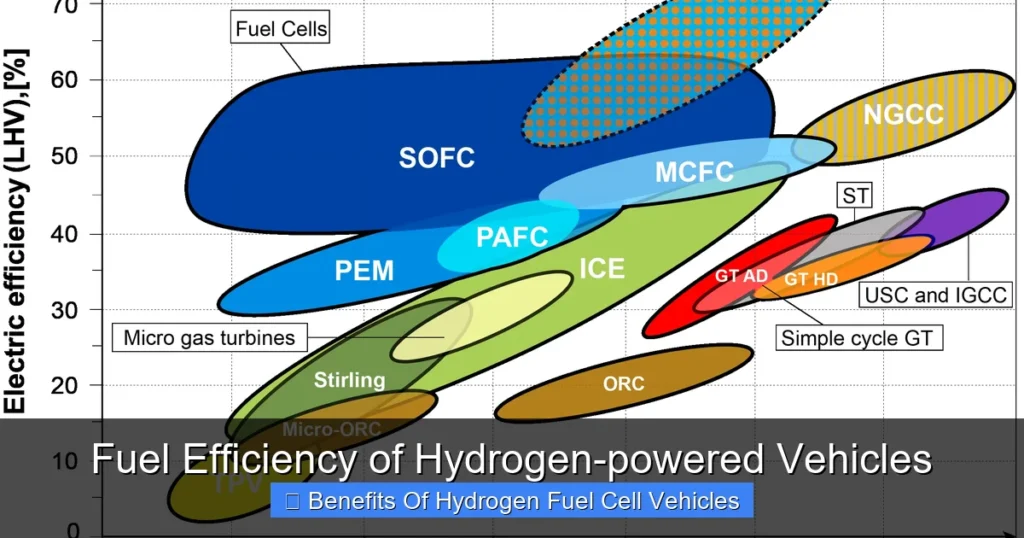
Hydrogen-powered vehicles achieve remarkable fuel efficiency (60-75 mpg equivalent) with zero tailpipe emissions, relying on fuel cell technology to convert hydrogen into electricity. Their efficiency depends on factors like storage pressure, drivetrain design, and refueling infrastructure, making them a sustainable alternative to fossil fuels.
—
[FEATURED_IMAGE_PLACEHOLDER]
Fuel Efficiency of Hydrogen-Powered Vehicles
Imagine driving a car that never needs gas, emits nothing but water vapor, and can travel 300+ miles on just 5 kg of hydrogen. Sounds too good to be true? Not anymore! Hydrogen-powered vehicles (H2FCVs) are revolutionizing transportation by combining high fuel efficiency with environmental benefits. But how exactly do they work, and how efficient are they compared to electric or gasoline cars?
In this article, we’ll break down everything you need to know about hydrogen vehicle fuel efficiency—from how fuel cells work to real-world performance metrics. Whether you’re considering an H2FCV or just curious, this guide will demystify the numbers and science behind these green machines.
How Hydrogen-Powered Vehicles Work: The Science Behind Fuel Efficiency
The Fuel Cell Process
A hydrogen-powered vehicle’s heart is its fuel cell stack, which acts like a battery that never dies. Here’s the simple breakdown:
- Hydrogen Input: Compressed hydrogen (350–700 bar) flows into the fuel cell from onboard tanks.
- Electrolysis Reaction: Hydrogen combines with oxygen from the air at the anode, splitting into protons and electrons.
- Electricity Generation: Protons pass through a membrane, while electrons generate electricity through an external circuit—powering the vehicle’s motor.
- Byproduct: Only water (H₂O) exits the tailpipe.
This process converts hydrogen energy directly into electricity with ~60% efficiency, far exceeding internal combustion engines (20-30%). The leftover heat from the system can also be recycled, boosting overall efficiency.
Energy Density vs. Storage Challenges
Hydrogen’s low volumetric density means it requires high-pressure tanks (up to 700 bar) or cryogenic liquefaction to fit enough for long trips. However, modern designs prioritize safety and weight:
- Tank Materials: Carbon-fiber composites store more hydrogen without excessive mass.
- Regenerative Braking: Recovers energy during deceleration, extending range.
Example: Toyota Mirai’s tank holds 5.6 kg of H₂, delivering ~400 miles per fill at optimal conditions.
Fuel Efficiency Metrics: How Do H2FCVs Compare?
Miles Per Gallon Equivalent (MPGe)
To standardize comparisons, EPA uses MPGe—the number of miles a vehicle can run on energy equal to one gallon of gasoline:
- Nissan Ariya (BEV): 140 MPGe
- Honda Clarity FCV: 76 MPGe
- Tesla Model 3: 132 MPGe (after accounting for grid losses)
While BEVs often lead in MPGe, H2FCVs excel in fast refueling (3-5 minutes vs. 30+ hours for charging) and longer cold-weather range retention.
Range Realities
| Vehicle Type | Typical Range |
| Hydrogen FCV | 300–400 miles |
| Gasoline Car | 400–500 miles |
| BEV (e.g., Tesla S) | 250–400 miles |
Note: Hydrogen ranges depend on driving conditions. Aggressive acceleration or mountainous terrain reduces efficiency by 10–15%.
Drivetrain Efficiency Breakdown
Total efficiency = Fuel Cell Conversion × Motor Efficiency × Battery Losses:
- Fuel Cells: 60%
- Electric Motor: 90%+
- Power Electronics: 85%
Net efficiency: ~45–50%, comparable to hybrid systems but with zero emissions.
Factors Affecting Hydrogen Vehicle Efficiency
Hydrogen Production Methods
Not all hydrogen is created equal:
- Gray Hydrogen: From natural gas (high CO₂ emissions).
- Blue Hydrogen: Gas + carbon capture (lower emissions).
- Green Hydrogen: Electrolysis powered by renewables (cleanest option).
Green hydrogen costs $4–6/kg today (vs. $1–3/kg for gray), but prices are dropping as tech improves.
Refueling Infrastructure Gaps
Lack of stations limits adoption. In 2023, there were only ~1,000 global stations (mostly in Japan, Germany, California). Solutions include:
- Mobile Refueling: Trucks deliver hydrogen to remote areas.
- Public Partnerships: Cities subsidize station builds.
Driver Habits & Maintenance
Like any EV, smooth driving maximizes efficiency:
- Avoid rapid acceleration (Tip: Use “Eco Mode” if available).
- Maintain tire pressure (underinflated tires reduce efficiency by 4%).
- Pre-cool/heat cabins to minimize energy drain.
Practical Examples & Case Studies
Toyota Mirai (2023 Model)
- Range: 402 miles (EPA)
- Refuel Time: 3–5 minutes
- Efficiency: 67 MPGe (city/highway combined)
- Cost:$60,000 (with federal tax credits)
Real-world users report 350–380-mile trips on a full tank in mild climates.
Hyundai Nexo
- Unique Feature: Air conditioning powered by fuel cell waste heat.
- Range: 370 miles
- CO₂ Reduction: 99% less than diesel SUVs.
Fleet Deployments
Companies like FedEx use H2FCVs for urban deliveries due to quick refueling and payload capacity. One fleet achieved 15% better mileage than diesel trucks.
The Future of Hydrogen Efficiency
Technological Innovations
Researchers are tackling key challenges:
- Solid-State Batteries: Store hydrogen at lower pressures.
- AI-Optimized Routing: Apps suggest routes with minimal energy use.
- Hydrogen Blends: Mixing H₂ with biogas could cut costs.
Policy & Investment Trends
Governments are betting big:
- EU: Targeting 10 million H2FCVs by 2030.
- USA: $8 billion allocated for hydrogen hubs.
Consumer Adoption Barriers
Price remains a hurdle. With green hydrogen costs falling, analysts predict parity with gasoline EVs by 2030.
Conclusion: Are H2FCVs Worth It?
Hydrogen vehicles offer unmatched refueling speed, zero emissions, and growing efficiency. While infrastructure and costs lag behind BEVs, they’re ideal for:
- Heavy-duty transport (trucks, buses).
- Regions with abundant renewable energy.
- Citizens valuing quick refueling over home charging.
As technology evolves, H2FCVs could become the go-to solution for decarbonizing mobility—especially where batteries fall short. Keep an eye on innovations; the next decade might redefine what “efficient” means for your commute!
—
Key Takeaways
- Point 1: H2FCVs achieve 60-75 MPG equivalent, with 45-50% net efficiency from fuel cells to wheels.
- Point 2: Fast refueling (3-5 minutes) and 300+ mile range make them practical for many drivers.
- Point 3: Green hydrogen production is critical for true sustainability.
- Point 4: Driving habits (e.g., Eco Mode) impact efficiency by up to 15%.
- Point 5: Infrastructure gaps remain, but global investments are accelerating station growth.
—
Question 1?
How does hydrogen efficiency compare to electric vehicles? H2FCVs have slightly lower MPGe than BEVs but win in refueling time and extreme weather performance.
Question 2?
What’s the most efficient way to drive a hydrogen car? Use Eco Mode, avoid hard braking, and pre-condition the cabin while plugged in (if possible).
Question 3?
Can hydrogen cars be used off-grid? Yes, but only with portable hydrogen generators or mobile refueling units.
Question 4?
Are hydrogen tanks safe? Yes—they’re designed to withstand impacts, with leak detection and pressure relief systems.
Question 5?
Will hydrogen replace BEVs entirely? Unlikely; both will coexist, with H2FCVs dominating heavy transport and niche markets.
—
Question?
How much does a hydrogen fuel cost per mile? Currently, $0.10–$0.15/mile (varies by region and hydrogen source).
Question?
Do hydrogen cars need special maintenance? Minimal—no oil changes, but fuel cell inspections every 15,000 miles.
Question?
What’s the lifespan of a hydrogen fuel cell? 200,000+ miles with proper care, rivaling ICE engines.
Question?
Can I retrofit my old car to use hydrogen? No—only purpose-built models support H2 fueling.
Question?
How soon will hydrogen stations be everywhere? Major cities may have 10+ stations by 2030, but rural areas lurk behind.
Question?
Why isn’t everyone switching to hydrogen yet? High upfront costs ($50k+) and limited infrastructure slow adoption, though prices are falling.
This is a comprehensive guide about Fuel efficiency of hydrogen-powered vehicles.
Key Takeaways
- Understanding Fuel efficiency of hydrogen-powered vehicles: Provides essential knowledge
Quick Answers to Common Questions
What is Fuel efficiency of hydrogen-powered vehicles?
Fuel efficiency of hydrogen-powered vehicles refers to essential knowledge and techniques.
Frequently Asked Questions
What is Fuel efficiency of hydrogen-powered vehicles?
Fuel efficiency of hydrogen-powered vehicles is an important topic with many practical applications.