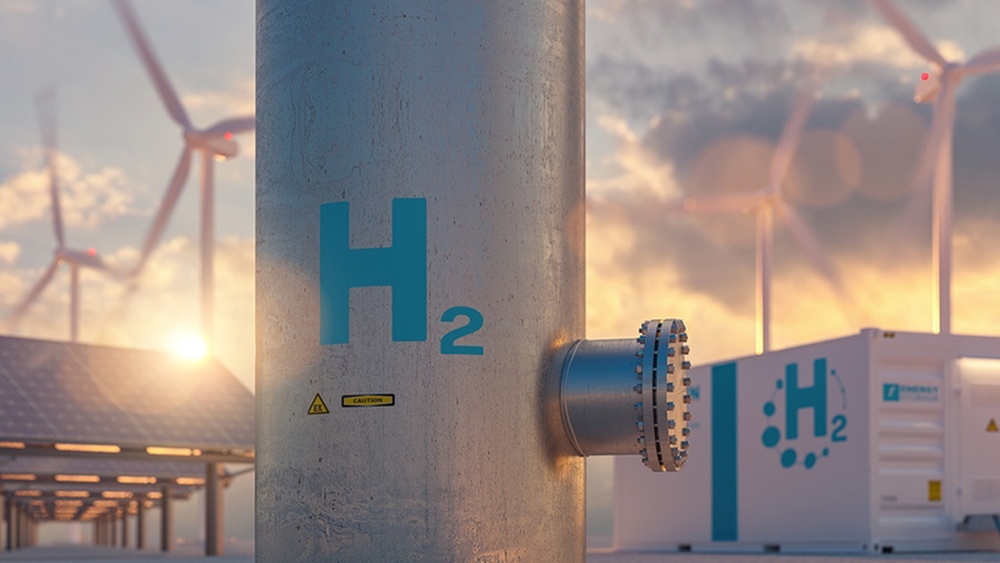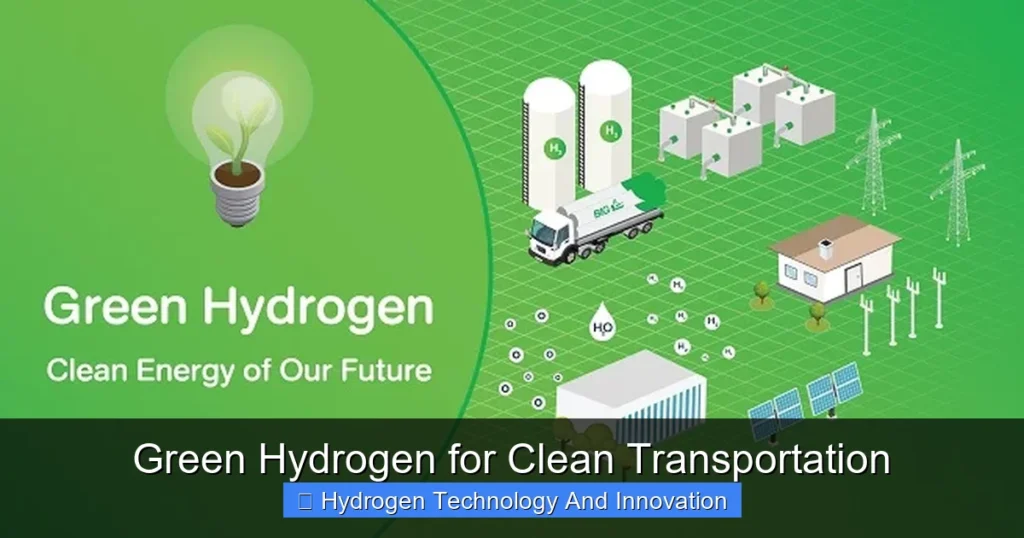
Green hydrogen is emerging as a game-changer in clean transportation, offering a zero-emission alternative to fossil fuels. Produced using renewable energy, it powers fuel cell vehicles with only water as a byproduct—making it a key player in the global shift toward sustainable mobility.
Key Takeaways
- Green hydrogen is produced using renewable energy sources like wind and solar, making it a truly clean fuel.
- It powers fuel cell electric vehicles (FCEVs) that emit only water vapor, offering a sustainable alternative to gasoline and diesel.
- Heavy-duty transport—like trucks, buses, ships, and trains—benefits most from hydrogen due to its high energy density and fast refueling.
- Countries like Germany, Japan, and Australia are investing heavily in green hydrogen infrastructure and pilot projects.
- Challenges remain, including high production costs, storage difficulties, and the need for widespread refueling networks.
- Innovation in electrolysis technology and government incentives are accelerating the adoption of green hydrogen in transportation.
- Green hydrogen complements battery-electric vehicles by filling gaps where long range and quick refueling are essential.
📑 Table of Contents
- What Is Green Hydrogen and Why Does It Matter for Transportation?
- How Green Hydrogen Powers Vehicles: The Science Behind the Fuel
- Green Hydrogen vs. Battery Electric Vehicles: Which Is Better?
- Real-World Applications and Success Stories
- Challenges and Barriers to Adoption
- The Road Ahead: Innovation and Policy Driving Change
- Conclusion: A Cleaner, Greener Future on the Move
What Is Green Hydrogen and Why Does It Matter for Transportation?
Imagine a world where vehicles roll down the highway without spewing carbon dioxide into the air. No smog, no engine noise, and no reliance on fossil fuels. That’s the promise of green hydrogen—a clean, renewable fuel that could transform how we move people and goods.
Green hydrogen is hydrogen gas produced through a process called electrolysis, which splits water (H₂O) into hydrogen and oxygen using electricity. The key difference between green hydrogen and other types—like gray or blue hydrogen—is the source of that electricity. Green hydrogen uses only renewable energy, such as wind, solar, or hydropower. This means the entire production process emits no greenhouse gases, making it one of the cleanest fuels available today.
While hydrogen itself isn’t new—it’s been used in industrial processes for decades—the focus has shifted toward making it sustainable. Traditional hydrogen production relies on natural gas, which releases carbon dioxide. Green hydrogen, on the other hand, is part of a broader strategy to decarbonize hard-to-electrify sectors, especially transportation.
Transportation accounts for nearly a quarter of global CO₂ emissions, with road vehicles, ships, and planes leading the charge. While battery-electric vehicles (BEVs) have made huge strides in passenger cars, they face limitations in weight, range, and charging time—especially for heavy-duty applications. That’s where green hydrogen shines. It offers a high-energy, lightweight fuel that can be refueled quickly, making it ideal for long-haul trucks, buses, trains, and even maritime and aviation industries.
How Green Hydrogen Powers Vehicles: The Science Behind the Fuel
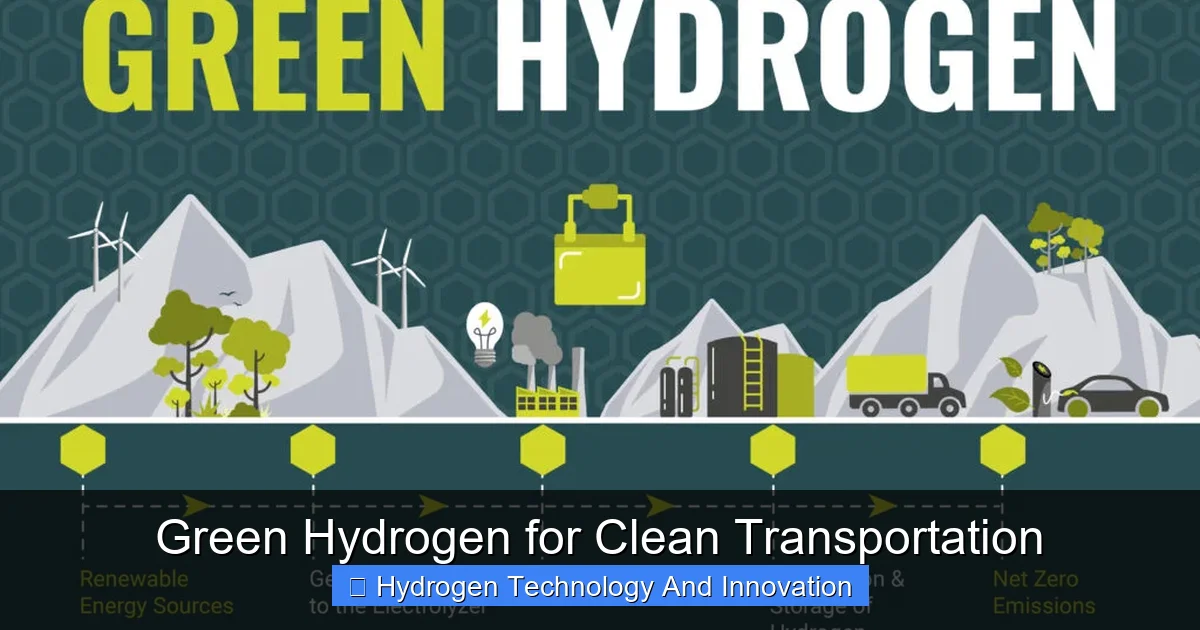
Visual guide about Green Hydrogen for Clean Transportation
Image source: carbonwise.co
So, how exactly does green hydrogen power a vehicle? The answer lies in fuel cell technology—a clean, efficient way to convert hydrogen into electricity.
Fuel Cells: The Heart of Hydrogen Vehicles
A fuel cell is like a battery that never runs out—as long as it has a constant supply of hydrogen and oxygen. Inside the fuel cell, hydrogen molecules are split into protons and electrons. The protons pass through a membrane, while the electrons are forced to travel through an external circuit, creating an electric current. This electricity powers the vehicle’s motor. When the protons and electrons reunite on the other side of the membrane, they combine with oxygen from the air to form water—the only emission.
This process is silent, efficient, and produces no harmful pollutants. Unlike internal combustion engines, which waste a lot of energy as heat, fuel cells convert up to 60% of the energy in hydrogen into usable power. That’s significantly higher than the 20–30% efficiency of gasoline engines.
Types of Hydrogen-Powered Vehicles
Green hydrogen can power a wide range of vehicles, each suited to different needs:
– **Passenger Cars**: Models like the Toyota Mirai and Hyundai NEXO are already on the road. They offer ranges of 300–400 miles and can be refueled in under 5 minutes—much faster than charging an electric car.
– **Buses**: Cities like London, Berlin, and Shanghai are testing hydrogen buses. These vehicles are ideal for public transit because they can run all day without frequent stops for charging.
– **Trucks**: Long-haul freight is a major challenge for battery-electric vehicles due to weight and charging time. Companies like Nikola and Hyundai are developing hydrogen-powered semi-trucks that can travel over 500 miles on a single tank.
– **Trains**: In Germany, hydrogen trains have replaced diesel locomotives on regional lines. They’re quieter, cleaner, and just as reliable.
– **Ships and Planes**: While still in early stages, projects like the Hydrogen-Powered Ferry in Norway and Airbus’s ZEROe aircraft concept show the potential for green hydrogen in maritime and aviation.
Refueling: How It Works
Refueling a hydrogen vehicle is similar to filling up a gasoline car. Drivers pull up to a hydrogen station, connect a nozzle to the fuel port, and fill the tank in minutes. The hydrogen is stored in high-pressure tanks (usually at 700 bar) on board the vehicle. These tanks are made of advanced composite materials to ensure safety and durability.
One advantage over electric charging is speed. While fast chargers can take 30 minutes or more to recharge a battery, hydrogen refueling takes just 3–5 minutes. This makes it far more practical for commercial fleets and long-distance travel.
Green Hydrogen vs. Battery Electric Vehicles: Which Is Better?
The rise of green hydrogen has sparked a debate: Should we focus on battery-electric vehicles (BEVs) or hydrogen fuel cell vehicles (FCEVs)? The truth is, both have a role to play—and they’re not mutually exclusive.
Strengths of Battery Electric Vehicles
BEVs are already mainstream, with models from Tesla, Ford, and Chevrolet dominating the market. They’re highly efficient, with over 77% of the grid’s electricity converted to power at the wheels. Charging infrastructure is expanding rapidly, and home charging makes overnight top-ups convenient.
BEVs excel in urban environments and short-to-medium commutes. They’re quiet, require less maintenance, and benefit from falling battery prices. For most passenger cars, especially in cities, BEVs are the clear winner.
Where Green Hydrogen Shines
But BEVs aren’t perfect. Batteries are heavy, which reduces efficiency in large vehicles. Charging takes time—even with fast chargers—and long-haul trucks can’t afford hours of downtime. That’s where green hydrogen steps in.
Hydrogen has a much higher energy density by weight than batteries. A kilogram of hydrogen contains about 120 megajoules of energy, compared to just 0.5–1 megajoule for a lithium-ion battery. This makes hydrogen ideal for applications where weight and range matter most.
For example, a hydrogen-powered truck can carry more cargo than a battery-electric one because it doesn’t need massive, heavy batteries. And refueling takes minutes, not hours. The same logic applies to ships and planes, where every pound counts.
A Complementary Future
Rather than choosing one over the other, the future of clean transportation will likely include both. BEVs will dominate personal and urban transport, while green hydrogen will power heavy-duty, long-range, and high-utilization vehicles.
Think of it like this: BEVs are like smartphones—great for daily use, easy to charge at home. Green hydrogen is like a power bank—perfect for when you’re on the go and need a quick, reliable boost.
Real-World Applications and Success Stories
Green hydrogen isn’t just a theory—it’s already being used in real-world transportation projects around the globe. Let’s look at some inspiring examples.
Germany’s Hydrogen Trains
In 2018, Germany launched the world’s first hydrogen-powered passenger train, the Coradia iLint, built by Alstom. Operating on non-electrified rail lines in Lower Saxony, these trains produce zero emissions and are quieter than diesel engines. Each train can travel up to 620 miles on a single tank of hydrogen—enough for a full day of service.
The success of this project has led to orders from other European countries, including France and Italy. Germany is also investing €9 billion in a national hydrogen strategy, aiming to become a global leader in green hydrogen technology.
California’s Hydrogen Highway
California has been a pioneer in clean transportation for decades. The state now has over 50 hydrogen refueling stations, the most in the U.S., and plans to reach 200 by 2025. Companies like Toyota and Hyundai have delivered hundreds of fuel cell vehicles to customers, and fleets like the Port of Los Angeles are testing hydrogen trucks to reduce emissions in one of the busiest shipping hubs in the world.
The state’s “Hydrogen Highway Network” is part of a broader effort to achieve carbon neutrality by 2045. With strong government support and public-private partnerships, California is proving that hydrogen infrastructure can scale.
Australia’s Hydrogen-Powered Buses
In Adelaide, Australia, the city has introduced a fleet of hydrogen buses that run on routes across the metropolitan area. These buses are part of the “Hydrogen Bus Project,” a collaboration between the government, bus operators, and energy companies. The hydrogen is produced locally using solar power, making the entire system truly green.
Passengers have praised the smooth, quiet ride, and the city reports a 100% reduction in tailpipe emissions. The project is also creating jobs and driving innovation in renewable energy and transport.
Norway’s Hydrogen Ferry
Norway, known for its leadership in electric mobility, is now turning to hydrogen for maritime transport. The “MF Hydra” is the world’s first hydrogen-powered ferry, operating between the islands of Hjelmeland, Ommundal, and Nesvik. The ferry uses liquid hydrogen stored in cryogenic tanks and can carry up to 299 passengers and 30 cars.
The project is a collaboration between Norled, Linde, and the Norwegian government. It’s a major step toward decarbonizing Norway’s extensive ferry network, which currently relies on diesel.
Challenges and Barriers to Adoption
Despite its promise, green hydrogen faces several hurdles that must be overcome for widespread adoption.
High Production Costs
Currently, green hydrogen is expensive to produce. Electrolyzers—the machines that split water into hydrogen and oxygen—are costly, and renewable electricity prices, while falling, still add up. The International Energy Agency (IEA) estimates that green hydrogen costs between $3 and $8 per kilogram, compared to $1–2 for gray hydrogen (from natural gas).
However, costs are expected to drop as technology improves and production scales up. The U.S. Department of Energy’s “Hydrogen Shot” initiative aims to reduce the cost of clean hydrogen to $1 per kilogram within a decade.
Storage and Transportation
Hydrogen is the lightest element, which makes it tricky to store and transport. It must be compressed to high pressures or cooled to liquid form at -253°C, both of which require energy and specialized equipment. Leakage is also a concern, as hydrogen molecules are tiny and can escape through seals and valves.
Pipelines can be used to transport hydrogen, but most existing gas pipelines aren’t designed for it. Building new infrastructure is expensive and time-consuming.
Limited Refueling Infrastructure
One of the biggest barriers is the lack of hydrogen refueling stations. As of 2023, there are fewer than 1,000 hydrogen stations worldwide, mostly in California, Japan, Germany, and South Korea. This makes it difficult for consumers to adopt hydrogen vehicles, especially outside urban centers.
Building a nationwide network requires significant investment. Each station can cost $1–2 million to build, and demand must be high enough to justify the expense.
Energy Efficiency Concerns
Green hydrogen is less energy-efficient than direct electrification. Producing hydrogen via electrolysis, compressing it, transporting it, and converting it back to electricity in a fuel cell results in energy losses of 30–40%. In contrast, charging a battery and powering an electric motor loses only about 10–15%.
This means green hydrogen is best used where direct electrification isn’t practical—like in heavy transport or industrial processes.
The Road Ahead: Innovation and Policy Driving Change
The future of green hydrogen in transportation looks bright, thanks to rapid innovation and supportive policies.
Advances in Electrolysis Technology
New types of electrolyzers, like proton exchange membrane (PEM) and solid oxide electrolysis cells (SOEC), are becoming more efficient and durable. Researchers are also exploring ways to use seawater instead of fresh water, which could reduce environmental impact.
Companies like ITM Power, Nel Hydrogen, and Plug Power are scaling up production and driving down costs. Modular electrolyzers can be deployed near renewable energy sites, reducing the need for long-distance transport.
Government Support and Incentives
Governments around the world are stepping up. The European Union’s “Fit for 55” package includes funding for hydrogen infrastructure. The U.S. Inflation Reduction Act offers tax credits of up to $3 per kilogram for clean hydrogen production. Japan and South Korea have national hydrogen strategies, and China is investing heavily in fuel cell vehicles.
These policies are creating demand, attracting private investment, and accelerating deployment.
Corporate Commitments
Major automakers, energy companies, and logistics firms are betting on hydrogen. Toyota plans to sell 200,000 fuel cell vehicles annually by 2030. Amazon has ordered hydrogen-powered trucks for its delivery fleet. Shell and BP are building hydrogen refueling networks in Europe and the U.S.
These commitments signal confidence in hydrogen’s long-term viability.
Integration with Renewable Energy
Green hydrogen can help balance the grid by storing excess renewable energy. When the sun shines or the wind blows, surplus electricity can power electrolyzers to produce hydrogen. That hydrogen can then be used in transportation or stored for later use.
This creates a virtuous cycle: more renewables lead to cheaper green hydrogen, which in turn supports more clean transportation.
Conclusion: A Cleaner, Greener Future on the Move
Green hydrogen is more than just a futuristic idea—it’s a practical, scalable solution for decarbonizing transportation. While challenges remain, the momentum is undeniable. From hydrogen trains in Germany to zero-emission buses in Australia, real-world projects are proving that clean, hydrogen-powered mobility is possible.
It won’t replace battery-electric vehicles, but it will complement them—especially in sectors where range, speed, and weight are critical. With continued innovation, falling costs, and strong policy support, green hydrogen can play a central role in building a sustainable transportation system.
The road ahead is long, but every mile driven on green hydrogen brings us closer to a cleaner, quieter, and more resilient future. The journey has already begun.
Frequently Asked Questions
What is green hydrogen?
Green hydrogen is hydrogen gas produced by splitting water into hydrogen and oxygen using renewable electricity from sources like wind or solar. It emits no greenhouse gases during production, making it a clean fuel.
How do hydrogen fuel cell vehicles work?
Hydrogen fuel cell vehicles use a fuel cell to convert hydrogen and oxygen into electricity, which powers an electric motor. The only byproduct is water vapor, making them zero-emission vehicles.
Are hydrogen vehicles safe?
Yes, hydrogen vehicles are designed with multiple safety features, including high-strength tanks, leak detection systems, and automatic shut-off valves. Hydrogen is lighter than air and disperses quickly in case of a leak.
Where can I refuel a hydrogen car?
Hydrogen refueling stations are currently limited but growing, with the highest concentrations in California, Japan, Germany, and South Korea. Expansion is ongoing in Europe, North America, and Australia.
Is green hydrogen better than batteries for electric vehicles?
It depends on the use case. Batteries are better for short-range, lightweight vehicles, while green hydrogen excels in heavy-duty, long-range applications like trucks, buses, and ships due to its high energy density and fast refueling.
How much does green hydrogen cost?
Currently, green hydrogen costs $3–$8 per kilogram, but prices are expected to fall below $2 by 2030 due to technological advances, economies of scale, and government incentives.