Hydrogen fuel cell SUVs offer a cleaner alternative to traditional gas-powered vehicles by producing only water vapor as emissions. While their environmental impact depends on how hydrogen is made, advancements in green hydrogen are making these vehicles increasingly sustainable.
Key Takeaways
- Zero Tailpipe Emissions: Hydrogen fuel cell SUVs emit only water vapor, significantly reducing air pollution in cities and urban areas.
- Energy Efficiency Varies: Fuel cells are more efficient than internal combustion engines, but overall efficiency depends on hydrogen production and distribution methods.
- Green Hydrogen Matters: When hydrogen is produced using renewable energy, the environmental footprint of fuel cell SUVs drops dramatically.
- Lower Lifecycle Emissions: Over their lifetime, hydrogen SUVs can have lower greenhouse gas emissions than gasoline or diesel vehicles, especially with clean energy sources.
- Infrastructure Challenges Remain: Limited refueling stations and high production costs currently hinder widespread adoption, but investment is growing.
- Complementary to EVs: Hydrogen SUVs can fill gaps where battery-electric vehicles struggle, such as long-haul travel and heavy-duty use.
- Future Potential is Strong: As clean energy expands, hydrogen fuel cell SUVs could play a key role in a sustainable transportation future.
📑 Table of Contents
How Do Hydrogen Fuel Cell SUVs Impact the Environment?
Imagine driving a powerful, spacious SUV that glides silently down the highway—without releasing a single puff of smog-forming gases. No exhaust fumes. No carbon dioxide pouring into the atmosphere. Just clean, quiet performance and a trail of water vapor behind you. This isn’t a scene from a sci-fi movie—it’s the reality of hydrogen fuel cell SUVs.
These vehicles are part of a growing movement toward cleaner transportation. As climate change accelerates and air quality worsens in cities worldwide, automakers and governments are searching for alternatives to gasoline and diesel. Electric vehicles (EVs) have taken center stage, but hydrogen fuel cell technology offers a compelling complement—especially for larger vehicles like SUVs that need longer range and quicker refueling.
But how green are hydrogen fuel cell SUVs, really? The answer isn’t black and white. While they produce zero emissions during operation, their overall environmental impact depends on how the hydrogen fuel is made, transported, and used. In this article, we’ll dive deep into the environmental footprint of hydrogen fuel cell SUVs, from production to disposal, and explore whether they’re a true step toward a sustainable future.
Whether you’re considering buying one or just curious about the tech, understanding their environmental impact helps you make informed decisions. Let’s break it down—simply, clearly, and without the jargon.
What Are Hydrogen Fuel Cell SUVs?
Visual guide about How Do Hydrogen Fuel Cell Suvs Impact the Environment?
Image source: hydrogenfuelnews.com
Before we talk about their environmental impact, let’s clarify what hydrogen fuel cell SUVs actually are. At first glance, they might look like any other SUV—spacious interiors, rugged designs, and all the modern tech you’d expect. But under the hood, they’re powered by a completely different system.
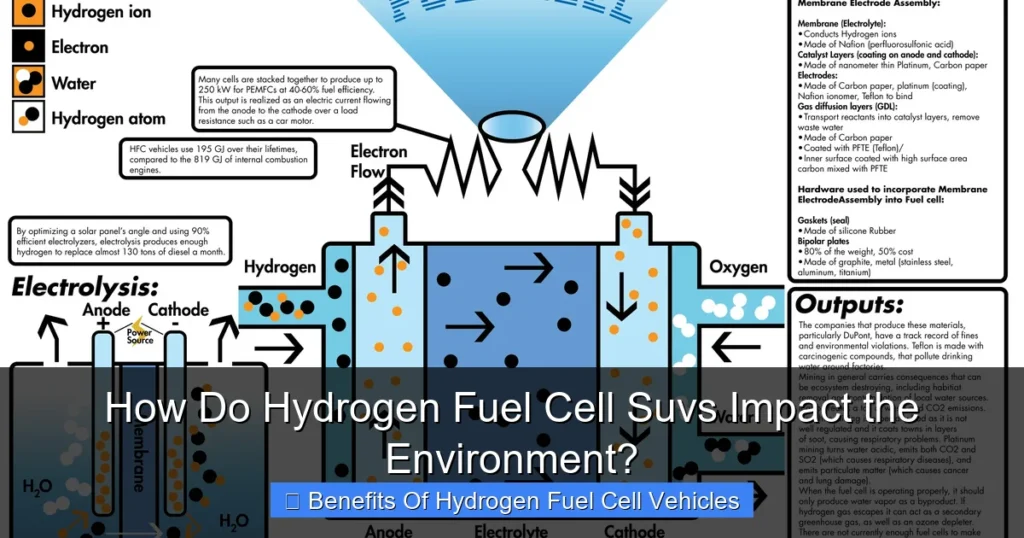
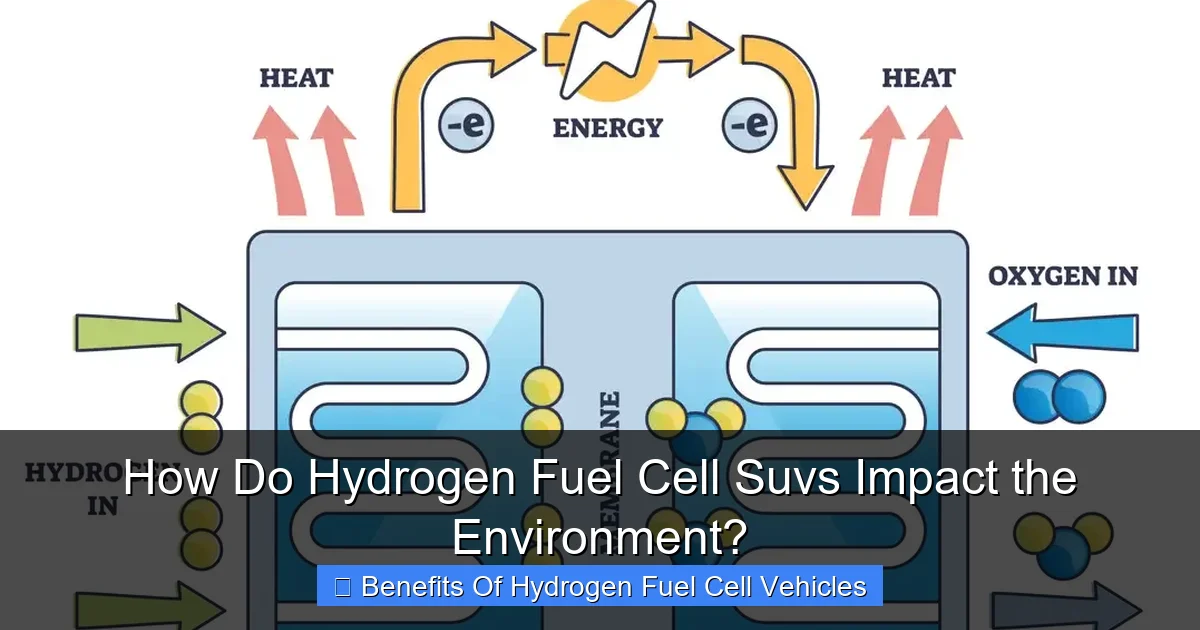
Instead of burning gasoline or relying on a large battery pack, hydrogen fuel cell SUVs use a fuel cell stack to generate electricity. Here’s how it works: hydrogen gas is stored in high-pressure tanks inside the vehicle. When you press the accelerator, the hydrogen flows into the fuel cell, where it reacts with oxygen from the air. This chemical reaction produces electricity, which powers the electric motor. The only byproduct? Water vapor—literally clean enough to drink.
This process is quiet, efficient, and emission-free at the tailpipe. That’s a huge advantage over traditional SUVs, which are among the biggest polluters on the road. According to the U.S. Environmental Protection Agency (EPA), the average passenger vehicle emits about 4.6 metric tons of carbon dioxide per year. SUVs, especially larger models, often exceed that.
Hydrogen fuel cell SUVs eliminate those direct emissions. But the story doesn’t end there. The real environmental impact comes from where the hydrogen comes from. Is it made using renewable energy, or is it derived from fossil fuels? That distinction makes all the difference.
How Hydrogen Is Produced
Hydrogen is the most abundant element in the universe, but it doesn’t exist freely in nature. It must be extracted from compounds like water (H₂O) or natural gas (CH₄). The method used determines how “clean” the hydrogen really is.
Currently, about 95% of hydrogen is produced through a process called steam methane reforming (SMR). This method uses natural gas and high-temperature steam to release hydrogen. While effective, it also releases carbon dioxide as a byproduct. This type of hydrogen is often called “gray hydrogen” and isn’t much better for the climate than burning gasoline.
A cleaner alternative is “blue hydrogen,” which uses the same SMR process but captures and stores the CO₂ emissions underground. It’s better than gray hydrogen but still relies on fossil fuels.
The gold standard is “green hydrogen,” produced by splitting water into hydrogen and oxygen using electricity from renewable sources like wind, solar, or hydropower. This method emits no greenhouse gases and is the most sustainable option. However, green hydrogen currently makes up less than 1% of global production due to high costs and limited infrastructure.
So, when we talk about hydrogen fuel cell SUVs, their environmental benefits depend heavily on the hydrogen source. A vehicle running on green hydrogen is far cleaner than one using gray hydrogen. As the world shifts toward renewable energy, the potential for truly clean hydrogen grows.
Popular Hydrogen Fuel Cell SUVs on the Market
While still a niche market, several automakers are leading the charge in hydrogen SUV development. The most well-known is the Toyota Mirai, a sleek, mid-size sedan that’s been available since 2015. But Toyota has also introduced the Mirai SUV concept, signaling a move toward larger hydrogen-powered vehicles.
Hyundai has been even more aggressive with its NEXO, a dedicated hydrogen fuel cell SUV that’s already on the road in select markets like California, South Korea, and parts of Europe. The NEXO offers over 380 miles of range, refuels in under five minutes, and features advanced driver-assistance systems.
Honda also entered the space with the Clarity Fuel Cell, though it has since discontinued the model in favor of focusing on battery EVs. Still, its technology laid important groundwork.
These vehicles aren’t just概念—they’re real, drivable, and increasingly refined. They offer the space, power, and versatility that SUV buyers want, without the guilt of high emissions. But again, their green credentials depend on the hydrogen supply chain.
Environmental Benefits of Hydrogen Fuel Cell SUVs
Now let’s get to the heart of the matter: how do hydrogen fuel cell SUVs impact the environment? The benefits are significant—but only if the system is set up correctly.
Zero Tailpipe Emissions
The most obvious advantage is zero tailpipe emissions. Unlike gasoline or diesel SUVs, hydrogen fuel cell vehicles don’t burn fuel. They don’t produce nitrogen oxides (NOx), particulate matter, or carbon monoxide—pollutants that contribute to smog, respiratory diseases, and climate change.
This is especially important in urban areas, where air quality is a major public health concern. In cities like Los Angeles, Beijing, or Delhi, vehicle emissions are a leading cause of poor air quality. Replacing gas-guzzling SUVs with hydrogen models could dramatically reduce local pollution.
Imagine a school zone where children breathe cleaner air because the SUVs dropping them off emit only water. That’s the kind of tangible benefit hydrogen vehicles can deliver.
Reduced Greenhouse Gas Emissions Over Time
While hydrogen production can be carbon-intensive, the overall lifecycle emissions of fuel cell SUVs are often lower than those of conventional vehicles—especially as green hydrogen becomes more common.
A 2021 study by the International Council on Clean Transportation (ICCT) found that hydrogen fuel cell vehicles powered by green hydrogen can reduce lifecycle greenhouse gas emissions by up to 70% compared to gasoline vehicles. Even when using blue hydrogen, emissions are still significantly lower.
Lifecycle emissions include everything: manufacturing the vehicle, producing the fuel, driving it, and eventually recycling or disposing of it. While building a hydrogen SUV does require energy and resources, the long-term savings in emissions during use make up for it.
For example, the Hyundai NEXO has a well-to-wheel emissions rating of about 70 grams of CO₂ per kilometer when using green hydrogen—compared to over 200 g/km for the average gasoline SUV.
Energy Efficiency and Performance
Fuel cells are inherently more efficient than internal combustion engines. A typical gasoline engine converts only about 20–30% of the energy in fuel into motion. The rest is lost as heat. In contrast, hydrogen fuel cells can achieve 40–60% efficiency.
This means more of the energy you put in actually moves the vehicle. That’s a big win for sustainability. Less wasted energy means less fuel needed, which reduces demand on energy resources.
And because hydrogen has a high energy density by weight, fuel cell SUVs can travel long distances without frequent refueling. The Toyota Mirai, for instance, can go over 400 miles on a single tank—comparable to many gas-powered SUVs.
Support for Renewable Energy Integration
Hydrogen can also play a role in balancing the electrical grid. When wind or solar production is high but demand is low, excess electricity can be used to produce hydrogen through electrolysis. This “power-to-gas” approach stores renewable energy for later use—either in vehicles or for industrial processes.
In this way, hydrogen fuel cell SUVs don’t just reduce emissions—they help integrate more renewables into the energy system. It’s a win-win for clean energy and clean transportation.
Environmental Challenges and Concerns
Despite their promise, hydrogen fuel cell SUVs aren’t a perfect solution. Several environmental challenges must be addressed for them to reach their full potential.
Hydrogen Production Emissions
As mentioned earlier, most hydrogen today is made from natural gas, which releases CO₂. Even with carbon capture, blue hydrogen still has a significant carbon footprint. Until green hydrogen becomes mainstream, the environmental benefits of fuel cell SUVs are limited.
Producing green hydrogen requires large amounts of renewable electricity. In regions where the grid is still powered by coal or gas, the net benefit may be small. For hydrogen SUVs to be truly green, we need a clean energy transition across the board.
Energy Loss in Production and Distribution
Hydrogen is tricky to handle. It’s a lightweight, low-density gas that requires compression or liquefaction for storage and transport. Each step—electrolysis, compression, transport, and refueling—loses energy.
Studies show that the well-to-wheel efficiency of hydrogen vehicles can be as low as 25–35%, compared to 70–80% for battery-electric vehicles. That means more total energy is needed to power a hydrogen SUV than an EV, even if the hydrogen is green.
This inefficiency raises questions about whether hydrogen is the best use of renewable energy. Should we power vehicles directly with electricity, or convert it to hydrogen first? The answer may depend on the application—hydrogen could be better for long-haul trucks or aviation, where batteries are too heavy.
Water Usage and Resource Concerns
Producing hydrogen through electrolysis requires water. While the amount per vehicle is relatively small (about 9 liters of water per kilogram of hydrogen), scaling up hydrogen production could strain water resources in arid regions.
Additionally, fuel cells use platinum as a catalyst, a rare and expensive metal. Mining platinum has environmental and social impacts, including habitat destruction and labor concerns. Researchers are working on reducing or replacing platinum, but it remains a challenge.
Infrastructure and Land Use
Building a hydrogen refueling network requires significant investment. Stations are expensive to build and maintain, and there are currently fewer than 100 public hydrogen stations in the U.S., mostly in California.
This lack of infrastructure limits adoption and increases the carbon footprint of transporting hydrogen over long distances. Pipelines, trucks, and storage facilities all have environmental costs.
Moreover, producing green hydrogen at scale may require large solar or wind farms, which take up land and can impact ecosystems. Careful planning is needed to minimize these effects.
Comparing Hydrogen SUVs to Other Green Vehicles
To truly understand the environmental impact of hydrogen fuel cell SUVs, it’s helpful to compare them to other clean transportation options—especially battery-electric SUVs.
Hydrogen vs. Battery-Electric SUVs
Battery-electric SUVs, like the Tesla Model Y or Ford Mustang Mach-E, are currently more common and efficient. They plug into the grid, use no fuel, and have lower lifecycle emissions when charged with renewable energy.
However, hydrogen SUVs have advantages in certain areas:
– **Refueling time:** Hydrogen takes 3–5 minutes to refuel, similar to gasoline. EVs can take 30 minutes to several hours, depending on the charger.
– **Range:** Hydrogen SUVs often have longer range than EVs, especially in cold weather where battery performance drops.
– **Weight and towing:** Fuel cells are lighter than large battery packs, making hydrogen SUVs better for towing and off-road use.
For long-distance travelers, rural drivers, or those who need quick refueling, hydrogen could be a better fit.
Hydrogen vs. Plug-In Hybrids and Conventional SUVs
Plug-in hybrid SUVs (like the Toyota RAV4 Prime) combine a gasoline engine with an electric motor. They reduce emissions but still rely on fossil fuels.
Conventional SUVs are the worst offenders in terms of emissions and fuel consumption. Switching to any alternative—hydrogen, electric, or hybrid—is a step in the right direction.
But for maximum environmental benefit, zero-emission vehicles like hydrogen fuel cell SUVs (with green hydrogen) or battery EVs are the best choices.
The Future of Hydrogen Fuel Cell SUVs
The future of hydrogen fuel cell SUVs depends on several factors: technology, policy, and market demand.
Advancements in Green Hydrogen
The biggest game-changer will be the scaling of green hydrogen production. Governments and companies are investing billions in electrolyzers and renewable energy projects. The European Union, for example, aims to produce 10 million tons of green hydrogen annually by 2030.
As costs fall and efficiency improves, green hydrogen could become the standard. This would make hydrogen fuel cell SUVs truly sustainable.
Government Support and Incentives
Policies play a crucial role. Countries like Japan, South Korea, and Germany have national hydrogen strategies. In the U.S., the Inflation Reduction Act includes tax credits for clean hydrogen production.
These incentives can accelerate adoption and drive down costs. California, a leader in clean transportation, offers rebates of up to $15,000 for hydrogen vehicle purchases.
Growing Infrastructure
More refueling stations are on the way. Companies like Shell, Air Liquide, and Nikola are expanding hydrogen networks. Automakers are also partnering to build infrastructure—Hyundai and Ineos, for example, are collaborating on hydrogen refueling in Europe.
As stations become more common, range anxiety will decrease, and consumer confidence will grow.
Role in a Diversified Clean Transportation System
Hydrogen fuel cell SUVs won’t replace all vehicles—but they don’t need to. The future of transportation is likely to be diverse: battery EVs for city driving, hydrogen for long-haul and heavy-duty use, and hybrids as a transition.
Hydrogen SUVs can fill a unique niche, offering zero-emission performance where batteries fall short. They’re not a silver bullet, but they’re a valuable tool in the fight against climate change.
Conclusion
So, how do hydrogen fuel cell SUVs impact the environment? The short answer: it depends—but the potential is huge.
When powered by green hydrogen, these vehicles offer near-zero emissions, long range, and quick refueling. They can significantly reduce air pollution and greenhouse gas emissions, especially in urban areas and for drivers who need the capabilities of an SUV.
But challenges remain. Most hydrogen today is still made from fossil fuels, and the infrastructure is limited. Energy losses in production and distribution mean they’re not as efficient as battery EVs.
Still, as renewable energy expands and technology improves, hydrogen fuel cell SUVs could become a key part of a sustainable transportation future. They’re not perfect—but they’re a step in the right direction.
If you’re considering a hydrogen SUV, look for models that use green hydrogen and support policies that expand clean energy. Every mile driven on clean hydrogen is a mile closer to a healthier planet.
The road ahead is long, but with innovation and commitment, hydrogen fuel cell SUVs can help drive us toward a cleaner, greener future.
Frequently Asked Questions
Are hydrogen fuel cell SUVs really zero emission?
Hydrogen fuel cell SUVs produce zero tailpipe emissions—only water vapor comes out of the exhaust. However, the overall environmental impact depends on how the hydrogen is produced. If it’s made from fossil fuels, there are still upstream emissions.
How far can a hydrogen fuel cell SUV travel on one tank?
Most hydrogen fuel cell SUVs, like the Hyundai NEXO or Toyota Mirai, can travel between 350 and 400 miles on a single tank—comparable to many gasoline SUVs and longer than most battery-electric SUVs.
How long does it take to refuel a hydrogen SUV?
Refueling a hydrogen SUV takes about 3 to 5 minutes, similar to filling up a gas tank. This is much faster than charging a battery-electric vehicle, which can take 30 minutes to several hours.
Is hydrogen fuel safe for everyday use?
Yes, hydrogen is safe when handled properly. It’s lighter than air and disperses quickly if leaked. Modern hydrogen tanks are rigorously tested and designed to withstand crashes and extreme conditions.
Where can I refuel a hydrogen fuel cell SUV?
Hydrogen refueling stations are currently limited, with most located in California, parts of Europe, and East Asia. Infrastructure is expanding, but availability varies by region.
Are hydrogen SUVs more expensive than electric or gas SUVs?
Yes, hydrogen fuel cell SUVs are currently more expensive to buy and fuel than gasoline or electric SUVs. However, prices are expected to fall as production scales up and technology improves.