Hydrogen fuel cell vehicles (FCVs) use hydrogen gas to generate electricity, powering an electric motor without emissions. Unlike EVs, they refuel in minutes and produce only water as a byproduct, making them a promising green transport solution.
This is a comprehensive guide about How does a hydrogen fuel cell vehicle work?.
Key Takeaways
- How It Works: FCVs combine hydrogen with oxygen in a fuel cell stack to create electricity, driving the wheels.
- No Emissions: Only water vapor is released—zero CO₂ or pollutants.
- Faster Refueling: Takes 3-5 minutes vs. hours for battery charging.
- Limited Infrastructure: Few hydrogen stations exist but are growing rapidly.
- Cost Efficiency: Lower operational costs over time due to cheaper hydrogen production advancements.
- Practicality: Ideal for long-distance travel where charging stations are sparse.
—
[FEATURED_IMAGE_PLACEHOLDER]
# How Does a Hydrogen Fuel Cell Vehicle Work?
## Introduction
Imagine a car that never needs plugging in, refuels like a gasoline vehicle, and doesn’t pollute. That’s the promise of hydrogen fuel cell vehicles (FCVs). As climate change accelerates and governments push for zero-emission transport, FCVs are gaining attention. But how exactly do they work? In this guide, we’ll break down the science behind FCVs, their advantages, and why they might be the next big thing in sustainable mobility.
### Why Hydrogen?
Hydrogen is abundant—it makes up about 75% of the universe! The trick is extracting it efficiently. When used in FCVs, hydrogen’s energy density and rapid refueling capabilities make it ideal for heavy-duty and long-range applications. Unlike battery-electric vehicles (EVs), which require massive batteries and slow charging, FCVs offer a faster, more flexible alternative.
## What Is a Hydrogen Fuel Cell Vehicle?
A hydrogen fuel cell vehicle is an electric car powered by a fuel cell instead of a battery. Here’s the simple breakdown:
1. Hydrogen Tank: Stores compressed hydrogen gas (like a gas tank).
2. Fuel Cell Stack: Converts hydrogen + oxygen into electricity via electrochemical reactions.
3. Battery System: Stores excess electricity for peak demands.
4. Electric Motor: Drives the wheels silently and smoothly.
Fun Fact: Toyota Mirai, Hyundai Nexo, and Honda Clarity are popular FCV models already on the road!
—
## How Does a Fuel Cell Generate Electricity?
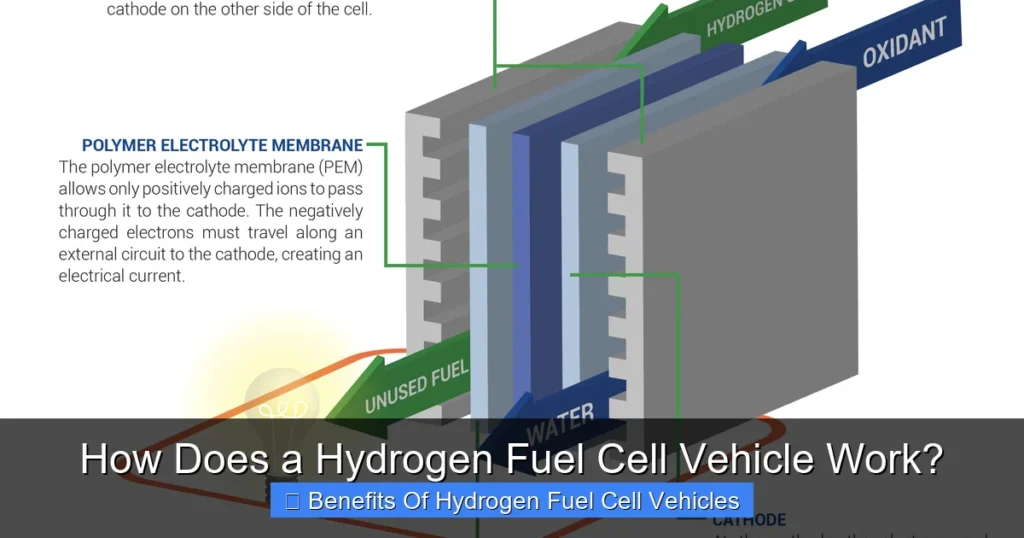
The heart of an FCV is the fuel cell stack, made up of individual cells. Each cell contains:
### Components of a Fuel Cell
- Anode: Releases hydrogen molecules (H₂).
- Cathode: Absorbs oxygen (O₂) from the air.
- Proton Exchange Membrane (PEM): Allows protons (H⁺) through but blocks electrons.
- Electrodes & Catalysts: Platinum-coated electrodes speed up the reaction.
### Electrochemical Reaction
At the anode, hydrogen splits into protons and electrons:
H₂ → 2H⁺ + 2e⁻
Protons pass through the PEM to the cathode, while electrons flow around it, creating electricity. At the cathode, protons, electrons, and oxygen combine to form water:
O₂ + 4H⁺ + 4e⁻ → 2H₂O
Result: Pure electricity drives the motor, and only water exits the exhaust!
—
## Advantages of Hydrogen Fuel Cell Vehicles
### 1. Zero Tailpipe Emissions
Unlike gasoline cars, FCVs emit only water vapor. Even if hydrogen production uses fossil fuels, the process itself is emission-free.
### 2. Faster Refueling
Fill up a hydrogen tank in 3–5 minutes—comparable to gasoline! EVs typically take 30+ minutes fast-charging.
### 3. Longer Range
Many FCVs offer 300–400 miles per fill, surpassing most EVs. Great for road trips!
### 4. Energy Density
Hydrogen stores more energy per pound than lithium-ion batteries, reducing weight and space needs.
### 5. Quiet Operation
No engine noise—just the hum of an electric motor.
—
## Challenges and Limitations
### 1. Infrastructure Gaps
Only a few hundred hydrogen stations worldwide exist (mostly in California, Japan, and Europe). Scaling up requires investment.
### 2. Production Costs
Hydrogen is currently expensive to produce (via electrolysis or steam methane reforming). Green hydrogen (from renewable energy) could lower prices.
### 3. Storage Safety
Compressed hydrogen tanks must meet strict safety standards to prevent leaks.
Tip: Governments are incentivizing FCV adoption—check local tax credits!
—
## How Hydrogen Is Produced
Hydrogen isn’t “green” yet in most cases. Key methods include:
### 1. Steam Methane Reforming (SMR)
Uses natural gas; produces CO₂ emissions (but with carbon capture, it can become cleaner).
### 2. Electrolysis
Splits water into hydrogen using renewable electricity (100% green!). Costs are dropping fast.
### 3. Biomass Gasification
Converts plant waste into hydrogen. A promising but niche method.
—
## Future Outlook
By 2030, experts predict:
– 1 million FCVs globally (up from ~20,000 today).
– 50x more hydrogen stations due to government funding.
– Cheaper hydrogen from renewables making FCVs mainstream.
Example: Hyundai aims to have 16,000 hydrogen trucks on European roads by 2030.
—
## Quick Q&A
Question 1?
Do FCVs need to plug in?
Question 2?
Is hydrogen safe to store?
Question 3?
Can FCVs be used for short commutes?
Question 4?
Are FCVs better than EVs?
Question 5?
What’s the lifespan of a fuel cell?
—
## FAQs
What’s the difference between hydrogen and battery EVs?
FCVs refuel quickly and suit long trips, while EVs excel in urban areas with dense charging networks. Both reduce emissions but serve different needs.
How much does hydrogen cost per kilometer?
Currently, hydrogen is pricier than gasoline, but economies of scale could lower costs to match EVs within a decade.
Can FCVs run in extreme weather?
Yes, modern systems handle cold and heat well. Some models even have heated fuel cells for winter starts.
Who manufactures FCVs?
Major players include Toyota, Hyundai, Honda, BMW, and startups like Nikola (trucks) and Hyzon (commercial vehicles).
When will FCVs replace gasoline cars?
Full replacement won’t happen soon, but they’ll coexist with EVs, especially for fleets and long-haul transport.
What’s the biggest hurdle for FCVs?
Infrastructure and cost are the main barriers. Solving these could unlock mass adoption.
—
## Conclusion
Hydrogen fuel cell vehicles represent a clean, efficient, and practical alternative to traditional cars and EVs. While challenges remain—like infrastructure and affordability—advances in technology and policy are paving the way. Whether you’re commuting daily or exploring the open road, FCVs offer a glimpse into a greener future. Keep an eye on this space—the next decade will likely see major breakthroughs!
Quick Answers to Common Questions
What is How does a hydrogen fuel cell vehicle work??
How does a hydrogen fuel cell vehicle work? refers to essential knowledge and techniques.
Frequently Asked Questions
What is How does a hydrogen fuel cell vehicle work??
How does a hydrogen fuel cell vehicle work? is an important topic with many practical applications.