Hydrogen fuel cells in SUVs combine hydrogen and oxygen to generate electricity, powering the vehicle with only water as a byproduct. This clean technology offers long range, fast refueling, and zero tailpipe emissions, making it a promising alternative to traditional engines and even battery-electric vehicles.
Have you ever imagined driving an SUV that runs on thin air and water—literally? Not magic, but science. Hydrogen fuel cell technology is turning that dream into reality. Unlike traditional gasoline engines or even battery-electric vehicles, hydrogen-powered SUVs generate their own electricity on board using a clean chemical process. The result? A vehicle that emits nothing but water vapor from its tailpipe.
This innovation is especially exciting for SUV lovers. SUVs are known for their size, power, and versatility—but often criticized for their environmental impact. Hydrogen fuel cells offer a way to keep all the benefits of an SUV while drastically reducing emissions. Whether you’re hauling gear for a weekend adventure or commuting daily in comfort, a hydrogen fuel cell SUV can do it all—without polluting the air.
So how does it actually work? At its core, a hydrogen fuel cell SUV uses hydrogen gas stored in high-pressure tanks. This hydrogen is fed into a fuel cell stack, where it reacts with oxygen from the air. The reaction produces electricity, which powers an electric motor. The only byproducts are heat and water. No smoke, no noise, no carbon emissions. It’s like having a mini power plant under your hood—one that’s clean, quiet, and incredibly efficient.
Key Takeaways
- Hydrogen fuel cells produce electricity through a chemical reaction, not combustion. This means no harmful emissions—just water vapor and heat.
- SUVs with hydrogen fuel cells offer long driving ranges, often exceeding 300 miles on a single tank. Refueling takes just 3–5 minutes, similar to gasoline vehicles.
- The fuel cell stack is the heart of the system, converting hydrogen into electrical energy. It works silently and efficiently, even in cold weather.
- Hydrogen is stored in high-pressure tanks within the SUV’s chassis. These tanks are rigorously tested for safety and durability.
- Electric motors powered by the fuel cell deliver smooth, instant torque. This gives SUVs strong acceleration and a quiet ride.
- Hydrogen SUVs are ideal for long-distance travel and heavy-duty use. They combine the practicality of an SUV with the sustainability of clean energy.
- Challenges include limited refueling infrastructure and higher upfront costs. However, advancements and government support are rapidly improving accessibility.
📑 Table of Contents
What Is a Hydrogen Fuel Cell?
Before diving into how it powers an SUV, let’s break down what a hydrogen fuel cell actually is. Think of it as a battery that never needs recharging—because it makes its own electricity as long as fuel is supplied. Unlike a conventional battery that stores energy, a fuel cell generates it through a continuous chemical reaction.
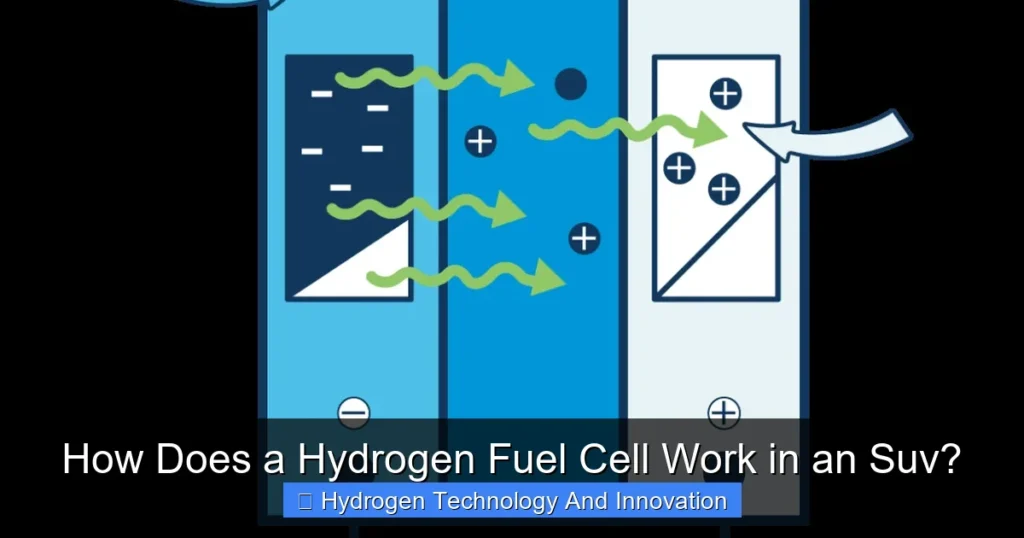
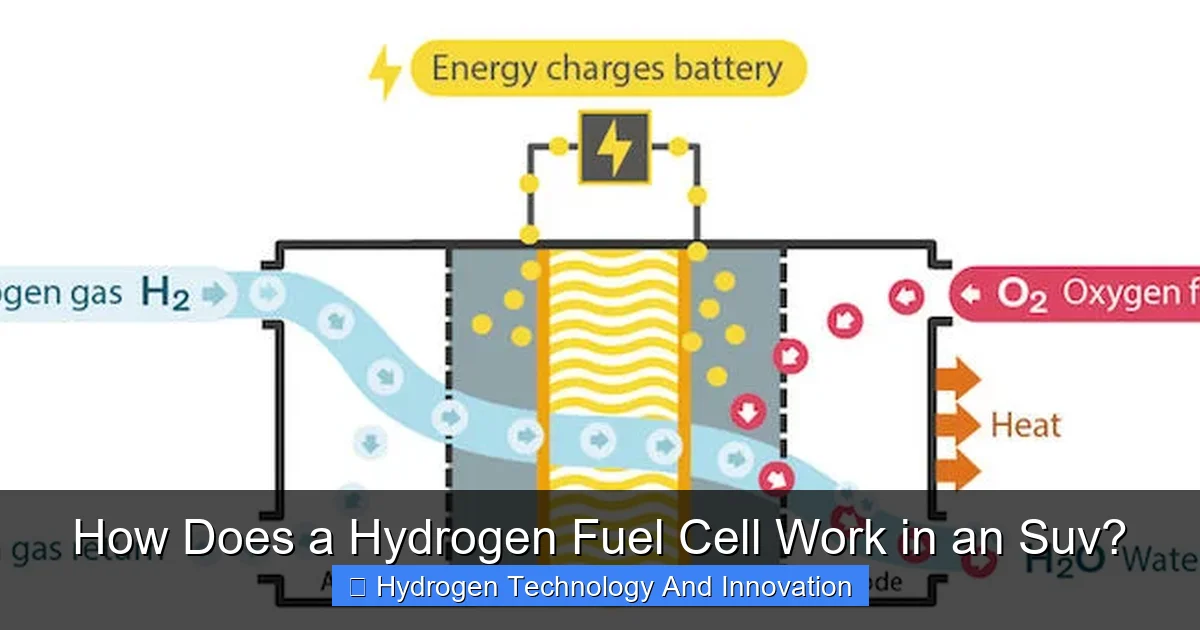
The most common type used in vehicles is the Proton Exchange Membrane (PEM) fuel cell. It’s compact, lightweight, and works well at low temperatures—perfect for cars and SUVs. Inside the fuel cell, hydrogen gas (H₂) is split into protons and electrons on one side of a special membrane. The protons pass through the membrane, but the electrons are forced to travel through an external circuit, creating an electric current. This current powers the vehicle’s motor.
On the other side of the membrane, the protons and electrons reunite with oxygen (O₂) from the air, forming water (H₂O). That’s it. No combustion. No moving parts. Just a quiet, efficient energy conversion process. The entire system is called a fuel cell stack because multiple cells are layered together to produce enough power for a vehicle.
One of the biggest advantages of fuel cells is their efficiency. While internal combustion engines waste a lot of energy as heat, fuel cells convert up to 60% of the hydrogen’s energy into electricity. That’s nearly double the efficiency of a gasoline engine. And because there are no pistons or exhaust systems, the ride is incredibly smooth and quiet.
How Hydrogen Powers an SUV
Visual guide about How Does a Hydrogen Fuel Cell Work in an Suv?
Image source: vcesvolvo.com
Now, let’s see how this technology translates into real-world performance in an SUV. The process starts with hydrogen storage. Most hydrogen fuel cell SUVs carry compressed hydrogen gas in carbon-fiber-reinforced tanks, usually mounted under the floor or behind the rear seats. These tanks can hold hydrogen at pressures up to 700 bar (over 10,000 psi), allowing for a large energy reserve in a compact space.
When you start the SUV, hydrogen flows from the tanks to the fuel cell stack. At the same time, air is drawn in from the environment. Inside the stack, the hydrogen molecules are split into protons and electrons using a catalyst—typically platinum. The protons move through the membrane, while the electrons are directed through an external circuit, generating electricity.
This electricity powers the electric motor, which turns the wheels. Some systems also use a small battery or supercapacitor to store excess energy and provide extra power during acceleration. This hybrid approach helps manage energy demand and improves efficiency, especially in stop-and-go traffic.
One of the standout features of hydrogen SUVs is their refueling speed. Unlike electric vehicles that can take hours to recharge, hydrogen tanks can be filled in just 3 to 5 minutes—about the same time as pumping gas. This makes long road trips much more practical. Plus, hydrogen SUVs typically offer ranges of 300 to 400 miles, rivaling or even exceeding many gasoline-powered models.
For example, the Toyota Mirai and Hyundai NEXO are two production hydrogen SUVs currently on the market. Both offer smooth, quiet rides, spacious interiors, and advanced safety features—all while emitting only water. The NEXO, in particular, boasts a range of over 400 miles and can even power external devices using its onboard electricity.
The Role of the Fuel Cell Stack
The fuel cell stack is the engine of a hydrogen SUV—but unlike a traditional engine, it has no moving parts. It’s a layered assembly of individual fuel cells, each about the thickness of a credit card. When stacked together, they form a powerful energy generator capable of producing hundreds of kilowatts of electricity.
Each cell in the stack consists of an anode, a cathode, and a proton exchange membrane (PEM) sandwiched between them. Hydrogen gas enters the anode side, where it’s split into protons and electrons. The protons pass through the PEM to the cathode, while the electrons travel through an external circuit, creating electrical current.
At the cathode, oxygen from the air combines with the protons and electrons to form water. This reaction is exothermic, meaning it releases heat, which is managed by a cooling system to keep the stack at optimal temperature. The entire process is silent and produces no pollutants.
The number of cells in the stack determines the total power output. A typical SUV fuel cell stack might have 300 to 400 individual cells, generating between 100 and 150 kilowatts of power. That’s enough to accelerate a large SUV from 0 to 60 mph in under 9 seconds—plenty of pep for highway merging and hill climbing.
One of the challenges with fuel cell stacks is durability. Over time, the catalyst can degrade, and the membrane can dry out or become contaminated. However, manufacturers are constantly improving materials and designs. For instance, newer stacks use less platinum, reducing cost and increasing longevity. Some models now promise over 100,000 miles of reliable operation.
Hydrogen Storage and Safety
Storing hydrogen safely in an SUV is a critical part of the design. Hydrogen is the lightest and smallest molecule, which makes it tricky to contain. It’s also highly flammable, so safety is a top priority. That’s why hydrogen tanks are built to withstand extreme conditions.
Modern hydrogen tanks are made from multiple layers: an inner liner that holds the gas, a carbon fiber composite shell for strength, and an outer protective layer. These tanks are tested to survive crashes, fires, and even bullet impacts. In fact, they’re often safer than gasoline tanks because hydrogen disperses quickly into the air if leaked, reducing the risk of explosion.
In an SUV, the tanks are typically placed in protected areas—under the floor or behind the rear seats—to minimize exposure in a collision. The system includes multiple safety valves and sensors that monitor pressure, temperature, and leaks. If a problem is detected, the system can shut off the hydrogen supply automatically.
Refueling is also designed with safety in mind. Hydrogen stations use specialized nozzles that only connect to compatible vehicles. The process is fully automated, with built-in checks to ensure a secure connection and prevent overfilling. Drivers don’t need any special training—just pull up, connect, and fill up in minutes.
Despite concerns about hydrogen’s flammability, studies show that hydrogen vehicles are as safe as, or safer than, conventional vehicles. The gas is stored in sealed, robust containers, and the entire system is designed to prevent leaks and manage any that do occur.
Performance and Driving Experience
Driving a hydrogen fuel cell SUV feels a lot like driving a high-end electric vehicle—smooth, quiet, and responsive. The electric motor delivers instant torque, so acceleration is strong and immediate. There’s no engine noise, just the quiet hum of the electric drive and the occasional sound of air moving through the fuel cell.
Because the fuel cell generates electricity on demand, there’s no need for a large, heavy battery pack. This reduces overall vehicle weight and improves efficiency. It also frees up space for passengers and cargo—something SUV owners definitely appreciate.
One of the biggest advantages is range. While many electric SUVs struggle to exceed 250–300 miles on a charge, hydrogen models like the Hyundai NEXO can go over 400 miles. And refueling takes just a few minutes, eliminating range anxiety on long trips.
Cold weather performance is another strong point. Unlike battery-electric vehicles, which can lose significant range in freezing temperatures, hydrogen fuel cells work efficiently in the cold. The system may take a little longer to warm up, but once it does, performance remains consistent.
Maintenance is also simpler. There’s no oil to change, no spark plugs to replace, and no exhaust system to worry about. The main components—fuel cell stack, tanks, and electric motor—are designed for long life with minimal upkeep. Most manufacturers offer extended warranties on the fuel cell system, often covering 8 years or 100,000 miles.
Environmental Impact and Sustainability
One of the biggest selling points of hydrogen fuel cell SUVs is their environmental benefit. When powered by green hydrogen—hydrogen produced using renewable energy—these vehicles have a near-zero carbon footprint. The only emission is water vapor, which is harmless to the environment.
Even when hydrogen is produced from natural gas (the most common method today), the overall emissions are still lower than gasoline vehicles. And as renewable energy becomes more widespread, the production of green hydrogen is growing rapidly.
Hydrogen SUVs also reduce air pollution in cities. Unlike diesel or gasoline engines, they don’t emit nitrogen oxides (NOx), particulate matter, or carbon monoxide. This makes them ideal for urban areas struggling with smog and respiratory health issues.
However, it’s important to note that the sustainability of hydrogen depends on how it’s made. Currently, about 95% of hydrogen is produced from fossil fuels, which generates carbon emissions. But governments and companies are investing heavily in electrolysis—using renewable electricity to split water into hydrogen and oxygen. This green hydrogen is the future of clean transportation.
Challenges and Future Outlook
Despite their many advantages, hydrogen fuel cell SUVs face several challenges. The biggest is infrastructure. There are only a few hundred hydrogen refueling stations in the U.S., mostly in California. This makes long-distance travel difficult outside of certain regions.
Cost is another barrier. Hydrogen SUVs are currently more expensive than comparable electric or gasoline models. The fuel cell stack, hydrogen tanks, and limited production scale all contribute to the high price. However, as technology improves and production ramps up, costs are expected to fall.
Public awareness is also low. Many people don’t know that hydrogen vehicles exist, or they have misconceptions about safety and performance. Education and real-world demonstrations are key to building trust.
But the future looks bright. Automakers like Toyota, Hyundai, and Honda are committed to hydrogen technology. Governments are investing in hydrogen infrastructure and offering incentives for buyers. And as renewable energy grows, green hydrogen will become more accessible and affordable.
In the coming decade, we could see hydrogen SUVs become a common sight on highways, especially for fleet operators, delivery services, and long-haul drivers who need fast refueling and long range.
Conclusion
Hydrogen fuel cell technology is reshaping the future of SUVs. By combining the power and practicality of an SUV with the clean, quiet operation of an electric vehicle, hydrogen offers a compelling alternative to fossil fuels. The science is sound, the performance is impressive, and the environmental benefits are undeniable.
While challenges remain—especially in infrastructure and cost—the momentum is growing. With continued innovation and investment, hydrogen fuel cell SUVs could play a major role in the transition to sustainable transportation. For drivers who want range, speed, and zero emissions, the future is already here.
Frequently Asked Questions
How does a hydrogen fuel cell work in an SUV?
A hydrogen fuel cell in an SUV combines hydrogen from onboard tanks with oxygen from the air to generate electricity. This electricity powers an electric motor, propelling the vehicle forward. The only byproduct is water vapor, making it a clean energy solution.
Is a hydrogen fuel cell SUV safe?
Yes, hydrogen fuel cell SUVs are designed with multiple safety features. The hydrogen tanks are made of strong, lightweight materials and are rigorously tested. Sensors monitor for leaks, and the system can shut off automatically if needed. Overall, they are as safe as conventional vehicles.
How long does it take to refuel a hydrogen SUV?
Refueling a hydrogen SUV takes just 3 to 5 minutes, similar to filling up a gasoline vehicle. This is much faster than charging an electric SUV, which can take 30 minutes to several hours depending on the charger.
What is the range of a hydrogen fuel cell SUV?
Most hydrogen fuel cell SUVs offer a range of 300 to 400 miles on a full tank. For example, the Hyundai NEXO can travel over 400 miles, making it ideal for long trips without frequent stops.
Are hydrogen SUVs better for the environment than electric SUVs?
Both are clean options, but hydrogen SUVs have an edge in range and refueling speed. Their environmental impact depends on how the hydrogen is produced. Green hydrogen, made from renewable energy, offers near-zero emissions.
Can I drive a hydrogen SUV in cold weather?
Yes, hydrogen fuel cell SUVs perform well in cold weather. Unlike some electric vehicles, they don’t lose significant range in freezing temperatures. The system may take a few extra minutes to warm up, but performance remains strong.