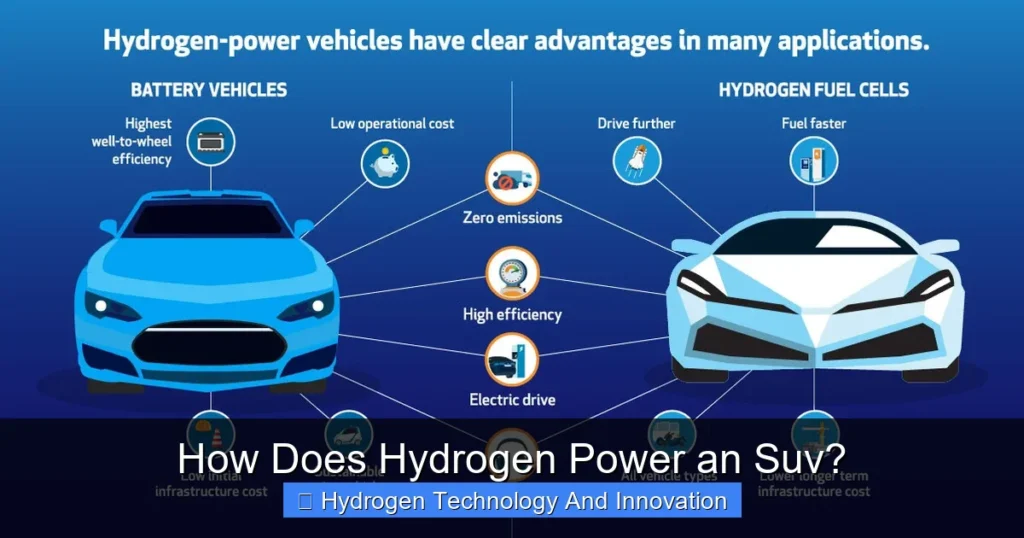
Hydrogen powers an SUV through advanced fuel cell technology that converts hydrogen gas into electricity to drive the electric motor. This process emits only water vapor, making it a clean, sustainable alternative to gasoline. With growing infrastructure and innovation, hydrogen SUVs are paving the way for a greener automotive future.
Key Takeaways
- Hydrogen fuel cells generate electricity through a chemical reaction: Hydrogen from the tank combines with oxygen from the air to produce electricity, water, and heat—no combustion involved.
- Hydrogen SUVs are fully electric vehicles: They use electric motors for propulsion, just like battery EVs, but refuel faster and offer longer range.
- Refueling takes minutes, not hours: A hydrogen SUV can be refilled in 3–5 minutes, similar to gasoline vehicles, unlike battery EVs that require lengthy charging.
- Zero tailpipe emissions: The only byproduct is pure water vapor, making hydrogen SUVs environmentally friendly during operation.
- Hydrogen can be produced sustainably: When made using renewable energy (green hydrogen), the entire lifecycle becomes carbon-neutral.
- Infrastructure is expanding: While still limited, hydrogen refueling stations are growing in key regions like California, Japan, and Europe.
- Hydrogen SUVs suit long-distance and heavy-duty use: Ideal for drivers needing high range and quick refueling, especially in commercial or fleet applications.
📑 Table of Contents
How Does Hydrogen Power an SUV?
Imagine driving an SUV that’s as powerful and spacious as your favorite gas-powered model, but instead of spewing out exhaust fumes, it only releases clean water vapor. Sounds futuristic? It’s not. Hydrogen-powered SUVs are already on the road, and they’re changing the way we think about clean transportation.
Unlike traditional vehicles that burn gasoline or diesel, hydrogen SUVs run on electricity generated from hydrogen fuel cells. These vehicles combine the best of both worlds: the convenience of quick refueling like a gas car and the environmental benefits of an electric vehicle. But how exactly does this work? Let’s break it down in simple terms.
At the heart of a hydrogen-powered SUV is a fuel cell stack—a compact, high-tech system that converts hydrogen gas into electricity. This electricity then powers an electric motor, which drives the wheels. The only byproduct? Pure water. No carbon dioxide, no nitrogen oxides, no smog-forming pollutants. Just clean energy and a quiet ride.
Hydrogen SUVs are part of a broader shift toward sustainable mobility. As governments and automakers push for zero-emission transportation, hydrogen offers a compelling alternative to battery-electric vehicles (BEVs), especially for larger, heavier vehicles like SUVs and trucks. While BEVs are great for city driving and shorter commutes, hydrogen shines in scenarios where long range, fast refueling, and heavy payloads matter.
In this article, we’ll explore the science behind hydrogen power, how it’s integrated into SUVs, the benefits and challenges, real-world examples, and what the future holds. Whether you’re a tech enthusiast, an eco-conscious driver, or just curious about the next big thing in cars, this guide will give you a clear, engaging look at how hydrogen powers an SUV.
The Science Behind Hydrogen Power
Visual guide about How Does Hydrogen Power an Suv?
Image source: wernerantweiler.ca
To understand how hydrogen powers an SUV, we need to start with the basics: what hydrogen is and how it generates energy.
Hydrogen is the simplest and most abundant element in the universe. On Earth, it doesn’t exist freely in large quantities—it’s usually bonded with other elements, like oxygen in water (H₂O) or carbon in fossil fuels. To use hydrogen as fuel, we must extract it through processes like electrolysis (splitting water using electricity) or steam methane reforming (from natural gas).
Once extracted and compressed, hydrogen is stored in high-pressure tanks inside the SUV. These tanks are made of strong, lightweight materials like carbon fiber to ensure safety and efficiency. When the driver presses the accelerator, hydrogen flows from the tank into the fuel cell stack.
How the Fuel Cell Works
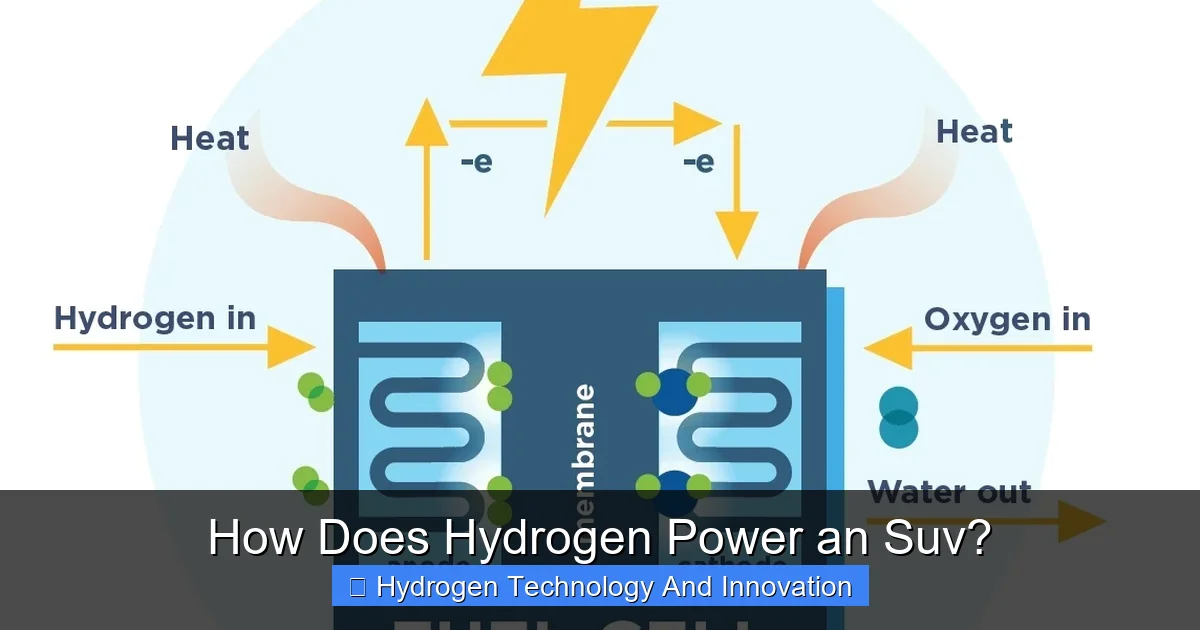
Inside the fuel cell, a remarkable chemical reaction takes place. The hydrogen gas (H₂) is split into protons and electrons using a catalyst—typically platinum. The protons pass through a special membrane, while the electrons are forced to travel through an external circuit, creating an electric current. This current powers the SUV’s electric motor.
Meanwhile, oxygen from the air enters the fuel cell and combines with the protons and electrons on the other side of the membrane. The result? Water (H₂O) and a small amount of heat. No combustion. No pollution. Just clean energy.
This process is called electrochemical conversion, and it’s incredibly efficient—up to 60% efficient in converting hydrogen to electricity, compared to about 20–30% for internal combustion engines.
Why Hydrogen for SUVs?
You might wonder: why use hydrogen instead of just plugging in a big battery? The answer lies in energy density and refueling time.
Hydrogen has a much higher energy density by weight than lithium-ion batteries. That means a small amount of hydrogen can store a lot of energy—ideal for heavy vehicles like SUVs that need long range without sacrificing cargo space or passenger comfort.
For example, the Toyota Mirai, a hydrogen-powered sedan, has a range of over 400 miles on a single tank. SUVs like the Hyundai NEXO can go even farther—up to 414 miles—while carrying five passengers and luggage. That’s hard to match with current battery technology without making the vehicle extremely heavy or expensive.
Plus, refueling a hydrogen SUV takes just 3 to 5 minutes—about the same as filling up a gas tank. Compare that to charging a large EV battery, which can take 30 minutes to several hours, even with fast chargers.
Hydrogen SUVs: How They Work in Practice
Now that we know the science, let’s see how hydrogen powers an SUV in real life.
A hydrogen-powered SUV operates much like a battery-electric vehicle (BEV). It has an electric motor, a transmission, and regenerative braking. But instead of drawing power from a large battery pack, it generates electricity on demand using hydrogen fuel cells.
When you start the SUV, the fuel cell system activates. Hydrogen flows from the onboard tanks into the fuel cell stack, where it’s converted into electricity. This electricity powers the motor and also charges a small buffer battery, which helps during acceleration or when extra power is needed.
The SUV’s control system manages everything—monitoring hydrogen levels, regulating power output, and ensuring safety. Advanced sensors detect leaks, pressure changes, or temperature spikes, shutting down the system if needed.
Refueling: Fast and Simple
One of the biggest advantages of hydrogen SUVs is refueling. You pull up to a hydrogen station, connect the nozzle to the vehicle’s fuel port, and fill up in minutes. The process is similar to gasoline, but cleaner and quieter.
Hydrogen is stored at high pressure—typically 700 bar (about 10,000 psi)—so the tanks must be robust. Modern hydrogen tanks are designed to withstand extreme conditions, including crashes and fires. They’re also equipped with multiple safety valves and vents to release pressure safely if needed.
In the U.S., most hydrogen stations are in California, where the state has invested heavily in infrastructure. There are over 50 public stations, with more planned. In countries like Japan, South Korea, and Germany, the network is even more developed.
Real-World Examples
Several automakers have launched hydrogen SUVs, proving the technology works in practice.
The Hyundai NEXO is one of the most advanced hydrogen SUVs on the market. It features a 95 kW fuel cell stack, a 40-kWh battery, and a range of 414 miles. It also includes advanced driver-assistance systems, a solar roof, and air purification technology that cleans the air as it drives.
Toyota offers the Mirai, a hydrogen sedan, but has announced plans for hydrogen SUVs and trucks. The company is also developing the Hilux hydrogen pickup and the second-generation Mirai, which improves efficiency and reduces platinum use.
In Europe, BMW is testing a hydrogen version of its X5 SUV, called the iX5 Hydrogen. It’s part of a pilot program to explore hydrogen’s potential for larger vehicles. The iX5 uses a fuel cell system co-developed with Toyota and can refuel in under four minutes.
These vehicles show that hydrogen isn’t just a concept—it’s a viable option for real drivers with real needs.
Benefits of Hydrogen-Powered SUVs
Hydrogen-powered SUVs offer a range of benefits that make them an attractive alternative to gasoline and even battery-electric vehicles.
Zero Tailpipe Emissions
The most obvious advantage is environmental. Hydrogen SUVs produce no harmful emissions during operation. The only thing that comes out of the tailpipe is water vapor—clean enough to drink. This makes them ideal for reducing urban air pollution and meeting climate goals.
In cities with smog problems, hydrogen vehicles can make a real difference. They don’t contribute to ground-level ozone, particulate matter, or greenhouse gases while driving.
Fast Refueling and Long Range
Unlike battery EVs, which can take hours to recharge, hydrogen SUVs refuel in minutes. This is a game-changer for long-distance travel, ride-sharing, or commercial use.
Imagine driving from Los Angeles to San Francisco—about 380 miles—without stopping to charge for hours. With a hydrogen SUV, you can do it with one quick stop. That’s a major advantage for people who value time and convenience.
High Energy Density
Hydrogen packs a lot of energy into a small space. This is crucial for SUVs, which are heavier and need more power than smaller cars. A hydrogen tank takes up less room than a massive battery pack, leaving more space for passengers and cargo.
For example, the Hyundai NEXO has a hydrogen storage system that weighs about 120 pounds and takes up less space than a full-size spare tire. A comparable battery for the same range would weigh over 1,000 pounds and reduce interior space.
Quiet and Smooth Operation
Like all electric vehicles, hydrogen SUVs are quiet and smooth. There’s no engine noise, no gear shifts, and no vibrations. The electric motor delivers instant torque, giving the SUV quick acceleration and a responsive feel.
This makes for a relaxing driving experience, especially on long trips. Passengers can talk, listen to music, or even take a nap without disturbance.
Potential for Renewable Hydrogen
While most hydrogen today is produced from natural gas (called “gray hydrogen”), the future is green. Green hydrogen is made using renewable energy—like wind or solar—to split water into hydrogen and oxygen.
When hydrogen is produced this way, the entire lifecycle becomes carbon-neutral. The vehicle emits only water, and the fuel is made without fossil fuels. This makes hydrogen SUVs a truly sustainable option.
Countries like Germany, Australia, and Canada are investing billions in green hydrogen production. As costs come down, green hydrogen could become the standard.
Challenges and Limitations
Despite the benefits, hydrogen-powered SUVs face several challenges that limit their widespread adoption.
Limited Refueling Infrastructure
The biggest hurdle is infrastructure. There are far fewer hydrogen stations than gas stations or EV chargers. In the U.S., most stations are in California. Outside of that, options are scarce.
This makes long-distance travel difficult and discourages buyers who worry about running out of fuel. Building a nationwide network requires massive investment and coordination between governments, energy companies, and automakers.
High Production Costs
Hydrogen fuel cells are expensive to make. They use rare materials like platinum as catalysts, which drives up costs. While research is underway to reduce or replace platinum, current systems remain pricey.
Hydrogen production is also costly, especially green hydrogen. Electrolysis requires a lot of electricity, and renewable energy isn’t always available at scale. Until production becomes cheaper, hydrogen fuel will remain more expensive than gasoline or electricity.
Energy Efficiency Concerns
Hydrogen isn’t the most efficient energy carrier. When you account for production, compression, transport, and conversion, only about 30–40% of the original energy makes it to the wheels. In contrast, battery EVs are 70–90% efficient.
This means hydrogen SUVs use more primary energy than battery EVs for the same distance. However, for heavy vehicles or applications where batteries aren’t practical, hydrogen may still be the better choice.
Public Awareness and Perception
Many people still think hydrogen is dangerous—thanks to images of the Hindenburg disaster. In reality, modern hydrogen systems are extremely safe. Tanks are designed to withstand crashes, and hydrogen disperses quickly in air, reducing fire risk.
But changing public perception takes time. Education and real-world demonstrations are needed to build trust.
Competition from Battery EVs
Battery-electric SUVs are improving rapidly. New models offer longer range, faster charging, and lower prices. With growing charging networks, many consumers see BEVs as the obvious choice for clean driving.
Hydrogen must prove it offers unique advantages—like fast refueling and high payload capacity—to compete effectively.
The Future of Hydrogen SUVs
Despite the challenges, the future of hydrogen-powered SUVs looks promising.
Governments are setting ambitious targets for zero-emission vehicles. The European Union, for example, plans to ban new gasoline and diesel cars by 2035. Hydrogen is seen as a key part of the solution, especially for trucks, buses, and large SUVs.
Automakers are investing heavily in hydrogen technology. Toyota, Hyundai, and BMW are leading the way, but others like General Motors and Honda are also developing fuel cell systems. Partnerships between automakers and energy companies are helping to build infrastructure and reduce costs.
Green Hydrogen on the Rise
The biggest game-changer could be green hydrogen. As renewable energy becomes cheaper and more abundant, producing hydrogen from water using solar or wind power is becoming viable.
Projects like the HyDeal Ambition in Europe aim to produce green hydrogen at scale for under $2 per kilogram—competitive with gasoline on a per-mile basis. If achieved, this could make hydrogen SUVs affordable and sustainable.
Hydrogen in Fleets and Commercial Use
While passenger SUVs are still niche, hydrogen is gaining traction in commercial applications. Delivery vans, taxis, and ride-sharing fleets benefit from fast refueling and long range.
In California, companies like Amazon and UPS are testing hydrogen delivery trucks. In Japan, hydrogen taxis serve the Tokyo area. These real-world uses help refine the technology and build demand.
Integration with Renewable Energy
Hydrogen can also store excess renewable energy. When the sun shines or wind blows, extra electricity can be used to produce hydrogen, which is stored and used later in vehicles or power plants.
This creates a circular energy system where hydrogen acts as a clean fuel and a storage medium. It’s a win for both transportation and the grid.
Conclusion
Hydrogen-powered SUVs represent a bold step toward a cleaner, more sustainable future. By converting hydrogen gas into electricity through fuel cells, these vehicles deliver the performance and convenience of traditional SUVs—without the pollution.
They offer zero tailpipe emissions, fast refueling, long range, and quiet operation. While challenges like infrastructure and cost remain, rapid advancements in technology and growing support from governments and automakers are paving the way for wider adoption.
As green hydrogen production scales up and refueling networks expand, hydrogen SUVs could become a common sight on roads around the world. They’re not just a niche experiment—they’re a practical solution for drivers who need power, space, and sustainability.
Whether you’re planning a cross-country road trip, managing a fleet, or simply want a greener way to drive, hydrogen-powered SUVs are worth watching. The future of clean transportation isn’t just electric—it’s hydrogen-powered.
Frequently Asked Questions
How does a hydrogen fuel cell work in an SUV?
A hydrogen fuel cell generates electricity by combining hydrogen from the tank with oxygen from the air. This chemical reaction produces electricity to power the SUV’s electric motor, with water vapor as the only emission.
How long does it take to refuel a hydrogen SUV?
Refueling a hydrogen SUV takes just 3 to 5 minutes, similar to filling up a gasoline vehicle. This is much faster than charging a battery-electric SUV, which can take 30 minutes to several hours.
Are hydrogen SUVs safe?
Yes, hydrogen SUVs are designed with multiple safety features. Hydrogen tanks are made of strong, lightweight materials and include pressure relief devices. Hydrogen also disperses quickly in air, reducing fire risk.
Where can I refuel a hydrogen SUV?
Hydrogen refueling stations are currently limited but growing. In the U.S., most are in California. Other countries like Japan, South Korea, and Germany have more developed networks.
Is hydrogen production environmentally friendly?
It depends. Hydrogen made from natural gas (gray hydrogen) produces emissions, but hydrogen made using renewable energy (green hydrogen) is clean and sustainable. The industry is shifting toward green hydrogen.
Can hydrogen SUVs compete with battery-electric SUVs?
Hydrogen SUVs excel in long range and fast refueling, making them ideal for heavy-duty or long-distance use. Battery EVs are better for city driving and shorter trips, but both technologies can coexist in a clean transportation future.