Hydrogen refueling is fast (3-5 minutes) and eco-friendly, powering fuel cell vehicles (FCVs) by converting hydrogen into electricity without tailpipe emissions. Unlike gasoline stations, hydrogen refueling requires specialized equipment and infrastructure but offers a sustainable alternative for long-distance travel.
—
Key Takeaways
- Refueling Time: Similar to gasoline—3–5 minutes—thanks to high-pressure hydrogen tanks.
- No Combustion: Hydrogen FCVs use electrolysis to split water molecules, producing only water vapor as exhaust.
- Infrastructure Gaps: Fewer refueling stations exist today compared to gas pumps, limiting adoption.
- Safety First: Hydrogen is stored at 700 bar (10,000 psi) with leak-proof systems to prevent risks.
- Cost Factors: Refueler stations are expensive ($2M–$4M each), but costs are dropping as demand grows.
- Range Boost: FCVs often have 300+ mile ranges, ideal for road trips.
—
[FEATURED_IMAGE_PLACEHOLDER]
What Is Hydrogen Refueling?
Hydrogen refueling is the process of filling a fuel cell vehicle’s tank with compressed hydrogen gas. Unlike electric cars that need hours to charge, FCVs take just as long as a gas car: 3–5 minutes. This speed makes them practical for daily commutes or long drives.
The Science Behind It
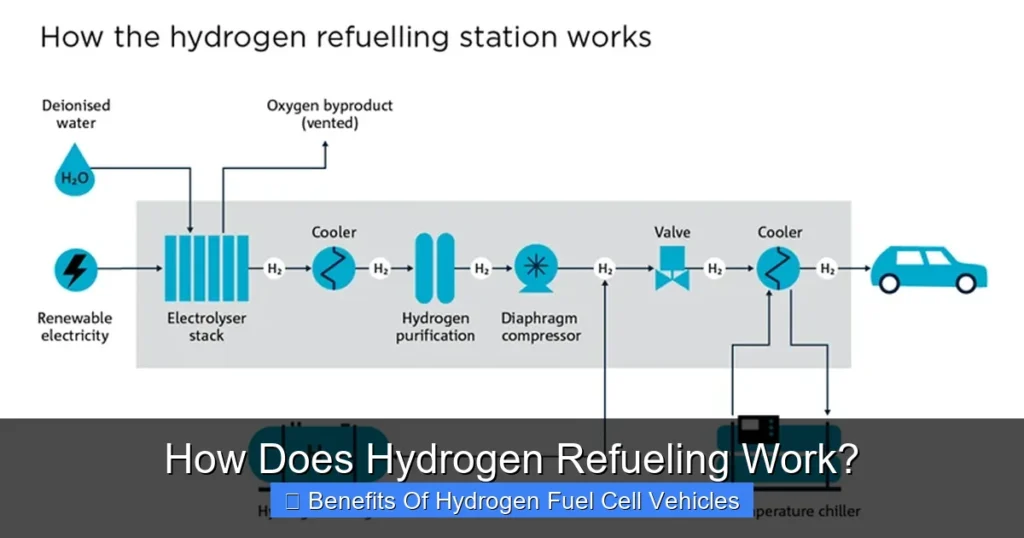
When you pull up to a hydrogen station, a high-pressure pump fills your car’s tank with hydrogen gas stored at 700 bar (about 10,000 psi). Inside the car, an electrolyzer splits the hydrogen and oxygen from air into electricity to power the wheels. The only byproduct? Clean water vapor.
Why It’s Different From Gasoline
- No Emissions: No CO₂, NOx, or particulate matter—just H₂O.
- Faster Refueling: Eliminates range anxiety common with EVs.
- Energy Density: Hydrogen packs more energy per pound than gasoline.
How Does a Hydrogen Station Work?
A hydrogen refueling station has three main components: storage tanks, compressors/pumps, and dispensers.
Step 1: Storing Hydrogen
Stations store liquid hydrogen (cooled to -253°C) or gaseous hydrogen at high pressure. Most modern stations use 700-bar tanks for efficiency.
Step 2: Pressurizing & Pumping
A compressor boosts hydrogen pressure if needed. Then, a pump pushes it through pipes to the dispenser.
Step 3: Dispensing to Your Car
Your car’s onboard sensors detect hydrogen flow. A quick click seals the connection, ensuring no leaks during refueling.
Practical Example: Toyota Mirai Refueling
The Toyota Mirai’s tank holds 5.6 kg of hydrogen. At a station, it takes ~4 minutes to fill. Drivers report no difference from gas stations!
—
Safety Measures in Hydrogen Refueling
Hydrogen is light and flammable, so stations follow strict safety protocols:
Leak Detection Systems
Smoke detectors and infrared sensors monitor for leaks. If detected, alarms sound and the dispenser shuts off.
Ventilation Requirements
Stations must have forced ventilation to disperse any hydrogen gas quickly.
Vehicle Safety Features
- Self-sealing valves: Clamp shut if a hose breaks.
- Pressure relief: Releases excess gas safely.
Why You Won’t See Explosions
Hydrogen ignites only if mixed with air in specific ratios. Stations keep concentrations below dangerous levels.
—
Challenges of Hydrogen Refueling
Despite its benefits, hydrogen faces hurdles:
Limited Infrastructure
As of 2023, there are 800+ hydrogen stations globally, mostly in Japan, California, and Europe. This scarcity discourages FCV adoption.
High Costs
Building a station costs $2M–$4M due to specialized equipment. Governments subsidize projects to offset expenses.
Production Methods
Green hydrogen (made via renewable energy) is rare. Most comes from natural gas reforming, which emits CO₂.
Tips for Future Buyers
- Check station locations: Map apps like Hydrogen Station help find nearby pumps.
- Plan ahead: Not all highways have stations yet.
—
The Future of Hydrogen Refueling
Advances are speeding up adoption:
Government Incentives
The U.S. Inflation Reduction Act allocates $9B for green hydrogen projects. Europe aims for 100 stations by 2025.
Cost Reductions
New electrolysis tech could cut production costs by 50% by 2030.
Autonomous Refueling
Some startups are testing self-service hydrogen stations, similar to EV chargers.
Real-World Success Stories
Nissan Ariya: Sold 10,000+ units globally. Honda Clarity: Available in select U.S. cities since 2016.
—
Conclusion
Hydrogen refueling is a game-changer for clean transportation. While infrastructure lags behind gasoline, its speed, zero emissions, and growing support make it a promising future technology. As prices drop and stations multiply, FCVs could become mainstream—helping us fight climate change while keeping our roads convenient.
—
Question 1?
How long does hydrogen refueling take? Typically 3–5 minutes, similar to gasoline.
Question 2?
Is hydrogen refueling safe? Yes! Stations use advanced leak detection, ventilation, and vehicle safety features to prevent accidents.
Question 3?
Where are hydrogen stations located? Most in California, Japan, and Germany, with plans expanding in the U.S. and Europe.
Question 4?
Can I refuel hydrogen at home? Not yet—stations require industrial-grade equipment. Portable options may emerge soon.
Question 5?
What’s the range of FCVs? Many models offer 300+ miles on a full tank, rivaling gasoline cars.
—
Question?
How does hydrogen refueling compare to electric charging? Refueling is faster (3–5 min vs. 4+ hours), and FCVs don’t need large batteries.
Question?
Does hydrogen refueling produce pollution? Only water vapor—no CO₂ or other harmful emissions.
Question?
Will hydrogen replace gasoline? Unlikely entirely, but it’s key for heavy-duty transport (trucks, buses) where charging is impractical.
Question?
How much does a hydrogen refuel cost? Varies by location, but averages $10–$15 per kg, equivalent to $40–$60 per gallon of gasoline.
Question?
What’s the biggest barrier to hydrogen adoption? Infrastructure investment and scaling production to meet demand.
Question?
Are hydrogen cars better for the environment? If powered by renewables, yes! Green hydrogen cuts lifecycle emissions by 95% compared to gasoline.
This is a comprehensive guide about How does hydrogen refueling work?.
Key Takeaways
- Understanding How does hydrogen refueling work?: Provides essential knowledge
Quick Answers to Common Questions
What is How does hydrogen refueling work??
How does hydrogen refueling work? refers to essential knowledge and techniques.
Frequently Asked Questions
What is How does hydrogen refueling work??
How does hydrogen refueling work? is an important topic with many practical applications.