Hydrogen fuel cell SUVs refuel in just 3 to 5 minutes—faster than most gasoline vehicles and dramatically quicker than battery electric SUVs. This rapid refueling time makes them a compelling option for drivers who value convenience, long-range travel, and minimal downtime, especially on road trips or busy schedules.
Key Takeaways
- Refueling Speed: Hydrogen fuel cell SUVs typically refuel in 3 to 5 minutes, comparable to gasoline vehicles and far faster than electric charging.
- Range Advantage: Most hydrogen SUVs offer 300–400 miles per fill, making them ideal for long-distance travel without frequent stops.
- Infrastructure Growth: While hydrogen stations are still limited, expansion is accelerating, especially in California, Japan, and parts of Europe.
- Zero Emissions: These vehicles emit only water vapor, offering a clean alternative without sacrificing refueling convenience.
- Weather Resilience: Unlike some EVs, hydrogen SUVs maintain consistent performance and refueling speed in cold weather.
- Future-Ready Technology: As green hydrogen production grows, fuel cell SUVs could become a sustainable mainstream option.
- Real-World Use: Fleet operators and long-haul drivers benefit most from fast refueling and high uptime.
📑 Table of Contents
- How Fast Do Hydrogen Fuel Cell SUVs Refuel?
- The Science Behind Hydrogen Refueling
- Real-World Refueling Times for Popular Hydrogen SUVs
- Hydrogen Refueling Infrastructure: Where and How
- Benefits of Fast Refueling for Drivers and Fleets
- Challenges and Considerations
- The Future of Hydrogen Fuel Cell SUVs
- Conclusion
How Fast Do Hydrogen Fuel Cell SUVs Refuel?
Imagine pulling up to a fueling station, stepping out of your SUV, and being back on the road in under five minutes—without waiting hours for a battery to charge. That’s the reality for drivers of hydrogen fuel cell SUVs. Unlike electric vehicles that require lengthy charging sessions, hydrogen-powered SUVs refuel in about the same time it takes to fill a gas tank. This speed is one of the most compelling advantages of hydrogen fuel cell technology, especially for drivers who prioritize convenience, long-range capability, and minimal downtime.
Hydrogen fuel cell SUVs use compressed hydrogen gas stored in high-pressure tanks. When you refuel, the hydrogen is pumped directly into these tanks at specialized stations. The process is simple, clean, and fast—typically taking just 3 to 5 minutes to go from empty to full. This makes hydrogen SUVs a strong contender in the clean transportation space, particularly for those who don’t want to sacrifice the refueling habits they’re used to with traditional vehicles.
But speed isn’t the only benefit. Hydrogen fuel cell SUVs also offer impressive range—often between 300 and 400 miles on a single fill—and they emit only water vapor from the tailpipe. That means you get the performance and convenience of a gasoline-powered SUV, but with zero harmful emissions. As the world moves toward cleaner transportation, hydrogen fuel cell technology is emerging as a practical solution for drivers who need both sustainability and efficiency.
The Science Behind Hydrogen Refueling
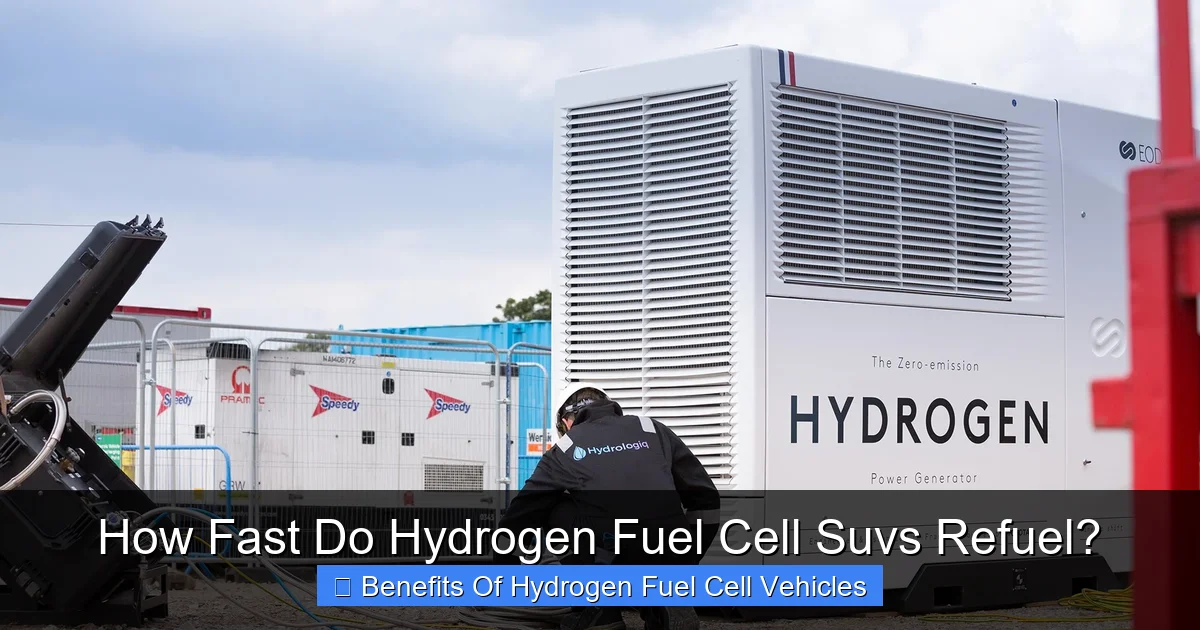
Visual guide about How Fast Do Hydrogen Fuel Cell Suvs Refuel?
Image source: hydrologiq.com
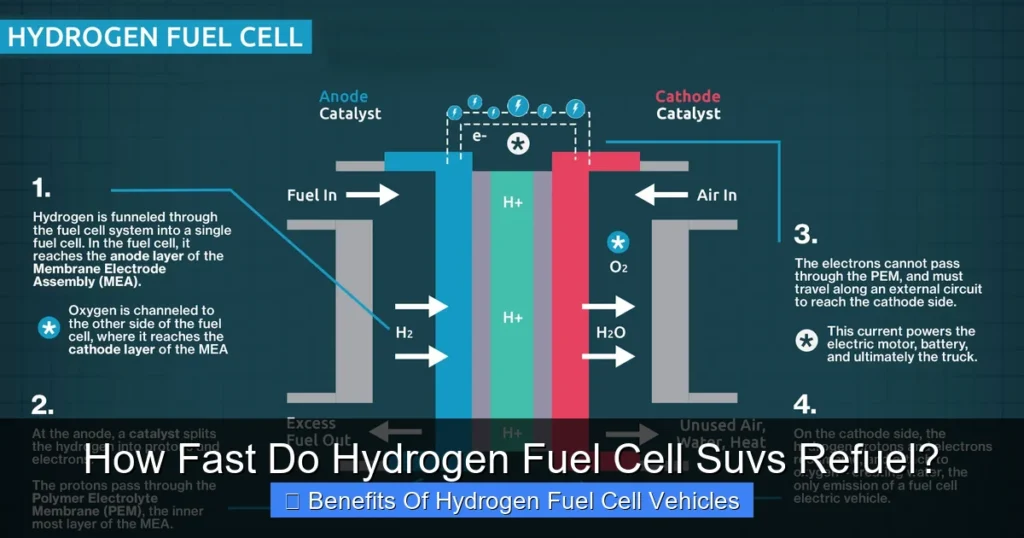
To understand why hydrogen fuel cell SUVs refuel so quickly, it helps to know how the technology works. At the heart of these vehicles is a fuel cell stack that combines hydrogen from the tank with oxygen from the air. This chemical reaction produces electricity, which powers the electric motor. The only byproduct? Pure water.
Refueling a hydrogen SUV is similar to filling up a gas car—just faster and cleaner. When you arrive at a hydrogen station, you connect a dispenser nozzle to a port on your vehicle. The station pumps compressed hydrogen gas (usually at 700 bar or 10,000 psi) into the onboard storage tanks. These tanks are designed to safely hold the high-pressure gas, allowing for a large energy capacity in a relatively compact space.
One key reason refueling is so fast is the physical nature of hydrogen gas. Unlike electricity, which must be slowly transferred to a battery, hydrogen can be pumped quickly—much like gasoline. Modern hydrogen dispensers are engineered for safety and speed, with automated systems that monitor pressure, temperature, and flow rate to ensure a smooth and secure fill.
How Refueling Compares to Gasoline and Electric Vehicles
Let’s put hydrogen refueling speed into perspective. A typical gasoline SUV takes about 5 to 10 minutes to fill up, depending on tank size and pump speed. Electric SUVs, on the other hand, vary widely. A Level 2 home charger might take 8 to 12 hours for a full charge. Even with a fast DC charger, most electric SUVs need 30 to 45 minutes to go from 10% to 80% charge—and that’s only partial range. Full charging can take much longer.
Hydrogen fuel cell SUVs, by contrast, consistently refuel in 3 to 5 minutes for a full tank. That’s a game-changer for road trips, commercial fleets, or anyone who values their time. You don’t need to plan charging stops or worry about battery degradation over time. Just pull up, refuel, and go.
Safety and Reliability of Hydrogen Refueling
Some people worry about the safety of hydrogen, but modern fuel cell vehicles are built with multiple layers of protection. The hydrogen tanks are made from advanced composite materials that can withstand extreme conditions, including crashes and high-pressure impacts. Stations are equipped with sensors and automatic shut-off systems to prevent leaks or over-pressurization.
In fact, hydrogen is no more dangerous than gasoline when handled properly. It’s lighter than air, so it disperses quickly if released, reducing the risk of fire. Automakers and fueling companies follow strict international safety standards, ensuring that refueling is as safe—or safer—than traditional methods.
Real-World Refueling Times for Popular Hydrogen SUVs
So, how fast do hydrogen fuel cell SUVs actually refuel in practice? Let’s look at some of the most popular models on the market today.
Toyota Mirai
The Toyota Mirai is one of the most well-known hydrogen fuel cell vehicles. While technically a sedan, it’s often grouped with SUVs in discussions about fuel cell technology due to its size and performance. The Mirai refuels in about 3 to 5 minutes at a 700-bar station, giving it a range of approximately 400 miles. Toyota has optimized the refueling process to be seamless, with clear instructions and automated systems at partner stations.
Hyundai NEXO
The Hyundai NEXO is a true hydrogen fuel cell SUV and one of the most advanced models available. It features a sleek design, advanced driver assistance systems, and a refueling time of just 3 to 5 minutes. With a range of up to 380 miles, the NEXO is ideal for long commutes and family road trips. Hyundai has partnered with fueling networks to ensure a smooth refueling experience, including mobile apps that locate nearby stations and guide users through the process.
BMW iX5 Hydrogen (Upcoming)
BMW is entering the hydrogen SUV market with the iX5 Hydrogen, a luxury model based on the popular X5 platform. Expected to launch in select markets soon, the iX5 Hydrogen promises a refueling time of under 5 minutes and a range of over 300 miles. BMW emphasizes the vehicle’s performance, with quick acceleration and a refined driving experience. The company is also investing in hydrogen infrastructure to support broader adoption.
Mercedes-Benz GLC F-CELL (Discontinued but Informative)
Although the Mercedes-Benz GLC F-CELL is no longer in production, it offered valuable insights into hydrogen SUV refueling. This plug-in hybrid combined a hydrogen fuel cell with a small battery, allowing for short electric-only trips. Refueling took about 3 minutes, and the vehicle could travel up to 310 miles on hydrogen alone. Its dual-power system demonstrated how hydrogen could complement electric technology for greater flexibility.
These examples show that refueling speed is consistent across major hydrogen SUV models. Whether you’re driving a Toyota, Hyundai, or BMW, you can expect to be back on the road in under five minutes.
Hydrogen Refueling Infrastructure: Where and How
One of the biggest questions about hydrogen fuel cell SUVs is availability. Can you actually find a station to refuel? The answer depends on where you live—but the situation is improving.
Current State of Hydrogen Stations
As of 2024, there are over 1,000 hydrogen refueling stations worldwide, with the majority located in California, Japan, South Korea, Germany, and parts of Scandinavia. California leads the U.S. with more than 60 operational stations, mostly along major highways and in urban centers like Los Angeles and San Francisco. Japan has over 160 stations, supported by government incentives and automaker partnerships.
In Europe, countries like Germany and France are expanding their networks through initiatives like H2 Mobility and the European Clean Hydrogen Alliance. South Korea is also investing heavily, with plans to have 1,200 stations by 2040.
How to Find a Hydrogen Station
If you own or are considering a hydrogen SUV, finding a station is easier than ever. Apps like PlugShare, Hydrogen Station Locator, and manufacturer-specific tools (like Hyundai’s Blue Link) show real-time locations, availability, and even pricing. Many stations are integrated with navigation systems, so your SUV can guide you directly to the nearest refueling point.
Future Expansion Plans
Governments and private companies are investing billions in hydrogen infrastructure. The U.S. Department of Energy’s H2@Scale initiative aims to make hydrogen affordable and widely available. In Europe, the REPowerEU plan includes significant funding for hydrogen corridors along major transport routes.
Automakers are also stepping up. Toyota, Hyundai, and BMW are partnering with energy companies to build new stations and retrofit existing ones. As demand grows, refueling networks will expand, making hydrogen SUVs more practical for everyday use.
Benefits of Fast Refueling for Drivers and Fleets
The speed of hydrogen refueling isn’t just a convenience—it’s a major advantage for both individual drivers and commercial fleets.
Time Savings for Daily Commuters
For daily drivers, fast refueling means less time spent at stations and more time on the road. Imagine never having to wait 30 minutes for a charge during your lunch break. With hydrogen, you can refuel in the time it takes to grab a coffee.
Ideal for Road Trips and Long-Distance Travel
Hydrogen SUVs shine on long trips. Unlike EVs, which require multiple charging stops and careful route planning, hydrogen vehicles can cover 300+ miles and refuel in minutes. This makes them perfect for cross-country travel, especially in regions with growing hydrogen networks.
Commercial and Fleet Applications
Delivery companies, taxi services, and logistics providers benefit greatly from fast refueling. Vehicles can return to service quickly, maximizing uptime and productivity. For example, a hydrogen-powered delivery van can complete multiple routes in a day without lengthy charging delays.
Reduced Downtime in Cold Weather
Cold weather can slow down EV charging and reduce battery range. Hydrogen SUVs, however, maintain consistent refueling speed and performance in winter conditions. This reliability is crucial for fleets operating in colder climates.
Challenges and Considerations
Despite the advantages, hydrogen fuel cell SUVs face some challenges that potential buyers should know about.
Limited Refueling Network
The biggest hurdle is infrastructure. While growing, hydrogen stations are still sparse in many areas. If you live outside major urban centers or travel frequently to rural regions, refueling could be difficult.
Higher Upfront Cost
Hydrogen SUVs are currently more expensive than comparable gasoline or electric models. The Toyota Mirai and Hyundai NEXO start around $60,000, though tax incentives and fuel savings can offset some of the cost over time.
Hydrogen Production and Sustainability
Not all hydrogen is created equal. Most hydrogen today is produced from natural gas, which emits carbon. However, “green hydrogen”—made using renewable energy—is becoming more common. As production scales up, the environmental benefits of hydrogen vehicles will grow.
Public Awareness and Education
Many consumers are unfamiliar with hydrogen technology. Misconceptions about safety and usability can slow adoption. Education and real-world demonstrations are key to building trust.
The Future of Hydrogen Fuel Cell SUVs
The future looks bright for hydrogen fuel cell SUVs. As technology improves and infrastructure expands, these vehicles could become a mainstream option for eco-conscious drivers.
Advancements in Fuel Cell Efficiency
Researchers are developing more efficient fuel cells that use less platinum and last longer. This could reduce costs and improve performance, making hydrogen SUVs more accessible.
Growth of Green Hydrogen
With investments in wind, solar, and electrolysis, green hydrogen production is scaling up. This will make hydrogen fuel truly sustainable and reduce reliance on fossil fuels.
Government Support and Incentives
Many governments offer tax credits, rebates, and grants for hydrogen vehicles and infrastructure. In the U.S., the Inflation Reduction Act includes incentives for clean hydrogen production and vehicle purchases.
Automaker Commitment
Major automakers continue to invest in hydrogen technology. Even as some focus on EVs, others see hydrogen as a complementary solution for larger vehicles and long-range applications.
Conclusion
Hydrogen fuel cell SUVs refuel in just 3 to 5 minutes—faster than any electric vehicle and on par with gasoline cars. This speed, combined with long range, zero emissions, and reliable performance, makes them an attractive option for drivers who want sustainability without sacrificing convenience.
While challenges like limited infrastructure and higher costs remain, the technology is advancing rapidly. With growing support from governments, automakers, and energy companies, hydrogen SUVs are poised to play a bigger role in the clean transportation future.
If you value quick refueling, long-distance capability, and environmental responsibility, a hydrogen fuel cell SUV could be the perfect fit. As the network expands and production becomes greener, now is the time to consider this innovative and efficient alternative.
Frequently Asked Questions
How long does it take to refuel a hydrogen fuel cell SUV?
Most hydrogen fuel cell SUVs refuel in just 3 to 5 minutes, similar to filling up a gasoline vehicle. This is significantly faster than electric SUVs, which can take 30 minutes to several hours to charge.
Is hydrogen refueling safe?
Yes, hydrogen refueling is safe when done at certified stations. Vehicles and stations are built with multiple safety features, including leak detection, automatic shut-offs, and strong composite tanks that withstand high pressure.
Where can I refuel a hydrogen SUV?
Hydrogen stations are currently concentrated in California, Japan, South Korea, Germany, and parts of Europe. Use apps like PlugShare or manufacturer tools to find the nearest station.
How far can a hydrogen SUV go on one tank?
Most hydrogen fuel cell SUVs offer a range of 300 to 400 miles per fill, making them suitable for long trips and daily commuting without frequent refueling.
Is hydrogen fuel expensive?
Hydrogen fuel currently costs more per mile than gasoline or electricity, but prices are expected to drop as production scales up and green hydrogen becomes more common.
Can hydrogen SUVs be used in cold weather?
Yes, hydrogen SUVs perform well in cold weather. Unlike some EVs, they maintain consistent refueling speed and range, making them reliable in winter conditions.