Hydrogen-powered vehicles are emerging as a clean alternative to gasoline, emitting only water vapor and offering fast refueling and long range. With advancing fuel cell technology and growing infrastructure, hydrogen could transform how we drive—without sacrificing convenience or performance.
Key Takeaways
- Hydrogen fuel cells produce electricity through a chemical reaction, not combustion, making them zero-emission at the tailpipe.
- Hydrogen vehicles refuel in 3–5 minutes, similar to gasoline cars, offering a major advantage over battery-electric vehicles.
- Green hydrogen, produced using renewable energy, is key to making hydrogen truly sustainable.
- Current hydrogen vehicles like the Toyota Mirai and Hyundai NEXO demonstrate real-world viability and performance.
- Challenges include limited refueling infrastructure, high production costs, and energy losses in hydrogen production and transport.
- Government policies and private investment are accelerating hydrogen adoption in transportation and heavy industry.
- Hydrogen is especially promising for long-haul trucks, buses, and aviation, where batteries face limitations.
📑 Table of Contents
- Introduction: A Cleaner Road Ahead
- How Hydrogen Vehicles Work: The Science Behind the Hype
- Advantages of Hydrogen Over Gasoline
- Challenges and Limitations
- The Path to Green Hydrogen: Sustainability Matters
- Government Support and Industry Momentum
- The Future of Hydrogen in Transportation
- Conclusion: A Hydrogen-Powered Tomorrow
Introduction: A Cleaner Road Ahead
Imagine pulling up to a fueling station, filling your car in under five minutes, and driving off with nothing but water dripping from the tailpipe. No smog, no greenhouse gases, no reliance on finite fossil fuels. This isn’t science fiction—it’s the promise of hydrogen-powered vehicles. As the world races to reduce carbon emissions and combat climate change, hydrogen is stepping into the spotlight as a viable alternative to gasoline.
For decades, gasoline has dominated the transportation landscape. It’s energy-dense, easy to store, and supported by a vast global infrastructure. But it comes at a steep environmental cost: burning gasoline releases carbon dioxide, nitrogen oxides, and other pollutants that contribute to global warming and poor air quality. Electric vehicles (EVs) have made significant strides in offering a cleaner option, but they’re not the only solution—especially for applications where long range, quick refueling, and heavy loads are essential.
That’s where hydrogen comes in. Unlike gasoline, hydrogen doesn’t burn. Instead, it’s used in fuel cells to generate electricity, powering an electric motor. The only byproduct? Pure water. This makes hydrogen vehicles (HFCVs) a zero-emission option at the point of use. And because hydrogen can be produced from renewable sources like wind and solar, it has the potential to be part of a truly sustainable energy ecosystem.
How Hydrogen Vehicles Work: The Science Behind the Hype
Visual guide about How Hydrogen Can Replace Gasoline in Vehicles
Image source: innovationnewsnetwork.com
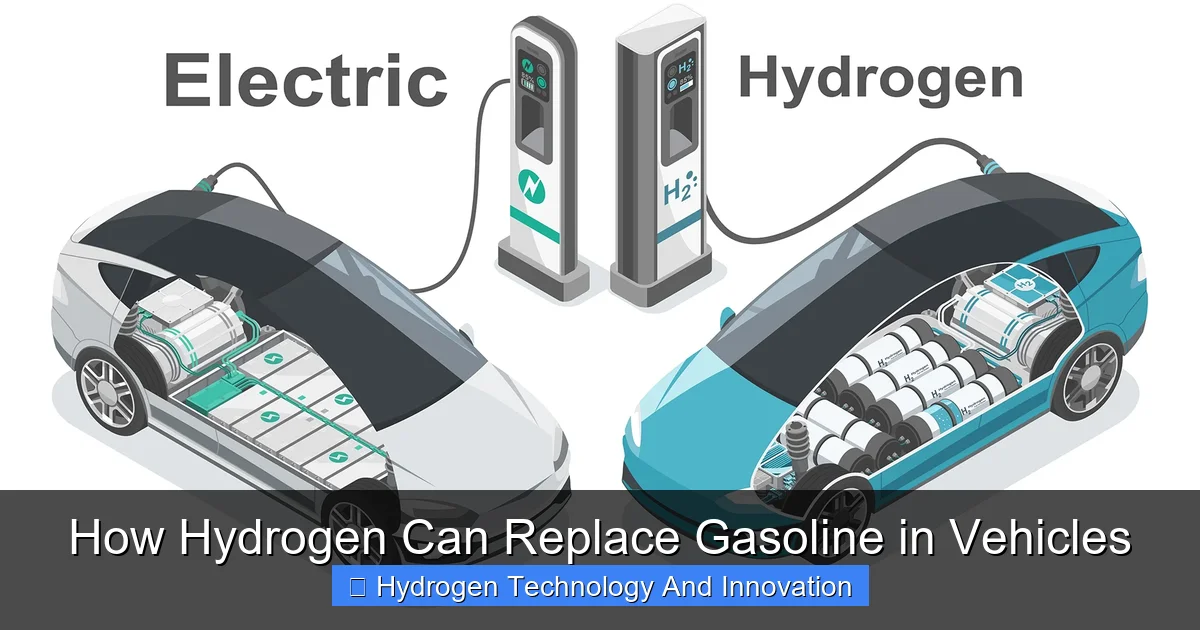
To understand how hydrogen can replace gasoline, it helps to know how these vehicles actually function. At the heart of every hydrogen-powered car is a fuel cell stack—a series of electrochemical cells that convert hydrogen and oxygen into electricity, heat, and water.
The Fuel Cell Process
When you fill up a hydrogen vehicle, compressed hydrogen gas is stored in high-pressure tanks, typically at 700 bar (about 10,000 psi). This hydrogen is then fed into the fuel cell, where it meets oxygen from the air. Inside the fuel cell, a catalyst—usually platinum—splits hydrogen molecules into protons and electrons. The protons pass through a membrane, while the electrons are forced to travel through an external circuit, creating an electric current. This electricity powers the vehicle’s motor.
Meanwhile, the protons and electrons reunite on the other side of the membrane, combining with oxygen to form water vapor, which exits through the exhaust. No combustion, no pollution—just clean energy.
Electric Motor and Battery Support
Like battery-electric vehicles, hydrogen cars use electric motors for propulsion. However, instead of drawing power from a large battery pack, they generate electricity on demand. Many hydrogen vehicles also include a small battery or supercapacitor to store excess energy and assist during acceleration, improving efficiency and performance.
This hybrid approach gives hydrogen vehicles the best of both worlds: the zero-emission benefits of electric propulsion and the quick refueling of traditional gasoline cars.
Real-World Examples
Today’s hydrogen vehicles aren’t prototypes—they’re on the road. The Toyota Mirai, for instance, can travel over 400 miles on a single tank and refuels in about five minutes. The Hyundai NEXO offers similar range and performance, with advanced safety features and a sleek design. These aren’t just concept cars; they’re production models available in select markets, proving that hydrogen technology is ready for real-world use.
Advantages of Hydrogen Over Gasoline
So why consider hydrogen instead of sticking with gasoline—or even switching to battery-electric vehicles? While no technology is perfect, hydrogen offers several compelling advantages, especially in specific use cases.
Zero Tailpipe Emissions
The most obvious benefit is environmental. Hydrogen vehicles emit only water vapor, making them truly zero-emission at the tailpipe. This is a game-changer for urban air quality, especially in cities struggling with smog and respiratory illnesses. Unlike gasoline cars, which release carbon dioxide, nitrogen oxides, and particulate matter, hydrogen vehicles leave no harmful pollutants behind.
Fast Refueling
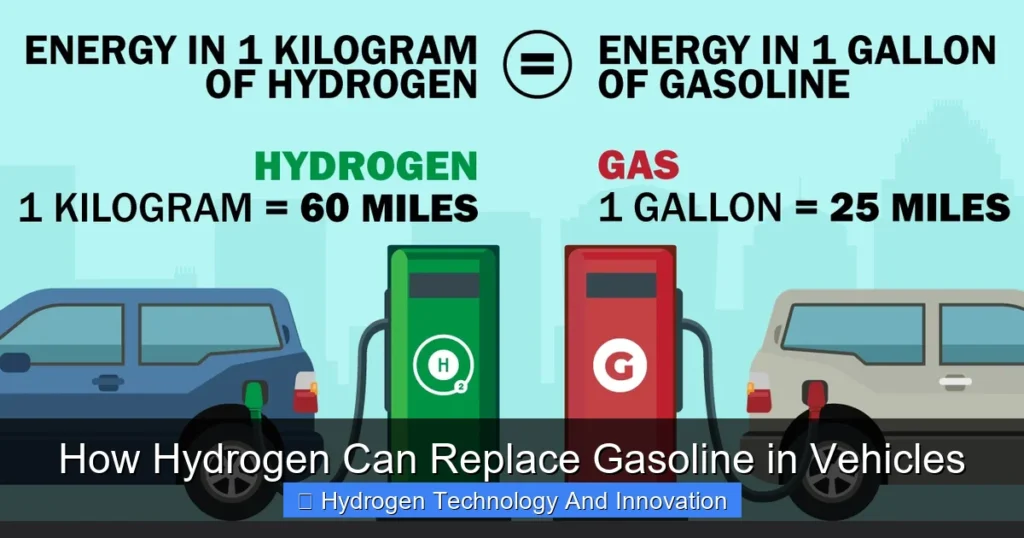
One of the biggest drawbacks of battery-electric vehicles is charging time. Even with fast chargers, it can take 30 minutes or more to reach 80% capacity. Hydrogen refueling, by contrast, takes just 3 to 5 minutes—comparable to filling up a gasoline car. This makes hydrogen ideal for drivers who need to get back on the road quickly, such as taxi drivers, delivery services, or long-haul truckers.
Long Range
Hydrogen vehicles typically offer longer ranges than most battery-electric cars. The Toyota Mirai, for example, has an EPA-estimated range of 402 miles, while the Hyundai NEXO achieves up to 380 miles. This makes hydrogen a strong contender for road trips and rural areas where charging stations are sparse.
Energy Density
Hydrogen has a very high energy density by weight—about three times that of gasoline. This means you can store more energy in less mass, which is especially important for heavy vehicles like trucks and buses. While batteries are heavy and take up space, hydrogen tanks are relatively compact and lightweight, preserving cargo capacity and vehicle efficiency.
Versatility Across Transportation Sectors
While battery-electric vehicles work well for passenger cars, they face challenges in heavier applications. Hydrogen shines in areas where batteries fall short: long-haul trucking, public transit, shipping, and even aviation. For example, hydrogen-powered buses are already operating in cities like London and Tokyo, and companies like Nikola and Hyundai are developing hydrogen trucks for freight transport.
Challenges and Limitations
Despite its promise, hydrogen isn’t a silver bullet. Several challenges must be overcome before it can truly replace gasoline on a large scale.
Limited Refueling Infrastructure
The biggest hurdle today is infrastructure. As of 2024, there are fewer than 100 hydrogen refueling stations in the United States, mostly concentrated in California. Compare that to over 150,000 gasoline stations nationwide. Without a widespread network, most consumers simply can’t access hydrogen fuel, making adoption difficult outside of niche markets.
High Production Costs
Currently, most hydrogen is produced from natural gas through a process called steam methane reforming (SMR). This method releases carbon dioxide, undermining the environmental benefits. While “green hydrogen”—produced using renewable electricity to split water via electrolysis—is cleaner, it’s also more expensive. Electrolyzers and renewable energy inputs drive up costs, making green hydrogen two to three times pricier than gray hydrogen (from natural gas).
Energy Losses in the Hydrogen Chain
Hydrogen is not an energy source—it’s an energy carrier. That means energy is lost at every step: production, compression, transport, and conversion in the fuel cell. Studies suggest that only about 30–40% of the original energy used to produce hydrogen ends up powering the wheels. In contrast, battery-electric vehicles are about 70–80% efficient from grid to wheel. This inefficiency raises questions about whether hydrogen is the best use of renewable energy.
Storage and Safety Concerns
Hydrogen is the lightest and smallest molecule, making it difficult to store and prone to leakage. It must be compressed to extremely high pressures or liquefied at cryogenic temperatures, both of which require energy and specialized equipment. While modern hydrogen tanks are rigorously tested and safe, public perception of hydrogen as “explosive” (thanks in part to the Hindenburg disaster) remains a barrier.
High Vehicle Costs
Hydrogen vehicles are currently expensive due to the cost of fuel cells, platinum catalysts, and high-pressure tanks. The Toyota Mirai starts around $50,000, and the Hyundai NEXO is similarly priced. While prices are expected to fall as production scales up, they remain out of reach for many consumers compared to gasoline or even electric vehicles.
The Path to Green Hydrogen: Sustainability Matters
For hydrogen to truly replace gasoline in an environmentally responsible way, it must be produced sustainably. That means moving away from fossil fuel-based methods and embracing green hydrogen.
Green vs. Gray vs. Blue Hydrogen
Not all hydrogen is created equal. The color-coding system helps distinguish between production methods:
- Gray hydrogen is made from natural gas and releases CO₂—currently the most common form.
- Blue hydrogen also uses natural gas but captures and stores the CO₂ emissions, reducing its climate impact.
- Green hydrogen is produced using renewable electricity (wind, solar, hydro) to power electrolysis, splitting water into hydrogen and oxygen with zero emissions.
Only green hydrogen offers a truly sustainable path forward. While blue hydrogen is a step in the right direction, it still relies on fossil fuels and carbon capture technology, which is not yet widely deployed.
Scaling Up Electrolysis
To make green hydrogen viable, we need to scale up electrolyzer production and reduce costs. Companies like ITM Power, Nel Hydrogen, and Plug Power are leading the charge, developing more efficient and affordable systems. Governments are also investing heavily: the U.S. Department of Energy’s “Hydrogen Shot” initiative aims to reduce the cost of clean hydrogen to $1 per kilogram by 2030.
Renewable Energy Integration
Green hydrogen production works best when paired with abundant renewable energy. Excess solar or wind power generated during off-peak hours can be used to produce hydrogen, storing energy for later use. This not only supports the grid but also provides a use for otherwise wasted electricity.
Government Support and Industry Momentum
The transition to hydrogen won’t happen without strong policy and investment. Fortunately, momentum is building.
Policy and Incentives
Governments around the world are introducing policies to support hydrogen development. The European Union’s Hydrogen Strategy aims to install 40 gigawatts of electrolyzers by 2030. Japan and South Korea have long been leaders in hydrogen technology, with national roadmaps and subsidies for fuel cell vehicles. In the U.S., the Inflation Reduction Act includes tax credits for clean hydrogen production, making green hydrogen more economically competitive.
Private Sector Investment
Major automakers, energy companies, and startups are investing billions in hydrogen. Toyota, Hyundai, and Honda continue to develop fuel cell vehicles. Companies like Shell, BP, and Air Liquide are building hydrogen refueling networks. Meanwhile, startups such as HyPoint and Hyzon are innovating in fuel cell efficiency and hydrogen-powered trucks.
Public-Private Partnerships
Collaboration is key. Initiatives like the Hydrogen Council—a global coalition of CEOs—bring together industry leaders to accelerate deployment. In California, the state government partners with private companies to expand the hydrogen refueling network, offering grants and incentives for station development.
The Future of Hydrogen in Transportation
So, what does the future hold? While hydrogen may not replace gasoline in every vehicle, it’s poised to play a critical role in decarbonizing transportation—especially in sectors where batteries fall short.
Heavy-Duty and Long-Haul Transport
Hydrogen is particularly promising for trucks, buses, and ships. These vehicles require long range, fast refueling, and high payload capacity—areas where hydrogen excels. Companies like Nikola and Daimler are developing hydrogen-powered semi-trucks, while ports in Europe and Asia are testing hydrogen-fueled cargo ships.
Aviation and Aerospace
The aviation industry is exploring hydrogen as a way to reduce emissions. Airbus has announced plans for hydrogen-powered aircraft by 2035, and startups like ZeroAvia are testing hydrogen-electric planes for regional flights. While challenges remain—especially around storage and airport infrastructure—hydrogen could revolutionize air travel.
Integration with Renewable Energy Systems
Beyond transportation, hydrogen can serve as a long-term energy storage solution. Excess renewable energy can be converted to hydrogen and stored for weeks or months, then used to generate electricity during periods of low wind or sun. This makes hydrogen a key player in building a resilient, low-carbon energy grid.
A Complementary, Not Competitive, Technology
It’s important to remember that hydrogen isn’t meant to replace battery-electric vehicles entirely. Instead, it complements them. For short commutes and urban driving, EVs are often the better choice. But for long-distance travel, heavy loads, and applications requiring quick turnaround, hydrogen offers a practical alternative.
Conclusion: A Hydrogen-Powered Tomorrow
Hydrogen has the potential to transform how we move people and goods—offering a clean, efficient, and fast-refueling alternative to gasoline. While challenges remain, from infrastructure to cost and production methods, the progress made in recent years is undeniable. With continued innovation, investment, and policy support, hydrogen vehicles could become a common sight on our roads.
The shift won’t happen overnight. But as green hydrogen production scales up and refueling networks expand, we’re moving closer to a future where driving doesn’t come at the planet’s expense. Whether you’re a commuter, a trucker, or a city planner, hydrogen offers a compelling vision: a world where transportation is powered not by burning fuel, but by clean, renewable energy.
The road ahead is long, but with hydrogen in the mix, it’s a journey worth taking.
Frequently Asked Questions
How does a hydrogen fuel cell vehicle work?
A hydrogen fuel cell vehicle uses compressed hydrogen gas stored in tanks. The hydrogen reacts with oxygen in a fuel cell to produce electricity, which powers an electric motor. The only emission is water vapor.
Is hydrogen safer than gasoline?
Hydrogen is highly flammable, but modern storage tanks are designed to be extremely safe. They undergo rigorous testing and are made from strong materials. In accidents, hydrogen disperses quickly, reducing explosion risk compared to gasoline.
How long does it take to refuel a hydrogen car?
Refueling a hydrogen vehicle takes about 3 to 5 minutes, similar to filling up a gasoline car. This is much faster than charging most electric vehicles.
Where can I refuel a hydrogen vehicle?
Hydrogen refueling stations are currently limited, with most located in California, Japan, South Korea, and parts of Europe. Infrastructure is expanding, but availability remains a challenge in many regions.
Is hydrogen production environmentally friendly?
It depends on the method. Green hydrogen, made using renewable energy, is clean. Gray hydrogen, from natural gas, produces CO₂. The goal is to shift entirely to green hydrogen for sustainability.
Will hydrogen cars replace electric cars?
Not necessarily. Hydrogen and battery-electric vehicles serve different needs. Hydrogen is better for long-range and heavy-duty applications, while EVs are ideal for short commutes and urban driving. Both will likely coexist.