Hydrogen fuel cells are revolutionizing the automotive industry by offering a cleaner, more efficient alternative to traditional engines. They convert hydrogen into electricity with zero emissions, enabling vehicles to travel farther, refuel faster, and reduce environmental impact.
Key Takeaways
- Zero Emissions Operation: Hydrogen fuel cells produce only water and heat as byproducts, making them a truly clean energy source for vehicles.
- Higher Energy Efficiency: Fuel cells convert chemical energy directly into electricity, achieving up to 60% efficiency—nearly double that of internal combustion engines.
- Extended Driving Range: Hydrogen-powered vehicles can travel 300–400 miles on a single tank, rivaling gasoline cars and outperforming many EVs.
- Fast Refueling: Refilling a hydrogen tank takes just 3–5 minutes, similar to gasoline, eliminating long charging waits.
- Reduced Weight and Space: Fuel cell systems are lighter and more compact than large EV battery packs, improving vehicle design and performance.
- Versatility Across Vehicle Types: From sedans to trucks and buses, hydrogen fuel cells are scalable for various transportation needs.
- Growing Infrastructure Support: Governments and companies are investing heavily in hydrogen refueling stations, especially in Europe, Japan, and California.
📑 Table of Contents
- The Rise of Hydrogen: A Clean Revolution in Transportation
- How Hydrogen Fuel Cells Work: The Science Made Simple
- Boosting Efficiency: Why Hydrogen Outperforms Traditional Engines
- Real-World Applications: Hydrogen Vehicles on the Road
- Overcoming Challenges: Infrastructure, Cost, and Public Perception
- The Road Ahead: What’s Next for Hydrogen Vehicles?
- Conclusion: Driving Toward a Cleaner, More Efficient Future
The Rise of Hydrogen: A Clean Revolution in Transportation
Imagine driving a car that emits nothing but clean water vapor from its tailpipe. No smog, no carbon dioxide, no harmful pollutants. Sounds like science fiction, right? But it’s not. Thanks to hydrogen fuel cells, this futuristic vision is becoming a reality on roads around the world.
Hydrogen fuel cells are emerging as one of the most promising technologies in the quest for sustainable transportation. Unlike traditional gasoline engines that burn fuel and release greenhouse gases, or even electric vehicles (EVs) that rely on large, heavy battery packs, hydrogen fuel cells generate electricity through a clean chemical reaction. They combine hydrogen from a tank with oxygen from the air to produce power—power that runs the vehicle’s motor. The only byproducts? Heat and water. Pure, drinkable water, in fact.
This breakthrough is more than just an environmental win. It’s a game-changer for efficiency, performance, and convenience. As the world pushes toward net-zero emissions, automakers, governments, and engineers are turning to hydrogen not just as an alternative, but as a vital piece of the clean mobility puzzle. From sleek sedans to heavy-duty trucks, hydrogen-powered vehicles are proving they can go the distance—without costing the Earth.
How Hydrogen Fuel Cells Work: The Science Made Simple
Visual guide about How Hydrogen Fuel Cells Are Improving Efficiency in Vehicles
Image source: thumbs.dreamstime.com
At the heart of every hydrogen-powered vehicle is a fuel cell stack—a compact, high-tech engine that turns fuel into motion. But how exactly does it work? Let’s break it down in simple terms.
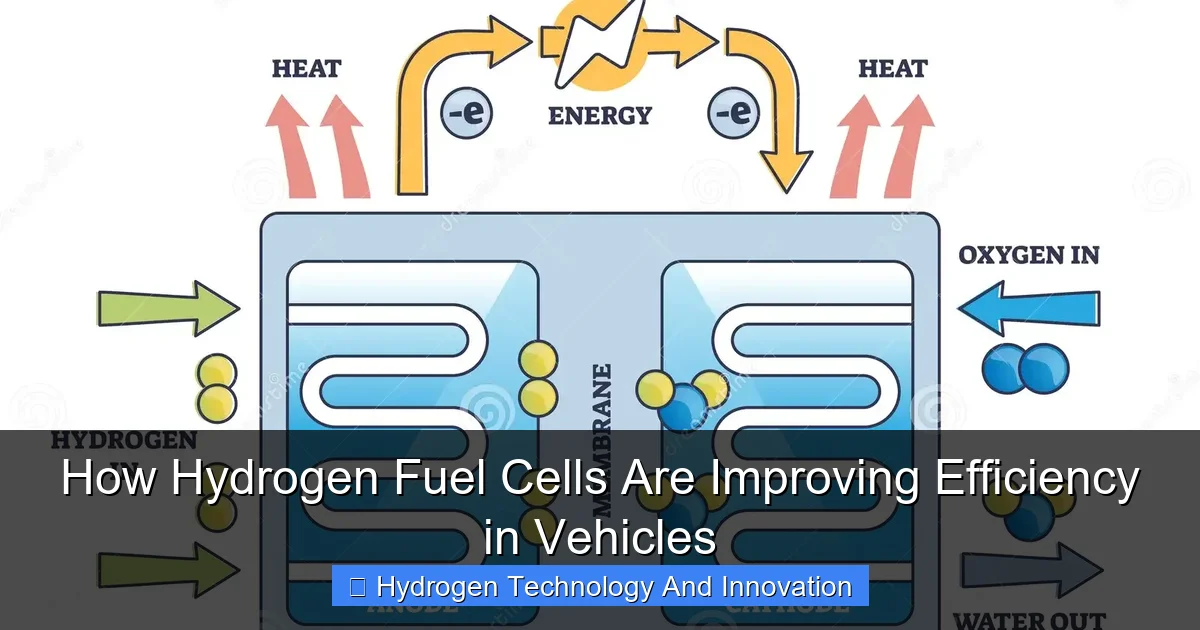
A hydrogen fuel cell consists of two electrodes—an anode and a cathode—sandwiched around an electrolyte membrane. Hydrogen gas is fed into the anode side of the cell. Here, a catalyst (usually platinum) splits the hydrogen molecules into protons and electrons. The protons pass through the electrolyte membrane to the cathode, while the electrons are forced to travel through an external circuit, creating an electric current. This current powers the vehicle’s motor.
On the cathode side, oxygen from the air combines with the protons and electrons to form water—H₂O. That’s it. No combustion. No explosions. Just a quiet, efficient, and clean energy conversion process.
Types of Fuel Cells Used in Vehicles
Not all fuel cells are created equal. For automotive use, the most common type is the Proton Exchange Membrane Fuel Cell, or PEMFC. These cells operate at relatively low temperatures (around 80°C), start up quickly, and are highly responsive—perfect for cars and trucks that need to accelerate and stop frequently.
Other types, like Solid Oxide Fuel Cells (SOFC), are better suited for stationary power generation due to their high operating temperatures. But PEMFCs dominate the transportation sector because of their efficiency, durability, and compact size.
Fueling the Future: Where Does the Hydrogen Come From?
One common question is: where does the hydrogen come from? After all, hydrogen isn’t found freely in nature like gasoline. It must be extracted.
Today, most hydrogen is produced through a process called steam methane reforming, which uses natural gas. While this method is cost-effective, it still emits some CO₂. However, the real promise lies in “green hydrogen”—hydrogen produced using renewable energy sources like wind, solar, or hydroelectric power to split water molecules via electrolysis. This process emits zero greenhouse gases and is rapidly becoming more affordable as renewable energy costs drop.
Countries like Germany, Japan, and Australia are investing billions in green hydrogen infrastructure. In Iceland, for example, geothermal energy powers hydrogen production, creating a truly sustainable cycle. As green hydrogen becomes more widespread, the environmental benefits of fuel cell vehicles will only grow.
Boosting Efficiency: Why Hydrogen Outperforms Traditional Engines
When it comes to efficiency, hydrogen fuel cells have a clear advantage over internal combustion engines (ICEs). Let’s look at the numbers.
A typical gasoline engine converts only about 20–30% of the energy in fuel into usable power. The rest is lost as heat and friction. In contrast, hydrogen fuel cells can achieve efficiencies of 40–60%, and even up to 80% in combined heat and power systems. That means more of the energy stored in hydrogen is actually used to move the vehicle—less waste, more miles.
But efficiency isn’t just about energy conversion. It’s also about how that energy is stored and delivered.
Energy Density: The Hidden Advantage
Hydrogen has one of the highest energy densities by weight of any fuel—about three times that of gasoline. This means a small amount of hydrogen can store a lot of energy. For example, just 5 kilograms of hydrogen can power a car for over 300 miles. Compare that to an EV battery, which might weigh 500 kilograms or more to achieve similar range.
This high energy density translates into lighter vehicles. Without massive battery packs, hydrogen cars can be more agile, have better weight distribution, and even carry heavier loads—ideal for trucks and commercial vehicles.
Regenerative Braking and Hybrid Systems
Many hydrogen vehicles also incorporate regenerative braking systems, similar to those in electric cars. When the driver brakes, the electric motor acts as a generator, capturing kinetic energy and storing it in a small battery. This energy can then be used to assist the fuel cell during acceleration, further improving overall efficiency.
Some manufacturers are even developing hybrid hydrogen-electric systems, where a fuel cell supplements a smaller battery pack. This setup reduces the load on the fuel cell, extends its lifespan, and enhances performance in stop-and-go traffic.
Real-World Applications: Hydrogen Vehicles on the Road
Hydrogen fuel cell vehicles (FCVs) are no longer just prototypes in labs. They’re on the streets, in fleets, and even in public transportation systems around the globe.
Passenger Cars: The Toyota Mirai and Hyundai NEXO
Toyota’s Mirai, launched in 2014, was one of the first mass-produced hydrogen cars. The latest model offers a range of over 400 miles and refuels in under five minutes. It’s sleek, quiet, and emits only water. Hyundai’s NEXO, another leading FCV, boasts similar performance and has earned top safety ratings.
These vehicles are primarily available in regions with hydrogen infrastructure, such as California, Japan, and parts of Europe. While they’re not yet as common as EVs, they represent a growing niche for eco-conscious drivers who want long range and fast refueling.
Commercial and Heavy-Duty Vehicles
Where hydrogen really shines is in commercial transportation. Trucks, buses, and delivery vans benefit greatly from hydrogen’s high energy density and quick refueling.
For example, the Nikola Tre FCEV is a hydrogen-powered semi-truck designed for long-haul freight. It can travel up to 500 miles on a single tank and refuel in 20 minutes—something no battery-electric truck can match today. Similarly, cities like London and Tokyo are testing hydrogen-powered buses that reduce urban air pollution while maintaining reliable service.
Trains, Ships, and Even Planes
Hydrogen isn’t limited to roads. In Germany, hydrogen-powered trains are already in service on non-electrified rail lines. These trains, like the Coradia iLint by Alstom, produce zero emissions and are quieter than diesel locomotives.
The maritime industry is also exploring hydrogen. Companies like Viking Cruises are investing in hydrogen-fueled ships for cleaner ocean travel. And in aviation, startups like ZeroAvia are developing hydrogen-electric engines for regional flights, aiming to make air travel carbon-free.
Overcoming Challenges: Infrastructure, Cost, and Public Perception
Despite their promise, hydrogen fuel cells face several hurdles. The biggest? Infrastructure.
The Refueling Dilemma
As of 2024, there are fewer than 200 hydrogen refueling stations in the United States, most of them concentrated in California. Compare that to over 150,000 gas stations or 50,000 EV charging points. Without a reliable network, consumers are hesitant to adopt hydrogen vehicles.
But progress is being made. The U.S. Department of Energy’s H₂@Scale initiative aims to expand hydrogen infrastructure nationwide. In Europe, the Hydrogen Valleys project is creating regional hubs where production, storage, and refueling are integrated. Japan has over 160 stations and plans to reach 1,000 by 2030.
Cost Barriers
Hydrogen vehicles are still expensive. The Toyota Mirai starts around $50,000, and fuel cell systems rely on rare materials like platinum, which drives up costs. However, as production scales up and technology improves, prices are expected to fall. Toyota has already reduced fuel cell costs by 90% since 2008.
Green hydrogen production is also becoming cheaper. The International Renewable Energy Agency (IRENA) predicts that green hydrogen could cost as little as $1.50 per kilogram by 2030—down from over $6 today—making it competitive with gasoline on a cost-per-mile basis.
Safety and Public Awareness
Some people worry that hydrogen is dangerous because it’s flammable. But in reality, hydrogen is safer than gasoline in many ways. It’s 14 times lighter than air, so it dissipates quickly if leaked. Modern hydrogen tanks are made of carbon fiber and can withstand crashes, bullets, and extreme temperatures.
Public education is key. Automakers and governments are working to dispel myths and promote the safety and benefits of hydrogen technology. Test drives, public demonstrations, and transparent data are helping build trust.
The Road Ahead: What’s Next for Hydrogen Vehicles?
The future of hydrogen fuel cells is bright—and accelerating. With global commitments to carbon neutrality, hydrogen is poised to play a central role in decarbonizing transportation.
Government Support and Policy
Countries are rolling out ambitious hydrogen strategies. The European Union’s Hydrogen Strategy aims to install 40 gigawatts of electrolyzers by 2030. The U.S. Inflation Reduction Act includes tax credits for clean hydrogen production. Japan’s Basic Hydrogen Strategy targets 20 million tons of hydrogen annually by 2050.
These policies are driving investment, innovation, and infrastructure development. As governments lead the way, private companies are following suit.
Technological Innovations
Researchers are working on next-gen fuel cells that use less platinum or alternative catalysts, reducing costs. New membrane materials are improving durability and performance in extreme conditions. Solid-state hydrogen storage is being developed to make tanks smaller and safer.
Meanwhile, AI and smart grid integration are optimizing hydrogen production and distribution. Imagine a world where solar farms produce hydrogen during the day, store it underground, and deliver it to stations at night—all managed by intelligent systems.
Integration with Renewable Energy
Hydrogen is becoming a key part of the clean energy ecosystem. Excess renewable energy can be used to produce hydrogen, which can then be stored for weeks or months—solving the intermittency problem of wind and solar. This “power-to-gas” approach turns hydrogen into a versatile energy carrier, not just a vehicle fuel.
In remote areas, hydrogen microgrids can power homes, schools, and clinics using locally produced green hydrogen. This decentralization reduces reliance on fossil fuels and strengthens energy security.
Conclusion: Driving Toward a Cleaner, More Efficient Future
Hydrogen fuel cells are more than just a technological curiosity—they’re a practical, efficient, and scalable solution for clean transportation. By converting hydrogen into electricity with zero emissions, they offer a compelling alternative to both gasoline and battery-electric vehicles.
They deliver high efficiency, long range, and fast refueling—addressing some of the biggest pain points of current EVs. They’re already powering cars, trucks, buses, and even trains in cities around the world. And with growing infrastructure, falling costs, and strong policy support, their role is only set to expand.
Of course, challenges remain. But every revolution faces obstacles. What matters is the direction we’re heading. As green hydrogen production scales up and fuel cell technology advances, we’re moving closer to a future where clean, efficient mobility is the norm—not the exception.
So the next time you see a car quietly gliding by with nothing but water dripping from its tailpipe, remember: that’s not just a vehicle. It’s a glimpse of the future.
Frequently Asked Questions
Are hydrogen fuel cell vehicles really emission-free?
Yes, hydrogen fuel cell vehicles produce zero tailpipe emissions. The only byproducts are water vapor and a small amount of heat. However, the overall environmental impact depends on how the hydrogen is produced—green hydrogen from renewables is truly clean.
How long does it take to refuel a hydrogen car?
Refueling a hydrogen vehicle takes just 3 to 5 minutes, similar to filling up a gasoline car. This is much faster than charging most electric vehicles, which can take 30 minutes to several hours depending on the charger.
Are hydrogen cars safe in accidents?
Yes, hydrogen cars are designed with safety in mind. Hydrogen tanks are made of strong carbon fiber and undergo rigorous testing. Hydrogen also dissipates quickly into the air if leaked, reducing fire risk compared to liquid fuels.
Can hydrogen fuel cells be used in cold weather?
Yes, modern fuel cells are designed to operate efficiently in cold climates. Some models even use waste heat from the fuel cell to warm the cabin, improving comfort and efficiency in winter.
Why aren’t hydrogen cars more common than electric cars?
The main reasons are limited refueling infrastructure and higher vehicle costs. While EV charging stations are widespread, hydrogen stations are still rare outside certain regions. However, investment in hydrogen infrastructure is growing rapidly.
Will hydrogen replace electric vehicles?
Not necessarily. Hydrogen and battery-electric vehicles serve different needs. EVs are ideal for short-range, urban driving, while hydrogen excels in long-range and heavy-duty applications. Both technologies will likely coexist in a diversified clean transportation future.