Buying a hydrogen fuel cell SUV is an eco-friendly, forward-thinking choice that combines zero-emission driving with the power and space of an SUV. With growing infrastructure and impressive performance, these vehicles offer a sustainable alternative to gas and even electric models—especially for long-distance drivers.
Key Takeaways
- Limited but growing availability: Only a few hydrogen fuel cell SUVs are currently on the market, primarily in select regions like California.
- Zero tailpipe emissions: Hydrogen SUVs emit only water vapor, making them one of the cleanest transportation options available.
- Fast refueling: Unlike battery EVs, hydrogen SUVs can be refueled in under 10 minutes, similar to gas vehicles.
- Higher upfront cost: These vehicles are typically more expensive than comparable gas or electric SUVs, though incentives may help.
- Refueling infrastructure is expanding: While still limited, hydrogen stations are increasing in key urban areas and along major highways.
- Long driving range: Most hydrogen SUVs offer 300–400 miles per fill-up, ideal for road trips and daily commutes.
- Government incentives available: Federal and state programs may offer tax credits, rebates, and access to carpool lanes.
📑 Table of Contents
- Why Consider a Hydrogen Fuel Cell SUV?
- How Hydrogen Fuel Cell SUVs Work
- Top Hydrogen Fuel Cell SUVs on the Market
- Costs and Incentives: What to Expect
- Refueling Infrastructure: Where Can You Fill Up?
- Is a Hydrogen Fuel Cell SUV Right for You?
- Tips for Buying Your First Hydrogen Fuel Cell SUV
- Conclusion
Why Consider a Hydrogen Fuel Cell SUV?
The world of clean transportation is evolving fast. While electric vehicles (EVs) dominate headlines, hydrogen fuel cell technology is quietly gaining momentum—especially in the SUV segment. If you’re looking for a vehicle that combines environmental responsibility with real-world practicality, a hydrogen fuel cell SUV might be exactly what you need.
Unlike traditional gas-powered SUVs, hydrogen models produce zero harmful emissions. Instead of burning fuel, they use a chemical reaction between hydrogen and oxygen to generate electricity, powering the motor and emitting only water vapor. That means you can drive with a clear conscience, knowing your carbon footprint is minimal. Plus, hydrogen SUVs offer the spacious interiors, towing capacity, and rugged capability that make SUVs so popular—without the guilt.
But it’s not just about being green. Hydrogen fuel cell SUVs solve some of the biggest pain points of electric vehicles. Charging an EV can take 30 minutes to several hours, depending on the charger. With a hydrogen SUV, you can refuel in under 10 minutes—just like filling up at a gas station. And with a range of 300 to 400 miles per tank, you won’t be constantly worrying about where to plug in. For families, road-trippers, or anyone who values convenience and sustainability, this technology is a game-changer.
How Hydrogen Fuel Cell SUVs Work
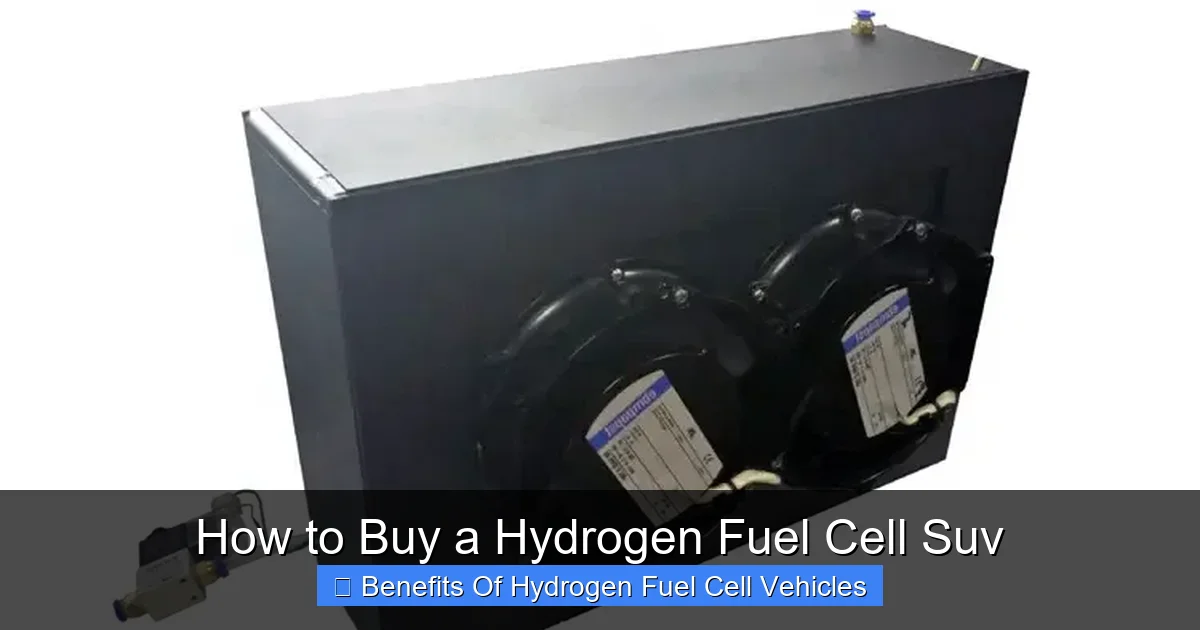
Visual guide about How to Buy a Hydrogen Fuel Cell Suv
Image source: cdn.globalso.com
Before you buy a hydrogen fuel cell SUV, it helps to understand how the technology works. At first glance, it might seem complicated, but the basics are surprisingly simple.
The Science Behind the Power
A hydrogen fuel cell SUV runs on electricity—but not from a battery you plug in. Instead, it generates its own power using a fuel cell stack. Here’s how it works: hydrogen gas is stored in high-pressure tanks inside the vehicle. When you press the accelerator, hydrogen flows into the fuel cell, where it meets oxygen from the air. This triggers a chemical reaction that produces electricity, water, and heat. The electricity powers the motor, while the only byproduct—water—is released as harmless vapor from the exhaust.
This process is clean, quiet, and incredibly efficient. Unlike internal combustion engines, which lose a lot of energy as heat, fuel cells convert up to 60% of the energy in hydrogen into usable power. That’s nearly double the efficiency of a typical gas engine.
Key Components of a Hydrogen SUV
Every hydrogen fuel cell SUV has three main parts: the hydrogen storage tanks, the fuel cell stack, and the electric motor. The tanks are made of lightweight, durable materials like carbon fiber and are designed to safely hold hydrogen at high pressure—usually around 10,000 psi. These tanks are strategically placed for safety and balance, often under the floor or in the rear.
The fuel cell stack is the heart of the system. It’s made up of hundreds of individual fuel cells layered together, each producing a small amount of electricity. Together, they generate enough power to move the vehicle. The electric motor then uses this electricity to drive the wheels, just like in a battery EV.
Some models also include a small battery or supercapacitor to store excess energy and provide extra power during acceleration. This hybrid approach improves performance and efficiency, especially in stop-and-go traffic.
Refueling: Quick and Simple
One of the biggest advantages of hydrogen SUVs is how easy it is to refuel. You pull up to a hydrogen station, connect the nozzle to your vehicle’s fuel port, and fill up in about 5 to 10 minutes. The process is similar to pumping gas, but cleaner and quieter. No cords, no waiting, no range anxiety.
While hydrogen stations are still limited, they’re growing. In California, for example, there are over 60 public stations, with more planned. Some automakers even offer free hydrogen fuel for the first few years of ownership, making the transition even more appealing.
Top Hydrogen Fuel Cell SUVs on the Market
As of 2024, the market for hydrogen fuel cell SUVs is still emerging, but a few standout models are leading the way. These vehicles offer cutting-edge technology, impressive performance, and the space and comfort you expect from an SUV.
Toyota Mirai (Sedan with SUV Appeal)
While technically a sedan, the Toyota Mirai is often considered in the same conversation as hydrogen SUVs due to its premium features, spacious interior, and SUV-like ride height. It’s one of the most reliable and well-engineered hydrogen vehicles available.
The Mirai offers a smooth, quiet ride with a range of up to 402 miles on a full tank. It features a luxurious cabin with premium materials, advanced safety tech, and a user-friendly infotainment system. Toyota also includes up to $15,000 in free hydrogen fuel for the first three years, which is a huge perk.
One downside? The Mirai’s design is more sedan than SUV, so if you need serious cargo space or off-road capability, it might not be the best fit. But for city driving and long commutes, it’s a top choice.
Hyundai NEXO
The Hyundai NEXO is one of the few true hydrogen fuel cell SUVs currently available. It’s a midsize crossover with a sleek design, roomy interior, and impressive tech features. With a range of up to 380 miles, it’s perfect for families and road trips.
The NEXO stands out for its advanced driver-assistance systems, including lane-keeping assist, adaptive cruise control, and automated parking. It also has a unique air purification system that filters out 99.9% of fine dust from the air as you drive—great for people with allergies or those living in polluted areas.
Hyundai offers the NEXO in select markets, primarily in California. Leasing is often the most practical option, with low monthly payments and included maintenance. The NEXO is a great example of how hydrogen technology can be both eco-friendly and high-tech.
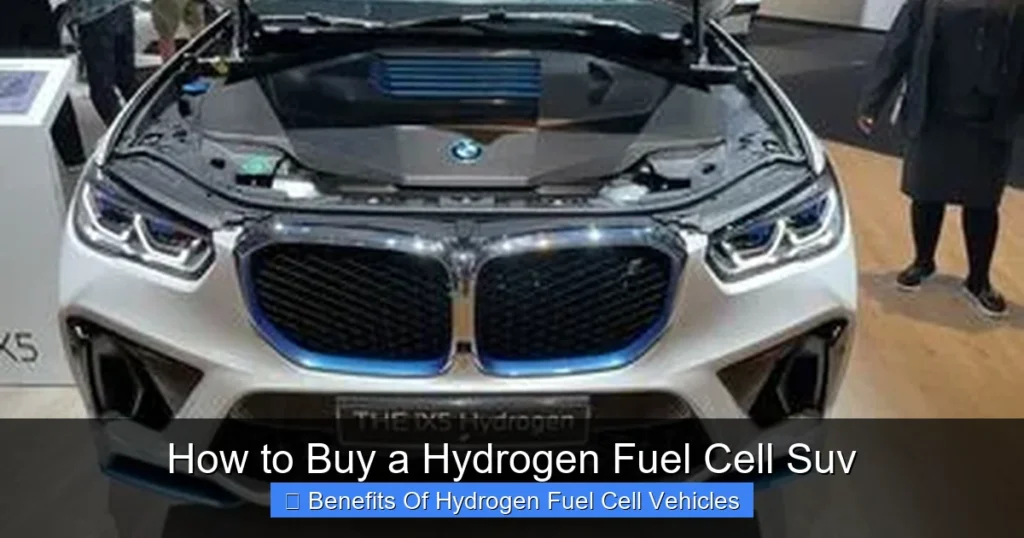
BMW iX5 Hydrogen (Coming Soon)
BMW is entering the hydrogen SUV space with the iX5 Hydrogen, a luxury SUV based on the popular iX electric model. While not yet widely available, it’s expected to launch in limited numbers by late 2024.
The iX5 Hydrogen combines BMW’s signature performance with zero-emission driving. It features a dual-motor setup, all-wheel drive, and a range of over 300 miles. The interior is packed with luxury touches, including premium leather, ambient lighting, and the latest iDrive infotainment system.
BMW is targeting Europe and select U.S. markets first, with plans to expand as hydrogen infrastructure grows. If you’re looking for a high-end hydrogen SUV with German engineering, the iX5 Hydrogen is one to watch.
Honda Clarity Fuel Cell (Discontinued but Still Relevant)
Although Honda has discontinued the Clarity Fuel Cell, it’s still worth mentioning because many used models are available. The Clarity was one of the first hydrogen SUVs to offer a true crossover design with seating for five and a spacious trunk.
It had a range of around 360 miles and came with Honda’s full suite of safety features. While newer models like the NEXO and iX5 Hydrogen offer more advanced tech, the Clarity remains a solid choice for buyers looking for affordability and reliability in the used market.
Costs and Incentives: What to Expect
Buying a hydrogen fuel cell SUV is a significant investment, but it’s important to look at the full picture—including upfront costs, fuel savings, and available incentives.
Upfront Purchase Price
Hydrogen SUVs are generally more expensive than comparable gas or electric models. The Hyundai NEXO, for example, starts around $60,000, while the Toyota Mirai is priced similarly. The BMW iX5 Hydrogen is expected to cost over $100,000 when it launches.
These prices reflect the advanced technology and limited production scale. However, many buyers opt to lease instead of buy. Hyundai, for instance, offers the NEXO for around $399 per month with $3,000 down—including maintenance and up to $15,000 in free hydrogen fuel over three years.
Fuel Costs and Savings
Hydrogen fuel is currently more expensive than gasoline on a per-mile basis, but prices vary by region. In California, hydrogen costs around $16 per kilogram, and most SUVs can travel about 60–70 miles per kilogram. That works out to roughly $0.23–$0.27 per mile—similar to premium gas.
However, many automakers include free fuel for the first few years, which can save you thousands. Toyota and Hyundai both offer generous fuel credits, making the cost of ownership much more manageable.
Government Incentives and Rebates
One of the biggest advantages of buying a hydrogen SUV is access to government incentives. In the U.S., the federal government offers a tax credit of up to $8,000 for new fuel cell vehicles. Some states, like California, add additional rebates—up to $5,000 through the Clean Vehicle Rebate Project (CVRP).
California also allows hydrogen vehicle owners to use carpool lanes, even with a single occupant. That can save you significant time during rush hour commutes.
Other states and countries are beginning to offer similar incentives. In Europe, countries like Germany and France provide purchase subsidies and tax breaks for hydrogen vehicles. Be sure to check local programs before you buy.
Maintenance and Long-Term Costs
Hydrogen SUVs have fewer moving parts than gas vehicles, which means lower maintenance costs over time. There’s no oil to change, no spark plugs to replace, and no exhaust system to worry about. The electric motor and fuel cell require minimal upkeep.
However, hydrogen tanks and fuel cells are complex and may need specialized servicing. Most manufacturers offer comprehensive warranties—Hyundai, for example, covers the fuel cell system for 10 years or 100,000 miles.
Insurance costs are generally comparable to other luxury SUVs, though some insurers may charge slightly more due to the vehicle’s advanced technology.
Refueling Infrastructure: Where Can You Fill Up?
One of the biggest concerns for potential hydrogen SUV buyers is access to refueling stations. The good news? The network is growing—especially in key regions.
Current State of Hydrogen Stations
As of 2024, there are over 100 public hydrogen refueling stations in the United States, with the vast majority located in California. The state has been a pioneer in hydrogen infrastructure, investing heavily in stations along major highways and in urban centers like Los Angeles, San Francisco, and San Diego.
Outside of California, stations are sparse but expanding. New stations are planned in states like Hawaii, New York, and Connecticut. In Europe, countries like Germany, France, and the UK are building national hydrogen networks, with hundreds of stations expected by 2030.
How to Find a Hydrogen Station
Finding a hydrogen station is easy with the right tools. Apps like Hydrogen Station Locator (by the U.S. Department of Energy) and PlugShare show real-time locations, availability, and pricing. Many hydrogen SUVs also have built-in navigation systems that guide you to the nearest station.
Before you buy, it’s smart to map out stations along your regular routes and any areas you plan to travel. If you live in or near a major city with hydrogen infrastructure, you’ll likely have no problem staying fueled.
The Future of Hydrogen Refueling
The hydrogen refueling network is expected to grow rapidly in the coming years. Automakers, energy companies, and governments are investing billions in hydrogen production and distribution. New technologies, like mobile refuelers and home hydrogen generators, could also make refueling more convenient.
In the long term, hydrogen could become as accessible as gasoline—especially for fleet vehicles, trucks, and public transit. For now, if you’re in a supported region, driving a hydrogen SUV is not only possible but practical.
Is a Hydrogen Fuel Cell SUV Right for You?
Deciding whether to buy a hydrogen fuel cell SUV depends on your lifestyle, driving habits, and values. Here are a few questions to help you decide.
Do You Drive Long Distances?
If you frequently take road trips or commute long distances, a hydrogen SUV could be ideal. With a 300–400 mile range and quick refueling, you won’t be stuck waiting at charging stations. It’s a great alternative to gas for highway driving.
Do You Live in a Supported Region?
Hydrogen infrastructure is still limited, so your location matters. If you live in California or plan to move there, you’re in luck. Other regions may not have enough stations to support regular use.
Are You Environmentally Conscious?
If reducing your carbon footprint is a priority, a hydrogen SUV is one of the cleanest options available. While the production of hydrogen can vary in sustainability (green hydrogen from renewable sources is best), the vehicle itself emits nothing but water.
Can You Afford the Upfront Cost?
Hydrogen SUVs are expensive, but leasing and incentives can make them more accessible. If you can take advantage of tax credits and free fuel, the total cost of ownership may be lower than expected.
Do You Want Cutting-Edge Technology?
Hydrogen SUVs are at the forefront of automotive innovation. If you love being an early adopter and enjoy high-tech features, this could be the perfect vehicle for you.
Tips for Buying Your First Hydrogen Fuel Cell SUV
Ready to make the switch? Here are some practical tips to help you buy with confidence.
1. Research Your Local Infrastructure
Before you commit, check how many hydrogen stations are near your home, work, and favorite travel destinations. Use online tools to plan your routes and ensure you won’t be stranded.
2. Consider Leasing First
Leasing is often the best way to try a hydrogen SUV without a long-term commitment. Many leases include maintenance, insurance discounts, and free fuel—making it a low-risk way to test the technology.
3. Take a Test Drive
Schedule a test drive at a dealership that carries hydrogen models. Pay attention to the ride quality, noise level, and ease of use. You’ll be surprised how smooth and quiet these vehicles are.
4. Ask About Incentives
Talk to the dealer about federal, state, and local incentives. Make sure you understand how to claim tax credits and rebates. Some programs require pre-approval, so start early.
5. Plan for the Future
Hydrogen technology is still evolving. Consider how your needs might change in 5–10 years. Will infrastructure improve? Will new models offer better range or features? Buying a hydrogen SUV is a forward-thinking decision.
Conclusion
Buying a hydrogen fuel cell SUV is more than just a purchase—it’s a statement. It says you care about the environment, value innovation, and want a vehicle that’s as practical as it is sustainable. While the technology is still growing, the benefits are clear: zero emissions, fast refueling, long range, and cutting-edge design.
Yes, there are challenges—higher costs, limited infrastructure, and fewer model choices. But for the right driver, these are minor hurdles compared to the long-term rewards. With government support, automaker incentives, and a rapidly expanding refueling network, now is a great time to explore hydrogen.
Whether you’re drawn to the sleek Hyundai NEXO, the luxurious BMW iX5 Hydrogen, or the reliable Toyota Mirai, there’s a hydrogen SUV that fits your lifestyle. Do your research, take a test drive, and consider leasing to start. The future of clean driving is here—and it runs on hydrogen.
Frequently Asked Questions
Are hydrogen fuel cell SUVs safe?
Yes, hydrogen fuel cell SUVs are designed with multiple safety features. The hydrogen tanks are made of strong, lightweight materials and undergo rigorous testing. In the event of a collision, sensors detect leaks and shut off the fuel supply immediately.
How long does it take to refuel a hydrogen SUV?
Refueling a hydrogen SUV takes about 5 to 10 minutes, similar to filling up a gas-powered vehicle. This is much faster than charging an electric SUV, which can take 30 minutes to several hours.
Can I install a hydrogen refueling station at home?
Currently, home hydrogen refueling is not widely available and is very expensive. Most drivers rely on public stations. However, some companies are developing compact home systems, though they are not yet practical for most consumers.
What happens if I run out of hydrogen?
If you run out of hydrogen, your SUV will stop running, just like a gas car. However, most models have low-fuel warnings and navigation systems that guide you to the nearest station. Roadside assistance programs often include hydrogen delivery.
Are hydrogen SUVs better for the environment than electric SUVs?
Both are clean options, but hydrogen SUVs emit only water vapor and can be refueled quickly. However, the environmental impact depends on how the hydrogen is produced. Green hydrogen, made from renewable energy, is the cleanest option.
Will hydrogen SUVs become more common in the future?
Yes, experts predict hydrogen vehicles will grow, especially for larger vehicles like SUVs and trucks. As infrastructure improves and production scales up, costs will decrease, making hydrogen SUVs more accessible to the average buyer.