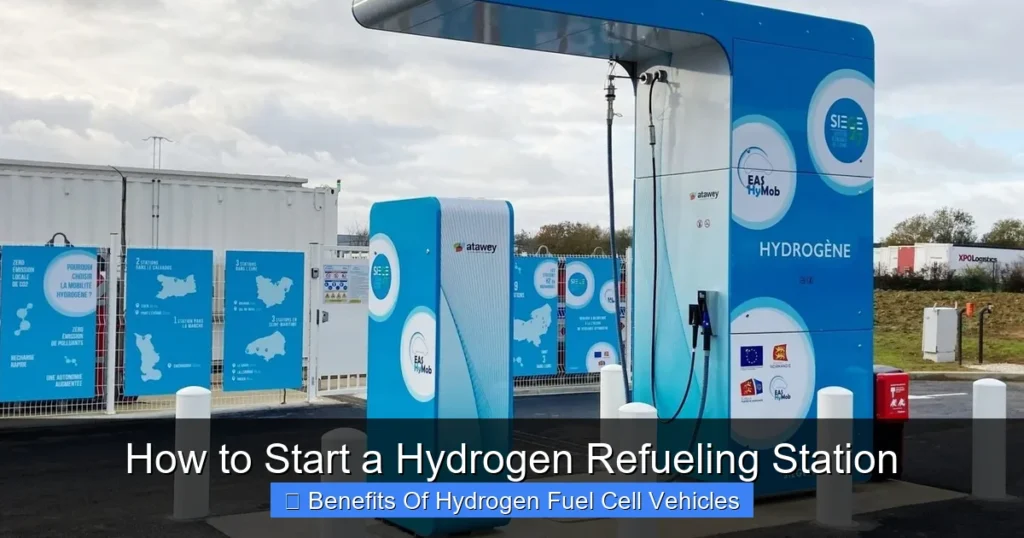
Starting a hydrogen refueling station requires planning, investment in infrastructure, and compliance with local regulations. This guide breaks down the process—from feasibility studies to operations—ensuring you’re ready to support the growing hydrogen economy.
This is a comprehensive guide about How to start a hydrogen refueling station.
Key Takeaways
- Market Research is Crucial: Understand demand, competitors, and local incentives before investing.
- Regulatory Compliance Matters: Work with authorities early to secure permits and safety approvals.
- Capital Costs Are High: Expect $1M–$5M+ per station, depending on capacity and technology.
- Partnerships Help: Collaborate with automakers, suppliers, or energy providers for cost-sharing.
- Sustainability Drives Demand: Green hydrogen (from renewables) is increasingly preferred by consumers.
- Maintenance Requires Expertise: Train staff on equipment like compressors, dispensers, and storage tanks.
—
[FEATURED_IMAGE_PLACEHOLDER]
Introduction: Why Hydrogen Refueling Stations Matter
Hydrogen fuel cell vehicles (FCEVs) are gaining traction as eco-friendly alternatives to traditional cars, but one big hurdle remains: refueling stations. Unlike electric vehicles that need hours to charge, FCEVs take just minutes to fill up—but only if stations exist nearby. Starting a hydrogen refueling station isn’t just about filling a tank; it’s about building a future-ready business that supports sustainability, energy independence, and cutting-edge technology.
This guide walks you through every step, from assessing your market to breaking ground on the first dispenser. Whether you’re an entrepreneur, investor, or policy maker, you’ll find practical advice to turn your vision into reality.
—
Step 1: Conduct Market Feasibility Studies
Assess Local Demand
Before investing, analyze these factors:
- FCEV Adoption Rates: Check nearby sales of Toyota Mirai, Hyundai Nexo, or other models using hydrogen.
- Government Incentives: Look for grants, tax credits, or subsidies (e.g., U.S. DOE’s H2USA program).
- Competitor Analysis: Identify existing stations or planned ones (e.g., Shell, Air Liquide networks).
Practical Example
In California, where FCEV adoption is high, new stations often partner with cities targeting zero-emission zones. A study might reveal a 20% annual growth rate in hydrogen vehicle registrations, justifying a station near a major highway.
—
Step 2: Navigate Regulations & Permits
Key Regulatory Bodies
- EPA/OSHA: Ensure safety protocols for hydrogen storage (flammable gas).
- Local Zoning Laws: Verify land use compatibility (e.g., no residential areas).
- Environmental Agencies: Mitigate risks like leaks or water usage during electrolysis.
Pro Tip
Engage a consultant specializing in hydrogen infrastructure early. They can streamline permitting—in some regions, delays add years to project timelines.
—
Step 3: Design Your Station Infrastructure
Core Components
- Storage Tanks: Pressurized at 350-700 bar; size depends on daily demand (e.g., 20kg/day for a small station).
- Dispensers: Must meet ISO 19880 standards; options include top-fill or pump systems.
- Production Method: Decide between imported hydrogen (gray/blue) or on-site electrolysis (green).
Cost Breakdown
A basic station (4 pumps, 200kg capacity) averages $3M–$6M, including:
- $1.2M for dispensers
- $800K for storage
- $500K for safety systems
—
Step 4: Secure Funding & Partnerships
Funding Sources
- Government Grants: EU’s Clean Hydrogen Joint Undertaking offers €5M–€20M projects.
- Private Investors: Energy firms like Plug Power or ITM Power often invest in scalable tech.
- Public-Private Partnerships: Co-funding with municipalities reduces risk.
Partnership Strategy
Collaborate with:
- Automakers: For vehicle testing and customer education.
- Utilities: To source renewable energy for green hydrogen production.
—
Step 5: Operations & Maintenance
Staff Training
Train employees on:
- Emergency shutdown procedures
- Customer service (explain hydrogen vs. battery EVs)
Maintenance Schedule
Monthly checks should include:
- Leak detection sensors
- Pressure valve inspections
—
Conclusion: The Future Is Hydrogen
Building a hydrogen refueling station is a long-term investment, but the payoff is significant. With global FCEV sales projected to hit 1 million annually by 2025, now is the time to act. By following this guide—from research to operations—you’ll not only launch a thriving business but also accelerate the transition to a cleaner energy future.
—
QUICK Q&A
Question 1?
How much does a hydrogen refueling station typically cost? Answer: Basic stations range from $3M–$6M, scaling up to $10M+ for large-capacity facilities.
Question 2?
What’s the biggest regulatory hurdle? Answer: Safety approvals for hydrogen storage/dispensing require rigorous EPA and OSHA compliance.
Question 3?
Can I use gray hydrogen (fossil-based)? Answer: Yes, but green hydrogen (from renewables) is preferred for sustainability goals and incentives.
Question 4?
How long does it take to build a station? Answer: 18–36 months, depending on permits and construction.
Question 5?
Who are my potential partners? Answer: Automakers, utilities, and governments offer funding and collaboration opportunities.
—
FAQS
What’s the difference between blue and green hydrogen?
Blue hydrogen uses carbon capture from natural gas, while green hydrogen is produced via electrolysis powered by renewables. Green is more sustainable but currently pricier.
Do I need a special license for hydrogen?
Yes, most regions require hazardous material handling licenses, plus state-specific permits for fuel dispensing.
How far apart should stations be placed?
Ideal spacing is 50–100 miles to ensure accessibility for drivers, based on regional traffic patterns.
Are there any hidden costs?
Yes, include ongoing expenses like insurance ($50k–$100k/year), maintenance contracts, and employee training.
What’s the lifespan of a hydrogen station?
Typically 20–25 years with proper upkeep, though technology may advance faster than infrastructure.
Can I retrofit an existing site?
Possible, but zoning and utility upgrades may be needed. Assess soil stability and underground pipelines first.
Quick Answers to Common Questions
What is How to start a hydrogen refueling station?
How to start a hydrogen refueling station refers to essential knowledge and techniques.
Frequently Asked Questions
What is How to start a hydrogen refueling station?
How to start a hydrogen refueling station is an important topic with many practical applications.