Hydrogen fuel cell SUV adoption rates are climbing slowly but steadily, driven by zero-emission performance and growing infrastructure. While still a niche market, government support and automaker innovation are paving the way for wider acceptance.
Key Takeaways
- Hydrogen fuel cell SUV adoption is growing in select regions: Countries like Japan, South Korea, and parts of the U.S. (especially California) lead in adoption due to supportive policies and infrastructure.
- Refueling speed rivals gasoline vehicles: Unlike battery-electric SUVs, hydrogen SUVs can refuel in under 5 minutes, offering convenience for long-distance travel.
- Zero tailpipe emissions make them eco-friendly: The only byproduct of hydrogen fuel cells is water vapor, making them ideal for reducing urban air pollution.
- Infrastructure remains a major hurdle: Limited hydrogen refueling stations restrict widespread use, especially outside urban centers.
- High upfront cost and vehicle availability limit adoption: Hydrogen SUVs are currently more expensive than EVs and available in fewer models.
- Government incentives are accelerating interest: Tax credits, rebates, and grants in key markets are helping offset costs and encourage early adopters.
- Long-term potential is strong with advancing technology: As production scales and green hydrogen becomes cheaper, adoption rates are expected to rise significantly by 2030.
📑 Table of Contents
- Why Hydrogen Fuel Cell SUVs Are Gaining Traction
- How Hydrogen Fuel Cell SUVs Work
- Current Adoption Rates and Market Trends
- Benefits of Hydrogen Fuel Cell SUVs
- Challenges Slowing Widespread Adoption
- The Future of Hydrogen Fuel Cell SUV Adoption
- Tips for Considering a Hydrogen Fuel Cell SUV
- Conclusion
Why Hydrogen Fuel Cell SUVs Are Gaining Traction
Imagine pulling up to a fueling station, filling your SUV in under five minutes, and driving off with nothing but water dripping from the tailpipe. No plugging in overnight. No range anxiety on road trips. That’s the promise of hydrogen fuel cell SUVs—and it’s starting to become a reality.
While electric vehicles (EVs) have dominated the clean transportation conversation, hydrogen fuel cell technology offers a compelling alternative, especially for larger vehicles like SUVs. These vehicles use hydrogen gas to generate electricity through a chemical reaction in a fuel cell stack, powering an electric motor. The result? A quiet, smooth ride with zero harmful emissions.
Hydrogen fuel cell SUV adoption rates are still modest compared to battery-electric models, but they’re on the rise. In 2023, global sales of hydrogen-powered light-duty vehicles—including SUVs—reached over 15,000 units, with the majority sold in South Korea, Japan, and California. While this represents less than 1% of the total EV market, the growth trajectory is notable. Automakers like Toyota, Hyundai, and Honda are investing heavily in the technology, and governments are beginning to back it with infrastructure funding and incentives.
What’s driving this momentum? For one, hydrogen SUVs solve some of the biggest pain points of electric SUVs: long charging times and limited range. A hydrogen-powered SUV like the Hyundai NEXO or Toyota Mirai can travel 300–400 miles on a single tank and refuel in about the same time it takes to fill a gas-powered SUV. That’s a game-changer for families, road trippers, and commercial fleets.
But it’s not just about convenience. Hydrogen fuel cell SUVs are also a key part of the broader strategy to decarbonize transportation. As the world pushes toward net-zero emissions, hydrogen—especially when produced using renewable energy—offers a clean, scalable solution for heavy-duty and long-range vehicles where batteries may fall short.
How Hydrogen Fuel Cell SUVs Work

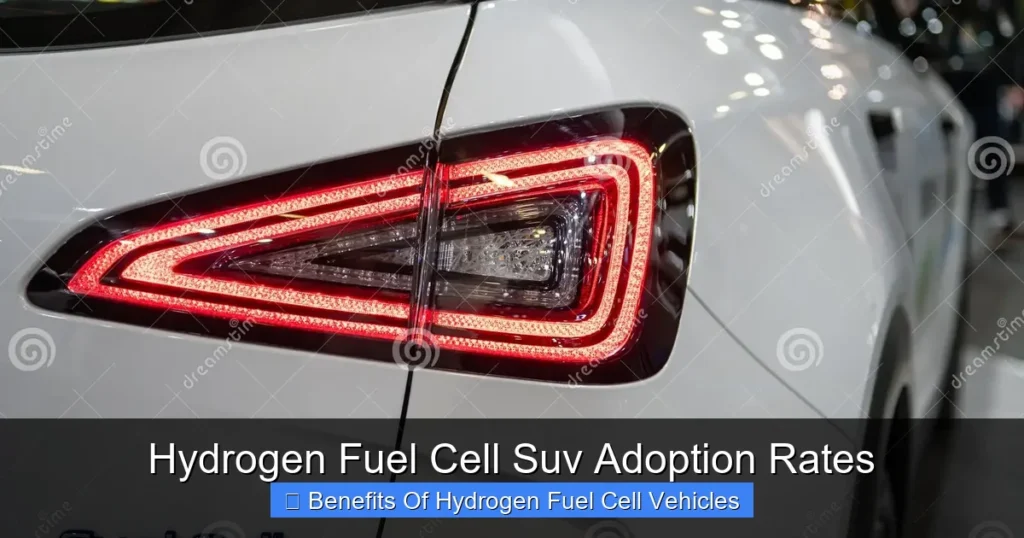
Visual guide about Hydrogen Fuel Cell Suv Adoption Rates
Image source: autodevot.com
To understand why hydrogen SUVs are gaining ground, it helps to know how they work. At first glance, they might seem similar to electric SUVs—after all, both run on electricity and produce zero tailpipe emissions. But the way they generate and store that electricity is fundamentally different.
The Science Behind the Fuel Cell
A hydrogen fuel cell SUV contains a fuel cell stack, which is essentially a series of individual fuel cells layered together. Each cell has an anode, a cathode, and an electrolyte membrane. Here’s what happens when you fill up with hydrogen:
– Hydrogen gas is fed into the anode side of the fuel cell.
– A catalyst (usually platinum) splits the hydrogen atoms into protons and electrons.
– The protons pass through the electrolyte membrane to the cathode, while the electrons are forced to travel through an external circuit, creating an electric current.
– At the cathode, the protons, electrons, and oxygen from the air combine to form water—the only emission.
This electricity powers the vehicle’s electric motor, just like in a battery-electric SUV. But instead of relying on a large, heavy battery that takes hours to recharge, the hydrogen fuel cell generates power on demand as long as hydrogen is supplied.
Hydrogen Storage and Safety
One common concern about hydrogen vehicles is safety. After all, hydrogen is a flammable gas. But modern hydrogen SUVs are designed with multiple safety features. The hydrogen is stored in high-strength carbon fiber tanks that can withstand extreme pressure and impact. These tanks are rigorously tested and often located in protected areas of the vehicle.
In the event of a leak, hydrogen is lighter than air and disperses quickly, reducing the risk of ignition. Plus, the fuel system includes automatic shut-off valves and sensors that detect leaks and stop the flow of hydrogen immediately.
Refueling: Fast and Familiar
Refueling a hydrogen SUV is surprisingly similar to filling up a gasoline car. You pull up to a hydrogen dispenser, connect the nozzle, and wait about 3–5 minutes while the tank fills. There’s no need to plug in or wait hours for a charge. This makes hydrogen SUVs particularly appealing for people who frequently travel long distances or don’t have access to home charging.
For example, a family planning a cross-country trip in a hydrogen SUV can stop at hydrogen stations along major highways—just like gas stations—and keep moving with minimal downtime. This convenience is a major advantage over battery-electric SUVs, which often require 30–60 minutes for a fast charge, even under ideal conditions.
Current Adoption Rates and Market Trends
So, how many hydrogen fuel cell SUVs are actually on the road today? The numbers are still small, but they’re growing.
Global Sales and Regional Leaders
As of 2023, cumulative global sales of hydrogen fuel cell vehicles (including SUVs, sedans, and trucks) exceeded 75,000 units. Of these, SUVs make up a significant portion—especially models like the Hyundai NEXO and Toyota Mirai, which are classified as mid-size SUVs.
South Korea leads the world in hydrogen vehicle adoption, with over 30,000 fuel cell vehicles on the road as of 2023. The government has set ambitious targets, aiming for 200,000 hydrogen vehicles by 2025. Japan follows closely, with strong support from automakers like Toyota and Honda. California remains the epicenter of hydrogen adoption in the U.S., with over 12,000 fuel cell vehicles registered—most of them SUVs.
Why Adoption Is Concentrated in Certain Areas
The uneven adoption of hydrogen SUVs isn’t due to lack of interest—it’s largely about infrastructure. Hydrogen refueling stations are expensive to build and require significant investment. As of 2023, there are fewer than 200 public hydrogen stations worldwide, with over half located in California, Japan, and South Korea.
This creates a “chicken-and-egg” problem: consumers won’t buy hydrogen SUVs without stations, and companies won’t build stations without demand. But governments and private companies are working to break this cycle. For example, California’s Zero-Emission Vehicle (ZEV) program requires automakers to sell a certain percentage of clean vehicles, including hydrogen models. In return, the state has invested over $200 million in hydrogen infrastructure.
Automaker Commitment and Model Availability
Despite the challenges, major automakers are doubling down on hydrogen. Hyundai has been a pioneer with the NEXO, which offers up to 380 miles of range and advanced driver-assistance features. Toyota continues to refine the Mirai, now in its second generation, with improved efficiency and a sleeker design.
Other manufacturers are exploring hydrogen for larger vehicles. BMW has announced plans to produce a hydrogen version of its X5 SUV, while General Motors is developing hydrogen powertrains for commercial and military applications. Even luxury brands like Audi and Mercedes-Benz have tested hydrogen concepts, signaling long-term interest.
Benefits of Hydrogen Fuel Cell SUVs
Hydrogen fuel cell SUVs offer several compelling advantages that make them an attractive option for eco-conscious drivers.
Zero Tailpipe Emissions
The most obvious benefit is environmental. Unlike gasoline or diesel SUVs, hydrogen fuel cell vehicles produce no carbon dioxide, nitrogen oxides, or particulate matter. The only emission is water vapor—literally clean enough to drink. This makes them ideal for reducing urban air pollution and meeting climate goals.
For cities struggling with smog and poor air quality, hydrogen SUVs can play a key role in improving public health. In California, where air quality regulations are strict, hydrogen vehicles are seen as a critical part of the clean transportation mix.
Fast Refueling and Long Range
One of the biggest drawbacks of electric SUVs is charging time. Even with fast chargers, it can take 30–60 minutes to recharge a battery to 80%. For long trips, this adds up quickly.
Hydrogen SUVs, on the other hand, refuel in under five minutes—comparable to gasoline vehicles. And with ranges often exceeding 350 miles, they’re well-suited for road trips, commuting, and commercial use.
Reduced Weight and Space Efficiency
Battery-electric SUVs require large, heavy battery packs to achieve long range. This adds weight, reduces cargo space, and can impact handling. Hydrogen fuel cell systems are more compact and lighter for the same range, freeing up space for passengers and luggage.
For example, the Hyundai NEXO has a spacious interior and a large cargo area, thanks to its efficient fuel cell design. This makes it a practical choice for families who need both eco-friendliness and utility.
Quiet and Smooth Driving Experience
Like all electric vehicles, hydrogen SUVs are quiet and offer instant torque. There’s no engine noise, no gear shifts, and no vibration. The result is a smooth, relaxing ride—perfect for daily commutes or long drives.
Potential for Green Hydrogen
Not all hydrogen is created equal. Most hydrogen today is produced from natural gas, which still generates carbon emissions. But “green hydrogen”—made using renewable energy to split water molecules—is becoming more viable.
As renewable energy costs fall and electrolyzer technology improves, green hydrogen could become the standard. This would make hydrogen SUVs truly carbon-neutral from production to use.
Challenges Slowing Widespread Adoption
Despite their benefits, hydrogen fuel cell SUVs face significant hurdles that are slowing adoption.
Limited Refueling Infrastructure
The biggest barrier is infrastructure. As of 2023, there are only about 180 public hydrogen stations worldwide. In the U.S., most are concentrated in California. In Europe, Germany and the UK are building networks, but progress is slow.
Without a reliable network of stations, consumers are hesitant to buy hydrogen SUVs. It’s hard to justify the purchase if you can’t refuel outside your home state.
High Vehicle and Fuel Costs
Hydrogen SUVs are expensive. The Toyota Mirai starts around $50,000, and the Hyundai NEXO is similarly priced. That’s significantly more than comparable electric SUVs like the Tesla Model Y or Ford Mustang Mach-E.
Fuel costs are also high. Hydrogen currently costs $12–$16 per kilogram in the U.S., and it takes about 1 kg to drive 60–70 miles. That’s roughly $0.20 per mile—more than electricity and comparable to gasoline.
Hydrogen Production and Distribution
Producing, transporting, and storing hydrogen is complex and energy-intensive. Most hydrogen is currently made from fossil fuels, which undermines its environmental benefits. Even green hydrogen requires large amounts of renewable energy and water.
Distribution is another challenge. Hydrogen is difficult to transport over long distances. It must be compressed or liquefied, which uses energy and increases costs. Pipelines exist in some industrial areas, but a national hydrogen network doesn’t yet exist.
Competition from Battery-Electric Vehicles
Battery-electric SUVs are advancing rapidly. New models offer longer ranges, faster charging, and lower prices. Tesla, Ford, GM, and others are investing billions in EV technology, making it harder for hydrogen to compete.
For many consumers, the convenience of home charging and the growing network of public chargers make EVs a more practical choice—especially for city driving.
The Future of Hydrogen Fuel Cell SUV Adoption
Despite the challenges, the future looks promising for hydrogen fuel cell SUVs.
Government Support and Policy Incentives
Governments around the world are stepping up support. The U.S. Inflation Reduction Act includes tax credits for hydrogen vehicles and infrastructure. The European Union has launched the Hydrogen Strategy, aiming for 6 GW of electrolyzer capacity by 2024.
South Korea and Japan continue to lead with national hydrogen roadmaps, subsidies, and public-private partnerships. These policies are helping to build momentum.
Technological Advancements
Research is ongoing to improve fuel cell efficiency, reduce platinum use (which lowers cost), and develop better hydrogen storage methods. Solid-state hydrogen storage and new catalysts could make hydrogen SUVs more affordable and practical.
Automakers are also working on modular platforms that can support both battery and hydrogen powertrains, giving consumers more flexibility.
Infrastructure Expansion
New hydrogen stations are being built in key corridors. In California, the goal is 200 stations by 2025. In Europe, the H2 Mobility initiative aims for 1,000 stations by 2030. These efforts will make hydrogen SUVs more viable for everyday use.
Role in a Diversified Clean Transportation Future
Hydrogen won’t replace battery-electric vehicles—but it doesn’t need to. The future of clean transportation is likely to be diverse, with different technologies serving different needs.
Battery EVs are ideal for city driving and short trips. Hydrogen SUVs excel in long-range, heavy-duty, and fast-refueling applications. Together, they can help reduce emissions across the entire transportation sector.
Tips for Considering a Hydrogen Fuel Cell SUV
If you’re thinking about making the switch, here are some practical tips:
- Check local hydrogen station availability: Use apps like H2stations.org or PlugShare to find stations near you.
- Look into incentives: Many states and countries offer tax credits, rebates, or free hydrogen for early adopters.
- Consider your driving habits: Hydrogen SUVs are best for long-distance drivers or those without home charging.
- Test drive a model: Experience the quiet, smooth ride firsthand at a dealership or auto show.
- Stay informed: Follow developments in hydrogen technology and infrastructure to make the best decision.
Conclusion
Hydrogen fuel cell SUV adoption rates are still in the early stages, but the technology holds immense promise. With zero emissions, fast refueling, and long range, hydrogen SUVs offer a unique solution for clean, convenient transportation.
While challenges like infrastructure and cost remain, government support, automaker innovation, and advancing technology are paving the way for broader adoption. As green hydrogen becomes more accessible and refueling networks expand, hydrogen SUVs could become a common sight on roads around the world.
For now, they’re a niche but growing segment—perfect for early adopters, eco-conscious families, and long-distance travelers. The journey to a hydrogen-powered future is just beginning, and the road ahead looks clean, quiet, and full of potential.
Frequently Asked Questions
How many hydrogen fuel cell SUVs are sold each year?
Global sales of hydrogen fuel cell SUVs reached over 15,000 units in 2023, with the majority sold in South Korea, Japan, and California. While this is a small fraction of total EV sales, the number is growing steadily each year.
Are hydrogen fuel cell SUVs really zero emission?
Yes, hydrogen fuel cell SUVs produce zero tailpipe emissions. The only byproduct is water vapor. However, the environmental impact depends on how the hydrogen is produced—green hydrogen from renewables is truly clean.
How long does it take to refuel a hydrogen SUV?
Refueling a hydrogen SUV takes about 3–5 minutes, similar to filling a gasoline vehicle. This is much faster than charging a battery-electric SUV, which can take 30–60 minutes even with fast chargers.
Where can I refuel a hydrogen SUV?
Hydrogen refueling stations are currently limited, with most located in California, Japan, and South Korea. Use apps like H2stations.org to find stations near you. Expansion is ongoing in Europe and parts of the U.S.
Are hydrogen SUVs safe?
Yes, hydrogen SUVs are designed with multiple safety features, including high-strength fuel tanks, leak detection systems, and automatic shut-off valves. Hydrogen disperses quickly in air, reducing fire risk.
Will hydrogen SUVs become more affordable?
As production scales and technology improves, prices are expected to drop. Government incentives and falling costs for green hydrogen will also help make hydrogen SUVs more accessible by 2030.