The hydrogen fuel cell SUV market is accelerating rapidly, driven by zero-emission technology and growing infrastructure. With major automakers investing heavily, these vehicles offer long range, fast refueling, and eco-friendly performance.
Key Takeaways
- Zero Tailpipe Emissions: Hydrogen fuel cell SUVs emit only water vapor, making them a clean alternative to gasoline-powered vehicles.
- Fast Refueling and Long Range: These SUVs can refuel in under 10 minutes and travel 300–400 miles on a single tank, rivaling traditional vehicles.
- Growing Infrastructure: Hydrogen refueling stations are expanding globally, especially in the U.S., Europe, and Asia, supporting wider adoption.
- Government Incentives: Many countries offer tax credits, rebates, and grants to encourage hydrogen vehicle purchases and infrastructure development.
- Major Automaker Investment: Companies like Toyota, Hyundai, and Honda are leading the charge with production models and R&D expansion.
- Ideal for Fleet and Commercial Use: Hydrogen SUVs are gaining traction in ride-sharing, delivery, and government fleets due to their efficiency and low emissions.
- Future-Proof Technology: As green hydrogen production grows, these vehicles will become even more sustainable and cost-effective.
📑 Table of Contents
Hydrogen Fuel Cell SUV Market Growth: The Future of Clean Driving
Imagine driving a powerful, spacious SUV that can travel over 300 miles on a single fill-up—and the only thing coming out of the tailpipe is water. No engine noise, no gasoline smell, and zero harmful emissions. This isn’t science fiction. It’s the reality of hydrogen fuel cell SUVs, and they’re gaining serious momentum in the automotive world.
The hydrogen fuel cell SUV market is no longer a niche segment. It’s growing fast, driven by environmental concerns, government policies, and major investments from automakers. As the world pushes toward carbon neutrality, hydrogen-powered vehicles are emerging as a key player in the clean transportation revolution. Unlike battery electric vehicles (BEVs), which rely on charging stations and long recharge times, hydrogen SUVs offer a familiar experience: quick refueling and long-range capability. This makes them especially appealing to families, long-distance travelers, and commercial users who need reliability and efficiency.
But what exactly is a hydrogen fuel cell SUV? How does it work? And why is the market expanding so quickly? In this article, we’ll explore the technology behind these vehicles, the benefits they offer, the current state of the market, and what the future holds. Whether you’re a car enthusiast, an eco-conscious consumer, or just curious about the next big thing in green mobility, this guide will give you everything you need to know.
What Is a Hydrogen Fuel Cell SUV?
Visual guide about Hydrogen Fuel Cell Suv Market Growth
Image source: precedenceresearch.com
A hydrogen fuel cell SUV is a type of electric vehicle that uses a fuel cell stack to generate electricity from hydrogen gas. Unlike battery electric SUVs, which store electricity in large lithium-ion batteries, hydrogen SUVs produce their own power on demand. Here’s how it works: hydrogen gas is stored in high-pressure tanks inside the vehicle. When you press the accelerator, the hydrogen flows into the fuel cell, where it reacts with oxygen from the air. This chemical reaction produces electricity, which powers the electric motor. The only byproduct? Pure water vapor.
This technology offers several advantages. First, it eliminates the need for long charging times. Refueling a hydrogen SUV takes just 5 to 10 minutes—about the same as filling up a gas tank. Second, these vehicles can travel 300 to 400 miles on a single tank, making them ideal for road trips and daily commutes alike. Third, they produce zero tailpipe emissions, helping to reduce air pollution and greenhouse gases.
One of the most well-known examples is the Hyundai NEXO, a midsize SUV that has been available in select markets since 2018. It boasts a range of over 380 miles and can be refueled in under 10 minutes. Another major player is the Toyota Mirai, which recently launched its second-generation model with improved performance and a sleeker design. Honda has also re-entered the market with the Honda CR-V Hydrogen Fuel Cell, set to launch in 2024 as a plug-in hybrid version that combines hydrogen and battery power.
These vehicles aren’t just for early adopters. They’re designed to be practical, comfortable, and safe—just like any other modern SUV. With spacious interiors, advanced driver-assistance systems, and smooth electric powertrains, they offer a premium driving experience without the environmental cost.
Why the Hydrogen Fuel Cell SUV Market Is Growing
The growth of the hydrogen fuel cell SUV market isn’t accidental. It’s the result of a perfect storm of technological progress, environmental urgency, and strategic investment. Let’s break down the key drivers behind this surge.
Environmental Benefits and Climate Goals
Climate change is one of the biggest challenges of our time, and transportation is a major contributor. According to the International Energy Agency (IEA), road transport accounts for about 16% of global CO₂ emissions. As governments and organizations push for net-zero emissions by 2050, the demand for clean vehicles is skyrocketing.
Hydrogen fuel cell SUVs offer a compelling solution. They produce zero tailpipe emissions, meaning they don’t release carbon dioxide, nitrogen oxides, or particulate matter. This makes them ideal for improving urban air quality and meeting strict emissions regulations. In cities like Los Angeles, Tokyo, and Copenhagen, where air pollution is a major concern, hydrogen vehicles are being promoted as part of broader sustainability initiatives.
Moreover, when hydrogen is produced using renewable energy—such as wind, solar, or hydroelectric power—the entire lifecycle of the vehicle becomes nearly carbon-free. This “green hydrogen” is still in its early stages, but it’s growing rapidly. Countries like Germany, Japan, and Australia are investing billions in green hydrogen production, which will make hydrogen vehicles even cleaner in the future.
Government Support and Incentives
One of the biggest boosts to the hydrogen SUV market comes from government policies. Many countries are offering financial incentives to encourage the adoption of hydrogen vehicles and the development of refueling infrastructure.
In the United States, the Inflation Reduction Act (IRA) of 2022 includes tax credits for hydrogen fuel cell vehicles. Buyers can receive up to $8,000 in federal tax credits, depending on the vehicle’s size and battery capacity. California, a leader in clean transportation, offers additional rebates through the Clean Vehicle Rebate Project (CVRP), which can reduce the purchase price by up to $5,000.
Europe is also pushing hard for hydrogen adoption. The European Union’s “Fit for 55” package aims to cut emissions by 55% by 2030, and hydrogen is a key part of the strategy. Countries like Germany and France are building extensive hydrogen refueling networks and offering purchase incentives. In Japan, the government has set a goal of having 800,000 hydrogen vehicles on the road by 2030 and is supporting automakers with research and development grants.
These policies don’t just help consumers—they also encourage automakers to invest in hydrogen technology. With stable demand and government backing, companies are more willing to develop and scale production.
Advancements in Technology and Infrastructure
Technology is another major driver of market growth. Over the past decade, fuel cell efficiency has improved significantly, while costs have dropped. According to the U.S. Department of Energy, the cost of fuel cells has decreased by more than 60% since 2008. This makes hydrogen SUVs more affordable and competitive with traditional vehicles.
At the same time, refueling infrastructure is expanding. As of 2023, there are over 1,000 hydrogen refueling stations worldwide, with the majority in California, Japan, South Korea, and parts of Europe. California alone has more than 60 stations, and the state plans to reach 200 by 2025. South Korea is even more ambitious, aiming for 1,200 stations by 2040.
New technologies are also making hydrogen production and storage more efficient. For example, liquid hydrogen and organic liquid carriers (like ammonia) are being explored as ways to transport hydrogen more safely and economically. Meanwhile, automakers are working on lighter, more durable fuel tanks that can withstand high pressures and last longer.
Automaker Commitment and New Models
Major automakers are betting big on hydrogen. Toyota, Hyundai, and Honda have been pioneers in fuel cell technology for years, but now other companies are joining the race. General Motors has partnered with Honda to develop next-generation fuel cells, while BMW is testing a hydrogen version of its X5 SUV. Even luxury brands like Mercedes-Benz are exploring hydrogen options.
These investments are leading to more models and greater availability. The Hyundai NEXO, for example, is now available in the U.S., Europe, and Asia. The Toyota Mirai has seen strong sales in California and Japan, and the company is working on a more affordable version. With more choices, consumers have greater flexibility to find a hydrogen SUV that fits their needs.
Benefits of Hydrogen Fuel Cell SUVs
Hydrogen fuel cell SUVs offer a unique combination of performance, convenience, and environmental benefits. Let’s take a closer look at why they’re becoming a popular choice for eco-conscious drivers.
Zero Tailpipe Emissions
The most obvious benefit is clean air. Unlike gasoline or diesel SUVs, hydrogen fuel cell vehicles emit only water vapor. This means no smog, no harmful particulates, and no contribution to climate change from the vehicle itself. For families living in cities with poor air quality, this can make a real difference in health and well-being.
Fast Refueling and Long Range
One of the biggest drawbacks of battery electric SUVs is charging time. Even with fast chargers, it can take 30 minutes or more to recharge a battery. Hydrogen SUVs, on the other hand, can be refueled in under 10 minutes—just like a gas-powered car. This makes them ideal for long trips, busy schedules, and commercial use.
Plus, they offer impressive range. The Hyundai NEXO can go up to 380 miles on a single tank, while the Toyota Mirai offers around 400 miles. That’s comparable to many gasoline SUVs and far exceeds the range of most electric vehicles.
Quiet and Smooth Driving Experience
Hydrogen SUVs are electric vehicles, so they’re quiet, smooth, and responsive. There’s no engine vibration or gear shifting—just instant torque and a peaceful ride. This makes them perfect for daily commuting, school runs, and weekend adventures.
Reduced Dependence on Fossil Fuels
By using hydrogen instead of gasoline, these vehicles reduce reliance on oil. This enhances energy security and helps countries diversify their energy sources. As renewable energy grows, hydrogen can be produced domestically, reducing the need for imported fuel.
Ideal for Fleet and Commercial Use
Hydrogen SUVs are especially attractive for fleets. Ride-sharing companies, delivery services, and government agencies benefit from fast refueling and long range. For example, Uber and Lyft are testing hydrogen vehicles in California, and postal services in Japan and Germany are using hydrogen vans for deliveries.
Challenges and Limitations
Despite the many benefits, the hydrogen fuel cell SUV market still faces challenges. Understanding these limitations is key to seeing the full picture.
Limited Refueling Infrastructure
While the number of hydrogen stations is growing, they’re still concentrated in a few regions. Outside of California, Japan, and parts of Europe, options are limited. This makes long-distance travel difficult and discourages some buyers.
High Production Costs
Hydrogen SUVs are currently more expensive than gasoline or electric vehicles. The Toyota Mirai starts around $50,000, and the Hyundai NEXO is similarly priced. This is due to the cost of fuel cells, hydrogen tanks, and limited production scale. However, prices are expected to fall as technology improves and production increases.
Hydrogen Production and Sustainability
Not all hydrogen is created equal. Most hydrogen today is produced from natural gas, which still emits CO₂. Only a small percentage comes from renewable sources. For hydrogen vehicles to be truly green, the industry must shift to green hydrogen production.
Energy Efficiency Concerns
Hydrogen production, compression, and transportation are energy-intensive. Some studies suggest that battery electric vehicles are more efficient overall. However, hydrogen has advantages in weight, refueling speed, and range, making it better suited for certain applications.
The Future of Hydrogen Fuel Cell SUVs
The future looks bright for hydrogen fuel cell SUVs. As technology advances and infrastructure expands, these vehicles are poised to play a major role in the clean transportation ecosystem.
Expansion of Green Hydrogen
The shift to green hydrogen—produced using renewable energy—will be a game-changer. Countries like Australia, Chile, and Saudi Arabia are investing in massive solar and wind projects to produce hydrogen at scale. This will make hydrogen vehicles even cleaner and more sustainable.
More Models and Lower Prices
As demand grows, automakers will introduce more hydrogen SUVs across different price points and sizes. We’ll see compact crossovers, luxury models, and even hydrogen-powered trucks. Increased production will drive down costs, making them accessible to more consumers.
Integration with Renewable Energy
Hydrogen can also support the broader energy system. Excess renewable energy can be used to produce hydrogen, which can then be stored and used in vehicles or power plants. This creates a circular, sustainable energy economy.
Global Market Growth
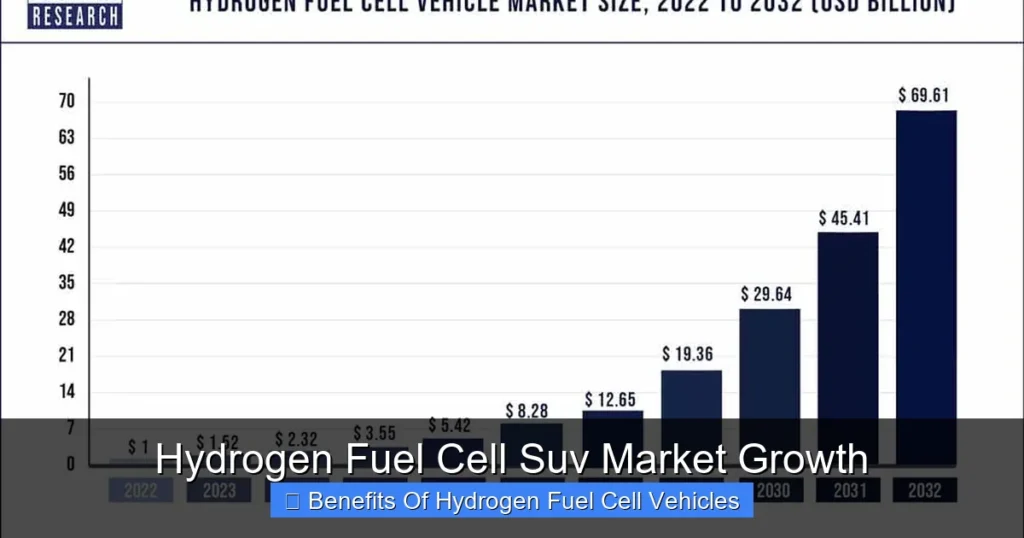
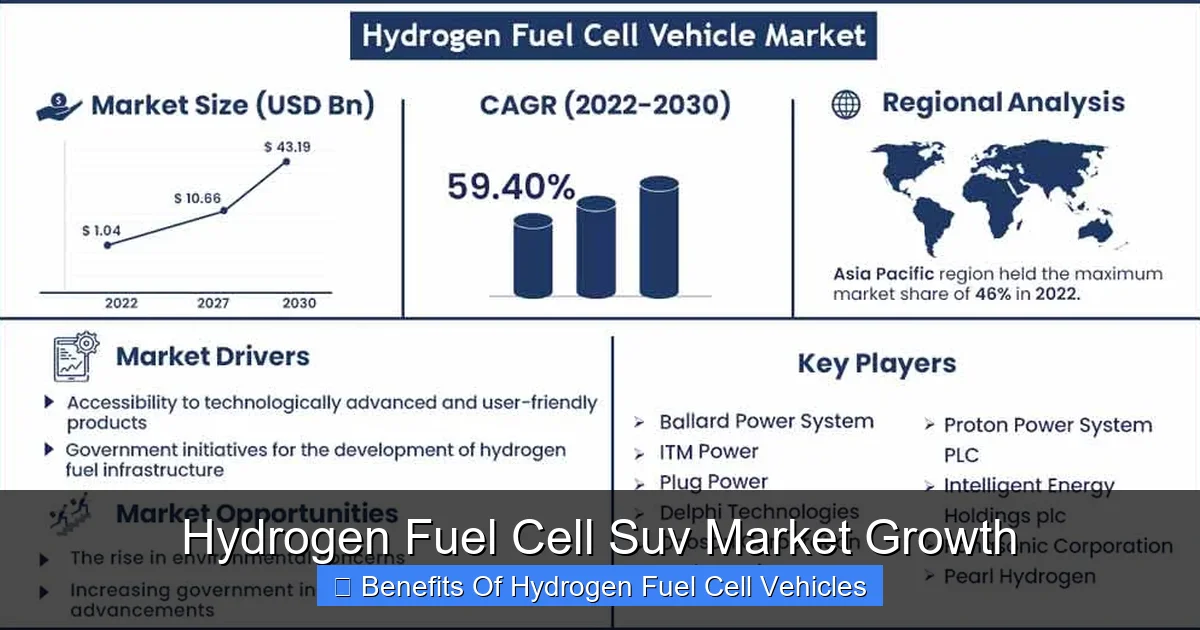
The global hydrogen vehicle market is expected to grow at a compound annual growth rate (CAGR) of over 30% through 2030, according to industry analysts. Asia-Pacific is leading the way, but North America and Europe are catching up fast.
Conclusion
The hydrogen fuel cell SUV market is growing rapidly, driven by environmental benefits, government support, and technological progress. These vehicles offer zero emissions, fast refueling, and long range—making them a practical and eco-friendly choice for modern drivers. While challenges remain, the future is promising. As green hydrogen production expands and infrastructure improves, hydrogen SUVs will become a mainstream option for families, fleets, and businesses. The road to clean transportation is long, but hydrogen fuel cell SUVs are helping us get there—one quiet, water-emitting mile at a time.
Frequently Asked Questions
How does a hydrogen fuel cell SUV work?
A hydrogen fuel cell SUV uses hydrogen gas stored in high-pressure tanks. The hydrogen reacts with oxygen in a fuel cell to produce electricity, which powers the electric motor. The only emission is water vapor.
Are hydrogen SUVs better for the environment than electric SUVs?
Hydrogen SUVs produce zero tailpipe emissions, just like electric SUVs. However, their overall environmental impact depends on how the hydrogen is produced. Green hydrogen from renewable sources makes them very clean.
How long does it take to refuel a hydrogen SUV?
Refueling a hydrogen SUV takes about 5 to 10 minutes, similar to filling up a gasoline vehicle. This is much faster than charging an electric SUV.
Where can I refuel a hydrogen SUV?
Hydrogen refueling stations are available in select regions, including California, Japan, South Korea, and parts of Europe. Infrastructure is expanding but still limited in many areas.
Are hydrogen SUVs safe?
Yes, hydrogen SUVs are designed with multiple safety features, including reinforced fuel tanks and leak detection systems. They undergo rigorous testing and meet strict safety standards.
Will hydrogen SUVs become more affordable?
Yes, as production scales up and technology improves, the cost of hydrogen SUVs is expected to decrease. Government incentives also help make them more accessible.