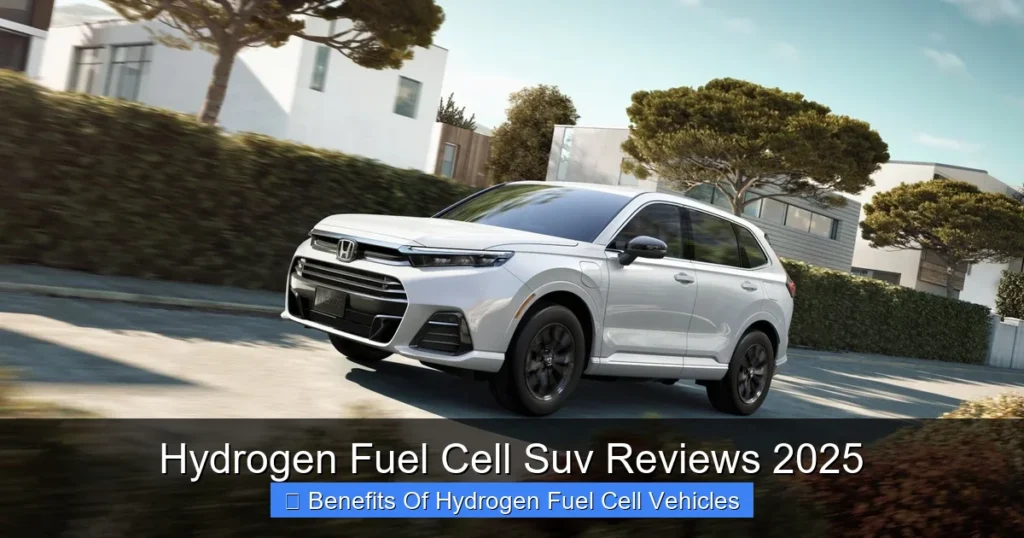
Hydrogen fuel cell SUVs are stepping into the spotlight in 2025, offering zero-emission driving with quick refueling and long range. From luxury models to family-friendly options, these vehicles combine sustainability with real-world practicality. This guide reviews the best hydrogen-powered SUVs hitting the market this year.
Key Takeaways
- Zero Tailpipe Emissions: Hydrogen fuel cell SUVs emit only water vapor, making them a clean alternative to gas and even some electric vehicles.
- Fast Refueling: Unlike battery EVs, hydrogen SUVs refuel in 3–5 minutes—comparable to gasoline vehicles.
- Long Driving Range: Most 2025 models offer 300–400 miles per fill, ideal for road trips and daily commutes.
- Growing Infrastructure: Hydrogen stations are expanding in the U.S., Japan, and Europe, especially in California and major cities.
- Premium Performance: These SUVs deliver smooth, quiet rides with instant torque and advanced tech features.
- Higher Upfront Cost: While prices remain steep, tax incentives and lower fuel costs over time help offset the initial investment.
- Limited Model Availability: Only a few manufacturers offer hydrogen SUVs, but options are increasing as demand grows.
📑 Table of Contents
- Why Hydrogen Fuel Cell SUVs Are Gaining Momentum in 2025
- How Hydrogen Fuel Cell Technology Works
- Top Hydrogen Fuel Cell SUVs of 2025
- Real-World Performance and Driving Experience
- Refueling and Infrastructure: What You Need to Know
- Cost, Incentives, and Ownership Considerations
- The Environmental Impact: Are Hydrogen SUVs Truly Green?
- Future Outlook: What’s Next for Hydrogen SUVs?
- Conclusion: Are Hydrogen Fuel Cell SUVs Right for You?
Why Hydrogen Fuel Cell SUVs Are Gaining Momentum in 2025
The automotive world is shifting fast. Electric vehicles (EVs) have dominated the green car conversation for years, but now, hydrogen fuel cell technology is stepping up as a serious contender—especially in the SUV segment. In 2025, hydrogen fuel cell SUVs are no longer futuristic concepts. They’re real, road-ready, and rolling out with impressive specs. These vehicles combine the spaciousness and versatility of SUVs with the environmental benefits of clean energy, making them a compelling choice for eco-conscious families and adventure seekers alike.
What makes hydrogen so appealing? For starters, it’s clean. A hydrogen fuel cell SUV produces zero harmful emissions—just water vapor. That’s a huge win for air quality and climate goals. But unlike battery-electric SUVs, which can take 30 minutes to several hours to recharge, hydrogen models refuel in just 3 to 5 minutes. That’s a game-changer for long-distance travel and busy lifestyles. Plus, with ranges often exceeding 350 miles, they rival traditional gas-powered SUVs in convenience.
How Hydrogen Fuel Cell Technology Works
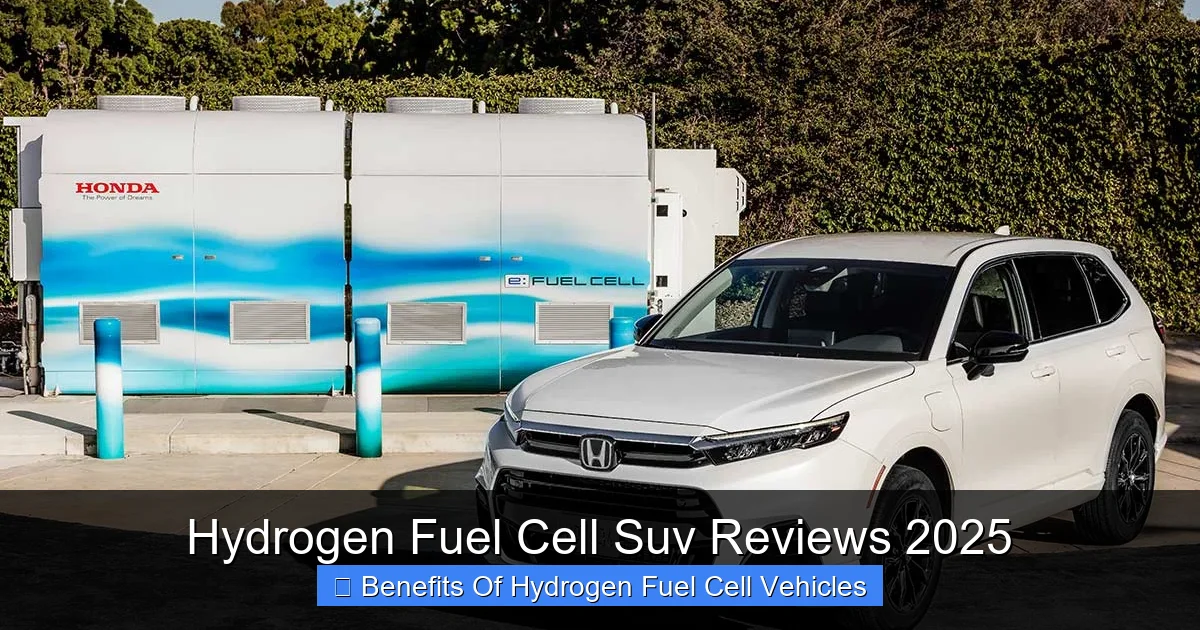
Visual guide about Hydrogen Fuel Cell Suv Reviews 2025
Image source: autobics.com
Before diving into the top models, it helps to understand how these vehicles actually work. Hydrogen fuel cell SUVs use a process called electrochemical conversion. Here’s the simple version: hydrogen gas from the tank flows into the fuel cell stack, where it reacts with oxygen from the air. This reaction generates electricity, which powers the electric motor. The only byproduct? Pure water, which exits through the tailpipe as vapor.
This system is different from battery EVs, which store electricity in large lithium-ion packs. Instead, hydrogen SUVs generate power on demand. That means no heavy battery to lug around, and no long charging waits. The fuel cell stack is compact and lightweight, allowing automakers to design spacious interiors without sacrificing performance.
Key Components of a Hydrogen Fuel Cell SUV
- Hydrogen Storage Tanks: High-pressure tanks (usually 700 bar) safely store compressed hydrogen gas. Modern tanks are made of carbon fiber and designed to withstand crashes.
- Fuel Cell Stack: The heart of the system, where hydrogen and oxygen combine to produce electricity. Advances in 2025 have made stacks more efficient and durable.
- Electric Motor: Powers the wheels with instant torque, delivering smooth acceleration.
- Power Control Unit: Manages energy flow between the fuel cell, battery, and motor for optimal performance.
- Small Battery Buffer: Stores excess energy and assists during acceleration, similar to a hybrid system.
One common misconception is that hydrogen is dangerous. In reality, modern hydrogen tanks are rigorously tested and include multiple safety features like pressure relief devices and leak sensors. Automakers like Toyota and Hyundai have driven millions of miles with hydrogen vehicles without major incidents.
Top Hydrogen Fuel Cell SUVs of 2025
Let’s take a closer look at the standout hydrogen fuel cell SUVs available or launching in 2025. These models represent the best of what the technology has to offer—combining innovation, comfort, and real-world usability.
2025 Toyota Mirai X SUV
Toyota has been a pioneer in hydrogen technology, and the 2025 Mirai X SUV is their latest evolution. This midsize SUV builds on the success of the original Mirai sedan but adds more space, power, and versatility. With a sleek, aerodynamic design and a premium interior, it’s aimed at families and professionals who want eco-luxury.
The Mirai X delivers an estimated 400-mile range and refuels in under 5 minutes. It features a rear-wheel-drive electric motor producing 182 horsepower, with optional all-wheel drive. Inside, you’ll find a 12.3-inch touchscreen, wireless Apple CarPlay and Android Auto, and Toyota’s latest Safety Sense 3.0 suite. The cabin is quiet and refined, with soft-touch materials and ambient lighting.
One standout feature is the solar roof option, which can add up to 1,200 miles of range per year by charging the auxiliary battery. While not a major range booster, it’s a nice touch for sustainability-minded drivers.
2025 Hyundai Nexo Platinum
Hyundai’s Nexo has been a leader in the hydrogen SUV space, and the 2025 Platinum trim raises the bar. This compact SUV offers a 380-mile range and a refined driving experience. It’s powered by a 161-horsepower electric motor and includes Hyundai’s SmartSense safety suite with adaptive cruise control, lane-keeping assist, and highway driving assist.
The Nexo stands out for its innovative air purification system. The vehicle actually cleans the air as it drives, filtering out fine dust and pollutants—removing up to 99% of particulate matter. Hyundai claims the Nexo can purify the air equivalent to what 42 adults breathe in an hour. That’s a powerful selling point for urban drivers.
Inside, the cabin is minimalist and high-tech, with a dual-screen dashboard and ambient mood lighting. The seats are heated and ventilated, and the panoramic sunroof adds to the sense of openness. The Nexo also supports over-the-air updates, so your SUV gets smarter over time.
2025 Honda CR-V Fuel Cell
Honda is entering the hydrogen SUV market in a big way with the 2025 CR-V Fuel Cell. This model combines the popular CR-V platform with a next-generation fuel cell system co-developed with General Motors. The result is a practical, family-friendly SUV with a 350-mile range and quick refueling.
The CR-V Fuel Cell retains the familiar CR-V design but adds unique badging and aerodynamic enhancements. Under the hood, it features a dual-motor setup with all-wheel drive, delivering 200 horsepower and strong low-end torque. The interior is spacious, with room for five passengers and ample cargo space.
Honda has focused on affordability, aiming to price the CR-V Fuel Cell competitively with premium gas SUVs. With federal and state incentives, the effective cost could drop significantly. Plus, Honda’s reputation for reliability gives buyers confidence in long-term ownership.
2025 BMW iX5 Hydrogen
BMW is bringing luxury to the hydrogen game with the iX5 Hydrogen. This premium SUV blends Bavarian engineering with cutting-edge fuel cell tech. It’s based on the iX platform but uses a hydrogen fuel cell instead of a large battery pack.
The iX5 Hydrogen offers a 310-mile range and accelerates from 0 to 60 mph in under 6 seconds. It features BMW’s latest iDrive 8 infotainment system, a curved display, and sustainable materials like recycled plastics and natural fibers. The interior is quiet and luxurious, with optional massaging seats and a panoramic glass roof.
BMW is targeting fleet customers and early adopters, with limited availability in Europe and select U.S. markets. The iX5 Hydrogen also supports bidirectional charging, meaning it can power your home during outages—a rare feature in hydrogen vehicles.
2025 Genesis GV80 Fuel Cell
Genesis, Hyundai’s luxury brand, is launching the GV80 Fuel Cell in 2025. This full-size SUV combines opulence with sustainability. It features a 370-mile range, a 190-horsepower motor, and a plush interior with Nappa leather, wood trim, and a 27-inch display.
The GV80 Fuel Cell includes advanced driver-assistance systems, including remote parking and highway autopilot. It also has a premium sound system and climate-controlled seats. Genesis is offering a concierge service for hydrogen refueling, helping owners locate stations and schedule deliveries in areas with limited infrastructure.
Real-World Performance and Driving Experience
So, how do these hydrogen SUVs actually perform on the road? In short—very well. Drivers report smooth, quiet acceleration and a comfortable ride. The electric motors deliver instant torque, making highway merging and hill climbing effortless. There’s no engine noise, just the gentle hum of the electric drivetrain.
One of the biggest advantages is the driving range. Most 2025 models offer between 350 and 400 miles per fill, which is competitive with gas SUVs. That means fewer stops on long trips and less range anxiety. Refueling is also a breeze—just pull up to a hydrogen station, connect the nozzle, and wait 3 to 5 minutes. It’s nearly identical to filling up with gas.
Handling and Comfort
Hydrogen SUVs are designed for comfort. The low center of gravity (thanks to the underfloor fuel tanks) improves stability and reduces body roll. Suspension systems are tuned for a smooth ride, absorbing bumps and potholes with ease. The cabins are quiet, with excellent sound insulation.
For example, the Toyota Mirai X uses adaptive dampers that adjust to road conditions in real time. The Hyundai Nexo has a multi-link rear suspension for better handling. And the BMW iX5 Hydrogen features air suspension for a floating-on-air feel.
Technology and Infotainment
Tech is a major selling point. Most 2025 hydrogen SUVs come with large touchscreens, voice control, and smartphone integration. Over-the-air updates keep the software current, adding new features and improving performance.
The Genesis GV80 Fuel Cell, for instance, includes a 27-inch curved display that spans the dashboard. It supports wireless Apple CarPlay, Android Auto, and a 21-speaker Lexicon audio system. The Honda CR-V Fuel Cell has a 9-inch screen with intuitive menus and real-time hydrogen station locator.
Safety is also a priority. All models come with advanced driver-assistance systems (ADAS), including automatic emergency braking, blind-spot monitoring, and lane-keeping assist. Some, like the Nexo and iX5, offer semi-autonomous driving on highways.
Refueling and Infrastructure: What You Need to Know
One of the biggest concerns about hydrogen vehicles is infrastructure. Can you actually refuel easily? The answer is improving, but it’s still a work in progress.
As of 2025, there are over 150 hydrogen refueling stations in the U.S., with the majority in California. States like New York, Massachusetts, and Hawaii are expanding their networks. In Europe, Germany, France, and the UK have significant hydrogen infrastructure, especially along major highways. Japan and South Korea lead globally, with hundreds of stations.
Finding a Hydrogen Station
Most hydrogen SUVs come with built-in station locators. Apps like PlugShare, Hydrogen Station Finder, and manufacturer-specific tools help drivers find the nearest station. Some automakers, like Hyundai and Toyota, offer free hydrogen fuel for the first few years of ownership—up to $15,000 worth in some cases.
Refueling is simple. The nozzle connects securely to the vehicle’s port, and the process is automated. You don’t need to touch the fuel—just confirm on the screen and wait. Safety systems prevent overfilling or leaks.
Home Refueling: Is It Possible?
Currently, home hydrogen refueling is rare and expensive. Systems like the at-home electrolyzer from companies like HyGen exist, but they cost $20,000 or more and require a steady water and electricity supply. For most drivers, public stations are the practical option.
However, companies are working on smaller, more affordable home units. By 2026, we may see consumer-ready systems that let you refuel overnight using solar power.
Cost, Incentives, and Ownership Considerations
Hydrogen fuel cell SUVs are still premium vehicles, with prices ranging from $60,000 to over $100,000. The Toyota Mirai X starts around $65,000, while the BMW iX5 Hydrogen can exceed $90,000. That’s higher than most gas SUVs and even many electric models.
But there are incentives. In the U.S., the federal government offers a tax credit of up to $8,000 for new hydrogen vehicles. Some states, like California, add additional rebates. California’s Clean Vehicle Rebate Project (CVRP) offers up to $5,000 for hydrogen SUVs.
Fuel Costs and Maintenance
Hydrogen fuel costs vary by region. In California, it’s around $16 per kilogram. A typical SUV uses about 1 kg per 60–70 miles, so a 350-mile trip might cost $80. That’s comparable to premium gas, but prices are expected to drop as production scales up.
Maintenance is simpler than gas vehicles. No oil changes, spark plugs, or exhaust systems. The main costs are tire rotations, brake fluid, and occasional fuel cell servicing. Most automakers offer 8-year/100,000-mile warranties on the fuel cell system.
Resale Value and Depreciation
Resale values are still uncertain due to limited market data. However, as infrastructure grows and technology improves, depreciation may slow. Leasing is a popular option, with many buyers choosing 3-year leases to stay current with advancements.
The Environmental Impact: Are Hydrogen SUVs Truly Green?
This is a critical question. While hydrogen SUVs emit only water, the source of the hydrogen matters. Currently, about 95% of hydrogen is produced from natural gas through a process called steam methane reforming (SMR), which releases CO₂.
However, “green hydrogen”—made using renewable energy to split water molecules—is growing. In 2025, over 20% of hydrogen in the U.S. and Europe comes from renewable sources. Automakers and governments are investing in green hydrogen plants, especially in sunny and windy regions.
When powered by green hydrogen, fuel cell SUVs have a carbon footprint up to 60% lower than gas vehicles and even lower than battery EVs in some regions. Plus, hydrogen production can use excess renewable energy, helping balance the grid.
Future Outlook: What’s Next for Hydrogen SUVs?
The future looks bright. Automakers are committing to hydrogen. Toyota plans to expand its lineup, Hyundai aims for 100,000 fuel cell vehicles annually by 2030, and BMW is exploring hydrogen for larger vehicles like trucks and SUVs.
Infrastructure is expanding. The U.S. Department of Energy’s H2@Scale initiative aims for 1,000 stations by 2030. Europe’s Hydrogen Backbone project will connect refueling networks across the continent.
Technology is improving too. Next-gen fuel cells are more efficient, durable, and affordable. Solid-state hydrogen storage and lighter tanks could increase range and reduce costs. By 2030, hydrogen SUVs may cost the same as gas models.
Conclusion: Are Hydrogen Fuel Cell SUVs Right for You?
Hydrogen fuel cell SUVs are no longer a niche curiosity. In 2025, they offer real-world performance, zero emissions, and the convenience of quick refueling. Models like the Toyota Mirai X, Hyundai Nexo, and Honda CR-V Fuel Cell prove that hydrogen can compete with gas and electric vehicles.
They’re ideal for drivers who want a clean, spacious SUV without the charging hassles of EVs. If you live in an area with hydrogen stations—especially California, Europe, or parts of Asia—a hydrogen SUV could be a smart choice.
Yes, the upfront cost is high, and infrastructure is still growing. But with incentives, low maintenance, and falling fuel prices, the total cost of ownership is becoming more competitive. And as green hydrogen production scales up, these vehicles will only get cleaner.
If you’re ready to go green without sacrificing convenience, a hydrogen fuel cell SUV might just be your next ride.
Frequently Asked Questions
How far can a hydrogen fuel cell SUV go on one tank?
Most 2025 hydrogen fuel cell SUVs offer a range of 350 to 400 miles per fill, depending on the model and driving conditions. This is comparable to many gas-powered SUVs and exceeds the range of some battery-electric vehicles.
How long does it take to refuel a hydrogen SUV?
Refueling a hydrogen SUV takes just 3 to 5 minutes, similar to filling up a gas tank. This is significantly faster than charging an electric vehicle, making hydrogen ideal for long trips and busy schedules.
Are hydrogen fuel cell SUVs safe?
Yes, hydrogen SUVs are designed with multiple safety features, including reinforced tanks, leak sensors, and automatic shut-off systems. They undergo rigorous crash testing and have a strong safety record.
Where can I refuel a hydrogen SUV in the U.S.?
As of 2025, most hydrogen stations are in California, with growing networks in New York, Massachusetts, and Hawaii. Use apps like PlugShare or your vehicle’s built-in locator to find the nearest station.
Are hydrogen SUVs eligible for tax incentives?
Yes, many hydrogen SUVs qualify for federal tax credits of up to $8,000 in the U.S., plus additional state rebates. California offers up to $5,000 through the Clean Vehicle Rebate Project.
Can hydrogen SUVs power my home during a blackout?
Some models, like the BMW iX5 Hydrogen, support bidirectional charging and can act as a backup power source. This feature is still rare but may become more common in future models.