Hydrogen fuel cell SUVs offer zero-emission driving with quick refueling, while gasoline SUVs remain widely available and affordable. Choosing between them depends on infrastructure, driving needs, and environmental goals.
When it comes to choosing your next SUV, the decision is no longer just about size, style, or towing capacity. Today, environmentally conscious drivers are asking a bigger question: Should I go with a hydrogen fuel cell SUV or stick with a traditional gasoline SUV? It’s a debate that’s gaining momentum as clean energy technology advances and climate concerns grow.
At first glance, both types of SUVs look similar—spacious interiors, rugged designs, and the ability to handle family trips or off-road adventures. But under the hood, they’re worlds apart. Gasoline SUVs have dominated the market for decades, powered by internal combustion engines that burn fossil fuels. They’re familiar, widely available, and supported by a vast network of gas stations. On the other hand, hydrogen fuel cell SUVs represent the cutting edge of green automotive technology. They use hydrogen gas to generate electricity, producing only water vapor as a byproduct.
So, which one is right for you? The answer depends on your priorities. Are you looking to reduce your carbon footprint? Do you value fast refueling and long range? Or are you more concerned about upfront cost and convenience? In this article, we’ll break down the key differences between hydrogen fuel cell SUVs and gasoline SUVs—covering everything from environmental impact and fuel efficiency to cost, performance, and the future of driving. By the end, you’ll have a clear picture of what each option offers and which might be the better fit for your lifestyle.
Key Takeaways
- Zero Emissions: Hydrogen fuel cell SUVs emit only water vapor, making them a clean alternative to gasoline-powered vehicles.
- Refueling Speed: Hydrogen SUVs refuel in 3–5 minutes, similar to gasoline, unlike electric vehicles that take hours to charge.
- Range and Performance: Both types offer strong range and power, with hydrogen SUVs often matching or exceeding gasoline models.
- Infrastructure Limitations: Gasoline stations are everywhere, but hydrogen refueling stations are still rare and concentrated in select regions.
- Upfront Cost and Maintenance: Hydrogen SUVs are more expensive to buy and maintain, though long-term fuel savings may offset costs.
- Environmental Impact: While hydrogen is clean at the tailpipe, its production often relies on fossil fuels, affecting overall sustainability.
- Future Outlook: As green hydrogen and infrastructure grow, hydrogen SUVs could become a mainstream eco-friendly option.
📑 Table of Contents
Environmental Impact: Clean Air vs. Carbon Footprint
When it comes to protecting the planet, the environmental impact of your vehicle matters more than ever. Climate change, air pollution, and fossil fuel dependency are driving a global shift toward cleaner transportation. In this arena, hydrogen fuel cell SUVs and gasoline SUVs sit on opposite ends of the spectrum.
Gasoline-powered SUVs run on internal combustion engines that burn fossil fuels. This process releases carbon dioxide (CO₂), nitrogen oxides (NOx), and other harmful pollutants into the atmosphere. According to the U.S. Environmental Protection Agency (EPA), transportation accounts for nearly 30% of greenhouse gas emissions in the United States, with light-duty vehicles like SUVs making up a significant portion. Even with modern emissions controls, gasoline SUVs contribute to smog, respiratory issues, and global warming.
In contrast, hydrogen fuel cell SUVs produce zero tailpipe emissions. The only thing that comes out of the exhaust is water vapor—literally clean water. This makes them a dream come true for eco-conscious drivers. The fuel cell works by combining hydrogen from the tank with oxygen from the air, generating electricity to power the motor. No combustion. No smoke. Just quiet, clean energy.
But here’s the catch: while hydrogen SUVs are clean on the road, the story isn’t so simple when you look at how the hydrogen is made. Most hydrogen today is produced through a process called steam methane reforming, which uses natural gas and releases CO₂. This “gray hydrogen” undermines some of the environmental benefits. However, “green hydrogen”—produced using renewable energy like wind or solar to split water molecules—is emerging as a truly sustainable option. As green hydrogen production scales up, the full environmental promise of fuel cell vehicles can be realized.
Lifecycle Emissions Comparison
To truly understand the environmental impact, we need to look at lifecycle emissions—the total greenhouse gases released from production to disposal. Studies show that even when hydrogen is made from natural gas, fuel cell vehicles can have lower lifecycle emissions than gasoline SUVs, especially if the electricity used in production comes from clean sources.
For example, a 2022 report by the International Council on Clean Transportation (ICCT) found that hydrogen fuel cell vehicles powered by green hydrogen can reduce lifecycle emissions by up to 70% compared to gasoline vehicles. That’s a massive improvement. But if the hydrogen is gray, the benefit drops significantly—sometimes to just 20–30%.
Gasoline SUVs, on the other hand, have high lifecycle emissions due to fuel extraction, refining, transportation, and combustion. Even with improved fuel efficiency in newer models, they can’t match the clean potential of a well-sourced hydrogen vehicle.
Air Quality and Public Health
Beyond climate change, local air quality is a major concern. Gasoline engines emit pollutants like particulate matter and NOx, which are linked to asthma, heart disease, and other health problems. In cities with heavy traffic, this can lead to smog and reduced quality of life.
Hydrogen fuel cell SUVs eliminate these local emissions. This makes them especially valuable in urban areas where air pollution is a pressing issue. Imagine driving through Los Angeles or Beijing without adding to the smog—hydrogen SUVs make that possible.
Fuel Efficiency and Range: How Far Can You Go?
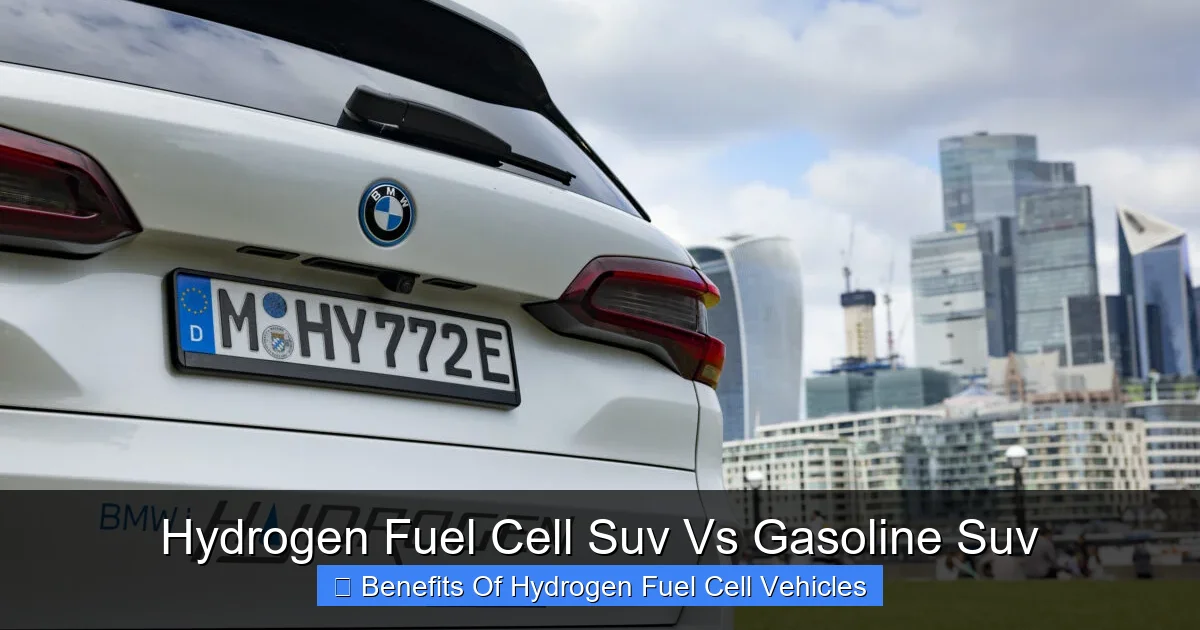
Visual guide about Hydrogen Fuel Cell Suv Vs Gasoline Suv
Image source: media.automotiveworld.com
Range anxiety is real—especially when you’re planning a long road trip or living in an area with limited charging or refueling options. So how do hydrogen fuel cell SUVs stack up against gasoline SUVs when it comes to how far you can drive on a single tank?
Let’s start with gasoline SUVs. Most modern models offer a range of 300 to 500 miles on a full tank, depending on size, engine type, and driving conditions. Full-size SUVs like the Ford Expedition or Chevrolet Tahoe can easily hit 400+ miles, making them ideal for long-distance travel. Fuel efficiency varies widely, but the average gasoline SUV gets around 18–22 miles per gallon (mpg). That means you’ll be stopping for gas every few hundred miles, but gas stations are everywhere—so it’s rarely a problem.
Now, hydrogen fuel cell SUVs. The Toyota Mirai, one of the most popular hydrogen SUVs, offers a range of about 400 miles on a full tank. The Hyundai NEXO is similar, with an EPA-estimated range of up to 380 miles. These numbers are competitive with gasoline SUVs, which is a big win for hydrogen technology.
But here’s where things get interesting: refueling time. While electric vehicles (EVs) can take 30 minutes to several hours to recharge, hydrogen SUVs refuel in just 3 to 5 minutes—about the same as a gasoline vehicle. You pull up to a hydrogen pump, connect the nozzle, and in less time than it takes to grab a coffee, you’re back on the road. This is a game-changer for drivers who value convenience and don’t want to wait around.
Energy Density and Storage
One reason hydrogen SUVs can match gasoline in range and refueling speed is energy density. Hydrogen has a very high energy content by weight—about three times more than gasoline. However, it’s much less dense by volume, which means it needs to be compressed or liquefied to store enough for a long drive.
Most hydrogen SUVs use high-pressure tanks that store hydrogen gas at 10,000 psi (pounds per square inch). These tanks are strong, lightweight, and designed to be safe in collisions. While they take up more space than a gasoline tank, automakers have cleverly integrated them into the vehicle’s design without sacrificing passenger or cargo room.
Gasoline, by contrast, is easy to store and transport. It’s liquid at room temperature and has a high energy density by volume, which is why gas tanks are compact and efficient. But it’s also flammable and toxic, requiring careful handling.
Real-World Driving Conditions
Both types of SUVs perform well in real-world conditions, but there are some differences. Cold weather can affect hydrogen fuel cells, reducing efficiency slightly in extreme temperatures. However, modern systems include heating elements to keep the fuel cell operating smoothly.
Gasoline engines also lose efficiency in cold weather due to longer warm-up times and increased friction. But they’re generally more resilient in extreme conditions, especially in off-road or rural settings where infrastructure is limited.
For daily commuting and highway driving, both options deliver reliable performance. But if you frequently drive long distances or live in a region with few hydrogen stations, gasoline might still be the more practical choice—for now.
Cost Comparison: Upfront Price, Fuel, and Maintenance
Let’s talk money. Owning a vehicle isn’t just about the sticker price—it’s about the total cost of ownership, including fuel, maintenance, insurance, and resale value. When comparing hydrogen fuel cell SUVs and gasoline SUVs, the financial picture is complex.
Upfront Purchase Price
Hydrogen fuel cell SUVs are significantly more expensive to buy. The Toyota Mirai starts around $50,000, and the Hyundai NEXO is priced similarly. In contrast, a comparable gasoline SUV like the Toyota Highlander or Honda Pilot starts around $35,000–$40,000. That’s a $10,000+ difference right off the bat.
Why the high cost? Fuel cell technology is still relatively new and expensive to produce. The fuel cell stack, hydrogen tanks, and electric motors require advanced materials and precision engineering. As production scales up and technology improves, prices are expected to drop—but for now, hydrogen SUVs are a premium option.
Fuel Costs
Here’s where things get tricky. Hydrogen fuel is currently expensive—often $12 to $16 per kilogram. Since a kilogram of hydrogen has roughly the same energy as a gallon of gasoline, this means fueling a hydrogen SUV can cost $50–$70 for a full tank. That’s more than double the cost of filling up a gasoline SUV, which might cost $30–$40 for the same range.
However, some regions offer incentives. In California, for example, hydrogen fuel is often subsidized, and drivers may pay as little as $10 per kilogram. Additionally, many hydrogen vehicle leases include free fuel for several years, which can offset the high cost.
Gasoline prices fluctuate, but they’re generally more predictable and widely available. With over 150,000 gas stations in the U.S., finding fuel is rarely an issue.
Maintenance and Repairs
Hydrogen fuel cell SUVs have fewer moving parts than gasoline engines, which means less wear and tear. No oil changes, no spark plugs, no exhaust system repairs. The electric motor and fuel cell require minimal maintenance, and brake pads last longer due to regenerative braking.
However, when something does go wrong, repairs can be costly. Fuel cell stacks are complex and expensive to replace—often $10,000 or more. And because the technology is still niche, finding qualified technicians and parts can be a challenge outside of major cities.
Gasoline SUVs, while more mechanically complex, benefit from decades of refinement and a vast support network. Mechanics everywhere know how to work on them, and parts are cheap and readily available. Routine maintenance like oil changes, tire rotations, and brake service is straightforward and affordable.
Resale Value and Incentives
Resale value for hydrogen SUVs is still uncertain. Because the technology is new and infrastructure is limited, some buyers are hesitant to purchase used models. However, as adoption grows, this could improve.
On the bright side, many governments offer incentives for hydrogen vehicles. Federal tax credits, state rebates, and access to carpool lanes can make ownership more appealing. California, for instance, offers up to $5,000 in rebates for hydrogen vehicle purchases.
Gasoline SUVs have stable resale values, especially popular models from reliable brands. But they don’t qualify for green incentives, which can be a drawback for budget-conscious eco-drivers.
Infrastructure and Accessibility: Where Can You Refuel?
No matter how advanced your vehicle is, it’s only as good as the infrastructure that supports it. This is where hydrogen fuel cell SUVs face their biggest challenge: availability.
Hydrogen Refueling Stations
As of 2024, there are fewer than 100 public hydrogen refueling stations in the United States—and nearly all of them are in California. This makes owning a hydrogen SUV impractical for most Americans. If you live outside the Golden State, you’re out of luck.
Even in California, stations are concentrated in urban areas like Los Angeles, San Francisco, and San Diego. Rural and suburban drivers may have to travel long distances to refuel. And if a station is out of service—which happens occasionally due to maintenance or supply issues—you could be stranded.
In contrast, gasoline stations are everywhere. From major highways to small towns, you’re never more than a few miles from a pump. This reliability is a huge advantage for gasoline SUVs, especially for travelers and those in remote areas.
The Future of Hydrogen Infrastructure
The good news is that hydrogen infrastructure is growing. Governments and private companies are investing in new stations, and countries like Japan, South Korea, and Germany are leading the way. In the U.S., the Department of Energy has launched initiatives to expand hydrogen refueling networks, particularly along major freight corridors.
Additionally, some hydrogen stations are being co-located with existing gas stations, making them more accessible. Mobile refueling units and home refueling systems (still in development) could also help bridge the gap.
But progress is slow. Building a hydrogen station costs millions of dollars, and the supply chain for hydrogen delivery is complex. Until infrastructure catches up, hydrogen SUVs will remain a niche option.
Home Refueling and Convenience
One of the biggest perks of gasoline SUVs is the ability to refuel at home—well, not literally, but you can easily stop at a nearby station on your way to work or while running errands. With hydrogen, there’s no such convenience. Home hydrogen refueling isn’t yet practical or safe for most consumers.
Electric vehicles have the advantage here—many people charge at home overnight. But hydrogen SUVs don’t offer that option, which limits their appeal for daily use.
Performance and Driving Experience
Beyond emissions and cost, how do these SUVs actually feel to drive? Performance matters—especially for families, adventurers, and anyone who values a smooth, responsive ride.
Power and Acceleration
Hydrogen fuel cell SUVs deliver instant torque, just like electric vehicles. The electric motor provides smooth, quiet acceleration, and there’s no engine noise or vibration. The Toyota Mirai, for example, goes from 0 to 60 mph in about 9 seconds—respectable for a midsize SUV. The Hyundai NEXO is slightly quicker, thanks to a more powerful motor.
Gasoline SUVs vary widely in performance. High-end models like the Ford Explorer ST or Jeep Grand Cherokee SRT can hit 60 mph in under 6 seconds, offering a thrilling ride. But base models may feel sluggish, especially when fully loaded.
Both types offer strong towing capacity. The Hyundai NEXO can tow up to 3,500 pounds, while many gasoline SUVs exceed 5,000 pounds. If you plan to haul trailers or boats, gasoline might still have the edge.
Handling and Comfort
Hydrogen SUVs are designed with a low center of gravity due to the placement of heavy hydrogen tanks under the floor. This improves stability and handling, especially on winding roads. The ride is typically quiet and refined, with minimal road noise.
Gasoline SUVs have come a long way in terms of comfort and handling. Modern suspensions, adaptive dampers, and advanced electronics make them surprisingly agile. But they still tend to be noisier and less efficient than their hydrogen counterparts.
Technology and Features
Both types of SUVs come loaded with the latest tech: touchscreen infotainment, smartphone integration, advanced driver assistance systems (ADAS), and premium interiors. However, hydrogen models often emphasize sustainability in their design—using eco-friendly materials and energy-efficient systems.
For example, the Toyota Mirai features a solar roof that helps power auxiliary systems, reducing the load on the fuel cell. These small innovations highlight the forward-thinking nature of hydrogen vehicles.
The Future of Hydrogen vs. Gasoline SUVs
So, where do we go from here? The automotive industry is at a crossroads, and the choice between hydrogen and gasoline SUVs reflects a larger shift toward sustainable transportation.
Advancements in Hydrogen Technology
Hydrogen fuel cell technology is improving rapidly. New catalysts are reducing the need for expensive platinum, and fuel cell durability is increasing. Researchers are also exploring alternative methods for hydrogen production, such as using algae or waste materials.
Green hydrogen—produced with renewable energy—is becoming more viable. Countries like Australia, Saudi Arabia, and Chile are investing in massive green hydrogen projects, aiming to export clean fuel globally. As supply grows, costs will fall, making hydrogen SUVs more competitive.
Policy and Market Trends
Government policies are accelerating the transition. The U.S. Inflation Reduction Act includes funding for clean hydrogen production and infrastructure. The European Union has set ambitious targets for hydrogen adoption in transportation.
Automakers are responding. Toyota, Hyundai, and Honda continue to invest in fuel cell technology. Even traditional truck and SUV makers like GM and Ford are exploring hydrogen options for heavy-duty vehicles.
Meanwhile, gasoline SUVs aren’t going away overnight. They’re still popular, profitable, and practical for many drivers. But stricter emissions standards and consumer demand for cleaner options are pushing the industry toward change.
A Balanced Outlook
In the short term, gasoline SUVs will remain dominant due to their affordability, availability, and familiarity. But hydrogen fuel cell SUVs represent a promising path forward—especially for those who want zero emissions without sacrificing range or refueling speed.
As infrastructure expands and costs decrease, hydrogen could become a mainstream alternative. For now, it’s a niche choice for early adopters and environmentally committed drivers.
Conclusion
Choosing between a hydrogen fuel cell SUV and a gasoline SUV isn’t just about picking a vehicle—it’s about aligning your driving habits with your values. If you prioritize environmental impact, quiet performance, and cutting-edge technology, a hydrogen SUV could be a great fit. You’ll enjoy zero emissions, fast refueling, and a smooth ride, all while supporting the transition to clean energy.
On the other hand, if you value affordability, convenience, and widespread support, a gasoline SUV remains a solid, practical choice. It’s reliable, familiar, and ready for anything—from daily commutes to cross-country adventures.
The truth is, there’s no one-size-fits-all answer. The best vehicle for you depends on where you live, how you drive, and what matters most to you. But one thing is clear: the future of SUVs is evolving. As hydrogen infrastructure grows and technology advances, we may see a day when clean, hydrogen-powered SUVs are as common as their gasoline counterparts.
Until then, both options have their place on the road. And whether you choose hydrogen or gasoline, you’re part of a larger movement toward smarter, cleaner, and more sustainable transportation.
Frequently Asked Questions
Are hydrogen fuel cell SUVs really zero emission?
Yes, hydrogen fuel cell SUVs produce only water vapor as a byproduct, making them zero-emission at the tailpipe. However, the overall environmental impact depends on how the hydrogen is produced—green hydrogen from renewable sources is truly clean, while gray hydrogen from natural gas still generates emissions.
How long does it take to refuel a hydrogen SUV?
Refueling a hydrogen SUV takes just 3 to 5 minutes, similar to filling up a gasoline vehicle. This is much faster than charging an electric SUV, which can take 30 minutes to several hours depending on the charger.
Can I drive a hydrogen SUV in cold weather?
Yes, hydrogen SUVs are designed to operate in cold climates. Modern fuel cell systems include heating elements to maintain performance, though efficiency may drop slightly in extreme cold—similar to gasoline engines.
Where can I find hydrogen refueling stations?
As of 2024, most public hydrogen stations are in California, with a few in other states. Availability is limited, so hydrogen SUV ownership is currently most practical for drivers in urban areas with access to refueling infrastructure.
Are hydrogen SUVs safe in a crash?
Yes, hydrogen SUVs are rigorously tested for safety. High-pressure hydrogen tanks are designed to withstand impacts, and multiple safety systems prevent leaks. In fact, hydrogen disperses quickly into the air, reducing fire risk compared to gasoline.
Will hydrogen SUVs become more affordable in the future?
Yes, as production scales up and technology improves, the cost of hydrogen SUVs is expected to decrease. Government incentives and growing infrastructure will also make them more accessible to mainstream buyers in the coming years.