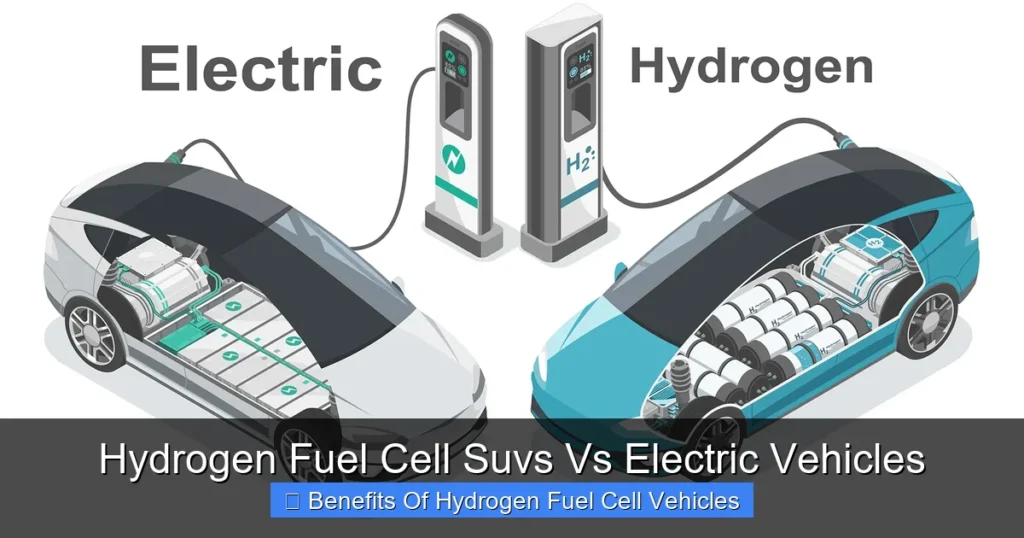
Hydrogen fuel cell SUVs and electric vehicles (EVs) both aim to reduce emissions, but they work in very different ways. While EVs rely on battery power, hydrogen SUVs generate electricity onboard using hydrogen gas—offering faster refueling and longer range in some cases. This article breaks down the pros, cons, and real-world performance of both technologies.
Key Takeaways
- Refueling Speed: Hydrogen fuel cell SUVs can refuel in 5–10 minutes, similar to gasoline vehicles, while most EVs take 30 minutes to several hours to charge.
- Range Capabilities: Many hydrogen SUVs offer 300–400 miles per tank, rivaling or exceeding the range of most battery-electric SUVs.
- Environmental Impact: Both produce zero tailpipe emissions, but the sustainability depends on how the electricity or hydrogen is produced.
- Infrastructure Availability: EV charging stations are far more common than hydrogen refueling stations, especially outside urban areas.
- Vehicle Cost and Maintenance: Hydrogen SUVs are currently more expensive to buy and maintain, though they have fewer moving parts than internal combustion engines.
- Energy Efficiency: EVs are generally more energy-efficient from well to wheel, while hydrogen production and distribution lose more energy.
- Future Potential: Hydrogen may shine in heavy-duty transport and long-haul travel, while EVs dominate personal and urban mobility.
📑 Table of Contents
Introduction: The Green Mobility Revolution
The race to decarbonize transportation is in full swing, and two technologies are leading the charge: battery electric vehicles (EVs) and hydrogen fuel cell vehicles (FCEVs). While EVs have captured the public’s imagination with sleek designs and widespread charging networks, hydrogen-powered SUVs are quietly emerging as a compelling alternative—especially for drivers who need long range, quick refueling, and minimal downtime. But which one is truly better for the future of clean driving?
At first glance, both options promise a cleaner ride. No more smog-forming tailpipe emissions. No more trips to the gas pump. But dig a little deeper, and you’ll find that EVs and hydrogen SUVs take very different paths to the same goal. EVs store electricity in large batteries and use it to power an electric motor. Hydrogen SUVs, on the other hand, carry compressed hydrogen gas in tanks and convert it into electricity through a fuel cell stack—right inside the vehicle. That electricity then powers the motor, with only water vapor coming out of the exhaust.
So why isn’t everyone talking about hydrogen SUVs? And why are EVs getting all the attention? The answer lies in infrastructure, cost, efficiency, and real-world usability. In this article, we’ll explore the strengths and weaknesses of both technologies, focusing especially on the benefits of hydrogen fuel cell SUVs. Whether you’re a weekend adventurer, a family road-tripper, or a tech-savvy commuter, understanding these differences will help you make a smarter, greener choice.
How Hydrogen Fuel Cell SUVs Work
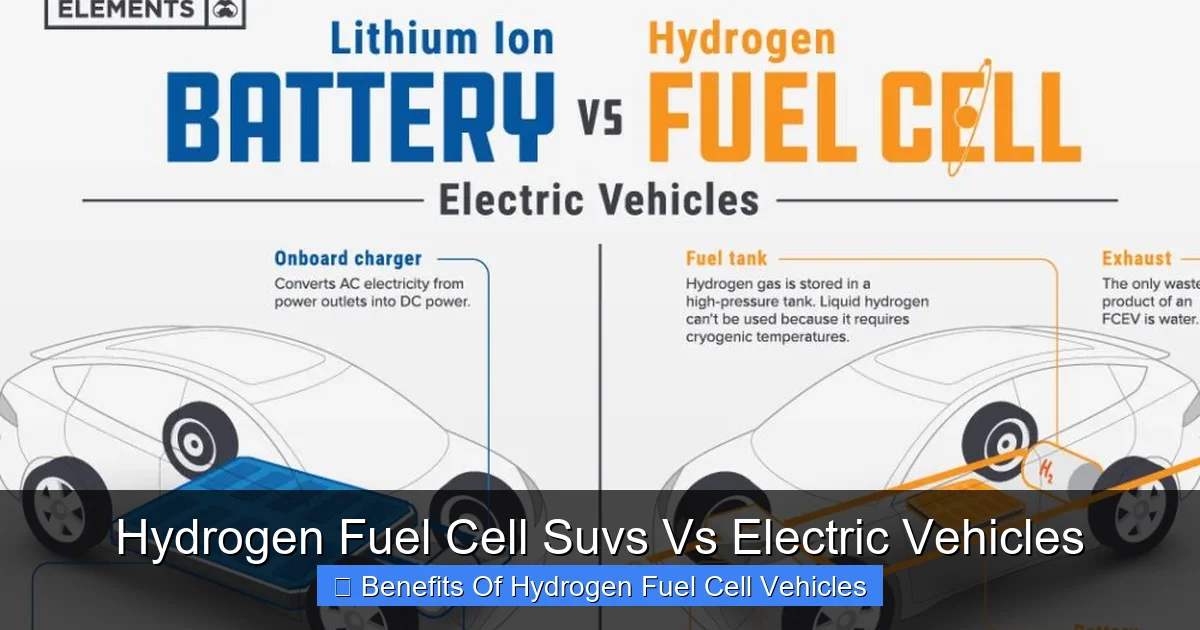
Visual guide about Hydrogen Fuel Cell Suvs Vs Electric Vehicles
Image source: visualcapitalist.com
To appreciate the benefits of hydrogen fuel cell SUVs, it helps to understand how they operate. Unlike EVs that plug into the grid, hydrogen SUVs generate their own electricity on demand. Here’s a simple breakdown of the process.
The Fuel Cell Stack: The Heart of the System
At the core of every hydrogen SUV is the fuel cell stack. This is where the magic happens. Compressed hydrogen gas from the onboard tanks is fed into the stack, where it meets oxygen from the air. Inside the fuel cell, a chemical reaction occurs—without combustion—that splits hydrogen atoms into protons and electrons. The protons pass through a membrane, while the electrons are forced to travel through an external circuit, creating an electric current. This electricity powers the vehicle’s motor and recharges a small buffer battery used for acceleration and regenerative braking.
The only byproduct? Pure water vapor. That’s right—no carbon dioxide, no nitrogen oxides, no particulate matter. Just H₂O dripping from the tailpipe. It’s one of the cleanest forms of propulsion available today.
Hydrogen Storage: Safe and Efficient
Modern hydrogen SUVs store hydrogen in high-strength carbon-fiber tanks, typically mounted under the floor or in the rear. These tanks are designed to withstand extreme pressure—usually around 10,000 psi—and are rigorously tested for safety. In fact, they’re often stronger than the vehicle’s frame and can survive crashes that would destroy a gasoline tank.
Refueling is quick and familiar. You pull up to a hydrogen dispenser, connect the nozzle, and in about 5 to 10 minutes, your tank is full. That’s a huge advantage over EVs, where even the fastest DC fast chargers take at least 20–30 minutes to reach 80% charge. For long-distance travelers or fleet operators, this time savings is a game-changer.
Real-World Examples: Toyota Mirai and Hyundai NEXO
The Toyota Mirai and Hyundai NEXO are two of the most prominent hydrogen fuel cell SUVs on the market. The 2023 Mirai, for example, offers up to 402 miles of EPA-estimated range and refuels in under 10 minutes. The NEXO boasts similar performance, with a range of around 380 miles and advanced driver-assistance features. Both vehicles deliver smooth, quiet rides with instant torque—just like their EV counterparts.
These SUVs aren’t just概念 cars; they’re being used in real-world applications, from ride-sharing services in California to government fleets in South Korea. And with manufacturers investing heavily in next-generation fuel cells, we can expect even better efficiency, lower costs, and longer lifespans in the coming years.
Electric Vehicles: The Current Leader in Clean Mobility
While hydrogen SUVs are promising, electric vehicles have already established themselves as the dominant force in the clean transportation market. From the Tesla Model Y to the Ford Mustang Mach-E and the Rivian R1S, EV SUVs are everywhere—and for good reason.
Battery Technology and Charging
EVs rely on large lithium-ion batteries to store energy. When you plug in, electricity from the grid charges these batteries, which then power an electric motor. The bigger the battery, the longer the range—but also the heavier the vehicle and the longer it takes to charge.
Charging times vary widely. A standard Level 2 home charger might take 8–12 hours for a full charge, while a DC fast charger can add 200 miles of range in about 30 minutes. Tesla’s Supercharger network is particularly fast and reliable, but even non-Tesla EVs are gaining access to high-speed charging through networks like Electrify America.
Range and Performance
Today’s EV SUVs offer impressive range. The Tesla Model Y Long Range can go up to 330 miles on a single charge, while the Lucid Air SUV (when released) is expected to exceed 400 miles. Performance is another strong suit—electric motors deliver instant torque, making EVs feel quick and responsive, even in large SUVs.
But range anxiety remains a concern for some drivers, especially in rural areas or during winter months when cold weather can reduce battery efficiency by 20–40%. And while charging infrastructure is growing rapidly, it’s still not as widespread as gasoline stations—let alone hydrogen pumps.
Environmental Considerations
EVs produce zero tailpipe emissions, but their overall environmental impact depends on how the electricity is generated. If your local grid runs on coal, your EV isn’t as clean as it seems. However, in regions with high renewable energy use—like California or Norway—EVs can be nearly carbon-free over their lifetime.
Battery production is another concern. Mining lithium, cobalt, and nickel has environmental and ethical implications. Recycling programs are improving, but the industry is still working to create a truly circular battery economy.
Benefits of Hydrogen Fuel Cell SUVs
Now let’s dive into the specific advantages of hydrogen fuel cell SUVs—especially in comparison to EVs. While they’re not perfect, they offer several compelling benefits that make them worth considering.
Faster Refueling: No More Waiting Around
One of the biggest pain points for EV owners is charging time. Even with fast chargers, you’re still looking at a 30-minute stop for a meaningful charge. For long road trips, that adds up. Hydrogen SUVs, by contrast, refuel in about the same time as a gasoline vehicle—typically 5 to 10 minutes. That means less downtime and more time on the road.
Imagine pulling into a hydrogen station, filling up while you grab a coffee, and hitting the highway again. No need to plan your route around charging stations or worry about finding an available plug. For families, delivery drivers, or anyone with a busy schedule, this convenience is hard to beat.
Longer Range Without Compromise
Hydrogen SUVs often match or exceed the range of most EVs. The Toyota Mirai, for example, offers over 400 miles per tank—more than many electric SUVs. And because hydrogen is energy-dense, adding range doesn’t require massively increasing the size or weight of the fuel system. In EVs, bigger range usually means bigger, heavier batteries, which can reduce efficiency and performance.
This makes hydrogen especially attractive for larger vehicles like SUVs and trucks, where battery weight becomes a significant issue. A hydrogen-powered SUV can carry more passengers and cargo without sacrificing range or efficiency.
Zero Emissions with Water Vapor Only
Like EVs, hydrogen SUVs produce no harmful tailpipe emissions. But unlike EVs, which rely on grid electricity (which may come from fossil fuels), hydrogen can be produced using renewable energy. When hydrogen is made via electrolysis powered by wind or solar, the entire process is nearly carbon-free.
Even when hydrogen is produced from natural gas (the most common method today), advancements in carbon capture are making “blue hydrogen” a cleaner option. And as green hydrogen production scales up, the environmental benefits will only grow.
Reduced Battery Degradation Concerns
EV batteries degrade over time, losing capacity and range after thousands of charge cycles. While modern batteries are built to last 10–15 years, eventual replacement can be costly. Hydrogen SUVs don’t have large batteries—just a small buffer for peak power. This means less concern about long-term degradation and potentially lower maintenance costs over time.
Additionally, hydrogen fuel cells have fewer moving parts than internal combustion engines, reducing wear and tear. With proper maintenance, a fuel cell stack can last over 100,000 miles—and newer models are expected to go even farther.
Ideal for Cold Weather Performance
Cold weather is a known challenge for EVs. Low temperatures reduce battery efficiency, which can cut range significantly. Hydrogen SUVs, on the other hand, are less affected by cold. The fuel cell system operates efficiently in a wide range of temperatures, and the vehicle can use waste heat from the fuel cell to warm the cabin—improving comfort and reducing energy loss.
This makes hydrogen SUVs a strong choice for drivers in northern climates, where winter range anxiety is a real concern for EV owners.
Challenges Facing Hydrogen Fuel Cell SUVs
Despite their benefits, hydrogen SUVs face significant hurdles that have slowed their adoption.
Limited Refueling Infrastructure
The biggest barrier is infrastructure. As of 2024, there are fewer than 100 hydrogen refueling stations in the United States—most of them in California. Compare that to over 150,000 public EV charging ports nationwide. Without a reliable network, owning a hydrogen SUV outside of major urban centers is impractical.
Building hydrogen stations is expensive—each one can cost $1–2 million—and requires specialized equipment and safety protocols. Until governments and private companies invest more heavily, this gap will remain a major obstacle.
High Production and Distribution Costs
Hydrogen is expensive to produce, transport, and store. Most hydrogen today is made from natural gas in a process called steam methane reforming, which emits CO₂. Green hydrogen, produced using renewable energy, is cleaner but costs 2–3 times more.
Transporting hydrogen is also challenging. It’s a light, low-density gas that requires compression or liquefaction, both of which consume energy. Pipelines are being developed, but they’re not yet widespread.
Energy Efficiency Concerns
From well to wheel, hydrogen is less efficient than electricity. It takes about three times more energy to power a hydrogen vehicle than an EV, due to losses in production, compression, transport, and conversion. For every 100 units of energy used to make hydrogen, only about 30–40 reach the wheels. In contrast, EVs deliver 70–90 units of energy to the wheels from the same 100 units.
This inefficiency makes hydrogen less sustainable unless it’s produced entirely from renewable sources—and even then, it’s a harder sell than direct electrification.
Higher Vehicle and Fuel Costs
Hydrogen SUVs are currently much more expensive than comparable EVs. The Toyota Mirai starts around $50,000, and hydrogen fuel costs about $16 per kilogram—equivalent to roughly $60 to fill a tank. That’s more than double the cost of charging an EV for the same range.
While prices are expected to fall as production scales up, hydrogen vehicles remain a niche product for now.
The Future: Can Hydrogen Catch Up?
So, will hydrogen fuel cell SUVs ever surpass EVs? It’s unlikely in the near term, but they could carve out a valuable niche—especially in specific use cases.
Heavy-Duty and Long-Haul Applications
Hydrogen shines in applications where batteries fall short: long-haul trucking, buses, and aviation. These vehicles need high energy density, quick refueling, and long range—all areas where hydrogen has an edge. Some automakers, like Hyundai and Toyota, are already testing hydrogen-powered trucks and delivery vans.
For personal SUVs, the market may remain small but growing. As green hydrogen production expands and infrastructure improves, hydrogen SUVs could become a viable option for eco-conscious drivers who value convenience and performance.
Government Support and Innovation
Countries like Japan, South Korea, and Germany are investing heavily in hydrogen infrastructure. The U.S. Department of Energy has launched the “Hydrogen Shot” initiative, aiming to reduce the cost of clean hydrogen to $1 per kilogram by 2030. If successful, this could make hydrogen competitive with gasoline and electricity.
Meanwhile, advancements in fuel cell durability, efficiency, and cost are making hydrogen vehicles more practical. Solid-state hydrogen storage, improved catalysts, and modular fuel cell designs are all on the horizon.
A Complementary Future
Rather than replacing EVs, hydrogen SUVs may complement them. EVs will likely dominate urban and short-range travel, while hydrogen could serve long-distance, heavy-duty, and cold-weather applications. The future of clean transportation isn’t a zero-sum game—it’s about using the right tool for the right job.
Conclusion: Choosing the Right Green SUV for You
So, which is better: a hydrogen fuel cell SUV or an electric vehicle? The answer depends on your needs, location, and priorities.
If you value fast refueling, long range, and cold-weather performance—and you live near a hydrogen station—a hydrogen SUV could be a great fit. The Toyota Mirai and Hyundai NEXO offer a glimpse into a future where clean driving doesn’t mean waiting hours to recharge.
But if you’re looking for affordability, widespread infrastructure, and high energy efficiency, an EV is still the smarter choice for most people. With rapidly expanding charging networks and falling battery prices, EVs are becoming more accessible every year.
Ultimately, both technologies are vital to a sustainable future. Hydrogen fuel cell SUVs may not be mainstream yet, but their benefits—especially in speed, range, and emissions—make them a compelling alternative worth watching. As the clean mobility landscape evolves, the best choice is the one that gets you where you need to go, with the least impact on the planet.
Frequently Asked Questions
Are hydrogen fuel cell SUVs really zero emission?
Yes, hydrogen SUVs produce only water vapor from the tailpipe, making them zero-emission vehicles during operation. However, the overall environmental impact depends on how the hydrogen is produced—green hydrogen from renewables is the cleanest option.
How long does it take to refuel a hydrogen SUV?
Refueling a hydrogen SUV takes about 5 to 10 minutes, similar to filling up a gasoline vehicle. This is significantly faster than charging most electric vehicles, even with fast chargers.
Can I drive a hydrogen SUV in cold weather?
Yes, hydrogen SUVs perform well in cold climates. Unlike EVs, they don’t suffer from significant range loss in winter, and waste heat from the fuel cell can be used to warm the cabin efficiently.
Are hydrogen SUVs safe?
Yes, hydrogen SUVs are designed with multiple safety features, including high-strength fuel tanks, leak detection systems, and automatic shut-off valves. They undergo rigorous crash and safety testing.
Why aren’t there more hydrogen refueling stations?
Hydrogen stations are expensive to build and require specialized infrastructure. Currently, most are concentrated in California and a few other regions, limiting widespread adoption.
Will hydrogen SUVs become cheaper in the future?
Yes, as production scales up and technology improves, the cost of hydrogen vehicles and fuel is expected to decrease. Government incentives and advances in green hydrogen production will also help make them more affordable.