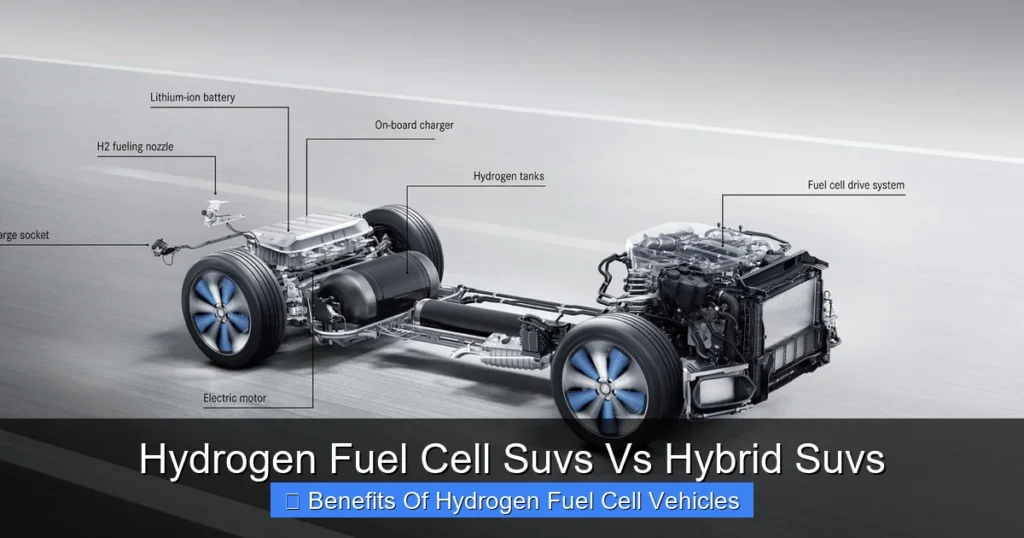
Hydrogen fuel cell SUVs and hybrid SUVs offer cleaner alternatives to traditional gas-powered vehicles, but they work very differently. While hybrids combine a gasoline engine with an electric motor, hydrogen SUVs generate electricity on board using hydrogen fuel—emitting only water vapor. Understanding the pros, cons, and real-world usability of each can help you pick the right sustainable SUV for your lifestyle.
Key Takeaways
- Zero Tailpipe Emissions: Both hydrogen fuel cell and hybrid SUVs reduce emissions, but only hydrogen models emit pure water vapor—no CO2 or pollutants.
- Refueling Speed: Hydrogen SUVs refuel in 3–5 minutes, similar to gas cars, while plug-in hybrids need hours to recharge unless using fast chargers.
- Range and Practicality: Hydrogen SUVs often offer 300–400 miles per tank, rivaling gas vehicles, while hybrids vary from 20–60 miles electric-only range.
- Infrastructure Limitations: Hydrogen refueling stations are scarce outside California and select urban areas, making hybrids more practical for most drivers.
- Environmental Impact: Hybrids rely partly on fossil fuels, while hydrogen’s green credentials depend on how the hydrogen is produced—green hydrogen from renewables is ideal.
- Cost and Maintenance: Hybrids are generally cheaper to buy and maintain; hydrogen SUVs have higher upfront costs and limited service networks.
- Future Potential: Hydrogen technology is promising for long-haul and heavy-duty transport, while hybrids remain a reliable bridge to full electrification.
📑 Table of Contents
- Introduction: The Green SUV Revolution
- How Hydrogen Fuel Cell SUVs Work
- How Hybrid SUVs Work
- Environmental Impact: Which Is Greener?
- Performance and Driving Experience
- Cost, Maintenance, and Ownership
- Infrastructure and Practicality
- The Future: Which Technology Will Win?
- Conclusion: Which SUV Is Right for You?
Introduction: The Green SUV Revolution
The SUV market is undergoing a quiet but powerful transformation. As climate concerns grow and governments push for cleaner transportation, automakers are racing to offer eco-friendly alternatives. Among the most talked-about options are hydrogen fuel cell SUVs and hybrid SUVs—two technologies that promise reduced emissions without sacrificing space, power, or practicality.
But which one is right for you? It’s not just about being “green.” It’s about real-world usability, cost, convenience, and long-term sustainability. While both types of SUVs aim to cut down on fossil fuel dependence, they do so in fundamentally different ways. Hybrids, especially plug-in models, are already common on roads across the U.S. and Europe. Hydrogen fuel cell SUVs, on the other hand, are still rare—but gaining attention for their potential in a zero-emission future.
In this guide, we’ll break down how each technology works, compare their performance, environmental impact, cost, and practicality. Whether you’re a daily commuter, a weekend adventurer, or a family hauler, understanding these differences will help you make a smarter, more informed choice.
How Hydrogen Fuel Cell SUVs Work
Visual guide about Hydrogen Fuel Cell Suvs Vs Hybrid Suvs
Image source: images.hgmsites.net
Hydrogen fuel cell SUVs might sound like science fiction, but they’re very real—and surprisingly simple in principle. Instead of burning gasoline, these vehicles use hydrogen gas stored in high-pressure tanks. The hydrogen is fed into a fuel cell stack, where it reacts with oxygen from the air. This chemical reaction produces electricity, which powers an electric motor. The only byproduct? Pure water vapor.
This process is clean, quiet, and incredibly efficient. Unlike battery-electric vehicles (BEVs), hydrogen SUVs don’t need to be plugged in. They generate their own electricity on board, which means longer range and faster refueling. For example, the Toyota Mirai and Hyundai Nexo can travel over 350 miles on a single tank—comparable to many gas-powered SUVs.
The Fuel Cell Stack: The Heart of the System
At the core of every hydrogen SUV is the fuel cell stack. Think of it as a mini power plant inside your vehicle. Inside the stack, hydrogen molecules are split into protons and electrons. The protons pass through a membrane, while the electrons are forced to travel through an external circuit—creating an electric current. This current powers the motor and charges a small buffer battery used for acceleration and regenerative braking.
One advantage of this setup is that it’s scalable. Larger SUVs can use bigger stacks and more hydrogen tanks without drastically increasing weight or complexity. That’s why hydrogen technology is especially promising for larger vehicles like SUVs and trucks, where battery weight and charging time can be limiting factors.
Hydrogen Storage and Safety
Storing hydrogen safely is a key engineering challenge. Hydrogen is the lightest element and highly flammable, so tanks must be extremely durable. Modern hydrogen SUVs use carbon-fiber-reinforced tanks that can withstand high pressure (up to 10,000 psi) and extreme impacts. These tanks are rigorously tested and designed to prevent leaks or ruptures.
In the rare event of a leak, hydrogen disperses quickly into the atmosphere—unlike gasoline fumes, which linger. Plus, hydrogen is non-toxic. Automakers like Toyota and Hyundai have built extensive safety protocols into their hydrogen models, including automatic shut-off valves and ventilation systems.
Real-World Examples
The Hyundai Nexo and Toyota Mirai are the two most prominent hydrogen fuel cell SUVs currently available. The Nexo offers up to 380 miles of range and can refuel in under five minutes. It also features advanced driver-assistance systems and a sleek, modern interior. The Mirai, while technically a sedan, shares many components with SUV platforms and is often used as a benchmark for hydrogen vehicle performance.
These vehicles are currently sold primarily in California, where the majority of hydrogen refueling stations are located. But as infrastructure expands, more models are expected to hit the market, including hydrogen-powered versions of popular SUVs from brands like Honda and General Motors.
How Hybrid SUVs Work
Hybrid SUVs are far more common—and for good reason. They combine a traditional gasoline engine with one or more electric motors, offering the best of both worlds: electric efficiency for city driving and gas power for long trips. There are two main types: standard hybrids (like the Toyota RAV4 Hybrid) and plug-in hybrids (like the Ford Escape PHEV).
Standard hybrids use the electric motor to assist the gas engine, improving fuel economy without needing to be plugged in. The battery recharges through regenerative braking and engine power. Plug-in hybrids, on the other hand, have larger batteries that can be charged from an external power source, allowing for 20–60 miles of all-electric driving before the gas engine kicks in.
The Hybrid Powertrain: Two Engines, One Goal
In a hybrid SUV, the gasoline engine and electric motor work together seamlessly. During low-speed driving—like city commutes or stop-and-go traffic—the electric motor does most of the work. At higher speeds or under heavy load, the gas engine takes over or assists. The system automatically switches between power sources based on driving conditions, optimizing efficiency.
This dual-power approach reduces fuel consumption and emissions without the “range anxiety” associated with fully electric vehicles. You can drive 300+ miles on a tank of gas, just like a conventional SUV, but with significantly better mileage—often 35–40 mpg combined.
Battery Technology and Charging
Hybrid SUVs use lithium-ion batteries, similar to those in smartphones and laptops, but much larger. These batteries are designed for frequent charging and discharging, with long lifespans (typically 8–10 years or 100,000+ miles). Unlike BEVs, hybrids don’t require home charging infrastructure—though plug-in models benefit from it.
For plug-in hybrids, charging can be done at home using a standard outlet (Level 1) or a dedicated 240V charger (Level 2). A full charge takes 2–8 hours, depending on the battery size and charger. Many owners charge overnight, waking up to a full “tank” of electricity for their morning commute.
Popular Hybrid SUV Models
The Toyota RAV4 Hybrid is one of the best-selling hybrid SUVs in the U.S., offering up to 40 mpg and a spacious interior. The Ford Escape Hybrid and Honda CR-V Hybrid are also strong contenders, with similar efficiency and reliability. On the plug-in side, the Toyota RAV4 Prime stands out with 42 miles of electric range and impressive acceleration (0–60 mph in 5.7 seconds).
Luxury brands like Lexus, BMW, and Volvo also offer hybrid SUVs, combining eco-friendliness with premium features. These models often include advanced infotainment, all-wheel drive, and high-end materials—proving that sustainability doesn’t mean sacrificing comfort.
Environmental Impact: Which Is Greener?
When it comes to environmental benefits, both hydrogen and hybrid SUVs are steps in the right direction—but their green credentials depend heavily on how they’re powered and manufactured.
Emissions: Tailpipe vs. Lifecycle
Hydrogen fuel cell SUVs produce zero tailpipe emissions. The only thing that comes out of the exhaust is water vapor. That’s a huge advantage over hybrids, which still burn gasoline and emit CO2, nitrogen oxides, and other pollutants—even if in smaller amounts.
However, the full environmental picture includes “well-to-wheel” emissions—the total impact from fuel production to vehicle operation. For hydrogen, this depends on how the hydrogen is made. Currently, over 95% of hydrogen is produced from natural gas through a process called steam methane reforming, which releases CO2. This “gray hydrogen” reduces the environmental benefit.
“Green hydrogen,” produced using renewable energy (like wind or solar) to split water molecules, is cleaner—but it’s still expensive and accounts for less than 1% of global production. Until green hydrogen becomes mainstream, the environmental edge of fuel cell SUVs is limited.
Hybrids, while not zero-emission, still cut greenhouse gas emissions by 20–35% compared to conventional SUVs. Plug-in hybrids can reduce emissions even further if charged with renewable electricity. Over their lifetime, well-maintained hybrids often have a lower carbon footprint than hydrogen SUVs powered by gray hydrogen.
Energy Efficiency: From Source to Wheel
Efficiency is another key factor. Hydrogen production, compression, transport, and conversion in the fuel cell is energy-intensive. Only about 30–40% of the original energy from the source (like natural gas or electricity) makes it to the wheels.
In contrast, plug-in hybrids are far more efficient. Electricity from the grid can power the motor with 60–70% efficiency, especially if charged during off-peak hours or with solar panels. Standard hybrids are less efficient than plug-ins but still outperform hydrogen in overall energy use.
Manufacturing and Battery Impact
Both technologies rely on batteries and rare materials. Hydrogen SUVs use smaller batteries than BEVs but still require platinum in the fuel cell—a costly and environmentally damaging metal to mine. Hybrids use larger batteries than standard cars, raising concerns about lithium, cobalt, and nickel extraction.
However, hybrid batteries are generally smaller and last longer than those in BEVs, reducing long-term waste. Recycling programs are improving, but the industry still faces challenges in sustainable material sourcing.
Performance and Driving Experience
Driving a hydrogen or hybrid SUV feels different from a gas-powered one—but in a good way. Both offer smooth, quiet operation and responsive acceleration, thanks to electric motors.
Acceleration and Power
Electric motors deliver instant torque, meaning quick acceleration from a stop. The Toyota RAV4 Prime, for example, feels sporty and agile, with 302 horsepower. The Hyundai Nexo, while not a performance SUV, still offers smooth and quiet power delivery, ideal for highway cruising.
Hydrogen SUVs tend to have a more consistent power output, as the fuel cell provides steady electricity. Hybrids may experience slight lag when the gas engine kicks in, though modern systems are nearly seamless.
Range and Refueling
Range is where hydrogen SUVs shine. With 300–400 miles per tank and 3–5 minute refueling, they match or exceed gas vehicles. This makes them ideal for long road trips or areas with limited charging infrastructure.
Hybrids offer excellent range too—often 500+ miles on a tank—but plug-in models require planning. If you forget to charge, you’re back to gas-only mode. For daily commuters under 30 miles, a plug-in hybrid can run mostly on electricity. But for frequent long drives, the convenience of hydrogen is hard to beat.
Handling and Comfort
Both types of SUVs are designed for comfort and practicality. Hydrogen models like the Nexo have a low center of gravity due to the placement of hydrogen tanks, improving stability. Hybrids benefit from regenerative braking, which can make city driving feel smoother and more controlled.
Noise levels are low in both, but hydrogen SUVs are nearly silent at low speeds. Some drivers miss the engine sound, but most appreciate the quiet cabin—especially on long drives.
Cost, Maintenance, and Ownership
Owning a green SUV isn’t just about the sticker price—it’s about long-term costs, maintenance, and resale value.
Upfront Cost
Hydrogen SUVs are expensive. The Hyundai Nexo starts around $60,000, and the Toyota Mirai is similar. Incentives like the U.S. federal tax credit (up to $8,000) and California’s Clean Vehicle Rebate can help, but they’re still pricier than most hybrids.
Hybrid SUVs are more affordable. The Toyota RAV4 Hybrid starts around $32,000, and the Ford Escape Hybrid is even lower. Plug-in models cost more—$38,000 to $45,000—but offer greater electric range and tax credits (up to $7,500).
Fuel and Maintenance Costs
Hydrogen fuel is costly—around $16 per kilogram, and a full tank (5–6 kg) can run $80–$100. That’s more expensive than gas per mile, though prices are expected to drop as production scales up.
Hybrids are cheaper to fuel. Electricity costs about $0.13 per kWh on average, so a 15 kWh battery costs under $2 to charge. Gas costs are lower too, thanks to better mileage.
Maintenance is simpler for both. No oil changes for electric motors, and fewer moving parts mean less wear. However, hydrogen vehicles have specialized components that require trained technicians—currently only available in select service centers.
Resale Value and Incentives
Hybrids hold their value well, especially popular models like the RAV4 Hybrid. Hydrogen SUVs have limited resale data, but early signs suggest slower depreciation due to low supply and high interest in new technology.
Both types qualify for federal and state incentives, but hydrogen vehicles often get additional perks—like HOV lane access in California and free hydrogen for the first three years (offered by Hyundai and Toyota).
Infrastructure and Practicality
The biggest hurdle for hydrogen SUVs isn’t technology—it’s infrastructure.
Refueling Stations: The Hydrogen Challenge
As of 2024, there are fewer than 60 hydrogen refueling stations in the U.S., with over 50 in California. That means unless you live near Los Angeles, San Francisco, or Sacramento, refueling is nearly impossible. Even in California, stations are concentrated in urban areas, limiting long-distance travel.
Hybrids, especially standard ones, face no such issue. You can refuel at any gas station. Plug-in hybrids need charging, but home charging is easy, and public chargers are growing rapidly—over 150,000 in the U.S. alone.
Charging vs. Refueling: Convenience Matters
For most drivers, convenience wins. Hybrids let you “fill up” in minutes at any gas station. Plug-in hybrids add the option of home charging, which is cheap and easy. Hydrogen refueling is fast—but only if you can find a station.
Until hydrogen infrastructure expands, hybrids remain the more practical choice for the average driver. But for fleets, delivery services, or regions with strong hydrogen investment (like Japan or South Korea), fuel cell SUVs make sense.
The Future: Which Technology Will Win?
The race between hydrogen and hybrid SUVs isn’t just about today—it’s about the future of transportation.
Hydrogen’s Niche: Long-Haul and Heavy-Duty
Hydrogen excels in applications where batteries fall short: long range, fast refueling, and heavy loads. That’s why it’s being explored for trucks, buses, and even ships. For SUVs, it’s ideal for cross-country travel or areas without charging networks.
As green hydrogen production scales up and costs fall, fuel cell vehicles could become mainstream. Countries like Germany and Japan are investing billions in hydrogen infrastructure, signaling long-term commitment.
Hybrids: The Bridge to Electrification
Hybrids are a proven, reliable technology. They reduce emissions today while battery and charging tech improve. Plug-in hybrids, in particular, offer a smooth transition to full electrification—especially for drivers who can’t yet go fully electric.
As battery prices drop and charging speeds increase, hybrids may evolve into range-extended EVs or fade in favor of BEVs. But for now, they’re the most accessible green SUV option.
A Complementary Future
The future likely won’t be “hydrogen vs. hybrid”—but “hydrogen and hybrid.” Each has a role to play. Hybrids for everyday drivers, hydrogen for long-distance and commercial use. The key is choosing the right tool for the job.
Conclusion: Which SUV Is Right for You?
So, hydrogen fuel cell SUVs vs hybrid SUVs—which should you choose?
If you live in California, drive long distances, and want zero emissions with gas-like convenience, a hydrogen SUV like the Hyundai Nexo is a compelling option. It’s clean, quiet, and futuristic—but limited by infrastructure and cost.
If you want a practical, affordable, and widely supported green SUV, a hybrid—especially a plug-in model—is the smarter choice today. You’ll save on fuel, reduce emissions, and enjoy the flexibility of both electric and gas power.
Ultimately, both technologies represent progress. The best SUV for you depends on your driving habits, location, budget, and environmental priorities. As the green vehicle market evolves, one thing is clear: the future of SUVs is cleaner, smarter, and more sustainable than ever.
Frequently Asked Questions
Are hydrogen fuel cell SUVs really zero-emission?
Yes, hydrogen SUVs emit only water vapor from the tailpipe. However, the overall environmental impact depends on how the hydrogen is produced. If made from renewable energy (green hydrogen), they are truly clean. If from natural gas (gray hydrogen), emissions are reduced but not eliminated.
Can I drive a hydrogen SUV outside California?
Currently, it’s very difficult. Most hydrogen refueling stations are in California, with a few in Hawaii and the Northeast. Without access to stations, refueling isn’t possible, making long-distance travel impractical.
Do hybrid SUVs need to be plugged in?
Standard hybrids do not need to be plugged in—they recharge through driving. Plug-in hybrids (PHEVs) have larger batteries and should be plugged in to maximize electric range and fuel savings.
How long do hydrogen fuel cells last?
Most manufacturers rate fuel cells for 100,000 to 150,000 miles. With proper maintenance, they can last the lifetime of the vehicle. Toyota and Hyundai offer 8-year/100,000-mile warranties on fuel cell components.
Are hybrid SUVs more reliable than hydrogen SUVs?
Hybrids have a longer track record and more service centers, making them easier to maintain. Hydrogen SUVs are reliable but require specialized technicians, which are currently limited to certain regions.
Will hydrogen SUVs become more common in the future?
Yes, but slowly. Governments and automakers are investing in hydrogen infrastructure, especially for commercial vehicles. For passenger SUVs, growth will depend on station expansion, cost reductions, and green hydrogen availability.