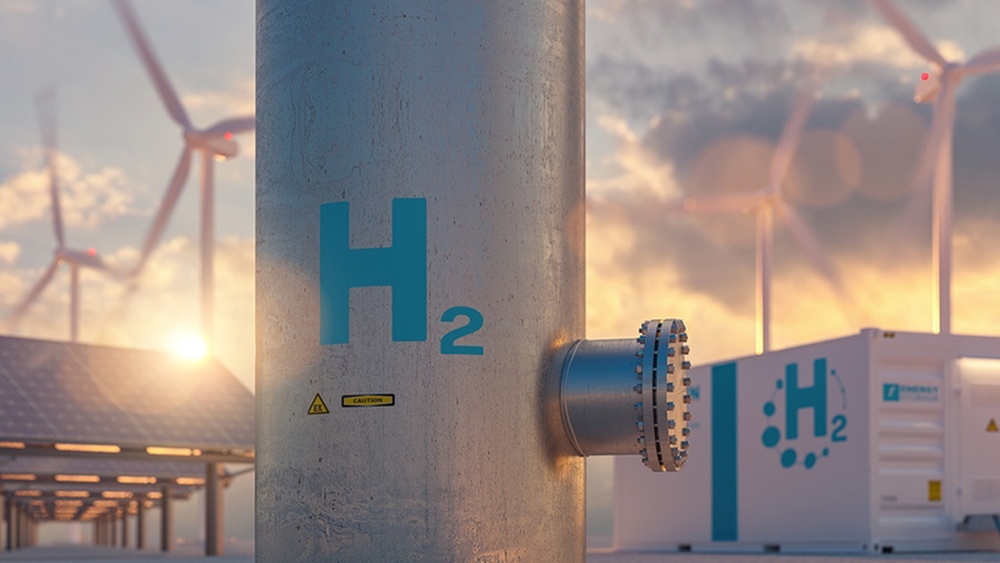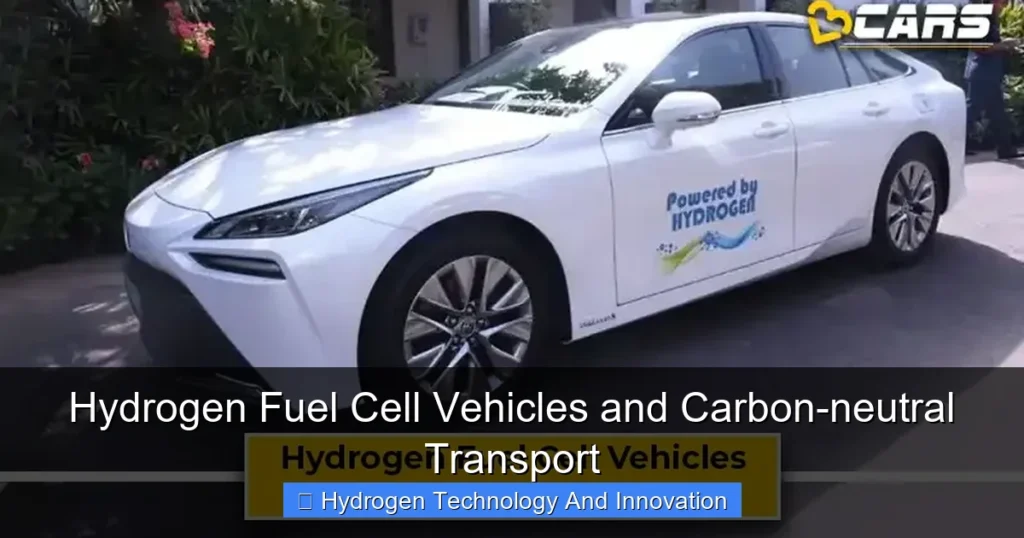
Hydrogen fuel cell vehicles (FCEVs) are emerging as a powerful solution for carbon-neutral transport, offering zero tailpipe emissions and fast refueling. By converting hydrogen into electricity, these vehicles support a cleaner future without sacrificing performance or convenience.
Key Takeaways
- Zero Tailpipe Emissions: Hydrogen fuel cell vehicles only emit water vapor, making them a truly clean transportation option.
- Fast Refueling: Unlike battery electric vehicles, FCEVs can be refueled in minutes, similar to gasoline cars.
- Long Driving Range: Most hydrogen vehicles offer ranges of 300–400 miles per tank, ideal for long-distance travel.
- Sustainable Hydrogen Production: When produced using renewable energy, hydrogen becomes a fully carbon-neutral fuel.
- Government and Industry Support: Major automakers and governments are investing heavily in hydrogen infrastructure and technology.
- Ideal for Heavy-Duty Transport: FCEVs are especially effective in trucks, buses, and trains where battery weight is a limitation.
- Challenges Remain: Limited refueling stations and high production costs are current barriers to widespread adoption.
[FEATURED_IMAGE_PLACEHOLDER]
Hydrogen Fuel Cell Vehicles and Carbon-neutral Transport
Imagine driving a car that runs on clean energy, refuels in minutes, and leaves nothing behind but water vapor. No smog, no greenhouse gases, no compromise on performance. This isn’t science fiction—it’s the reality of hydrogen fuel cell vehicles (FCEVs), a technology quietly reshaping the future of transportation. As the world races to cut carbon emissions and combat climate change, hydrogen-powered transport is stepping into the spotlight as a viable, scalable solution for a carbon-neutral future.
Unlike traditional gasoline cars or even battery electric vehicles (BEVs), hydrogen fuel cell vehicles generate their own electricity on board. They do this through a chemical reaction between hydrogen and oxygen inside a fuel cell stack, producing only electricity, heat, and water. This means zero tailpipe emissions—just pure, clean energy powering your journey. And because they don’t rely on large, heavy batteries, FCEVs can offer longer ranges and faster refueling times, making them especially attractive for long-haul trucking, public transit, and commercial fleets.
But hydrogen isn’t just about cars. It’s part of a broader vision for carbon-neutral transport—one that includes buses, trains, ships, and even airplanes. As renewable energy sources like wind and solar become more widespread, the potential to produce “green hydrogen” (hydrogen made using clean electricity) grows exponentially. When paired with expanding infrastructure and supportive policies, hydrogen technology could play a central role in decarbonizing sectors that are hard to electrify with batteries alone.
How Hydrogen Fuel Cell Vehicles Work
At the heart of every hydrogen fuel cell vehicle is a surprisingly simple yet powerful technology: the fuel cell. Think of it as a mini power plant on wheels. Instead of burning fuel, it uses a clean chemical process to generate electricity. Here’s how it works, step by step.
The Fuel Cell Stack: The Engine of the Future
The fuel cell stack is the core component of an FCEV. It’s made up of hundreds of individual fuel cells layered together, each about the thickness of a credit card. Inside each cell, hydrogen gas (H₂) is fed into the anode side, while oxygen (from the air) enters the cathode side. A special membrane, called a proton exchange membrane (PEM), sits in the middle.
When hydrogen atoms reach the anode, a catalyst—usually platinum—splits them into protons and electrons. The protons pass through the membrane to the cathode, but the electrons are forced to travel through an external circuit, creating an electric current. This current powers the vehicle’s motor, just like a battery would in an electric car.
At the cathode, the protons, electrons, and oxygen combine to form water (H₂O)—the only emission. It’s a closed-loop system: clean, quiet, and incredibly efficient.
Hydrogen Storage: Safe and Secure
One of the biggest concerns people have about hydrogen vehicles is safety. After all, hydrogen is a highly flammable gas. But modern FCEVs are designed with safety as a top priority. Hydrogen is stored in high-strength carbon-fiber tanks that can withstand extreme conditions, including crashes and high-pressure impacts.
These tanks are typically mounted in protected areas of the vehicle, such as under the floor or behind reinforced panels. They’re also equipped with multiple safety valves and sensors that detect leaks and automatically shut off the system if needed. In fact, hydrogen disperses quickly into the air—much faster than gasoline vapors—so it’s less likely to accumulate in dangerous concentrations.
Refueling: Quick and Convenient
One of the biggest advantages of hydrogen vehicles over battery electric cars is refueling time. While BEVs can take 30 minutes to several hours to recharge, hydrogen vehicles can be refueled in just 3 to 5 minutes—about the same as filling up a gas tank.
At a hydrogen refueling station, a nozzle connects to the vehicle’s tank, and compressed hydrogen gas is pumped in at high pressure (usually 700 bar). The process is fully automated and safe, with built-in checks to prevent overfilling or leaks. Drivers don’t need to do anything except press a button and wait a few minutes.
This makes FCEVs ideal for people who need to cover long distances without long charging stops—like delivery drivers, taxi operators, or road-trippers.
Environmental Benefits of Hydrogen-Powered Transport
When it comes to fighting climate change, every gram of CO₂ matters. Transportation accounts for nearly a quarter of global greenhouse gas emissions, and road vehicles are the biggest culprits. That’s why shifting to cleaner alternatives like hydrogen fuel cell vehicles is so critical.
Zero Tailpipe Emissions
The most obvious benefit of FCEVs is that they produce no harmful emissions from the exhaust pipe. No carbon dioxide (CO₂), no nitrogen oxides (NOx), no particulate matter—just pure water vapor. This makes them a game-changer for urban air quality, especially in cities struggling with smog and pollution.
For example, in cities like Los Angeles or Tokyo, where air quality is a major public health concern, replacing diesel buses with hydrogen-powered ones could significantly reduce respiratory illnesses and improve quality of life.
Lifecycle Emissions: The Full Picture
Of course, it’s not enough to just look at what comes out of the tailpipe. We also need to consider the entire lifecycle of the vehicle and its fuel. This includes how the hydrogen is produced, how the vehicle is manufactured, and how it’s disposed of at the end of its life.
Currently, most hydrogen is produced from natural gas through a process called steam methane reforming (SMR), which does release CO₂. This “gray hydrogen” isn’t carbon-neutral. However, the game changes when we use renewable energy to produce “green hydrogen.”
Green hydrogen is made by using electricity from wind, solar, or hydropower to split water into hydrogen and oxygen through electrolysis. This process emits no carbon at all. When FCEVs run on green hydrogen, their total lifecycle emissions are dramatically lower than gasoline cars—and even competitive with battery electric vehicles, especially in regions where the electricity grid is still heavily reliant on fossil fuels.
Supporting a Circular Economy
Hydrogen fuel cells are also more sustainable in the long run. Unlike lithium-ion batteries, which require rare earth metals and pose recycling challenges, fuel cells use more abundant materials. Platinum, the catalyst used in most PEM fuel cells, can be recovered and reused, reducing the need for mining.
Moreover, as hydrogen infrastructure grows, excess renewable energy can be stored as hydrogen during off-peak hours. This helps balance the grid and makes better use of wind and solar power, which are intermittent by nature. In this way, hydrogen doesn’t just clean up transport—it supports the entire energy system.
Hydrogen in Heavy-Duty and Public Transport
While passenger cars get most of the attention, hydrogen’s real strength lies in heavy-duty and public transportation. These sectors are some of the hardest to decarbonize, but they’re also among the most polluting. Hydrogen fuel cells offer a practical solution where batteries fall short.
Trucks and Freight: Power Without the Plug
Long-haul trucks are the backbone of global commerce, but they’re also major emitters. A single diesel truck can emit as much CO₂ as dozens of passenger cars. Battery electric trucks are emerging, but they face serious challenges: heavy batteries reduce cargo capacity, and long charging times disrupt delivery schedules.
Hydrogen fuel cell trucks, on the other hand, offer a compelling alternative. Companies like Hyundai, Toyota, and Nikola are already testing hydrogen-powered semi-trucks that can travel 500–700 miles on a single tank and refuel in under 20 minutes. For example, Hyundai’s XCIENT Fuel Cell truck is already in commercial use in Switzerland and California, hauling goods across highways with zero emissions.
Buses: Clean Transit for Cities
Public buses are another perfect fit for hydrogen. They follow fixed routes, return to central depots for refueling, and operate in urban areas where air quality matters most. Cities like London, Berlin, and Tokyo have already deployed hydrogen buses as part of their clean transit initiatives.
The Toyota Sora bus, for instance, uses two fuel cell stacks and can carry up to 79 passengers. It’s equipped with advanced safety features and even has USB ports and Wi-Fi for passengers. Because it emits only water, it helps cities meet strict emissions targets while providing reliable, quiet service.
Trains and Ships: Beyond the Road
Hydrogen isn’t limited to roads. In Germany, Alstom has introduced the Coradia iLint, the world’s first hydrogen-powered passenger train. It emits no pollutants and runs quietly along regional rail lines, replacing diesel trains in rural areas.
Similarly, shipping companies are exploring hydrogen and hydrogen-derived fuels like ammonia for cargo ships. While still in early stages, these efforts could help decarbonize global trade, which currently relies on heavy fuel oil and contributes significantly to emissions.
Challenges and Barriers to Adoption
Despite their promise, hydrogen fuel cell vehicles face several hurdles that slow widespread adoption. Understanding these challenges is key to overcoming them.
Limited Refueling Infrastructure
The biggest barrier today is the lack of hydrogen refueling stations. As of 2024, there are fewer than 200 public hydrogen stations in the United States, mostly concentrated in California. In Europe and Asia, the network is slightly more developed, but still far behind gasoline or EV charging stations.
Building new stations is expensive—each one can cost $1–2 million—and requires significant space and safety permits. Without a robust network, consumers are hesitant to buy FCEVs, and automakers are reluctant to produce them at scale.
High Production Costs
Hydrogen fuel cells are still expensive to manufacture. The use of platinum as a catalyst drives up costs, although researchers are working on alternatives like iron-nitrogen-carbon materials. Additionally, producing, compressing, and transporting hydrogen is energy-intensive and costly compared to electricity or gasoline.
However, as production scales up and technology improves, costs are expected to fall. The U.S. Department of Energy aims to reduce the cost of green hydrogen to $1 per kilogram by 2031—a goal that would make it competitive with fossil fuels.
Energy Efficiency Concerns
It’s important to acknowledge that hydrogen is less energy-efficient than batteries. Producing hydrogen via electrolysis, compressing it, transporting it, and converting it back to electricity in a fuel cell results in energy losses of around 60–70%. In contrast, battery electric vehicles use about 77% of the energy from the grid to power the wheels.
This means hydrogen is best suited for applications where batteries aren’t practical—like long-haul transport or aviation—rather than replacing all electric vehicles.
The Future of Hydrogen and Carbon-Neutral Transport
The road ahead for hydrogen fuel cell vehicles is full of potential. With the right investments, policies, and innovation, hydrogen could become a cornerstone of carbon-neutral transport by 2050.
Government Support and Policy
Governments around the world are stepping up. The European Union’s Hydrogen Strategy aims to install 40 gigawatts of electrolyzers by 2030. The U.S. Inflation Reduction Act includes tax credits for clean hydrogen production. Japan and South Korea have long been leaders in hydrogen technology, with national roadmaps to build hydrogen societies.
These policies are critical for driving down costs, building infrastructure, and encouraging private investment.
Automaker Commitment
Major automakers are also betting on hydrogen. Toyota has been a pioneer with its Mirai sedan and is expanding into trucks and buses. Hyundai offers the NEXO SUV and is investing heavily in fuel cell technology. Even traditional diesel engine manufacturers like Cummins are developing hydrogen engines for heavy equipment.
While some companies like Tesla focus exclusively on batteries, others see hydrogen as a complementary technology—one that fills gaps where batteries can’t.
Innovation on the Horizon
Research is accelerating. Scientists are developing more efficient fuel cells, cheaper catalysts, and better storage methods. Liquid organic hydrogen carriers (LOHCs) could make hydrogen easier to transport. Solid-state hydrogen storage might eliminate the need for high-pressure tanks.
Meanwhile, green hydrogen production is scaling up. Projects like the HyDeal Ambition in Europe aim to produce solar-powered hydrogen at industrial scale, driving down costs and emissions.
Conclusion
Hydrogen fuel cell vehicles represent more than just a new type of car—they’re a shift toward a cleaner, more sustainable transportation system. With zero emissions, fast refueling, and long range, they offer a practical path to carbon-neutral transport, especially in sectors where batteries fall short.
While challenges like infrastructure and cost remain, the momentum is building. Governments, industries, and researchers are working together to unlock hydrogen’s full potential. As green hydrogen production grows and technology improves, FCEVs could become as common as electric cars—powering our roads, rails, and seas with nothing but water and clean energy.
The future of transport isn’t just electric. It’s hydrogen-powered, too.
FAQs
Are hydrogen fuel cell vehicles really emission-free?
Yes, hydrogen fuel cell vehicles produce zero tailpipe emissions—only water vapor. However, the overall environmental impact depends on how the hydrogen is produced. When made with renewable energy (green hydrogen), the entire lifecycle is nearly carbon-neutral.
How long does it take to refuel a hydrogen car?
Refueling a hydrogen fuel cell vehicle takes just 3 to 5 minutes, similar to filling up a gasoline car. This is much faster than charging a battery electric vehicle, which can take 30 minutes to several hours.
Are hydrogen cars safe?
Yes, hydrogen vehicles are designed with multiple safety features, including high-strength tanks, leak detection systems, and automatic shut-off valves. Hydrogen also disperses quickly into the air, reducing fire risk compared to gasoline.
Can hydrogen be produced sustainably?
Absolutely. Green hydrogen is produced using renewable electricity to split water into hydrogen and oxygen. This process emits no carbon and is key to making hydrogen a truly sustainable fuel.
Why aren’t there more hydrogen refueling stations?
Building hydrogen stations is expensive and requires significant infrastructure. Currently, they’re mostly found in California, Europe, and parts of Asia. Expansion is underway, but it will take time and investment to create a nationwide network.
Are hydrogen vehicles better than electric cars?
It depends on the use case. Hydrogen vehicles excel in long-range and heavy-duty applications where batteries are impractical. For city driving and short trips, battery electric vehicles are often more efficient and cost-effective.
This is a comprehensive guide about Hydrogen fuel cell vehicles and carbon-neutral transport.
Key Takeaways
- Understanding Hydrogen fuel cell vehicles and carbon-neutral transport: Provides essential knowledge
Frequently Asked Questions
What is Hydrogen fuel cell vehicles and carbon-neutral transport?
Hydrogen fuel cell vehicles and carbon-neutral transport is an important topic with many practical applications.