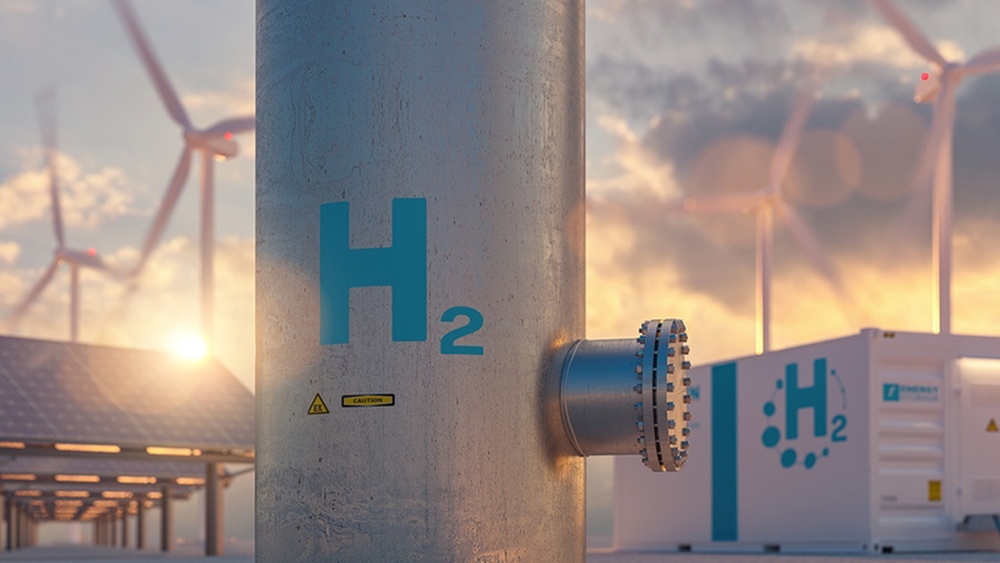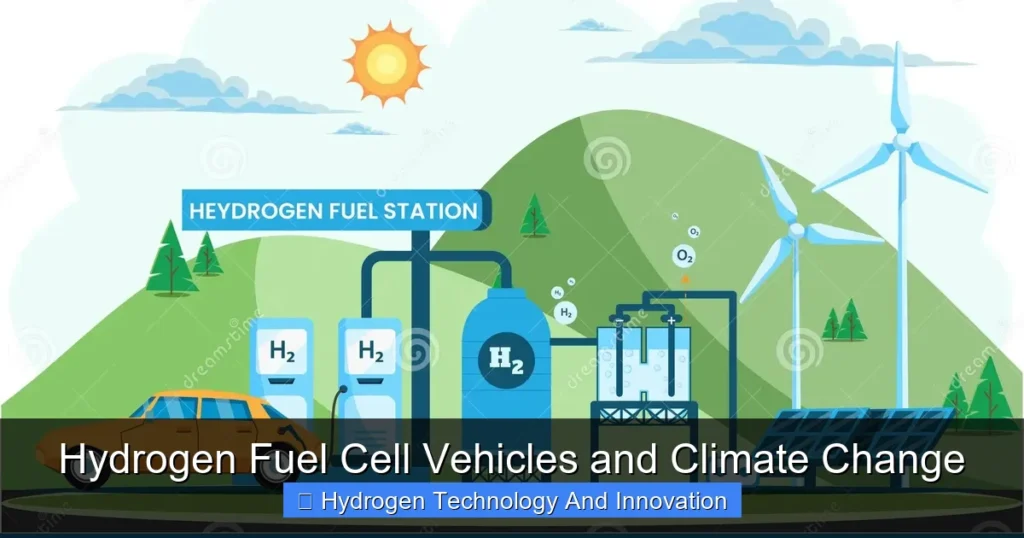
Hydrogen fuel cell vehicles (FCEVs) offer a promising zero-emission alternative to gasoline-powered cars, producing only water as exhaust. By leveraging clean hydrogen produced from renewable energy, FCEVs can significantly reduce greenhouse gas emissions and help combat climate change—especially in heavy transport and long-range applications where battery electric vehicles face limitations.
Key Takeaways
- Zero Tailpipe Emissions: Hydrogen fuel cell vehicles emit only water vapor, making them a clean alternative for reducing air pollution and carbon footprints.
- Climate Impact Depends on Hydrogen Source: The environmental benefits of FCEVs depend heavily on whether hydrogen is produced using renewable energy (green hydrogen) or fossil fuels (gray or blue hydrogen).
- Complementary to Battery Electric Vehicles: FCEVs excel in long-haul trucking, buses, and industrial applications where fast refueling and extended range are critical.
- Infrastructure Challenges Remain: Limited hydrogen refueling stations and high production costs currently hinder widespread adoption, but investments are growing globally.
- Policy Support is Accelerating Adoption: Governments worldwide are introducing incentives, subsidies, and hydrogen strategies to scale up clean hydrogen production and FCEV deployment.
- Lifecycle Emissions Matter: A full lifecycle analysis shows that green hydrogen-powered FCEVs can cut emissions by up to 90% compared to conventional vehicles.
- Innovation is Driving Down Costs: Advances in electrolysis, fuel cell efficiency, and manufacturing are making hydrogen technology more affordable and scalable.
📑 Table of Contents
- Introduction: The Road to Cleaner Transportation
- How Hydrogen Fuel Cell Vehicles Work
- Hydrogen Production: The Key to Climate Impact
- Comparing FCEVs and Battery Electric Vehicles
- Environmental and Climate Benefits of FCEVs
- Challenges and Barriers to Adoption
- The Role of Policy and Innovation
- Conclusion: A Cleaner Future on the Horizon
Introduction: The Road to Cleaner Transportation
Imagine driving a car that emits nothing but clean water vapor—no smog, no carbon dioxide, no harmful particulates. That’s the reality of hydrogen fuel cell vehicles (FCEVs), a technology that’s quietly gaining momentum as a key player in the fight against climate change. As the world races to cut greenhouse gas emissions and meet international climate goals, transportation remains one of the biggest challenges. Cars, trucks, ships, and planes account for nearly a quarter of global CO₂ emissions, and while electric vehicles (EVs) have made impressive strides, they’re not a one-size-fits-all solution.
Enter hydrogen fuel cell vehicles—a clean, efficient, and versatile alternative that could transform how we move people and goods. Unlike battery-powered EVs that store electricity in large batteries, FCEVs generate their own electricity on board using hydrogen gas and oxygen from the air. The only byproduct? Pure water. This makes them especially appealing for applications where battery weight, charging time, and range are limiting factors—like long-haul trucking, public transit, and aviation.
But here’s the catch: not all hydrogen is created equal. The climate benefits of FCEVs depend entirely on how the hydrogen fuel is produced. If it’s made using renewable energy like wind or solar, the environmental impact is minimal. But if it’s derived from natural gas—a common method today—the emissions savings shrink significantly. As we dive deeper into the role of hydrogen fuel cell vehicles in combating climate change, it’s essential to understand both the promise and the pitfalls of this emerging technology.
How Hydrogen Fuel Cell Vehicles Work
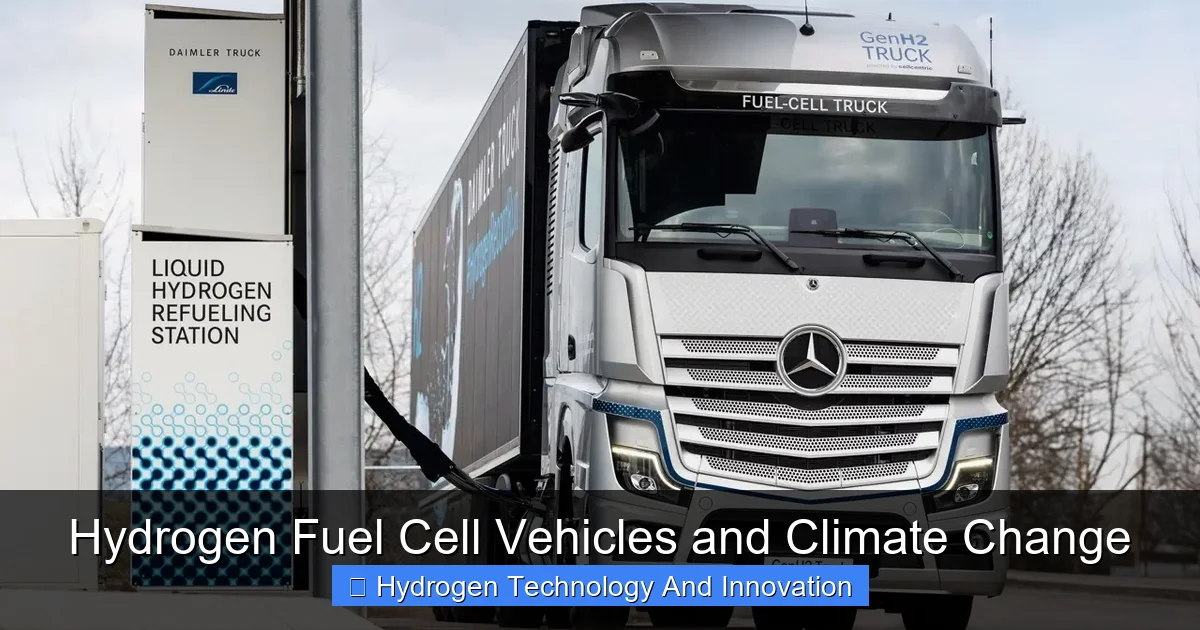
Visual guide about Hydrogen Fuel Cell Vehicles and Climate Change
Image source: images.hgmsites.net
To appreciate the potential of hydrogen fuel cell vehicles, it helps to understand how they operate. At the heart of every FCEV is a device called a fuel cell stack. This stack combines hydrogen gas (H₂) from the vehicle’s tank with oxygen (O₂) from the air in a chemical reaction that produces electricity, heat, and water. The electricity powers the vehicle’s electric motor, while the water exits through the exhaust as vapor—clean, odorless, and harmless.
The Fuel Cell Process Explained
The magic happens inside the fuel cell, where hydrogen molecules are split into protons and electrons using a catalyst—typically platinum. The protons pass through a special membrane, while the electrons are forced to travel through an external circuit, creating an electric current. When the electrons reunite with the protons and oxygen at the other side of the membrane, they form water (H₂O). This process is silent, efficient, and produces no harmful emissions.
One of the biggest advantages of FCEVs is their refueling speed. While battery electric vehicles can take 30 minutes to several hours to recharge—even with fast chargers—hydrogen vehicles can be refueled in just 3 to 5 minutes, similar to filling up a gasoline car. This makes them ideal for commercial fleets, taxis, and delivery trucks that can’t afford long downtimes.
Vehicle Types and Real-World Examples
Hydrogen fuel cell technology isn’t limited to passenger cars. It’s being deployed across a wide range of transportation modes. Toyota’s Mirai and Hyundai’s NEXO are two of the most well-known hydrogen-powered sedans, offering ranges of over 400 miles per fill-up. But the real growth is happening in heavier vehicles.
For example, companies like Nikola and Hyundai are developing hydrogen-powered semi-trucks for long-distance freight. These trucks can travel up to 1,000 miles on a single tank and refuel in under 20 minutes—something no battery-electric truck can currently match. In public transit, cities like London, Tokyo, and Cologne are testing hydrogen buses that reduce urban air pollution and noise.
Even aviation and shipping are exploring hydrogen. Airbus has announced plans for hydrogen-powered passenger planes by 2035, while companies like ZeroAvia are already testing hydrogen-electric aircraft for regional flights. In maritime transport, hydrogen fuel cells could power ferries and cargo ships, cutting emissions in ports and coastal areas.
Hydrogen Production: The Key to Climate Impact
While hydrogen fuel cell vehicles themselves are clean, the environmental benefits depend entirely on how the hydrogen is made. Today, about 95% of hydrogen is produced from fossil fuels—primarily natural gas—through a process called steam methane reforming (SMR). This method releases significant amounts of CO₂, undermining the climate advantages of FCEVs.
Green, Blue, and Gray Hydrogen: What’s the Difference?
Not all hydrogen is the same. The color-coding system helps distinguish between production methods:
– Gray hydrogen is made from natural gas using SMR and emits CO₂. It’s the most common and cheapest form today.
– Blue hydrogen also uses natural gas but captures and stores the CO₂ emissions underground (carbon capture and storage, or CCS). It reduces emissions by 50–90% compared to gray hydrogen.
– Green hydrogen is produced by splitting water into hydrogen and oxygen using renewable electricity (electrolysis). It’s the cleanest option, with near-zero emissions.
For hydrogen fuel cell vehicles to truly help fight climate change, the shift to green hydrogen is essential. Fortunately, the cost of electrolyzers and renewable energy is falling rapidly. In 2023, the global green hydrogen market was valued at over $2 billion and is projected to grow tenfold by 2030, driven by government policies and private investment.
Case Study: Iceland’s Hydrogen Highway
Iceland offers a real-world example of how green hydrogen can power transportation. With nearly 100% renewable electricity from geothermal and hydro sources, the country is investing in green hydrogen production for buses, fishing vessels, and even export. The “Hydrogen Highway” project connects key cities with hydrogen refueling stations, demonstrating how a small nation can lead in clean mobility.
Similarly, Germany’s H2 Mobility initiative aims to build 1,000 hydrogen refueling stations by 2030, supported by €9 billion in government funding. These efforts show that with the right policies and infrastructure, green hydrogen can become a cornerstone of decarbonization.
Comparing FCEVs and Battery Electric Vehicles
The debate between hydrogen fuel cell vehicles and battery electric vehicles (BEVs) is often framed as an either/or choice. But the reality is more nuanced. Both technologies have strengths and weaknesses, and they’re likely to coexist in a decarbonized transportation system.
Range, Refueling, and Weight
One of the biggest advantages of FCEVs is their long range and quick refueling. A hydrogen car can travel 300–400 miles on a single tank and refuel in minutes. In contrast, even the fastest-charging BEVs take at least 20–30 minutes to reach 80% charge, and long road trips require careful route planning.
For heavy-duty applications, the difference is even more pronounced. A battery-electric semi-truck would need a massive, heavy battery pack to match the range of a diesel or hydrogen truck, reducing cargo capacity and increasing costs. Hydrogen fuel cells are lighter and more energy-dense, making them better suited for trucks, ships, and planes.
Energy Efficiency and Infrastructure
However, FCEVs are less energy-efficient than BEVs. Producing hydrogen, compressing it, transporting it, and converting it back to electricity in a fuel cell loses about 60–70% of the original energy. In contrast, BEVs use about 77% of the grid energy to power the wheels. This means that for every unit of renewable electricity, a BEV can go farther than an FCEV.
Infrastructure is another challenge. As of 2024, there are over 60,000 public EV charging stations in the U.S. alone, compared to fewer than 100 hydrogen refueling stations. Building a hydrogen network requires significant investment in production, storage, and distribution—much of which doesn’t exist yet.
Complementary, Not Competitive
Rather than competing, FCEVs and BEVs can complement each other. BEVs are ideal for short-range urban driving, where charging infrastructure is abundant and efficiency is key. FCEVs shine in long-haul transport, aviation, and industrial uses where weight, range, and refueling speed matter most.
For example, a delivery company might use battery-electric vans for last-mile deliveries in cities but switch to hydrogen trucks for cross-country routes. This hybrid approach maximizes efficiency and minimizes emissions across the entire supply chain.
Environmental and Climate Benefits of FCEVs
When powered by green hydrogen, fuel cell vehicles offer substantial climate benefits. A lifecycle analysis by the International Council on Clean Transportation (ICCT) found that FCEVs using renewable hydrogen can reduce greenhouse gas emissions by up to 90% compared to gasoline vehicles—even when accounting for hydrogen production, transportation, and vehicle manufacturing.
Reducing Urban Air Pollution
Beyond CO₂, FCEVs eliminate harmful pollutants like nitrogen oxides (NOx), particulate matter (PM), and carbon monoxide (CO) that contribute to smog and respiratory diseases. In cities like Los Angeles and Tokyo, where air quality is a major concern, hydrogen buses and taxis are helping clean the air while reducing noise pollution.
Decarbonizing Hard-to-Electrify Sectors
Some industries are difficult to electrify with batteries alone. Long-haul trucking, aviation, and shipping require high energy density and rapid refueling—areas where hydrogen excels. For instance, a hydrogen-powered cargo ship could cross the Pacific without stopping, while a battery-electric equivalent would need to dock frequently to recharge.
In aviation, hydrogen fuel cells or hydrogen combustion engines could power regional flights with zero emissions. Airbus estimates that hydrogen could reduce aviation’s climate impact by up to 50%, even when accounting for non-CO₂ effects like contrails.
Supporting Renewable Energy Integration
Hydrogen also plays a role in energy storage. Excess electricity from wind and solar farms can be used to produce green hydrogen during off-peak hours, storing energy for later use. This helps balance the grid and reduces curtailment of renewable power. In times of high demand, the stored hydrogen can be converted back to electricity or used in transportation.
Challenges and Barriers to Adoption
Despite their potential, hydrogen fuel cell vehicles face significant hurdles. High costs, limited infrastructure, and public awareness are slowing adoption. Let’s break down the main challenges.
High Production and Vehicle Costs
Green hydrogen is still expensive—currently around $4–6 per kilogram, compared to $1–2 for gray hydrogen. Fuel cell vehicles are also pricier than their gasoline or electric counterparts. The Toyota Mirai, for example, starts at around $50,000, while a comparable EV like the Tesla Model 3 costs less.
However, costs are falling. The U.S. Department of Energy aims to reduce green hydrogen production costs to $1 per kilogram by 2030 through its “Hydrogen Shot” initiative. Advances in electrolyzer technology and economies of scale are expected to drive prices down further.
Limited Refueling Infrastructure
One of the biggest barriers is the lack of hydrogen stations. In the U.S., most stations are in California, with only a handful in other states. Building a nationwide network requires billions in investment and coordination between governments, automakers, and energy companies.
But progress is being made. Japan has over 160 hydrogen stations, and Germany plans to have 100 by 2025. California, a leader in FCEV adoption, aims to have 200 stations by 2026. These efforts are laying the groundwork for broader adoption.
Public Perception and Safety Concerns
Hydrogen has a reputation for being dangerous, thanks to historical events like the Hindenburg disaster. But modern hydrogen storage is highly safe. Tanks are made of carbon fiber, designed to withstand crashes and fires. Hydrogen is also lighter than air, so it disperses quickly if leaked, reducing explosion risks.
Education and outreach are key to overcoming these fears. Demonstration projects, public test drives, and transparent safety data can help build trust.
The Role of Policy and Innovation
Government policies and technological innovation are critical to scaling up hydrogen fuel cell vehicles. Around the world, countries are launching hydrogen strategies to accelerate clean energy transitions.
Government Incentives and Regulations
The U.S. Inflation Reduction Act includes a $3/kg tax credit for green hydrogen production, making it more competitive. The European Union’s REPowerEU plan aims to produce 10 million tons of green hydrogen domestically by 2030. Japan and South Korea have long supported hydrogen research and deployment.
These policies are driving investment. In 2023, global hydrogen project announcements exceeded $300 billion, with major projects in Australia, Saudi Arabia, and Canada.
Breakthroughs in Technology
Innovation is also accelerating. Researchers are developing cheaper, more efficient catalysts to replace platinum in fuel cells. New electrolyzer designs are improving green hydrogen production. Startups like Hyzon Motors and Plug Power are scaling up manufacturing to reduce costs.
Solid-state hydrogen storage, which stores hydrogen in metal hydrides or chemical compounds, could make refueling safer and more efficient. Meanwhile, ammonia and liquid organic hydrogen carriers (LOHCs) are being explored as ways to transport hydrogen more easily.
Conclusion: A Cleaner Future on the Horizon
Hydrogen fuel cell vehicles are not a silver bullet, but they are a vital piece of the climate solution. When powered by green hydrogen, they offer a zero-emission alternative for transportation sectors that are hard to electrify with batteries alone. From long-haul trucks to city buses and even airplanes, FCEVs can help reduce emissions, improve air quality, and support a renewable energy future.
The path forward requires continued investment in clean hydrogen production, infrastructure, and innovation. But with strong policy support, falling costs, and growing public awareness, hydrogen-powered transportation is no longer a distant dream—it’s a realistic and necessary step toward a sustainable, low-carbon world. As we accelerate the transition away from fossil fuels, hydrogen fuel cell vehicles will play an increasingly important role in driving us toward a cleaner, healthier planet.
Frequently Asked Questions
Are hydrogen fuel cell vehicles really zero emission?
Yes, hydrogen fuel cell vehicles emit only water vapor from the tailpipe, making them zero-emission at the point of use. However, the overall climate impact depends on how the hydrogen is produced—green hydrogen from renewables offers the cleanest lifecycle.
How does hydrogen fuel compare to gasoline in terms of energy efficiency?
Hydrogen fuel cell vehicles are less energy-efficient than battery electric vehicles, losing about 60–70% of energy during production and conversion. Gasoline vehicles are even less efficient, typically converting only 20–30% of fuel energy into motion.
Can hydrogen be produced sustainably?
Yes, green hydrogen is produced using renewable electricity to split water into hydrogen and oxygen via electrolysis. This method emits no greenhouse gases and is key to making hydrogen fuel truly sustainable.
Why aren’t there more hydrogen refueling stations?
Building hydrogen infrastructure is expensive and requires coordination between governments, energy companies, and automakers. Currently, most stations are in California, Japan, and parts of Europe, but expansion is underway.
Are hydrogen cars safe?
Yes, modern hydrogen vehicles are designed with multiple safety features, including reinforced tanks and leak detection systems. Hydrogen disperses quickly in air, reducing explosion risks compared to gasoline.
Will hydrogen vehicles replace electric cars?
Unlikely. Hydrogen fuel cell vehicles and battery electric vehicles serve different needs. BEVs are better for short-range urban driving, while FCEVs excel in long-haul and heavy-duty applications. Both will likely coexist in a clean transportation future.