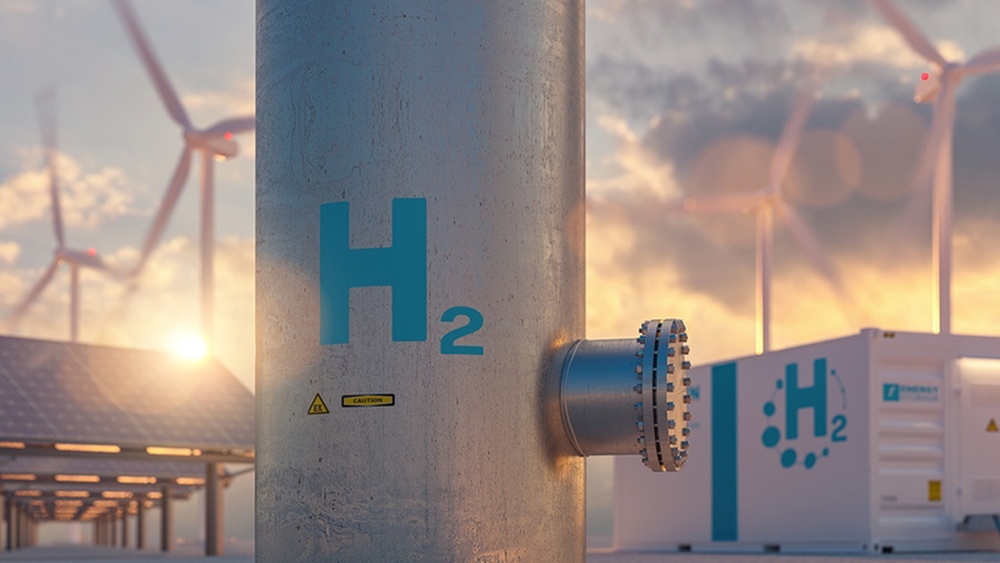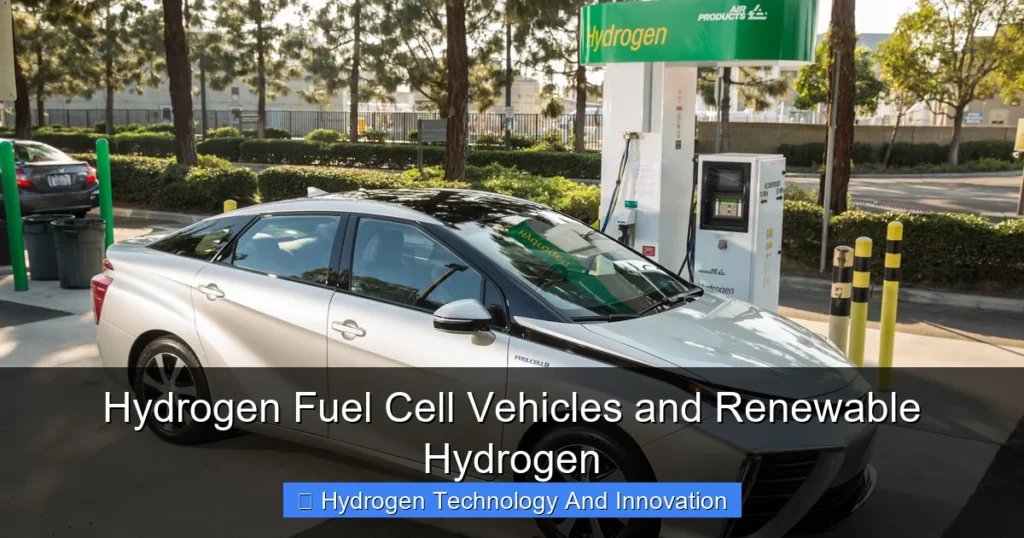
Hydrogen fuel cell vehicles (FCEVs) offer a promising alternative to battery-electric and internal combustion engines by producing only water as emissions. When powered by renewable hydrogen—made using clean energy sources like wind or solar—these vehicles can truly deliver on the promise of sustainable, long-range transportation.
Key Takeaways
- Zero tailpipe emissions: Hydrogen fuel cell vehicles emit only water vapor, making them ideal for reducing urban air pollution and greenhouse gases.
- Fast refueling and long range: FCEVs can be refueled in under 10 minutes and travel 300–400 miles on a single tank, rivaling gasoline vehicles.
- Renewable hydrogen is key: Green hydrogen, produced via electrolysis powered by renewable energy, is essential for making FCEVs truly sustainable.
- Ideal for heavy-duty transport: Trucks, buses, and trains benefit most from hydrogen due to their high energy demands and need for quick refueling.
- Infrastructure is growing: Governments and companies are investing heavily in hydrogen refueling stations and production facilities worldwide.
- Costs are falling: Advances in technology and scaling production are steadily reducing the cost of both fuel cells and renewable hydrogen.
- Complementary to battery EVs: Hydrogen and battery-electric vehicles serve different needs and can coexist in a clean transportation future.
Introduction: The Rise of Clean Mobility
The world is in the middle of a transportation revolution. As climate change accelerates and cities grapple with smog and congestion, the search for cleaner, more efficient ways to move people and goods has never been more urgent. Electric vehicles (EVs) have led the charge, but they’re not the only solution. Enter hydrogen fuel cell vehicles—quiet, powerful machines that run on one of the most abundant elements in the universe and leave behind nothing but water.
Hydrogen fuel cell technology isn’t new, but recent breakthroughs in efficiency, cost, and renewable energy integration have brought it to the forefront of sustainable mobility. Unlike battery-electric vehicles that rely on large, heavy batteries, hydrogen vehicles generate electricity onboard through a chemical reaction between hydrogen and oxygen. The result? A smooth, quiet ride with zero harmful emissions and refueling times that rival gasoline cars. But the real game-changer is renewable hydrogen—hydrogen produced using clean, green energy sources like wind, solar, or hydropower. When FCEVs are powered by this “green hydrogen,” they become a truly carbon-free transportation option.
How Hydrogen Fuel Cell Vehicles Work
To understand why hydrogen fuel cell vehicles are gaining traction, it helps to know how they work. At the heart of every FCEV is a fuel cell stack—a compact, high-tech system that converts hydrogen gas into electricity to power the vehicle’s motor.
The Science Behind the Fuel Cell
A fuel cell operates much like a battery, but instead of storing energy, it generates it on demand. Inside the fuel cell, hydrogen gas (H₂) from the vehicle’s tank is fed into the anode (negative side), while oxygen (O₂) from the air enters the cathode (positive side). A catalyst—usually platinum—splits the hydrogen atoms into protons and electrons. The protons pass through a special membrane to the cathode, while the electrons are forced to travel through an external circuit, creating an electric current that powers the car’s motor.
At the cathode, the protons, electrons, and oxygen combine to form water (H₂O)—the only byproduct. This entire process is silent, efficient, and emits no carbon dioxide or pollutants. Modern fuel cells can achieve efficiencies of 60% or higher, far surpassing the 20–30% efficiency of traditional internal combustion engines.
Vehicle Design and Performance
Hydrogen fuel cell vehicles are designed to be practical and user-friendly. They typically include a high-pressure hydrogen storage tank (usually made of carbon fiber), a fuel cell stack, an electric motor, and a small battery or supercapacitor to capture energy from braking (regenerative braking). This hybrid setup allows for smooth acceleration and improved efficiency.
For example, the Toyota Mirai, one of the most well-known FCEVs, can travel up to 400 miles on a single tank and refuels in about five minutes. It accelerates from 0 to 60 mph in under 9 seconds and offers a quiet, comfortable ride. Similarly, the Hyundai NEXO boasts advanced driver-assistance features and a sleek design, proving that hydrogen cars aren’t just functional—they’re stylish too.
Refueling: Fast and Simple
One of the biggest advantages of hydrogen vehicles is refueling speed. Unlike battery EVs, which can take 30 minutes to several hours to recharge (depending on the charger), hydrogen stations can fill a tank in under 10 minutes. This makes FCEVs ideal for long-distance travel and commercial applications where downtime is costly.
Refueling is also straightforward. Drivers pull up to a hydrogen dispenser, connect the nozzle (similar to a gasoline pump), and wait while the tank fills. Safety systems ensure that the process is secure, with automatic shutoffs and leak detection. As of 2024, there are over 1,000 hydrogen refueling stations worldwide, with the majority in California, Japan, Germany, and South Korea.
The Role of Renewable Hydrogen
While hydrogen fuel cell vehicles themselves are clean, the environmental benefits depend heavily on how the hydrogen is produced. Not all hydrogen is created equal. The color-coded system—gray, blue, green, and pink—helps distinguish between different production methods and their environmental impact.
Green Hydrogen: The Gold Standard
Green hydrogen is produced through electrolysis—a process that splits water (H₂O) into hydrogen and oxygen using electricity. When that electricity comes from renewable sources like wind, solar, or hydropower, the resulting hydrogen is considered truly sustainable. This is the ideal fuel for FCEVs, as it creates a closed loop: clean energy powers hydrogen production, which powers zero-emission vehicles.
For example, countries like Iceland and Norway are leveraging their abundant geothermal and hydroelectric resources to produce green hydrogen at scale. In Australia, massive solar farms are being paired with electrolyzers to export hydrogen to Asia. These projects show that renewable hydrogen isn’t just a theory—it’s already happening.
Other Types of Hydrogen
Not all hydrogen is green. Gray hydrogen, the most common type today, is made from natural gas through a process called steam methane reforming (SMR). This method releases significant amounts of CO₂, making it far from climate-friendly. Blue hydrogen is similar but includes carbon capture and storage (CCS) to reduce emissions. While better than gray, it still relies on fossil fuels and isn’t fully renewable.
Pink hydrogen refers to hydrogen produced using nuclear energy, which is low-carbon but comes with its own set of challenges, including waste and public perception. The key takeaway? For hydrogen fuel cell vehicles to be truly green, they must run on green hydrogen. Otherwise, the environmental benefits are significantly diminished.
The Cost Challenge
Currently, green hydrogen is more expensive to produce than gray or blue hydrogen. The main costs come from electrolyzers and renewable electricity. However, prices are falling rapidly. According to the International Energy Agency (IEA), the cost of green hydrogen could drop by 60% by 2030 as technology improves and renewable energy becomes cheaper.
Government incentives and private investment are also helping. The U.S. Inflation Reduction Act, for instance, offers tax credits of up to $3 per kilogram for clean hydrogen production. Similar programs exist in the European Union and Canada. These policies are accelerating the shift toward renewable hydrogen and making it more competitive with fossil fuels.
Applications Beyond Passenger Cars
While hydrogen fuel cell vehicles are often associated with sedans like the Toyota Mirai, their real potential lies in larger, heavier applications where battery-electric solutions face limitations.
Heavy-Duty Trucks and Freight
Long-haul trucks, delivery vans, and freight vehicles require high energy density and quick refueling—two areas where hydrogen excels. Batteries are heavy and take too long to charge for cross-country routes, but hydrogen tanks are lighter and can be refilled in minutes. Companies like Nikola, Hyundai, and Toyota are already testing hydrogen-powered trucks in the U.S. and Europe.
For example, Hyundai’s XCIENT Fuel Cell truck has been operating in Switzerland since 2020, with over 50 units logging more than 5 million kilometers. These trucks can carry up to 37 tons and travel 400 kilometers on a single tank. In California, the Port of Los Angeles is piloting hydrogen drayage trucks to reduce emissions in one of the busiest shipping hubs in the world.
Public Transit and Buses
Cities are increasingly turning to hydrogen buses to clean up public transportation. These vehicles offer the range and reliability needed for daily routes without the noise and pollution of diesel engines. In London, over 20 hydrogen buses are in service, and cities like Aberdeen, Scotland, and Cologne, Germany, have launched large-scale hydrogen bus fleets.
Hydrogen buses also have the advantage of centralized refueling. Unlike passenger cars, buses return to a depot each night, making it easier to install hydrogen infrastructure. This reduces the need for widespread public stations and lowers overall costs.
Trains and Maritime Transport
Hydrogen is also making waves in rail and shipping. In Germany, Alstom’s Coradia iLint is the world’s first hydrogen-powered passenger train, operating on non-electrified lines. It emits only steam and condensed water and has a range of up to 1,000 kilometers.
In maritime transport, companies like Ballard Power Systems are developing hydrogen fuel cells for ferries and cargo ships. The Norwegian ferry MF Hydra became the first hydrogen-powered vessel to sail in 2023, using liquid hydrogen to cross fjords with zero emissions. As regulations tighten on ship emissions, hydrogen is emerging as a viable alternative to heavy fuel oil.
Infrastructure and Market Growth
For hydrogen fuel cell vehicles to succeed, they need a reliable network of refueling stations and production facilities. While the infrastructure is still in its early stages, it’s growing fast.
Global Hydrogen Stations
As of 2024, there are over 1,000 hydrogen refueling stations worldwide. Japan leads with more than 160 stations, followed by Germany with over 100 and California with around 60. South Korea, China, and France are also expanding rapidly. These stations are often co-located with existing gas stations or built near industrial hubs to serve fleets.
The expansion is being driven by public-private partnerships. For example, the H2USA initiative in the U.S. brings together automakers, energy companies, and government agencies to build a national hydrogen network. In Europe, the Hydrogen Valleys program supports regional clusters where hydrogen production, distribution, and use are integrated.
Production and Distribution
Producing renewable hydrogen at scale requires significant investment in electrolyzers, renewable energy, and storage. Large-scale projects are underway around the world. The HyDeal Ambition project in Spain aims to produce green hydrogen at $1.50 per kilogram by 2030, making it cheaper than fossil fuels.
Hydrogen can be transported via pipelines, trucks, or ships, depending on the distance and volume. Liquid hydrogen is more efficient for long distances but requires cryogenic storage. Compressed gas is easier to handle but takes up more space. Innovations in ammonia and liquid organic hydrogen carriers (LOHCs) are also being explored to improve transport efficiency.
Policy and Investment
Government support is critical. The European Union’s Hydrogen Strategy aims to install 40 GW of electrolyzers by 2030. The U.S. Department of Energy’s Hydrogen Shot initiative targets $1 per kilogram of clean hydrogen within a decade. China, Japan, and Australia have also announced multi-billion-dollar hydrogen plans.
Private investment is surging too. Companies like Plug Power, Nel Hydrogen, and ITM Power are scaling up electrolyzer production. Automakers such as Toyota, Hyundai, and BMW are investing in hydrogen technology, while energy giants like Shell and BP are building hydrogen refueling networks.
Challenges and the Road Ahead
Despite the promise, hydrogen fuel cell vehicles face several hurdles. Cost, infrastructure, and public awareness remain key challenges.
High Upfront Costs
FCEVs are still more expensive than battery EVs and gasoline cars. The Toyota Mirai starts around $50,000, and hydrogen fuel costs about $16 per kilogram in the U.S.—roughly equivalent to $5–6 per gallon of gasoline. However, prices are expected to fall as production scales up and technology improves.
Maintenance costs are also a concern. Fuel cells contain expensive materials like platinum, though researchers are developing alternatives. Still, FCEVs have fewer moving parts than internal combustion engines, which could lead to lower long-term maintenance.
Limited Consumer Awareness
Many people still don’t know what hydrogen vehicles are or how they work. Unlike EVs, which have been heavily marketed, FCEVs have received less attention. Education and test-drive programs are needed to build public trust and familiarity.
Safety is another misconception. Hydrogen is flammable, but so is gasoline. Modern hydrogen tanks are rigorously tested and designed to withstand crashes, fires, and punctures. In fact, hydrogen disperses quickly into the air, reducing the risk of explosion compared to liquid fuels.
The Future Outlook
The future of hydrogen fuel cell vehicles depends on continued innovation, investment, and policy support. By 2030, experts predict that hydrogen could power millions of vehicles, especially in heavy-duty and commercial sectors. As renewable energy becomes cheaper and electrolyzers more efficient, green hydrogen will become the standard.
Hydrogen won’t replace battery EVs—it will complement them. For short trips and urban driving, battery-electric vehicles are ideal. For long-haul transport, aviation, and industrial applications, hydrogen offers a cleaner alternative. Together, they can help build a truly sustainable transportation system.
Conclusion: A Cleaner, Hydrogen-Powered Future
Hydrogen fuel cell vehicles represent a bold step toward a cleaner, more sustainable future. When powered by renewable hydrogen, they offer a zero-emission solution that’s fast, efficient, and capable of meeting the demands of modern transportation. From city buses to freight trucks, the applications are vast and growing.
While challenges remain, the momentum is undeniable. With falling costs, expanding infrastructure, and strong government and industry support, hydrogen is poised to play a major role in the clean energy transition. The road ahead isn’t just electric—it’s also hydrogen. And for those ready to embrace innovation, the journey has already begun.
FAQs
Are hydrogen fuel cell vehicles really zero-emission?
Yes, hydrogen fuel cell vehicles emit only water vapor from the tailpipe. However, the overall environmental impact depends on how the hydrogen is produced. When powered by renewable (green) hydrogen, FCEVs are truly zero-emission.
How long does it take to refuel a hydrogen car?
Refueling a hydrogen fuel cell vehicle takes about 5 to 10 minutes, similar to filling up a gasoline car. This is much faster than charging a battery-electric vehicle, especially for long trips.
Is hydrogen safe to use in vehicles?
Yes, hydrogen is safe when handled properly. Modern hydrogen tanks are made of strong composite materials and undergo rigorous safety testing. Hydrogen also disperses quickly in the air, reducing fire risks compared to liquid fuels.
Where can I refuel a hydrogen car?
Hydrogen refueling stations are currently concentrated in California, Japan, Germany, and South Korea. The network is expanding, with new stations being built in Europe, North America, and Asia.
What is green hydrogen?
Green hydrogen is produced by splitting water into hydrogen and oxygen using renewable electricity from sources like wind, solar, or hydropower. It’s the most sustainable form of hydrogen and essential for clean transportation.
Will hydrogen cars replace electric cars?
Not likely. Hydrogen and battery-electric vehicles serve different needs. EVs are great for short-range, urban driving, while hydrogen excels in long-haul and heavy-duty applications. Both will play key roles in a clean transportation future.
This is a comprehensive guide about Hydrogen fuel cell vehicles and renewable hydrogen.
Key Takeaways
- Understanding Hydrogen fuel cell vehicles and renewable hydrogen: Provides essential knowledge
Frequently Asked Questions
What is Hydrogen fuel cell vehicles and renewable hydrogen?
Hydrogen fuel cell vehicles and renewable hydrogen is an important topic with many practical applications.