Hydrogen fuel cell vehicles (FCVs) offer a clean alternative to traditional cars by producing only water as a byproduct, drastically cutting greenhouse gas emissions. While infrastructure and cost remain hurdles, advancements in technology and policy are making FCVs a promising solution for sustainable transportation.
This is a comprehensive guide about Hydrogen fuel cell vehicles and their environmental impact.
Key Takeaways
- Zero tailpipe emissions: FCVs emit only water vapor, eliminating harmful pollutants like CO2 and NOx.
- Sustainability depends on hydrogen source: Green hydrogen (from renewables) is key; gray/blue hydrogen still relies on fossil fuels.
- Limited refueling infrastructure: Few stations exist globally, though investments are growing.
- Higher upfront costs: FCVs are pricier than EVs but may become competitive with scaling production.
- Energy-efficient: Fuel cells convert 60% of hydrogen’s energy into power, better than internal combustion engines.
- Long range and quick refueling: FCVs offer ~300 miles per fill-up in under 5 minutes, ideal for heavy-duty transport.
—
[FEATURED_IMAGE_PLACEHOLDER]
Hydrogen Fuel Cell Vehicles and Their Environmental Impact
Introduction: Why Hydrogen FCVs Matter
As the world shifts away from fossil fuels, hydrogen fuel cell vehicles (FCVs) are gaining attention as a green alternative to electric cars. Unlike battery-powered EVs that rely on electricity generation—often still coal-heavy—FCVs produce energy through an electrochemical reaction between hydrogen and oxygen, emitting only water. This makes them a compelling option for decarbonizing transportation, especially in sectors where batteries struggle (e.g., long-haul trucks or buses).
But are they truly eco-friendly? The answer isn’t simple. It hinges on how hydrogen is produced, the energy used in its supply chain, and the efficiency of FCVs themselves. Let’s break down the environmental pros, cons, and future potential of these innovative vehicles.
—
1. How Hydrogen Fuel Cell Vehicles Work
The Science Behind FCVs
An FCV’s heart is the fuel cell stack, which combines hydrogen stored in tanks with oxygen from the air to generate electricity. This electricity powers an electric motor while releasing pure water vapor as exhaust. Here’s the simplified process:
- Hydrogen supply: Gasoline stations for FCVs deliver compressed hydrogen (700 bar pressure).
- Fuel cell operation: Hydrogen splits into protons and electrons via an anode; electrons flow through an external circuit (creating electricity), while protons recombine with oxygen at the cathode.
- Power delivery: Electricity drives the wheels; excess hydrogen can be stored for longer trips.
- Refueling time: FCVs take minutes (like gasoline); BEVs require hours (even with fast chargers).
- Weight and space: Batteries add bulk; hydrogen tanks are compact but require high-pressure storage.
- Efficiency: BEVs typically have 70-80% round-trip efficiency; FCVs average 60% (improving with tech).
- Toyota Mirai: Uses green hydrogen; lifecycle emissions match those of a well-to-wheel EV charged with wind/solar power.
- Daimler eCitaro bus: Runs on hydrogen made from natural gas (gray hydrogen), but retrofitting to green hydrogen could cut emissions by 95%.
- Tanker trucks: Hyundai’s XCIENT has driven over 4 million miles with zero emissions.
- Aerospace: Airbus aims for hydrogen-powered passenger planes by 2035.
- Cheaper catalysts: Platinum alternatives (e.g., iron-nickel alloys) reduce material costs.
- Modular designs: Standardized components lower manufacturing expenses.
- EU: Targets 10 million hydrogen fuel cell vehicles by 2030.
- South Korea: Plans 1,000 FCVs in public fleets by 2025.
Comparison to Battery Electric Vehicles (BEVs)
While both use electricity, FCVs differ in:
—
2. Environmental Benefits: A Cleaner Ride
No Tailpipe Emissions
Unlike diesel or gasoline cars, FCVs never release carbon dioxide, nitrogen oxides, or particulate matter during operation. This is critical for urban areas struggling with smog and respiratory diseases.
Lower Lifecycle Emissions
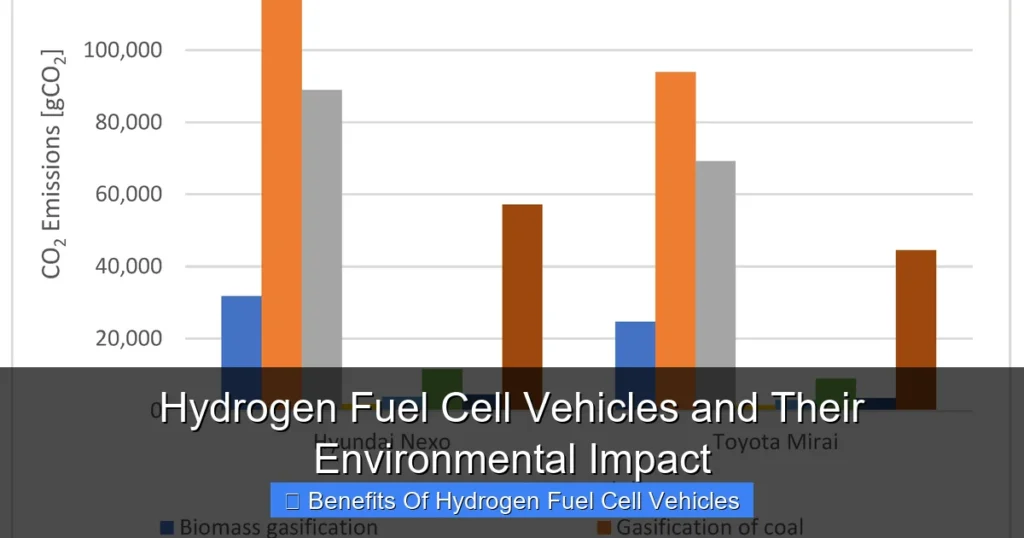
When hydrogen is produced via electrolysis using renewable energy (green hydrogen), FCVs achieve near-zero emissions across their lifecycle. For example:
Versatility for Heavy Transport
Battery EVs face limitations in weight capacity and range for trucks, ships, and planes. FCVs excel here:
—
3. Challenges: The Hidden Costs
Green Hydrogen Isn’t Yet Dominant
Most hydrogen today is made from steam methane reforming (SMR), a process reliant on fossil fuels. Green hydrogen (via renewable-powered electrolysis) accounts for less than 1% of global production due to high costs ($4–$6/kg vs. $1–$2/kg for gray hydrogen).
Infrastructure Gaps
As of 2023, there are only over 700 hydrogen refueling stations worldwide, concentrated in Japan, Europe, and California. Expanding this network requires massive investment ($1 trillion estimated for full global coverage).
Energy Losses
Producing, compressing, transporting, and storing hydrogen wastes energy. For every 1 kWh of renewable energy input, only about 3-5 kWh of usable energy reaches the vehicle.
—
4. Innovations Driving Change
Cost Reductions
Pelican Hydrogen estimates FCV prices will drop below $20,000 by 2030, rivaling EVs. Advances include:
Policy Support
Governments are stepping up:
—
5. The Future: What’s Next?
Scaling Up Green Hydrogen
Projects like Australia’s Asian Renewable Energy Hub aim to produce 15 GW of green hydrogen, supplying Asia and Europe.
Hybrid Systems
Some prototypes combine hydrogen batteries with supercapacitors for faster charging and extended range.
Consumer Adoption
As prices fall and infrastructure grows, FCVs may appeal to eco-conscious buyers seeking practicality (no range anxiety, quick refueling).
—
Conclusion: A Promising but Evolving Solution
Hydrogen fuel cell vehicles aren’t a silver bullet, but they’re a vital piece of the puzzle. When powered by green hydrogen, FCVs offer unparalleled sustainability for heavy transport and regions with abundant renewables. However, overcoming cost, infrastructure, and efficiency gaps will require collaboration among automakers, governments, and energy producers. As technology advances, FCVs could play a pivotal role in achieving net-zero emissions—making them more than just a trend, but a cornerstone of the future mobility landscape.
—
Question 1?
Do hydrogen fuel cell vehicles produce any emissions?
Question 2?
What’s the difference between green and gray hydrogen?
Question 3?
How much does a hydrogen fuel cell car cost compared to an EV?
Question 4?
Why are hydrogen refueling stations so rare?
Question 5?
Can FCVs compete with battery EVs in the long term?
Question?
Are hydrogen fuel cell vehicles truly environmentally friendly?
It depends on the hydrogen source. Green hydrogen (from renewables) makes FCVs nearly emission-free, but gray hydrogen (from fossil fuels) undermines their benefits. Transitioning to green production is critical.
Question?
How efficient are hydrogen fuel cells?
Modern fuel cells achieve 60-65% efficiency (up from 40-50% a decade ago). This means most hydrogen’s energy is converted to power, with minimal waste heat.
Question?
Where can I refuel a hydrogen vehicle?
Major hubs include California (US), Japan, Germany, and South Korea. Apps like Hy5 map available stations, but expansion is slow outside these regions.
Question?
Is hydrogen safer than gasoline?
Yes! Hydrogen disperses quickly in air, unlike gasoline vapors, which linger. FCVs also have leak detection systems and low-pressure storage tanks.
Question?
Will FCVs replace battery EVs?
Unlikely for most consumers, but they’ll dominate niche applications (trucks, buses, aviation) where batteries fall short. Both technologies will coexist in a decarbonized grid.
Quick Answers to Common Questions
What is Hydrogen fuel cell vehicles and their environmental impact?
Hydrogen fuel cell vehicles and their environmental impact refers to essential knowledge and techniques.
Frequently Asked Questions
What is Hydrogen fuel cell vehicles and their environmental impact?
Hydrogen fuel cell vehicles and their environmental impact is an important topic with many practical applications.