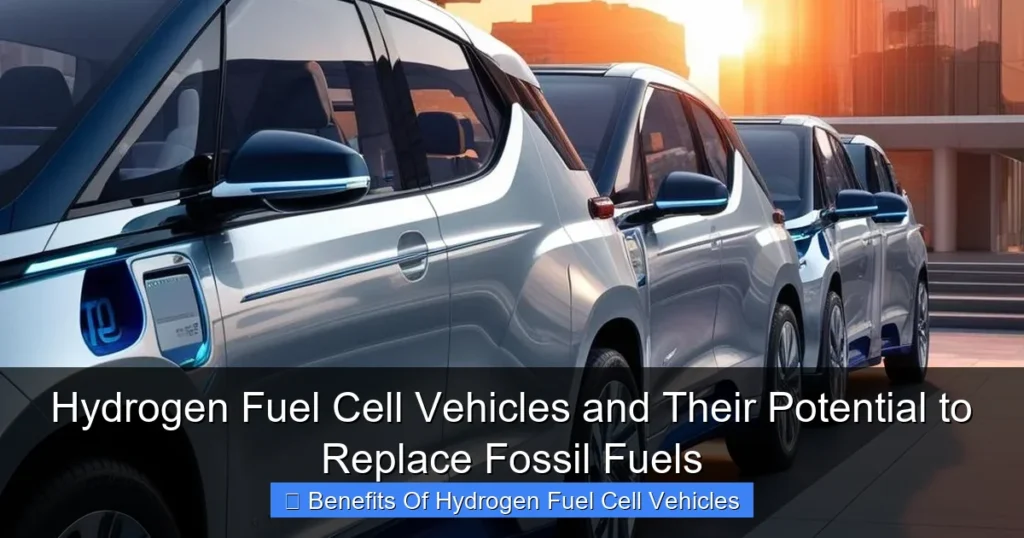
Hydrogen fuel cell vehicles (FCVs) are emerging as a clean alternative to fossil fuels, offering zero-emission power through hydrogen’s chemical reaction with oxygen. With advancements in infrastructure, cost reductions, and environmental benefits, FCVs hold immense potential to transform global mobility.
This is a comprehensive guide about Hydrogen fuel cell vehicles and their potential to replace fossil fuels.
Key Takeaways
- Zero Emissions: FCVs produce only water vapor, eliminating tailpipe pollutants like CO2 and NOx.
- Energy Efficiency: Hydrogen’s energy density allows longer ranges compared to batteries for heavy-duty vehicles.
- Faster Refueling: FCVs refuel in minutes, unlike electric cars that take hours to charge.
- Sustainability: Green hydrogen (made from renewable sources) can make FCVs truly carbon-neutral.
- Infrastructure Gaps: Limited hydrogen stations and high production costs remain key challenges.
- Government Support: Policies like tax credits and subsidies are accelerating adoption.
- Versatility: FCVs excel in trucks, buses, and ships where batteries struggle.
—
[FEATURED_IMAGE_PLACEHOLDER]
# Hydrogen Fuel Cell Vehicles and Their Potential to Replace Fossil Fuels
## Introduction
Picture a car that runs on nothing but water—no exhaust fumes, no pollution. That’s the promise of hydrogen fuel cell vehicles (FCVs). Unlike traditional gasoline or diesel engines, FCVs generate electricity by combining hydrogen gas with oxygen in a fuel cell, emitting only water vapor. This technology isn’t just futuristic; it’s already here, with Toyota Mirai, Hyundai Nexo, and other models hitting roads worldwide. But can FCVs really replace fossil fuels? The answer lies in their environmental, economic, and practical advantages—and some hurdles to overcome.
The urgency to transition away from fossil fuels is undeniable. Climate change demands cleaner alternatives, and FCVs offer one of the most scalable solutions. Governments, automakers, and researchers are pouring billions into this technology, betting on hydrogen as the “green” fuel of the future. Yet, adoption faces challenges: infrastructure, cost, and public perception. Let’s dive into why FCVs could be the next big thing in transportation.
—
## 1. Environmental Benefits: A Cleaner Future
###
No Tailpipe Pollution
Traditional internal combustion engines (ICEs) release harmful pollutants like carbon monoxide (CO), nitrogen oxides (NOx), and particulate matter. FCVs sidestep this entirely. When hydrogen reacts with oxygen in the fuel cell, the only byproduct is water vapor—a stark contrast to ICEs. For example, a single FCV bus operating in a city could cut annual CO2 emissions by over 50 tons compared to a diesel equivalent.
###
Carbon-Neutral Potential
The environmental advantage hinges on how hydrogen is produced. If made using renewable energy (e.g., wind, solar-powered electrolysis), green hydrogen becomes carbon-neutral. In contrast, “gray hydrogen” (from natural gas) still emits CO2. Countries like Norway and Japan are investing heavily in green hydrogen to ensure FCVs align with climate goals.
#### Practical Example:
– Hyundai XCIENT Heavy Truck: Uses green hydrogen, achieving near-zero emissions while hauling freight across Europe.
—
## 2. Energy Efficiency and Performance
###
Battery vs. Fuel Cells: Range Matters
Electric vehicles (EVs) rely on lithium-ion batteries, which suffer from range anxiety, especially in cold weather. FCVs, however, use hydrogen stored in high-pressure tanks, delivering longer ranges (400+ miles per tank) without needing frequent stops. This makes them ideal for long-haul trucking, aviation, and maritime transport, where batteries are impractical.
###
Fast Refueling = Less Downtime
Refueling an FCV takes 3–5 minutes, rivaling gasoline cars. Charging an EV battery even at fast chargers (350 kW) can take 20–30 minutes. For fleet operators, this difference is game-changing—less idle time means higher productivity.
—
## 3. Infrastructure and Cost Challenges
###
Hydrogen Stations Are Rare
As of 2024, there are fewer than 1,000 hydrogen refueling stations globally, concentrated in North America, Europe, and Asia. Building these requires massive investment ($2–3 million per station). However, projects like California’s H2 Highway aim to connect major cities with FCV corridors.
###
Production Costs Drop Over Time
Hydrogen production remains expensive today, but economies of scale are helping. The U.S. Inflation Reduction Act offers $3/kg tax credits for green hydrogen, pushing prices down from $6–10/kg to $2–4/kg by 2030. Toyota estimates FCVs could match ICE costs within a decade.
#### Pro Tip:
Look for “hydrogen hubs”—regions prioritizing infrastructure development (e.g., EU’s Hydrogen Strategy).
—
## 4. Government and Industry Push
###
Policy Incentives
Governments are betting big on hydrogen:
– EU: Targeting €47 billion in investments by 2030.
– Japan: Allocating ¥2 trillion ($15B) for FCV adoption.
– U.S.: The Bipartisan Infrastructure Law funds 500 new hydrogen stations.
###
Automaker Commitments
Major players are scaling up:
– Toyota: Plans 30,000 FCVs annually by 2025.
– Nikola Motors: Developing hydrogen trucks for logistics.
– Shell & Air Liquide: Joint ventures to supply hydrogen fuel.
—
## 5. Versatility Beyond Cars
###
Heavy-Duty Transport
Batteries struggle with weight limits for trucks and ships. FCVs shine here:
– Nikola Tre Hydrogen Truck: 1,000-mile range with quick refueling.
– Maersk’s Hydrogen-Powered Ships: First of its kind in 2024.
###
Backup Power
Fuel cells provide reliable grid backup during outages. Companies like Plug Power deploy hydrogen generators for hospitals and data centers.
—
## Conclusion
Hydrogen fuel cell vehicles aren’t a distant fantasy—they’re a viable solution to decarbonize transport. While challenges like infrastructure exist, the momentum from governments, tech, and consumers is unstoppable. As green hydrogen production scales and costs fall, FCVs could become mainstream, replacing fossil fuels not just for cars but for trucks, planes, and ships. The road to a cleaner future starts with hydrogen.
—
###
Quick Q&A
Question 1?
Do FCVs emit any pollutants? No! They only produce water vapor when powered by green hydrogen. Gray hydrogen (from fossil fuels) is less common now due to climate policies.
Question 2?
How much does hydrogen fuel cost? Currently around $6–10/kg, but green hydrogen prices may drop below $2/kg by 2030 with subsidies and scaling.
Question 3?
Why are FCVs better for long-haul trucks? They offer 400+ mile ranges and refuel in minutes, avoiding battery weight limits.
Question 4?
Are FCVs safer than EVs? Yes! Hydrogen is stored under pressure, but tanks are designed to withstand impacts, and leaks dissipate harmlessly as gas.
Question 5?
When will FCVs replace fossil fuels? Likely mid-century, but early adopters (trucks, buses, ships) will lead the shift in the next decade.
###
FAQs
How do hydrogen fuel cells work?
A fuel cell splits hydrogen into protons and electrons. Electrons flow through an external circuit, generating electricity, while protons combine with oxygen to form water.
Is hydrogen flammable?
Yes, but it’s safer than gasoline in small quantities. Hydrogen’s low density means it disperses quickly if leaked, reducing explosion risks.
What’s the biggest hurdle for FCVs?
Building hydrogen infrastructure (stations) and lowering production costs are the top barriers.
Can FCVs run on gray hydrogen?
Temporarily yes, but long-term success depends on transitioning to green hydrogen to meet climate goals.
Are FCVs quieter than ICEs?
Yes! FCVs have fewer moving parts than engines, resulting in significantly lower noise levels.
Will FCVs compete with EVs?
They won’t replace EVs everywhere—but they’ll dominate niches like heavy transport and regions with abundant renewable energy for hydrogen.
Quick Answers to Common Questions
What is Hydrogen fuel cell vehicles and their potential to replace fossil fuels?
Hydrogen fuel cell vehicles and their potential to replace fossil fuels refers to essential knowledge and techniques.
Frequently Asked Questions
What is Hydrogen fuel cell vehicles and their potential to replace fossil fuels?
Hydrogen fuel cell vehicles and their potential to replace fossil fuels is an important topic with many practical applications.