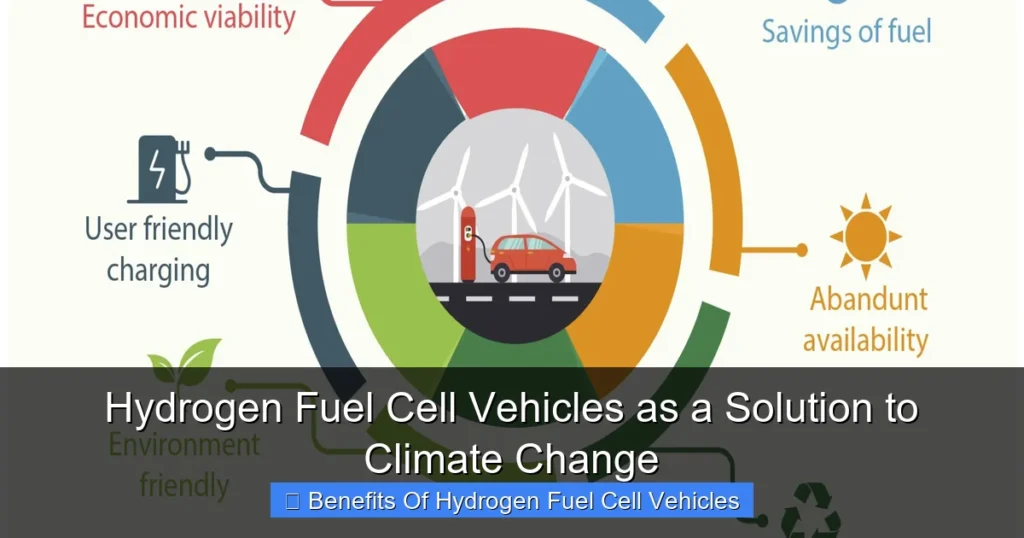
Hydrogen fuel cell vehicles (HFCVs) offer a cutting-edge solution to climate change by producing only water vapor as emissions, unlike traditional cars that emit CO2. With advancements in green hydrogen production and infrastructure expansion, HFCVs are poised to revolutionize clean mobility.
—
Key Takeaways
- Zero Emissions: HFCVs emit only water vapor, eliminating tailpipe pollutants like CO2 and NOx.
- Energy Efficiency: They convert 60% of hydrogen’s energy into motion, outperforming internal combustion engines.
- Sustainable Hydrogen: Green hydrogen (from renewable sources) makes HFCVs truly carbon-neutral.
- Faster Refueling: Charging takes minutes vs. hours for EVs, appealing to long-distance travelers.
- Scalability: Growing global infrastructure (e.g., Toyota, Hyundai models) supports mass adoption.
- Cost Reduction: Falling hydrogen prices ($1–$4/kg) make HFCVs more affordable than ever.
- Policy Support: Governments worldwide incentivize HFCV adoption via subsidies and R&D funding.
—
[FEATURED_IMAGE_PLACEHOLDER]
Introduction: Why HFCVs Stand Out Against Climate Change
The fight against climate change demands bold solutions—and hydrogen fuel cell vehicles (HFCVs) are emerging as a frontrunner. Unlike electric vehicles (EVs), which rely on battery technology, HFCVs use hydrogen gas stored in high-pressure tanks. When combined with oxygen in a fuel cell stack, this reaction generates electricity to power the vehicle without emitting harmful gases. The only byproduct? Water vapor. This makes HFCVs a compelling alternative to fossil-fueled cars, especially in sectors where battery range or charging speed is critical.
While EVs dominate headlines, HFCVs address unique challenges like fast refueling and heavy-duty applications (e.g., trucks, buses). As global leaders like Toyota, Hyundai, and Honda roll out affordable models, and green hydrogen production scales up, these vehicles could play a pivotal role in decarbonizing transport. Let’s break down how HFCVs tackle climate head-on.
—
1. Zero Emissions: A Cleaner Alternative to Fossil Fuels
HFCVs eliminate the most direct cause of climate change: tailpipe emissions. Traditional gasoline/diesel vehicles release carbon dioxide (CO2), nitrogen oxides (NOx), and particulate matter—key contributors to air pollution and global warming. In contrast, HFCVs produce no such emissions during operation. Even when considering hydrogen production, green hydrogen (made from renewables like wind or solar) ensures a net-zero lifecycle.
Example: A Toyota Mirai emits 0g of CO2/km when powered by green hydrogen. For context, a conventional SUV averages ~250g CO2/km.
Why It Matters
- Air Quality: Reduces smog and respiratory diseases in urban areas.
- Climate Impact: Cuts CO2-equivalent emissions by 50%+ compared to ICE vehicles over their lifetime.
—
2. Energy Efficiency: More Power, Less Waste
HFCVs boast superior energy conversion rates. Internal combustion engines waste ~70% of fuel energy through heat, while fuel cells convert up to 60% of hydrogen’s energy into motion. Even accounting for electrolysis (hydrogen production), HFCVs remain more efficient than EVs in cold climates or heavy loads.
Tip: Pairing HFCVs with regenerative braking systems (like some hybrids) further boosts efficiency.
Practical Example
A heavy-duty truck running on hydrogen can cover longer distances without frequent stops—ideal for freight routes like California’s ports or Germany’s logistics hubs.
—
3. Sustainable Hydrogen: The Key to True Carbon Neutrality
The environmental impact of HFCVs hinges on how hydrogen is produced. Today, most hydrogen comes from natural gas (“gray hydrogen”), releasing CO2. But “green hydrogen”—via electrolysis powered by renewables—is transforming the landscape:
- Cost Drop: Green hydrogen costs fell 89% since 2010 (IRENA).
- Global Push: Countries like Australia and Chile aim to become hydrogen exporters.
Future Outlook
By 2030, analysts project green hydrogen could supply 20% of Europe’s industrial demand, including fuel cell vehicles.
—
4. Infrastructure & Adoption: Breaking Barriers
Early adopters worry about hydrogen refueling stations, but progress is rapid:
- Stations Grow: Over 1,200 exist globally (Japan leads with 1,000+).
- Public-Private Partnerships: Shell and BP are investing $1 billion in U.S. hydrogen hubs.
- Home Solutions: Projects like Japan’s “hydrogen villages” allow households to produce their own fuel.
Pro Tip: Check apps like FuelCellToday to locate nearby stations.
—
5. Cost & Policy Drivers: Making HFCVs Affordable
Upfront costs have historically been a hurdle, but trends are shifting:
- Price Drops: Fuel cell costs fell 50% in 2022 (BloombergNEF).
- Incentives: The U.S. Inflation Reduction Act offers $3,500 tax credits for HFCVs.
- Fleet Savings: Cities like London subsidize hydrogen buses, saving €100k/year per bus vs. diesel.
Investment Momentum
Global investments in hydrogen reached $130 billion in 2022—double 2021 levels (IEA).
—
Conclusion: The Road Ahead
HFCVs aren’t just a niche option; they’re a scalable, science-backed tool to slash emissions. While challenges remain (e.g., infrastructure gaps, green hydrogen scaling), the technology’s advantages—zero emissions, efficiency, and versatility—make it indispensable in our climate fight. As policies, tech, and public awareness evolve, HFCVs could complement EVs and accelerate a cleaner future. The choice isn’t between “clean” or “dirty” transport—it’s about embracing all solutions at scale.
—
Quick Q&A
Question 1?
HFCVs emit only water vapor when driving, provided the hydrogen is produced sustainably (green hydrogen). Gray hydrogen (from natural gas) still has a carbon footprint.
Question 2?
Yes! Companies like Toyota (Mirai) and Hyundai (Nexo) sell consumer models, while heavy-duty HFCVs are being tested for trucks and buses.
Question 3?
Hydrogen refueling stations are growing rapidly, especially in regions like Japan, California, and parts of Europe. Apps help locate available stations.
Question 4?
Green hydrogen, made via electrolysis using renewable energy, is the gold standard. It’s carbon-neutral if powered by wind/solar.
Question 5?
Costs are falling due to economies of scale and tech improvements. Subsidies (e.g., U.S. IRA) also reduce buyer expenses.
—
FAQs
How do hydrogen fuel cell vehicles compare to electric cars?
HFCVs excel in fast refueling (minutes) and heavy-duty uses, while EVs lead in urban range and lower upfront costs. Both are vital for decarbonization.
Is hydrogen safe for consumers?
Yes! Hydrogen’s low density means leaks dissipate quickly, and modern designs prevent explosions. Regulations ensure strict safety standards.
Where are the best places to drive an HFCV today?
Japan (most stations), California (over 100), Europe (Germany, France), and Canada (Quebec) have robust networks.
Can hydrogen be produced at home?
Emerging projects like Japan’s “hydrogen villages” allow small-scale electrolysis, but commercial adoption is still years away.
What’s the timeline for HFCV dominance?
Experts predict 5-15% of new vehicle sales will be HFCVs by 2035, especially in fleets and long-haul transport.
Are there any downsides to HFCVs?
Challenges include high initial costs, limited infrastructure, and reliance on renewable energy for green hydrogen. These barriers are shrinking fast.
This is a comprehensive guide about Hydrogen fuel cell vehicles as a solution to climate change.
Key Takeaways
- Understanding Hydrogen fuel cell vehicles as a solution to climate change: Provides essential knowledge
Quick Answers to Common Questions
What is Hydrogen fuel cell vehicles as a solution to climate change?
Hydrogen fuel cell vehicles as a solution to climate change refers to essential knowledge and techniques.
Frequently Asked Questions
What is Hydrogen fuel cell vehicles as a solution to climate change?
Hydrogen fuel cell vehicles as a solution to climate change is an important topic with many practical applications.