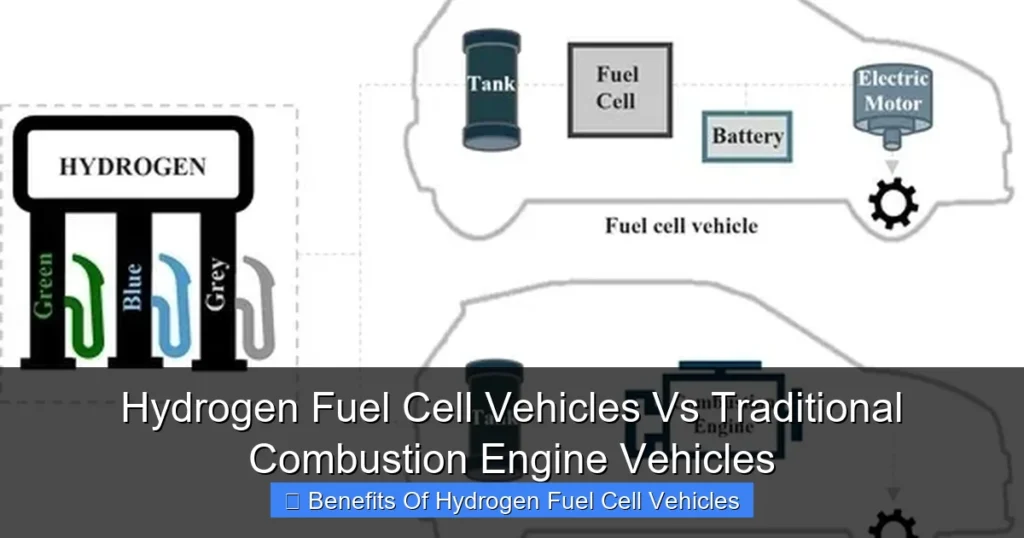
Hydrogen fuel cell vehicles (HFCVs) offer zero-emission driving with refueling times rivaling gas cars, while combustion engines remain cheaper upfront but pollute more. HFCVs excel in sustainability but face infrastructure challenges, making them ideal for eco-conscious buyers seeking long-term benefits.
Key Takeaways
- Zero Emissions: HFCVs produce only water vapor, unlike combustion engines that emit CO2 and pollutants.
- Faster Refueling: HFCVs refuel in 3–5 minutes, similar to gasoline, while EVs charge slower.
- Limited Infrastructure: Hydrogen stations are scarce compared to gas stations or EV charging networks.
- Higher Upfront Cost: HFCVs are pricier than combustion engines but may save money on fuel over time.
- Energy Efficiency: HFCVs convert 60% of energy into power, outperforming internal combustion engines at 20–30%.
- Weight & Storage: Hydrogen tanks add weight, while combustion engines have proven durability.
- Government Support: Many nations subsidize HFCVs to accelerate green transport adoption.
[FEATURED_IMAGE_PLACEHOLDER]
Quick Answers to Common Questions
Question 1?
Are hydrogen fuel cell vehicles really emission-free? Yes, but only if the hydrogen is “green” (renewable). Gray hydrogen from natural gas still produces some CO2 during production.
Question 2?
How much does a hydrogen refuel cost? Typically $10–$15 per kg, equating to ~$50–$75 for a full tank (range: 300–400 miles).
Question 3?
Can I drive a hydrogen car anywhere? Not yet. Stations are concentrated in places like California, Japan, and Germany, so check coverage before buying.
Question 4?
Do HFCVs last as long as combustion engines? Early data suggests similar lifespans (~200,000 miles), but long-term reliability studies are limited.
Question 5?
Will hydrogen cars replace electric vehicles? Unlikely in the short term. Both will coexist, with hydrogen excelling in sectors needing quick refueling (e.g., freight).
📑 Table of Contents
- Introduction: The Future of Transportation?
- 1. Environmental Impact: Cleaner Than Ever
- 2. Performance & Convenience: Speed vs. Range
- 3. Cost Breakdown: Upfront vs. Long-Term Savings
- 4. Infrastructure Challenges: Where Are the Stations?
- 5. Technology Reliability: Proven vs. Emerging
- Conclusion: Is It Time to Switch?
Introduction: The Future of Transportation?
Imagine a car that never spits out smog, fills up in minutes, and runs on renewable energy. That’s the promise of hydrogen fuel cell vehicles (HFCVs), which contrast sharply with traditional combustion engine cars. While most drivers still rely on gasoline or diesel, HFCVs are emerging as a viable alternative—especially as climate concerns grow. But how do they truly compare? Let’s break down the pros, cons, and real-world implications.
The debate between HFCVs and combustion engines isn’t just about technology; it’s about priorities. Are you ready to trade decades of familiarity for a cleaner, faster, and (eventually) more affordable option? Stick around—we’ll cover everything from environmental impact to wallet-friendly realities.
1. Environmental Impact: Cleaner Than Ever
Zero Tailpipe Emissions
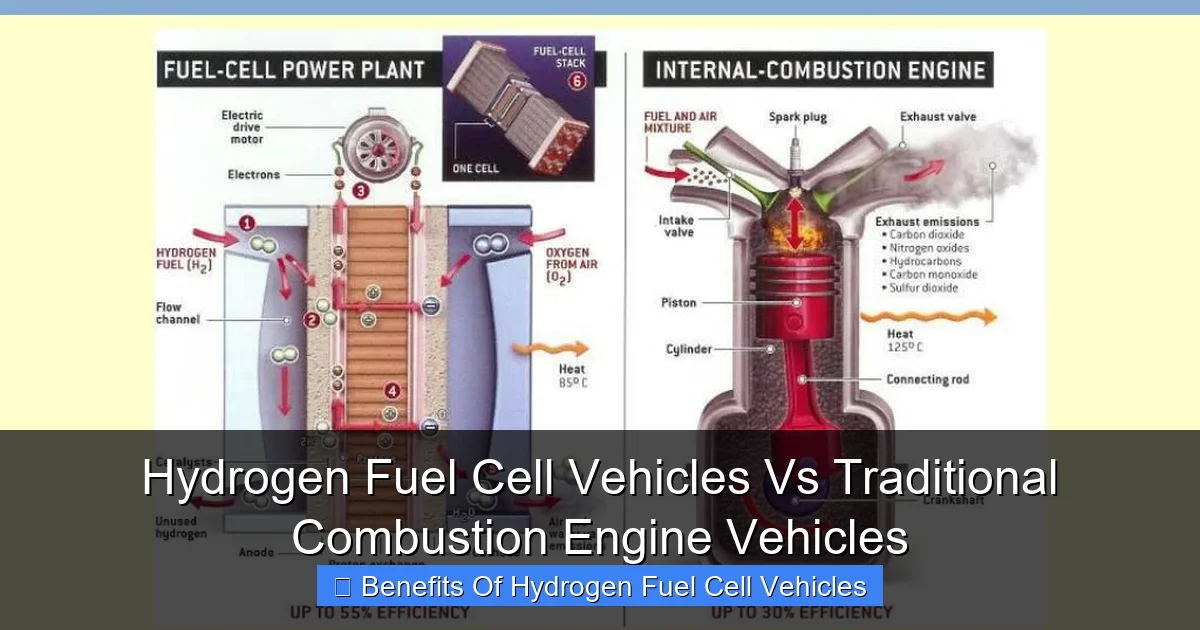
HFCVs generate electricity via a chemical reaction between hydrogen and oxygen, producing only water vapor as a byproduct. In contrast, combustion engines burn fossil fuels, releasing carbon dioxide (CO2), nitrogen oxides (NOx), and particulate matter—key contributors to air pollution and climate change.
Visual guide about Hydrogen Fuel Cell Vehicles Vs Traditional Combustion Engine Vehicles
Image source: image3.slideserve.com
Lifecycle Considerations
While HFCVs are clean when driving, their full environmental footprint depends on hydrogen production. Green hydrogen (made via electrolysis using renewable energy) is ideal, but gray hydrogen (from natural gas) still emits CO2. Combustion engines, meanwhile, have no such ambiguity—they pollute directly.
Practical Tip: Look for HFCVs powered by green hydrogen or consider hybrid models that combine hydrogen with battery storage to minimize emissions.
2. Performance & Convenience: Speed vs. Range
Refueling Time Advantage
A key selling point of HFCVs is their 3–5 minute refueling time, matching gasoline cars. Electric vehicles (EVs) require 20–40 minutes for fast charging, though home overnight charging helps.
Range Comparison
HFCVs typically offer 300–400 miles per fill, comparable to large SUVs like the Toyota RAV4 Hybrid. Most combustion engines also achieve this range, but heavy trucks may exceed it. However, extreme weather can reduce both types of vehicles’ efficiency.
3. Cost Breakdown: Upfront vs. Long-Term Savings
Higher Initial Price Tag
HFCVs currently cost $50,000–$100,000+, double or triple combustion-engine models. Toyota Mirai, one of the first mass-produced HFCVs, retails for ~$57,000 in 2023. Combustion engines remain cheaper due to mature manufacturing.
Running Costs
Hydrogen costs vary by region ($10–$15/kg), translating to $0.03–$0.06/mile. Gasoline averages $0.10–$0.15/mile today. Over 10 years, HFCVs could save thousands if fuel prices rise.
Pro Tip: Check local hydrogen incentives—many governments offer tax credits or rebates to offset upfront costs.
4. Infrastructure Challenges: Where Are the Stations?
Today, there are around 800 hydrogen stations globally, mostly in Europe and Japan, versus millions of gas stations and growing EV chargers. This scarcity limits HFCV practicality outside major cities.
Future Outlook: Companies like Air Liquide and Shell are expanding networks, but combustion engines will dominate until 2030–2040, according to industry analysts.
5. Technology Reliability: Proven vs. Emerging
Combustion Engine Legacy
Diesel and gasoline engines have over a century of refinement, with spare parts widely available and robust repair networks.
HFCV Advancements
While HFCV tech is newer, manufacturers like Hyundai and Toyota have sold tens of thousands of units without major safety incidents. Critics worry about hydrogen storage risks, but modern systems are safer than ever.
Conclusion: Is It Time to Switch?
HFCVs aren’t a magic bullet yet—combustion engines win in affordability and infrastructure. But for eco-minded buyers who prioritize sustainability and convenience, HFCVs are worth considering as technology improves and subsidies grow. The future? A mix of both, with hydrogen filling gaps where EVs struggle (e.g., long-haul trucking).
Bottom Line: If you’re looking to cut emissions and embrace innovation, test-driving an HFCV now could be your first step toward greener mobility.
Frequently Asked Questions
What makes hydrogen cars better than electric cars?
HFCVs refuel faster and often have longer ranges than EVs, especially for heavy-duty use. However, EVs benefit from wider charging infrastructure and lower operating costs.
Is hydrogen safer than gasoline?
Hydrogen leaks dissipate quickly, posing less explosion risk than gasoline. However, high-pressure tanks require careful handling, and safety standards are strict.
How far can a hydrogen car go on a single tank?
Most models achieve 300–400 miles, similar to midsize SUVs. Some commercial trucks target 500+ miles.
Why are hydrogen cars so expensive?
High R&D costs, limited production scale, and complex fuel-cell systems drive prices down as demand grows.
Will hydrogen cars become mainstream soon?
By 2030–2040, yes, but only if infrastructure expands and production scales up. For now, combustion engines and EVs dominate.