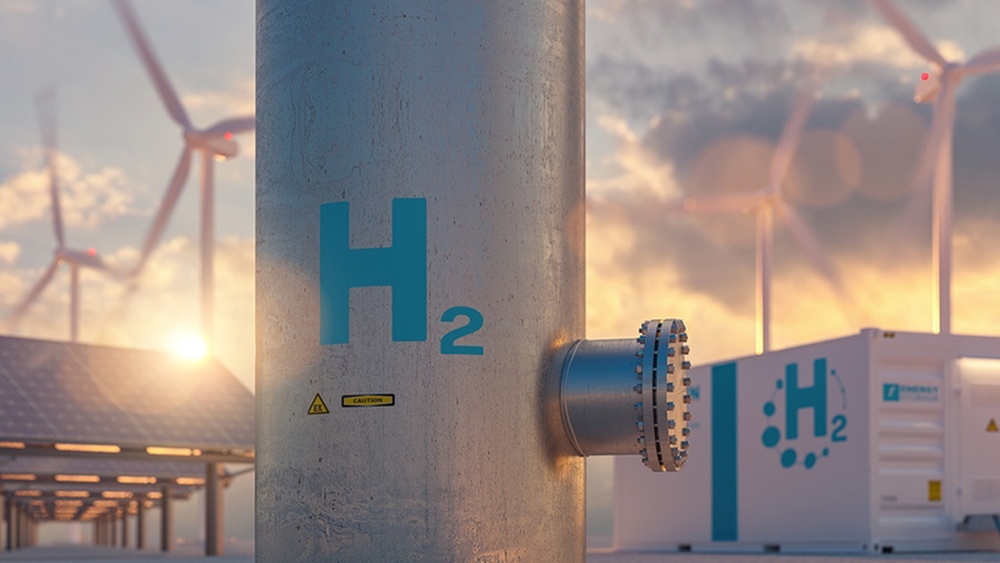
Hydrogen fuel cells offer a clean, efficient energy solution by producing electricity with only water and heat as byproducts. As industries and governments push for net-zero emissions, hydrogen technology is emerging as a key player in decarbonizing transportation, manufacturing, and power generation.
Imagine a world where your car runs silently, emits nothing but water vapor, and refuels in minutes—not hours. No tailpipe pollution. No range anxiety. No reliance on fossil fuels. This isn’t science fiction. It’s the promise of hydrogen fuel cells, a clean energy technology that’s quietly reshaping how we power our lives.
For decades, we’ve relied on burning coal, oil, and natural gas to keep our lights on, our vehicles moving, and our factories running. But this comes at a steep cost: rising carbon emissions, air pollution, and climate change. The need for cleaner alternatives has never been more urgent. Enter hydrogen fuel cells—a technology that converts hydrogen gas into electricity through an electrochemical reaction, not combustion. The only byproducts? Water and a little heat. No smoke. No smog. No carbon footprint.
Hydrogen isn’t new. It’s the most abundant element in the universe. But using it as a clean fuel source has long been held back by cost, infrastructure, and production methods. Today, thanks to advances in technology and growing climate awareness, hydrogen is stepping into the spotlight. From buses in California to steel plants in Sweden, real-world applications are proving that hydrogen fuel cells aren’t just a futuristic dream—they’re a practical solution for reducing carbon footprints across industries.
Key Takeaways
- Zero-emission energy: Hydrogen fuel cells generate electricity without releasing carbon dioxide or harmful pollutants during operation.
- Versatile applications: From cars and buses to backup power systems and industrial processes, fuel cells serve diverse sectors.
- Green hydrogen is key: When produced using renewable energy, hydrogen becomes a truly sustainable fuel source.
- Energy storage advantage: Hydrogen can store excess renewable energy, helping balance supply and demand on the grid.
- Infrastructure challenges remain: Widespread adoption depends on building refueling networks and reducing production costs.
- Government support is growing: Policies and incentives are accelerating investment in hydrogen technology worldwide.
- Future potential is vast: With innovation and scale, hydrogen could play a central role in a carbon-neutral future.
📑 Table of Contents
How Hydrogen Fuel Cells Work
At the heart of every hydrogen fuel cell is a simple but powerful chemical reaction. Think of it like a battery that never needs recharging—as long as it has a steady supply of hydrogen and oxygen.
Inside the fuel cell, hydrogen gas is fed into the anode (the negative side), while oxygen from the air enters the cathode (the positive side). A special membrane called an electrolyte sits between them. This membrane allows positively charged hydrogen ions (protons) to pass through to the cathode, but blocks electrons. Those electrons are forced to travel through an external circuit, creating an electric current that can power everything from a car motor to a hospital’s backup generator.
When the electrons finally reunite with the hydrogen ions and oxygen at the cathode, they form water—plain old H₂O. That’s it. No combustion. No emissions. Just clean electricity.
The Core Components
A typical hydrogen fuel cell consists of three main parts:
- Anode: Where hydrogen is split into protons and electrons. Catalysts, often made of platinum, speed up this reaction.
- Electrolyte membrane: A proton exchange membrane (PEM) that only lets protons through, forcing electrons to take the long way around.
- Cathode: Where oxygen combines with the protons and electrons to form water.
Multiple fuel cells are stacked together to form a “fuel cell stack,” which increases the voltage and power output. This is similar to how batteries are connected in series to boost performance.
Types of Fuel Cells
Not all fuel cells are the same. Different types are suited for different applications based on their operating temperature, efficiency, and fuel flexibility.
- Proton Exchange Membrane (PEM) Fuel Cells: Most common in vehicles. They operate at low temperatures (60–80°C), start quickly, and are compact. Ideal for cars, buses, and drones.
- Solid Oxide Fuel Cells (SOFC): High-temperature (700–1,000°C) systems used in stationary power generation. They’re highly efficient and can use natural gas or biogas as fuel.
- Alkaline Fuel Cells (AFC): Used in space missions like the Apollo program. Efficient but sensitive to carbon dioxide, which limits ground use.
- Phosphoric Acid Fuel Cells (PAFC): Common in hospitals and data centers for backup power. Moderate temperature and durability make them reliable.
Each type has its strengths, but PEM fuel cells dominate the transportation sector due to their quick response and compact size.
Why Hydrogen Fuel Cells Reduce Carbon Footprints
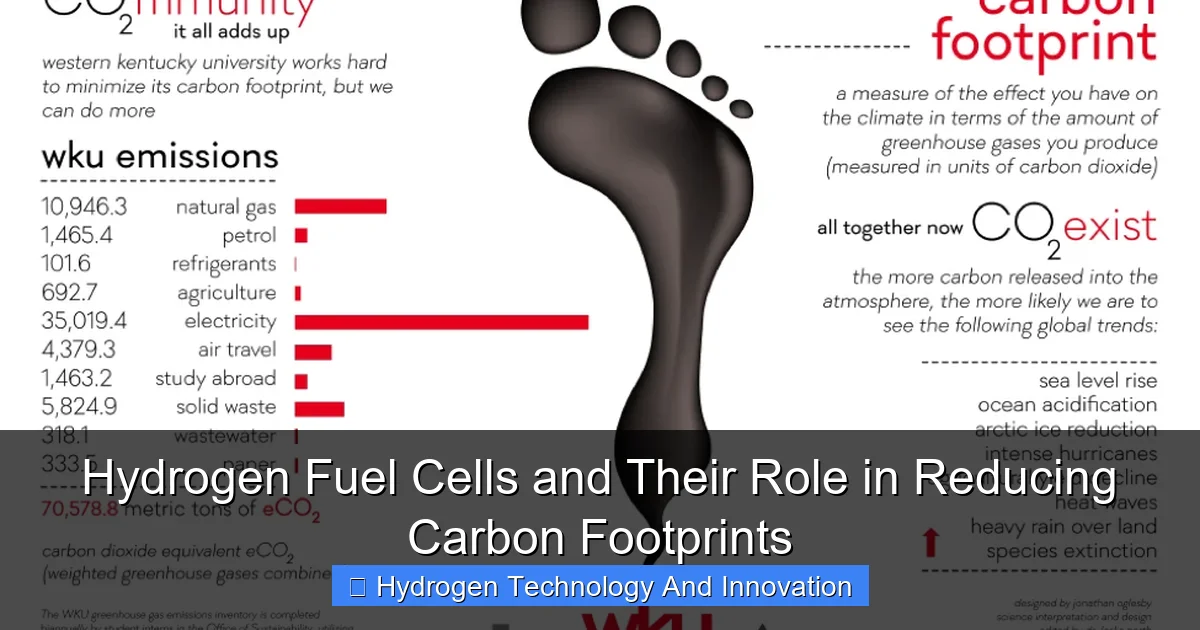
Visual guide about Hydrogen Fuel Cells and Their Role in Reducing Carbon Footprints
Image source: greengraceland.files.wordpress.com
The biggest selling point of hydrogen fuel cells is their ability to cut greenhouse gas emissions. But how exactly do they help reduce our carbon footprint?
First, let’s talk about emissions. When a hydrogen fuel cell generates electricity, it produces zero carbon dioxide (CO₂) at the point of use. Unlike gasoline engines that spew CO₂, nitrogen oxides, and particulate matter, fuel cells emit only water vapor. This makes them ideal for urban areas struggling with air pollution.
But the real environmental benefit depends on how the hydrogen is made.
Green, Blue, and Gray Hydrogen
Not all hydrogen is created equal. The color-coding system helps us understand its environmental impact:
- Green hydrogen: Produced using renewable energy (like wind or solar) to power electrolysis—splitting water into hydrogen and oxygen. This is the cleanest form, with near-zero emissions.
- Blue hydrogen: Made from natural gas, but with carbon capture and storage (CCS) to trap CO₂ emissions. It’s cleaner than gray hydrogen but still relies on fossil fuels.
- Gray hydrogen: The most common type today, produced from natural gas without capturing emissions. It’s cheap but contributes to carbon pollution.
Currently, over 95% of hydrogen is gray, which limits its climate benefits. But the shift toward green hydrogen is accelerating. Countries like Germany, Australia, and Japan are investing billions in renewable-powered electrolyzers to produce clean hydrogen at scale.
Decarbonizing Hard-to-Abate Sectors
Some industries are notoriously difficult to decarbonize—think heavy transport, steelmaking, and chemical production. Electric batteries work well for cars and light trucks, but they’re too heavy and slow-charging for long-haul trucks, ships, or airplanes. That’s where hydrogen shines.
For example, hydrogen fuel cells can power:
– Long-haul trucks: Companies like Hyundai and Toyota are testing hydrogen-powered semis that can travel over 500 miles on a single tank.
– Marine vessels: The European Union is funding hydrogen ferries and cargo ships to cut emissions in ports.
– Aviation: Airbus aims to launch a hydrogen-powered commercial aircraft by 2035.
In heavy industry, hydrogen can replace coal in steel production. Traditional methods release massive amounts of CO₂. But “green steel” projects in Sweden and Germany are using hydrogen to reduce iron ore, slashing emissions by up to 95%.
Real-World Applications and Success Stories
Hydrogen fuel cells aren’t just lab experiments—they’re already on the road, in the air, and powering critical infrastructure.
Transportation: From Cars to Trains
The most visible use of hydrogen is in vehicles. Toyota’s Mirai and Hyundai’s NEXO are hydrogen-powered cars available in select markets like California, Japan, and South Korea. They offer ranges of 300–400 miles and refuel in under five minutes—far faster than charging an electric vehicle.
But cars are just the beginning. Buses are a natural fit. Cities like London, Tokyo, and Aberdeen have deployed hydrogen buses that serve regular routes with zero emissions. In 2023, London’s hydrogen bus fleet surpassed 1 million miles, proving reliability and public acceptance.
Trains are another success story. In Germany, Alstom’s Coradia iLint—the world’s first hydrogen-powered passenger train—has been running since 2018. It emits only steam and condensed water, replacing diesel trains on non-electrified lines. Over 40 units are now in service across Europe.
Stationary Power and Backup Energy
Fuel cells also provide clean, reliable electricity for buildings and emergency systems. Hospitals, data centers, and telecom towers use them as backup power because they start instantly and run quietly—unlike diesel generators.
In Japan, over 300,000 homes use residential fuel cell systems called “Ene-Farm.” These units generate electricity and heat from natural gas, cutting household CO₂ emissions by up to 40%. While not pure hydrogen, they’re a step toward cleaner energy use.
Industrial and Grid Applications
Hydrogen can store excess renewable energy. On sunny or windy days, when solar and wind farms produce more power than the grid needs, that energy can power electrolyzers to make hydrogen. The hydrogen is stored and later used in fuel cells to generate electricity when demand peaks or the weather is calm.
This “power-to-gas” approach helps balance the grid and reduces reliance on fossil-fuel peaker plants. Projects like the HyDeploy trial in the UK are testing hydrogen injection into natural gas pipelines, paving the way for blended heating systems.
Challenges and Barriers to Adoption
Despite their promise, hydrogen fuel cells face significant hurdles. Overcoming them is key to widespread adoption.
High Production Costs
Green hydrogen is still expensive. Electrolyzers and renewable energy infrastructure require large upfront investments. Currently, green hydrogen costs $3–$6 per kilogram, compared to $1–$2 for gray hydrogen. But costs are falling fast. The International Energy Agency (IEA) predicts green hydrogen could drop below $2/kg by 2030 with scaling and innovation.
Limited Infrastructure
There are fewer than 200 hydrogen refueling stations worldwide, mostly in California, Japan, and Germany. Building a nationwide network is costly and complex. Unlike electric charging stations, hydrogen stations require high-pressure storage, safety systems, and specialized delivery trucks.
But progress is being made. The U.S. Department of Energy’s H₂@Scale initiative aims to expand infrastructure, while the European Clean Hydrogen Alliance is funding 100+ stations by 2025.
Energy Efficiency Concerns
Hydrogen isn’t the most efficient energy carrier. Converting electricity to hydrogen, then back to electricity in a fuel cell, loses about 30–40% of the original energy. In contrast, charging and discharging a battery loses only 10–15%. This makes hydrogen less ideal for applications where efficiency is critical.
However, for sectors where batteries aren’t feasible—like aviation or steelmaking—hydrogen’s efficiency trade-off is worth it.
Safety and Public Perception
Hydrogen is flammable and requires careful handling. But it’s also lighter than air, so it disperses quickly if leaked—unlike gasoline, which pools and creates fire hazards. Modern hydrogen systems include multiple safety features: leak detectors, automatic shutoffs, and reinforced tanks.
Public education is essential. Many people still associate hydrogen with the Hindenburg disaster, but today’s technology is far safer and more controlled.
The Future of Hydrogen: Innovation and Policy
The future of hydrogen fuel cells looks bright, driven by innovation, investment, and supportive policies.
Technological Advancements
Researchers are developing cheaper, more efficient fuel cells. New catalysts are reducing or eliminating the need for expensive platinum. Solid-state electrolytes and advanced membranes are improving durability and performance.
Meanwhile, electrolyzer technology is advancing. Companies like ITM Power and Nel Hydrogen are building larger, more efficient systems that can produce green hydrogen at industrial scale.
Government Support and Global Initiatives
Governments are stepping up. The U.S. Inflation Reduction Act offers tax credits of up to $3/kg for clean hydrogen production. The European Union’s REPowerEU plan aims to produce 10 million tons of renewable hydrogen by 2030.
Countries like Australia and Saudi Arabia are positioning themselves as hydrogen exporters, using vast solar and wind resources to produce and ship green hydrogen globally.
Corporate Commitments
Major companies are betting on hydrogen. Amazon, Walmart, and IKEA are testing hydrogen-fueled forklifts in warehouses. BMW and Daimler are investing in hydrogen trucks. Even oil giants like Shell and BP are launching hydrogen divisions.
These investments signal a shift from fossil fuels to clean energy—and hydrogen is at the center of that transition.
How You Can Support the Hydrogen Transition
You don’t need to be a scientist or policymaker to help advance hydrogen technology. Here’s how individuals and businesses can contribute:
- Choose clean transportation: If you live in a region with hydrogen refueling, consider a fuel cell vehicle. Support public transit systems that use hydrogen buses.
- Advocate for policy: Contact local representatives to support clean energy incentives and hydrogen infrastructure funding.
- Reduce energy waste: Lower your carbon footprint by using energy-efficient appliances and supporting renewable energy programs.
- Stay informed: Follow developments in hydrogen technology and share credible information with friends and family.
- Support green businesses: Patronize companies investing in sustainable practices and clean energy solutions.
Every action counts. As demand for clean energy grows, so does the momentum for hydrogen innovation.
Conclusion
Hydrogen fuel cells are more than a technological curiosity—they’re a vital tool in the fight against climate change. By producing clean electricity with zero emissions at the point of use, they offer a pathway to decarbonize transportation, industry, and power generation.
While challenges remain—cost, infrastructure, and production methods—the progress is undeniable. Green hydrogen is becoming more affordable. Governments are setting ambitious targets. Companies are deploying real-world solutions.
The transition won’t happen overnight. But with continued innovation, investment, and public support, hydrogen fuel cells can play a central role in building a sustainable, low-carbon future. The journey has begun. And the destination? A cleaner planet for generations to come.
Frequently Asked Questions
Are hydrogen fuel cells really emission-free?
Hydrogen fuel cells produce zero emissions during operation—only water and heat come out. However, the overall environmental impact depends on how the hydrogen is made. If it’s produced using fossil fuels without carbon capture, emissions are still generated upstream.
How long does it take to refuel a hydrogen car?
Refueling a hydrogen car takes about 3 to 5 minutes, similar to gasoline vehicles. This is much faster than charging most electric cars, making hydrogen attractive for long-distance travel and commercial fleets.
Is hydrogen safer than gasoline?
Hydrogen is flammable, but it’s lighter than air and disperses quickly if leaked, reducing fire risk. Modern hydrogen systems include multiple safety features, and studies show they can be as safe as—or safer than—gasoline when handled properly.
Can hydrogen be used in homes?
Yes, residential fuel cell systems like Japan’s Ene-Farm generate electricity and heat for homes. While most currently use natural gas, future systems could run on green hydrogen for zero-emission home energy.
Why isn’t hydrogen more widely used today?
The main barriers are high production costs, limited refueling infrastructure, and the dominance of gray hydrogen. However, falling renewable energy prices and government support are accelerating adoption.
Will hydrogen replace electric batteries?
Not entirely. Batteries are more efficient for light-duty vehicles and short-range applications. Hydrogen excels in heavy transport, long-range travel, and industrial uses where batteries are impractical. The future likely includes both technologies.