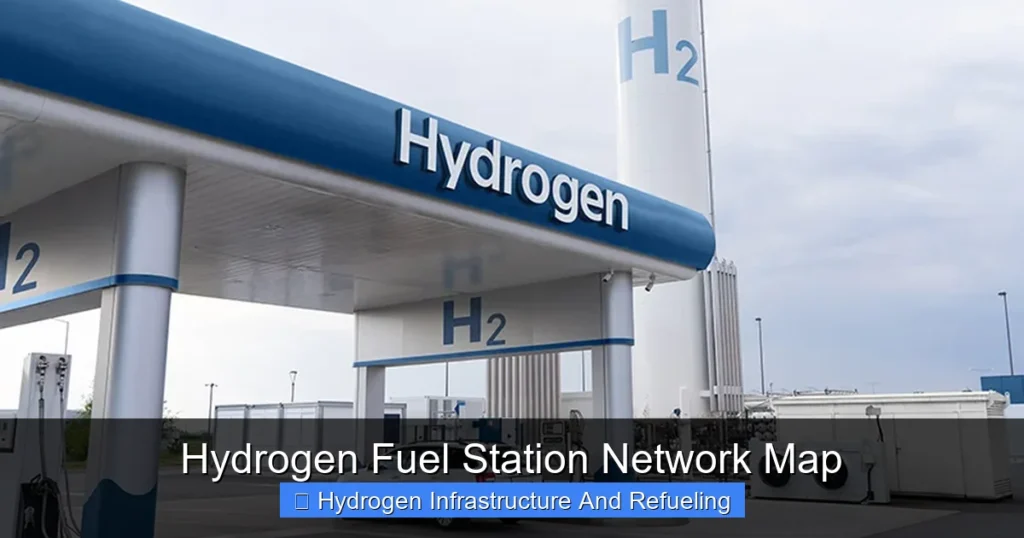
Hydrogen fuel station network maps are essential tools for drivers of fuel cell electric vehicles (FCEVs), offering real-time data on station locations, availability, and compatibility. These digital platforms help users plan routes, reduce range anxiety, and support the growing shift toward clean transportation.
Key Takeaways
- Hydrogen fuel station network maps show real-time locations and status of refueling stations. They help FCEV drivers find the nearest operational station with compatible connectors.
- California leads the U.S. in hydrogen infrastructure. Over 90% of U.S. hydrogen stations are located in the Golden State, especially in Los Angeles and the Bay Area.
- Global expansion is accelerating, especially in Europe and Asia. Countries like Germany, Japan, and South Korea are rapidly building hydrogen corridors for long-haul transport.
- Station availability and uptime vary significantly. Some stations experience downtime due to maintenance or supply issues, making real-time data crucial.
- Mobile apps and online platforms enhance accessibility. Tools like H2.Live, PlugShare, and Toyota’s Hydrogen Station Finder simplify trip planning.
- Future growth depends on government support and private investment. Policies and funding are key to expanding the network beyond urban centers.
- Hydrogen stations support multiple vehicle types. Beyond passenger cars, they serve buses, trucks, and even forklifts in industrial settings.
📑 Table of Contents
Understanding the Hydrogen Fuel Station Network Map
Imagine driving a car that runs on water—well, almost. Fuel cell electric vehicles (FCEVs) use hydrogen gas to generate electricity, emitting only water vapor as a byproduct. But here’s the catch: unlike gasoline or even electric charging, hydrogen refueling isn’t as widespread. That’s where the hydrogen fuel station network map comes in.
These digital maps act like GPS guides for hydrogen drivers. They show where stations are located, whether they’re open, what types of connectors they support, and even real-time status updates. Think of them as the Google Maps of the hydrogen highway. Whether you’re commuting across town or planning a cross-state trip, these tools help you stay fueled and confident on the road.
But it’s not just about convenience. The hydrogen fuel station network map is a vital piece of the clean transportation puzzle. As more automakers roll out FCEVs—like the Toyota Mirai, Hyundai NEXO, and Honda Clarity—drivers need reliable access to refueling. Without a visible and functional network, adoption stalls. That’s why governments, energy companies, and tech startups are investing heavily in both infrastructure and the digital tools that support it.
How Hydrogen Fuel Station Maps Work
Visual guide about Hydrogen Fuel Station Network Map
Image source: static.vecteezy.com
At their core, hydrogen fuel station network maps are databases powered by real-time data. They pull information from station operators, vehicle manufacturers, and user reports to deliver up-to-date insights. Most platforms use GPS coordinates to pinpoint station locations and integrate with navigation systems for turn-by-turn directions.
One of the key features is status tracking. A station might be listed as “open,” “closed for maintenance,” or “out of hydrogen.” This helps drivers avoid wasted trips. For example, if you’re driving a Toyota Mirai and your nearest station is down, the app might reroute you to the next available one—saving time and stress.
Compatibility is another critical factor. Not all hydrogen stations use the same connector type. The most common standard in North America and Europe is the SAE J2601 dispenser, which works with most FCEVs. However, some older or experimental stations may use different fittings. The map will usually indicate which vehicles can refuel there, so you don’t end up stranded with a mismatched nozzle.
Many platforms also include user reviews and photos. Did the station have long lines? Was the staff helpful? Was the hydrogen flow rate fast? These insights add a layer of community-driven reliability, similar to how drivers rate gas stations or EV chargers.
Popular Platforms and Tools
Several apps and websites have emerged as go-to resources for hydrogen drivers. One of the most widely used is H2.Live, a free app available on iOS and Android. It covers stations across the U.S., Europe, and parts of Asia, with real-time status updates and route planning. Users can filter by vehicle type, connector, and even hydrogen production method (e.g., green vs. gray hydrogen).
Another popular option is PlugShare, which started as an EV charging map but now includes hydrogen stations. Its large user base means frequent updates and detailed reviews. You can even see photos of the station layout, which helps if you’re unfamiliar with hydrogen pumps.
Automakers are also stepping in. Toyota’s Hydrogen Station Finder is tailored for Mirai owners, offering personalized alerts and integration with the car’s navigation system. Similarly, Hyundai’s Blue Link service includes hydrogen station locations for NEXO drivers.
For international travelers, H2stations.org—run by the International Energy Agency’s Hydrogen TCP—provides a global database. It’s especially useful in countries like Germany, where the H2 Mobility initiative is building a nationwide network.
Data Sources and Accuracy
The accuracy of a hydrogen fuel station map depends on how it gathers data. Some platforms rely on official feeds from station operators, while others use crowdsourced reports from drivers. The best maps combine both.
For example, H2.Live partners with station owners like Shell, Air Liquide, and FirstElement Fuel to get direct status updates. At the same time, it allows users to report issues like outages or long wait times. This dual approach improves reliability.
However, no system is perfect. Hydrogen infrastructure is still evolving, and some rural or newly built stations may not appear immediately. That’s why it’s smart to cross-check multiple sources before heading out. If your primary app shows a station as open, but a recent review says it’s been down for days, it’s worth calling ahead or having a backup plan.
Current State of the U.S. Hydrogen Network
When it comes to hydrogen refueling in the United States, one state dominates: California. As of 2024, over 90% of the country’s hydrogen stations are located there, with the majority clustered in Los Angeles, San Francisco, and San Diego. This concentration makes sense—California has aggressive clean air goals, strong incentives for zero-emission vehicles, and a culture of early tech adoption.
The California Fuel Cell Partnership (CaFCP) plays a major role in tracking and promoting the network. Their interactive map shows not only station locations but also planned openings and infrastructure projects. According to their data, there are over 60 operational public hydrogen stations in the state, with dozens more in development.
But outside California, the landscape is sparse. States like Hawaii, Connecticut, and New York have a handful of stations, often tied to pilot programs or fleet operations. The Midwest and South have very limited access, making long-distance travel in an FCEV challenging.
Why California Leads the Way
California’s leadership in hydrogen infrastructure stems from a mix of policy, funding, and innovation. The state’s Zero-Emission Vehicle (ZEV) mandate requires automakers to sell a certain percentage of clean cars, pushing investment in alternatives like hydrogen. Additionally, the California Energy Commission has funded over $200 million in hydrogen station development since 2014.
Private companies have also stepped up. FirstElement Fuel, for example, operates more than 40 stations across the state and is expanding into new markets. Shell has opened several hydrogen stations in partnership with Toyota and Hyundai, often co-located with traditional gas stations for convenience.
Public awareness plays a role too. In cities like Los Angeles, hydrogen stations are visible and accessible, reducing the “fear of the unknown” that can deter new adopters. Drivers see FCEVs on the road, know where to refuel, and feel more confident making the switch.
Challenges Beyond California
Despite progress, expanding the hydrogen network beyond California faces hurdles. One major issue is cost. Building a hydrogen station can cost between $1 million and $3 million, depending on size and technology. That’s significantly more than a fast-charging EV station.
Another challenge is hydrogen supply. Most hydrogen in the U.S. is produced from natural gas (“gray hydrogen”), which isn’t truly carbon-free. While “green hydrogen”—made using renewable energy—is growing, it’s still a small fraction of the market. Transporting hydrogen to remote stations is also expensive and complex, requiring high-pressure pipelines or specialized tankers.
Finally, there’s the chicken-and-egg problem: without enough vehicles, there’s little incentive to build stations. And without enough stations, consumers hesitate to buy FCEVs. Breaking this cycle requires coordinated effort from automakers, governments, and energy providers.
Global Hydrogen Infrastructure: A Growing Network
While the U.S. is still building its hydrogen footprint, other regions are moving faster. Europe, Japan, and South Korea are leading the charge with ambitious plans for hydrogen mobility.
In Europe, Germany’s H2 Mobility initiative aims to establish a nationwide network of 100 hydrogen stations by 2025. As of 2024, over 60 are operational, with strong coverage along major highways like the A3 and A7. France, the Netherlands, and the UK are also expanding, often integrating hydrogen into broader clean transport strategies.
Japan has long been a pioneer in hydrogen technology. With over 160 stations nationwide, it has the densest network in the world relative to its size. The government’s “Basic Hydrogen Strategy” targets 900 stations by 2030, supporting not just cars but also buses, trucks, and even hydrogen-powered homes.
South Korea is another hotspot. Hyundai’s home country has invested heavily in hydrogen infrastructure, with plans to deploy 1,200 stations by 2040. The government offers generous subsidies for both vehicles and refueling stations, accelerating adoption.
Hydrogen Corridors for Long-Haul Transport
One of the most exciting developments is the rise of hydrogen corridors—dedicated routes with stations spaced at regular intervals, ideal for freight and long-distance travel. These corridors are especially important for heavy-duty vehicles, which are harder to electrify with batteries due to weight and range limitations.
In Europe, the “Hydrogen Corridor” project connects Germany, France, and the Benelux countries, enabling hydrogen-powered trucks to cross borders seamlessly. Similar initiatives are underway in California, where the I-5 and I-10 highways are being equipped with stations every 50–100 miles.
These corridors aren’t just for trucks. They also benefit passenger vehicles, making road trips in an FCEV more feasible. Imagine driving from San Francisco to Seattle or Berlin to Paris without worrying about running out of fuel. That’s the future hydrogen corridors are building.
Green Hydrogen and Sustainability
As the network grows, so does the focus on sustainability. Green hydrogen—produced using renewable energy like wind or solar—is key to making FCEVs truly clean. Stations that source green hydrogen help reduce the carbon footprint of the entire supply chain.
Countries like Iceland, Norway, and Australia are investing in green hydrogen production, often using excess renewable energy to power electrolysis. In the U.S., California is promoting green hydrogen through incentives and regulations, encouraging stations to shift away from fossil-based sources.
Some stations even produce hydrogen on-site using solar panels or wind turbines. This decentralized approach reduces transportation costs and increases resilience, especially in remote areas.
Planning Your Trip with a Hydrogen Station Map
So, how do you actually use a hydrogen fuel station network map to plan a trip? It’s simpler than you might think—and getting easier every year.
Start by entering your destination into your preferred app, like H2.Live or PlugShare. The map will show all stations along your route, color-coded by status (green for open, red for closed, yellow for limited). You can filter by distance, connector type, or hydrogen source.
Next, check the estimated driving range of your vehicle. Most FCEVs get between 300 and 400 miles on a full tank—similar to a gasoline car. That means you’ll typically need to refuel every few hundred miles, depending on your route and driving style.
Use the map to identify “anchor stations”—reliable, high-traffic locations where you can refuel with confidence. These are often near major highways, urban centers, or transportation hubs. If a station is listed as “frequently busy,” consider stopping early or during off-peak hours.
Practical Tips for FCEV Drivers
– Always have a backup plan. Even with real-time data, stations can go down unexpectedly. Identify at least one alternative station within range.
– Check for user reviews. Recent feedback can alert you to issues like slow pumps, long lines, or poor signage.
– Call ahead if possible. Some stations have limited hours or require appointments, especially in rural areas.
– Keep your vehicle’s software updated. Many FCEVs sync with station maps and can receive over-the-air updates on station status.
– Join a hydrogen driver community. Online forums and social media groups share tips, alerts, and firsthand experiences.
For long trips, consider breaking your journey into segments. For example, if you’re driving from Los Angeles to San Francisco (about 380 miles), you’ll likely need one refuel stop. The map will show you the best options—perhaps in Santa Barbara or San Luis Obispo.
What to Expect at a Hydrogen Station
Refueling a hydrogen car is surprisingly similar to pumping gas. You pull up to the dispenser, put on safety gloves (provided at most stations), and connect the nozzle to your vehicle’s fuel port. The process is fully automated—once connected, the system handles pressure checks, fueling, and disconnection.
Most fills take 3 to 5 minutes, comparable to gasoline. That’s a major advantage over battery EVs, which can take 30 minutes or more for a fast charge. Plus, hydrogen stations are often quieter and emit no fumes, making the experience more pleasant.
After fueling, you’ll receive a receipt—either printed or digital—showing the amount of hydrogen dispensed and the cost. Prices vary, but in California, hydrogen typically costs between $12 and $16 per kilogram. A full tank (around 5–6 kg) can cost $60–$90, though many stations offer discounts for members or frequent users.
The Future of Hydrogen Fuel Station Maps
As hydrogen adoption grows, so will the sophistication of station maps. Future platforms may include AI-powered route optimization, predictive maintenance alerts, and integration with smart city systems.
Imagine a map that not only shows station locations but also predicts wait times based on historical data. Or one that suggests the greenest route, prioritizing stations that use renewable hydrogen. These features are already in development and could become standard within the next decade.
Another trend is interoperability. Right now, some apps work better with certain vehicles or networks. But as standards evolve, we’ll likely see more universal platforms—like a “Hydrogen Google Maps”—that work seamlessly across borders and brands.
Integration with Smart Vehicles
The next frontier is vehicle-to-infrastructure (V2I) communication. Future FCEVs may automatically sync with station maps, receiving real-time updates and even reserving fuel slots. Your car could alert you when you’re low on hydrogen and suggest the nearest available station—complete with directions and estimated wait time.
Some automakers are already testing this. Toyota’s latest Mirai models can communicate with select stations in Japan, enabling faster, more secure refueling. As 5G and IoT technologies expand, these capabilities will become more widespread.
Expanding Beyond Passenger Cars
While most hydrogen station maps focus on cars, the future is broader. Heavy-duty trucks, delivery vans, and even trains and ships are exploring hydrogen power. Station maps will need to adapt, showing not just locations but also compatibility with different vehicle types and fueling speeds.
For example, a hydrogen truck might require a high-flow dispenser that fills in under 10 minutes, while a forklift might use a smaller, slower pump. Maps that categorize stations by use case will help fleet operators plan more efficiently.
Conclusion
The hydrogen fuel station network map is more than just a tool—it’s a symbol of progress. It represents a shift toward cleaner, more sustainable transportation, powered by innovation and collaboration. While the network is still growing, especially outside California, the foundation is strong.
For drivers, these maps reduce anxiety and increase confidence. For policymakers and investors, they provide visibility into where infrastructure is needed most. And for the planet, they support a future where clean energy powers not just our homes, but our journeys.
As hydrogen technology advances and adoption increases, the map will evolve too—becoming smarter, more accurate, and more accessible. Whether you’re a current FCEV owner or considering one, keeping an eye on the hydrogen fuel station network map is a smart move. It’s your guide to the road ahead.
Frequently Asked Questions
How many hydrogen fuel stations are there in the U.S.?
As of 2024, there are over 60 public hydrogen fuel stations in the United States, with more than 90% located in California. Additional stations are in development in states like Hawaii, New York, and Connecticut.
Can I use any hydrogen station with my FCEV?
Most modern FCEVs use the SAE J2601 standard connector, which is compatible with the majority of public stations in North America and Europe. Always check the station map for compatibility before arriving.
How long does it take to refuel a hydrogen car?
Refueling typically takes 3 to 5 minutes, similar to gasoline. This is much faster than most EV fast charging, making hydrogen convenient for long trips.
Are hydrogen stations safe?
Yes, hydrogen stations are designed with multiple safety systems, including leak detection, emergency shutoffs, and ventilation. Refueling is automated and follows strict international standards.
Can I find hydrogen stations on Google Maps?
Google Maps currently shows some hydrogen stations, but coverage is limited. Dedicated apps like H2.Live or PlugShare offer more detailed and up-to-date information.
Will hydrogen stations become more common?
Yes, with government support, private investment, and growing demand for zero-emission vehicles, the number of hydrogen stations is expected to increase significantly in the coming decade, especially along major transportation corridors.