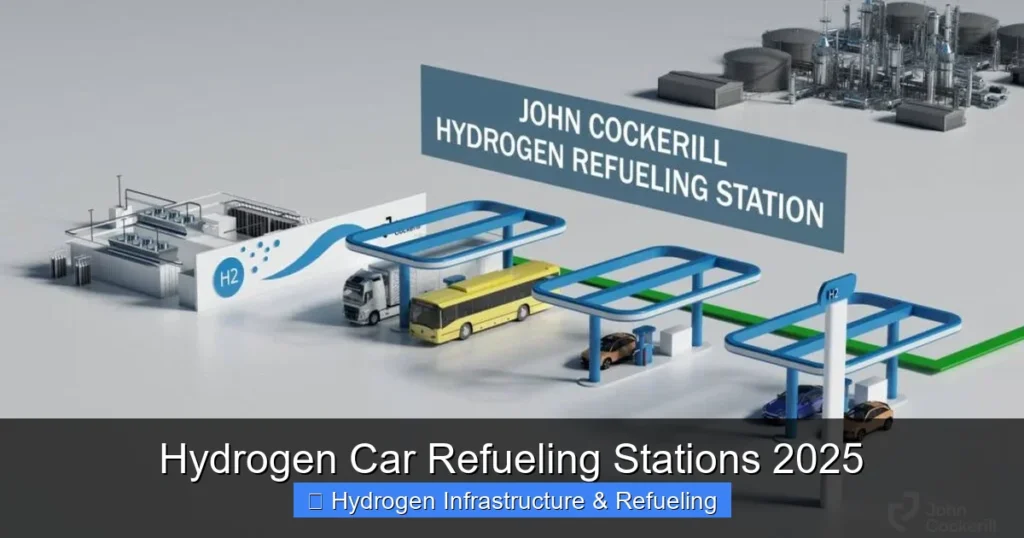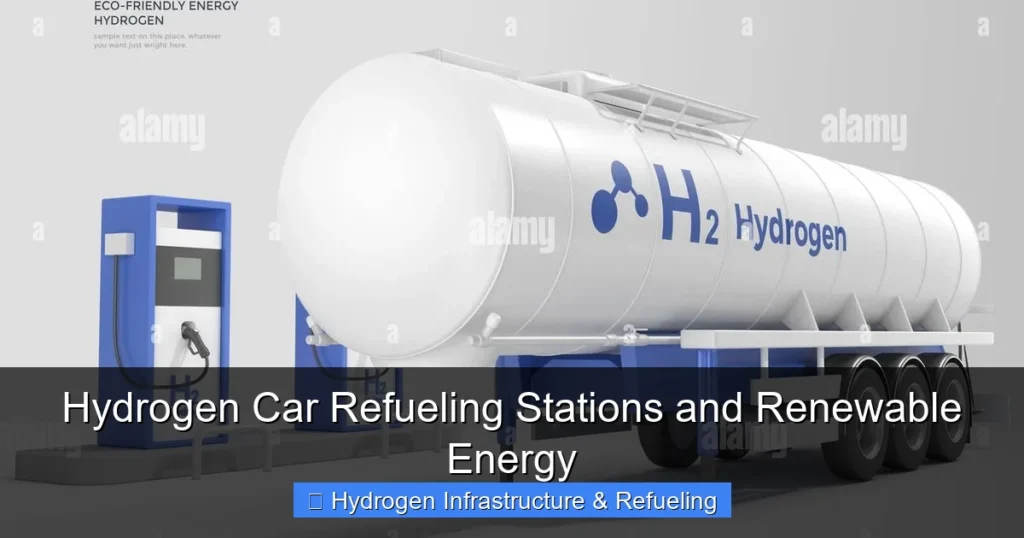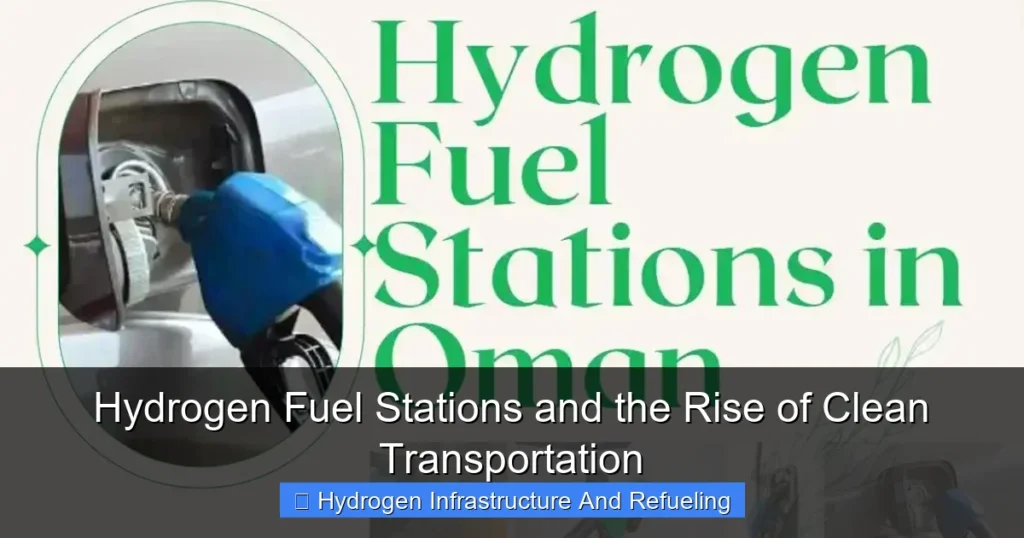
Hydrogen fuel stations are emerging as a game-changer in the clean transportation revolution, offering zero-emission vehicles that refuel in minutes. As governments and automakers invest heavily in hydrogen infrastructure, this technology is poised to complement electric vehicles in building a sustainable future.
Key Takeaways
- Hydrogen fuel stations enable zero-emission driving: Vehicles powered by hydrogen emit only water vapor, making them a clean alternative to gasoline and diesel.
- Refueling is fast and convenient: Hydrogen vehicles can be refueled in 3–5 minutes, similar to traditional gas cars, unlike most battery-electric vehicles.
- Infrastructure is expanding globally: Countries like Japan, South Korea, Germany, and the U.S. are rapidly building hydrogen refueling networks.
- Hydrogen supports heavy-duty transport: Trucks, buses, and trains benefit from hydrogen’s high energy density and quick refueling, where batteries fall short.
- Green hydrogen is key to sustainability: When produced using renewable energy, hydrogen becomes a truly clean fuel with minimal environmental impact.
- Government policies are accelerating adoption: Subsidies, tax incentives, and national hydrogen strategies are driving investment in stations and vehicles.
- Challenges remain but are being addressed: High costs, storage issues, and limited public awareness are hurdles, but innovation and scale are improving the outlook.
📑 Table of Contents
Hydrogen Fuel Stations and the Rise of Clean Transportation
Imagine pulling up to a fuel station, filling your car in under five minutes, and driving away with nothing but water dripping from the tailpipe. No emissions. No noise. No guilt. This isn’t science fiction—it’s the reality of hydrogen-powered vehicles, and it’s becoming more accessible every day thanks to the growing network of hydrogen fuel stations.
As the world races to cut carbon emissions and combat climate change, clean transportation has moved from a niche idea to a global priority. Electric vehicles (EVs) have led the charge, but they’re not the only solution. Enter hydrogen fuel cell vehicles (FCVs)—cars, trucks, and buses that run on hydrogen gas and produce zero harmful emissions. The key to making this technology viable? A reliable, widespread network of hydrogen fuel stations.
While still in its early stages compared to EV charging stations, hydrogen refueling infrastructure is expanding rapidly. From urban centers in California to industrial hubs in Germany and Japan, hydrogen stations are popping up to support a new generation of clean vehicles. This shift isn’t just about replacing gasoline—it’s about reimagining how we move people and goods in a sustainable way.
What Are Hydrogen Fuel Stations?
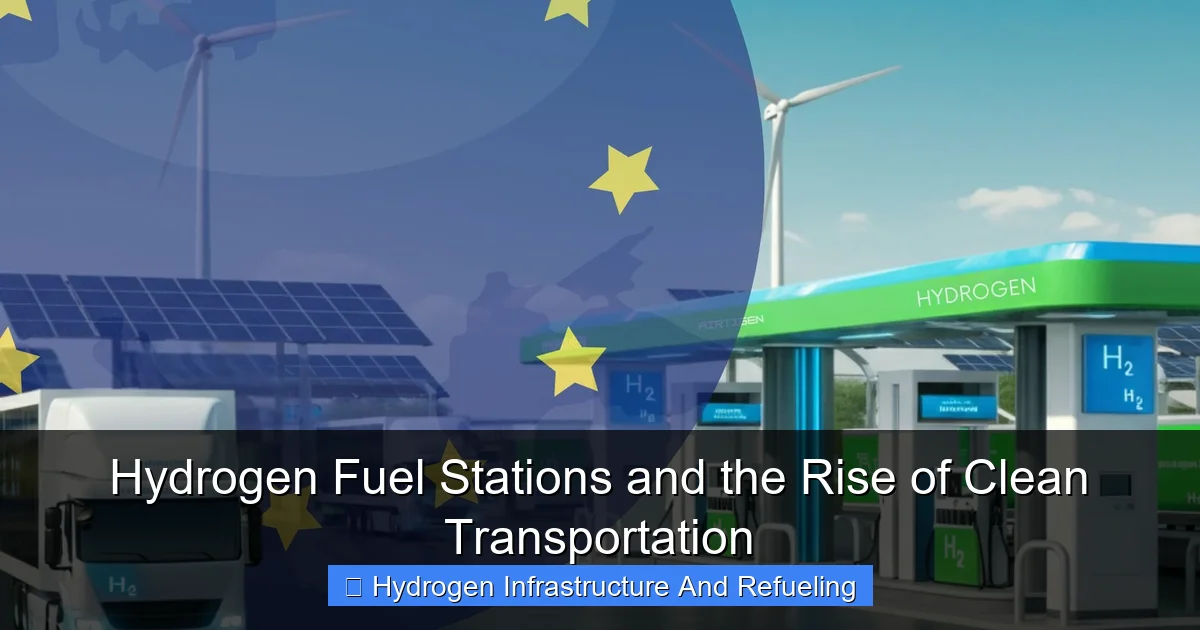
Visual guide about Hydrogen Fuel Stations and the Rise of Clean Transportation
Image source: hydrogenfuelnews.com
At their core, hydrogen fuel stations are refueling points where hydrogen gas is dispensed into vehicles equipped with fuel cell systems. These stations look and function similarly to traditional gas stations, but instead of pumping liquid fuel, they deliver compressed hydrogen gas directly into a vehicle’s onboard tank.
How Do They Work?
When you pull up to a hydrogen fuel station, the process is straightforward. A dispenser connects to your vehicle’s fuel inlet, and high-pressure hydrogen gas (typically stored at 350 or 700 bar) is pumped into the tank. This hydrogen then travels to the fuel cell stack inside the vehicle, where it reacts with oxygen from the air to produce electricity. That electricity powers the motor, and the only byproduct? Pure water vapor.
The entire refueling process takes about 3 to 5 minutes—comparable to filling up a gas-powered car. This speed is one of hydrogen’s biggest advantages over battery-electric vehicles, which can take 30 minutes to several hours to recharge, depending on the charger type.
Types of Hydrogen Fuel Stations
Not all hydrogen stations are created equal. There are three main types:
- Retail Stations: Open to the public, these are the most visible and user-friendly. Located in cities and along highways, they serve passenger cars and light-duty vehicles. Examples include stations in California’s Hydrogen Highway Network and along Germany’s H2 Mobility initiative.
- Fleet Stations: Designed for commercial or government fleets, such as buses, delivery trucks, or taxis. These are often located at depots and refuel multiple vehicles overnight or during shifts. For instance, transit agencies in cities like Aberdeen, Scotland, and Foshan, China, operate hydrogen bus fleets with dedicated refueling infrastructure.
- Mobile or Temporary Stations: Used for events, demonstrations, or in areas without permanent infrastructure. These portable units can be transported by truck and set up quickly, helping to test demand and support early adopters.
Components of a Hydrogen Station
A typical hydrogen fuel station includes several key components:
- Hydrogen Storage Tanks: High-pressure tanks store compressed hydrogen gas safely on-site. These are often buried or shielded for safety.
- Compressors: Needed to increase the pressure of hydrogen before dispensing, especially for 700-bar systems used in passenger cars.
- Dispensers: Similar to gasoline pumps, but designed to handle high-pressure gas and prevent leaks.
- Cooling Systems: Hydrogen must be cooled during refueling to prevent overheating and ensure safe, efficient filling.
- Safety Systems: Include leak detectors, emergency shut-offs, fire suppression, and ventilation to protect users and equipment.
Safety is a top priority. Hydrogen is flammable, but it’s also lighter than air, so any leaks tend to rise and dissipate quickly. Modern stations are built with multiple layers of protection, and strict regulations govern their design and operation.
The Role of Hydrogen in Clean Transportation
Hydrogen fuel cell vehicles are more than just a novelty—they’re a critical piece of the clean transportation puzzle. While battery-electric vehicles (BEVs) have dominated headlines, hydrogen offers unique advantages, especially for certain types of travel and industries.
Zero Emissions at the Tailpipe
The most obvious benefit of hydrogen vehicles is their environmental impact—or lack thereof. When powered by hydrogen, fuel cell vehicles emit only water vapor and warm air. No carbon dioxide, no nitrogen oxides, no particulate matter. This makes them ideal for improving air quality in cities and reducing greenhouse gas emissions.
But it’s important to note: the environmental benefit depends on how the hydrogen is produced. If hydrogen is made using fossil fuels (known as “gray hydrogen”), the overall emissions can still be high. However, when hydrogen is produced using renewable energy—like wind or solar—through a process called electrolysis, it becomes “green hydrogen,” and the entire lifecycle is nearly emission-free.
Fast Refueling and Long Range
One of the biggest drawbacks of battery-electric vehicles is charging time. Even with fast chargers, it can take 20–40 minutes to get an 80% charge. For long-distance travel or commercial use, this downtime adds up.
Hydrogen vehicles solve this problem. Refueling takes just a few minutes, and most FCVs offer a range of 300–400 miles on a single tank—comparable to gasoline cars. This makes hydrogen ideal for road trips, delivery services, and public transportation, where time is money.
For example, the Toyota Mirai and Hyundai NEXO, two popular hydrogen-powered sedans, can travel over 400 miles and refuel in under five minutes. That’s a game-changer for drivers who need convenience without compromise.
Perfect for Heavy-Duty Transport
While batteries work well for passenger cars, they struggle with heavy-duty applications. Large trucks, buses, and trains require a lot of energy, and batteries become too heavy and bulky to be practical.
Hydrogen, on the other hand, has a high energy density by weight. This means hydrogen-powered trucks and buses can carry heavy loads over long distances without sacrificing performance. Companies like Nikola, Hyzon, and Toyota are already developing hydrogen-powered semi-trucks for freight transport.
In public transit, cities are turning to hydrogen buses. For instance, London has deployed over 20 hydrogen buses as part of its effort to clean up urban air. These buses run on fixed routes, refuel at centralized stations, and provide quiet, emission-free service.
Complementing, Not Replacing, Electric Vehicles
It’s easy to frame hydrogen and battery-electric vehicles as competitors, but they’re better seen as partners. Each has strengths that suit different needs.
- BEVs: Best for short- to medium-range driving, urban commuting, and home charging.
- FCVs: Ideal for long-range travel, heavy-duty transport, and applications where fast refueling is essential.
A balanced clean transportation ecosystem will likely include both technologies. Just as we have different tools for different jobs, we’ll need different fuels for different vehicles.
Global Growth of Hydrogen Fuel Stations
The number of hydrogen fuel stations is growing fast. As of 2024, there are over 1,000 hydrogen refueling stations operating worldwide, with hundreds more in development. This expansion is being driven by government support, private investment, and increasing demand for clean transport.
Leading Countries in Hydrogen Infrastructure
- Japan: A global leader in hydrogen technology, Japan has over 160 hydrogen stations and aims to have 900 by 2030. The government’s “Basic Hydrogen Strategy” supports research, infrastructure, and public awareness. Toyota and Honda, both based in Japan, have been pioneers in FCV development.
- South Korea: With more than 200 stations, South Korea is building one of the world’s most advanced hydrogen networks. The government plans to deploy 1,200 stations and 200,000 hydrogen vehicles by 2030. Hyundai’s NEXO is a flagship model in this effort.
- Germany: Europe’s largest hydrogen market, Germany has over 100 stations and is expanding rapidly through the H2 Mobility initiative. The country is investing heavily in green hydrogen and aims to become a leader in hydrogen technology.
- United States: California leads the U.S. with over 60 hydrogen stations, mostly in the Bay Area and Los Angeles. The state’s Zero-Emission Vehicle (ZEV) mandate and clean fuel programs have driven adoption. Other states, like New York and Connecticut, are beginning to build their own networks.
- China: While still developing, China is investing billions in hydrogen. Cities like Foshan and Shanghai are testing hydrogen buses and trucks, and the government has included hydrogen in its national energy strategy.
Challenges to Expansion
Despite progress, hydrogen infrastructure faces several hurdles:
- High Costs: Building a hydrogen station can cost $1–2 million, compared to $50,000–$150,000 for a fast EV charger. This makes scaling up expensive.
- Limited Vehicle Availability: Only a few hydrogen models are available to consumers, and they’re often priced higher than EVs or gas cars.
- Hydrogen Production: Most hydrogen today is made from natural gas, not renewables. Scaling up green hydrogen production is essential for true sustainability.
- Public Awareness: Many people don’t know hydrogen vehicles exist, let alone how they work. Education and outreach are needed.
However, these challenges are being addressed. Costs are falling as technology improves and production scales up. Automakers are introducing new models, and governments are offering incentives to build stations and buy vehicles.
How Hydrogen Is Produced: The Path to Green Fuel
Not all hydrogen is created equal. The environmental impact of hydrogen vehicles depends heavily on how the hydrogen is made. Understanding the different production methods is key to evaluating hydrogen’s role in clean transportation.
Gray, Blue, and Green Hydrogen
- Gray Hydrogen: Produced from natural gas through steam methane reforming (SMR). This is the most common method today, but it releases carbon dioxide, making it less sustainable.
- Blue Hydrogen: Also made from natural gas, but the CO2 emissions are captured and stored (carbon capture and storage, or CCS). This reduces emissions but still relies on fossil fuels.
- Green Hydrogen: Produced by splitting water into hydrogen and oxygen using renewable electricity (electrolysis). This method emits no greenhouse gases and is the gold standard for clean hydrogen.
Currently, over 95% of hydrogen is gray or blue. But the shift to green hydrogen is accelerating. Countries like Germany, Australia, and Canada are investing in large-scale electrolysis plants powered by wind and solar. The goal is to make green hydrogen cost-competitive with fossil-based hydrogen by 2030.
The Role of Renewable Energy
Green hydrogen only makes sense if it’s powered by clean energy. Fortunately, the cost of solar and wind power has plummeted in recent years, making electrolysis more affordable. In sunny or windy regions, producing hydrogen during off-peak hours can even help balance the grid.
For example, in Australia, the Asian Renewable Energy Hub plans to use 14 gigawatts of wind and solar to produce green hydrogen for export. Similarly, Iceland and Norway are leveraging their abundant geothermal and hydroelectric power to produce clean hydrogen.
Hydrogen as Energy Storage
Beyond transportation, hydrogen can store excess renewable energy. When the sun shines or the wind blows, but demand is low, that energy can be used to produce hydrogen. Later, when energy is needed, the hydrogen can be converted back to electricity in a fuel cell or burned in a turbine.
This makes hydrogen a valuable tool for grid stability and energy independence. It’s like a giant battery, but one that can store energy for weeks or months—something batteries can’t do efficiently.
Future Outlook: What’s Next for Hydrogen Transportation?
The future of hydrogen in transportation looks promising, but it’s not without uncertainty. Several trends will shape the next decade:
Government Policies and Incentives
Governments around the world are rolling out policies to support hydrogen. The U.S. Inflation Reduction Act includes tax credits for clean hydrogen production. The European Union’s REPowerEU plan aims to produce 10 million tons of green hydrogen by 2030. Japan and South Korea have national hydrogen roadmaps with clear targets and funding.
These policies are critical. They reduce risk for investors, lower costs for consumers, and accelerate infrastructure development.
Automaker Commitment
Major automakers are betting on hydrogen. Toyota, Hyundai, and Honda continue to develop and sell FCVs. General Motors and Ford are investing in hydrogen trucks. Even luxury brands like BMW and Mercedes-Benz are exploring hydrogen options.
At the same time, startups like Nikola and Hyzon are focusing entirely on hydrogen-powered commercial vehicles. Their success will depend on building reliable vehicles and securing fleet customers.
Technological Advances
Innovation is making hydrogen more viable. New electrolyzers are more efficient and durable. Fuel cells are becoming cheaper and longer-lasting. Storage tanks are lighter and safer.
One exciting development is liquid organic hydrogen carriers (LOHCs), which allow hydrogen to be stored and transported in liquid form at ambient pressure. This could revolutionize hydrogen logistics, making it easier to ship across long distances.
Public Acceptance and Education
For hydrogen to succeed, people need to trust it. Safety concerns—however unfounded—can slow adoption. Public education campaigns, transparent safety data, and visible infrastructure (like stations in city centers) can help build confidence.
Test drives, ride-sharing programs, and partnerships with ride-hailing services (like Uber or Lyft) can also introduce more people to hydrogen vehicles.
Integration with Other Clean Technologies
The future isn’t just about hydrogen—it’s about integration. Smart cities will combine hydrogen stations with EV chargers, public transit, bike-sharing, and renewable energy grids. A seamless, multimodal transportation system will give people more clean options.
For example, a commuter might drive a hydrogen car to a transit hub, take a hydrogen-powered train to the city, and finish with an e-bike. All powered by clean energy.
Conclusion
Hydrogen fuel stations are more than just a niche innovation—they’re a vital part of the clean transportation revolution. By enabling fast, zero-emission refueling, they address key limitations of battery-electric vehicles and open new possibilities for heavy-duty and long-range travel.
While challenges remain—cost, production methods, and public awareness—the momentum is undeniable. With strong government support, technological progress, and growing infrastructure, hydrogen is poised to play a major role in decarbonizing transportation.
The road ahead won’t be easy, but it’s one worth traveling. As hydrogen stations multiply and more drivers experience the convenience and clean power of fuel cell vehicles, we move closer to a future where clean transportation isn’t just possible—it’s the norm.
Whether you’re a commuter, a fleet manager, or a policy maker, now is the time to pay attention to hydrogen. It’s not just the future of fuel—it’s the future of freedom, sustainability, and innovation on the road.
Frequently Asked Questions
How safe are hydrogen fuel stations?
Hydrogen fuel stations are designed with multiple safety features, including leak detectors, emergency shut-offs, and ventilation systems. Hydrogen is flammable but lighter than air, so leaks rise and dissipate quickly, reducing fire risk. Strict regulations ensure safe operation.
How long does it take to refuel a hydrogen car?
Refueling a hydrogen vehicle takes about 3 to 5 minutes, similar to filling up a gasoline car. This is much faster than charging most electric vehicles, making hydrogen ideal for long trips and commercial use.
Where can I find a hydrogen fuel station?
Hydrogen stations are currently concentrated in countries like Japan, South Korea, Germany, and the U.S. (especially California). Use apps like H2.Live or PlugShare to locate stations near you.
Are hydrogen cars more expensive than electric cars?
Currently, hydrogen vehicles tend to have higher upfront costs than battery-electric cars, but prices are expected to fall as production scales up. Government incentives can also help offset the cost.
Can hydrogen be produced sustainably?
Yes, when hydrogen is made using renewable energy (like wind or solar) through electrolysis, it’s called green hydrogen and has minimal environmental impact. This is the goal for a truly clean fuel.
Will hydrogen replace electric vehicles?
Not likely. Hydrogen and electric vehicles serve different needs. EVs are great for city driving and short trips, while hydrogen excels in long-range and heavy-duty applications. Both will play roles in clean transportation.