Hydrogen fueling stations are key to the clean transportation revolution, but their costs and pricing remain complex and evolving. From multimillion-dollar installations to fluctuating fuel prices, understanding the financial landscape is crucial for consumers, businesses, and policymakers.
Imagine pulling up to a fueling station, connecting a nozzle, and refueling your car in under five minutes—just like gasoline. But instead of emitting fumes, your vehicle releases only water vapor. This isn’t science fiction. It’s the promise of hydrogen fuel cell vehicles (FCEVs), and the key to making them mainstream lies in hydrogen fueling stations.
Hydrogen fueling stations are the backbone of the hydrogen economy. They’re where hydrogen gas is stored, compressed, and dispensed into vehicles. But behind this clean, futuristic vision is a complex financial reality. Building and operating these stations is expensive, and the price of hydrogen fuel is still high compared to gasoline or electricity. Yet, as the world pushes toward decarbonization, hydrogen is gaining momentum—especially for heavy-duty transport, buses, and industrial applications.
Understanding the costs and pricing of hydrogen fueling stations is essential. Whether you’re a fleet manager considering FCEVs, a policymaker planning infrastructure, or a curious consumer, knowing what drives these numbers helps you make informed decisions. In this article, we’ll break down the full picture: from construction expenses to fuel pricing, government support, and future trends. Let’s dive in.
Key Takeaways
- High upfront costs: Building a hydrogen fueling station can cost between $1 million and $3 million, depending on size and technology.
- Production method matters: Green hydrogen from renewable energy is cleaner but more expensive than gray hydrogen from natural gas.
- Fuel pricing varies widely: Hydrogen fuel costs range from $12 to $16 per kilogram in the U.S., influenced by location and production.
- Government incentives help: Tax credits and grants, like those in the Inflation Reduction Act, significantly reduce costs for station developers.
- Maintenance and operation add up: Ongoing costs include electricity, labor, safety systems, and equipment upkeep.
- Economies of scale are coming: As demand grows, station costs and hydrogen prices are expected to drop over time.
- Refueling speed and convenience: Hydrogen stations offer quick refueling, similar to gasoline, making them ideal for fleets and long-haul transport.
📑 Table of Contents
- What Is a Hydrogen Fueling Station?
- Breaking Down the Costs of Building a Hydrogen Fueling Station
- Operating Costs: What It Takes to Run a Station
- Hydrogen Fuel Pricing: What Drivers Pay at the Pump
- Government Incentives and Financial Support
- The Future of Hydrogen Station Costs and Pricing
- Practical Tips for Consumers and Businesses
- Conclusion
What Is a Hydrogen Fueling Station?
A hydrogen fueling station is a facility that dispenses compressed hydrogen gas to fuel cell electric vehicles. Unlike battery electric vehicles (BEVs), which recharge over time, FCEVs refuel quickly—often in 3 to 5 minutes—making them ideal for long-haul trucks, buses, and taxis that need minimal downtime.
These stations come in different types, depending on how the hydrogen is produced and delivered. Some stations produce hydrogen on-site using electrolysis (splitting water into hydrogen and oxygen with electricity), while others receive hydrogen via truck or pipeline from centralized production plants. The choice affects both cost and environmental impact.
On-site production, especially using renewable energy (called green hydrogen), is cleaner but more expensive due to the cost of electrolyzers and electricity. Delivered hydrogen, often made from natural gas (gray hydrogen), is cheaper but less sustainable. Many stations today use a mix, balancing cost and emissions.
Hydrogen must be stored at high pressure—typically 350 or 700 bar—to provide enough range for vehicles. This requires robust, specialized equipment, including compressors, storage tanks, and dispensers. Safety is also critical, as hydrogen is flammable and lighter than air, requiring careful handling and ventilation.
Breaking Down the Costs of Building a Hydrogen Fueling Station
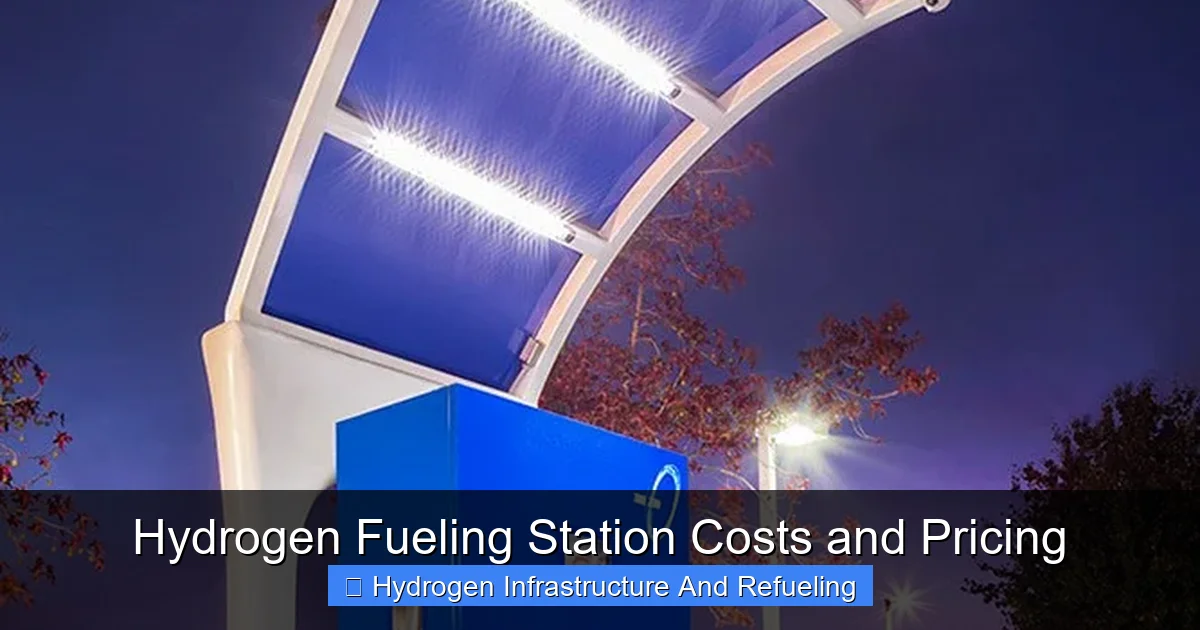
Visual guide about Hydrogen Fueling Station Costs and Pricing
Image source: driveclean.ca.gov
Building a hydrogen fueling station is a major investment. Costs vary widely based on location, size, technology, and whether hydrogen is produced on-site or delivered. But on average, you’re looking at $1 million to $3 million per station.
Capital Expenditures (CapEx)
The largest chunk of the cost comes from upfront capital expenditures. These include equipment, land, permitting, and construction.
– Hydrogen production equipment: If the station produces hydrogen on-site, electrolyzers are a major expense. A typical 1 MW electrolyzer system can cost $1–$2 million. Larger systems scale up in price but offer better efficiency.
– Compression and storage: Hydrogen must be compressed to high pressures for vehicle use. Compressors can cost $500,000 to $1 million, depending on capacity. High-pressure storage tanks add another $200,000 to $500,000.
– Dispensers and safety systems: Dispensers for 700-bar fueling can cost $100,000 to $150,000 each. Safety systems—like gas detectors, emergency shutoffs, and ventilation—add $100,000 or more.
– Land and site preparation: Land costs vary by region. In urban areas, securing a site can be expensive. Site prep—including foundations, electrical connections, and fencing—can run $200,000 to $500,000.
– Permitting and regulatory compliance: Hydrogen stations face strict safety regulations. Permitting can take months and cost $50,000 to $150,000, depending on local requirements.
For example, the True Zero network in California—one of the largest hydrogen station operators—has built stations for around $2 million each. These stations typically serve 100–200 kg of hydrogen per day, enough for 20–40 vehicles.
Delivery vs. On-Site Production
One of the biggest cost decisions is whether to produce hydrogen on-site or have it delivered.
– Delivered hydrogen: This is the most common model today. A tube trailer delivers compressed hydrogen from a central plant. The station only needs storage, compression, and dispensing equipment. This reduces CapEx to $1–$1.5 million but increases operating costs due to delivery fees and hydrogen price markups.
– On-site production: Electrolysis allows stations to make hydrogen using electricity. This eliminates delivery costs and can lower long-term fuel prices—especially if powered by solar or wind. However, the electrolyzer and power infrastructure push CapEx to $2–$3 million or more.
A real-world example is the H2@Scale project in California, where stations use solar-powered electrolysis. While the initial investment is high, the long-term savings on fuel and delivery make it attractive for high-volume locations.
Operating Costs: What It Takes to Run a Station
Once a hydrogen fueling station is built, the real work begins. Operating costs (OpEx) include electricity, labor, maintenance, insurance, and hydrogen procurement.
Electricity and Hydrogen Procurement
Electricity is the biggest ongoing cost—especially for on-site production. Electrolysis requires about 50–55 kWh to produce 1 kg of hydrogen. At an average industrial electricity rate of $0.10/kWh, that’s $5–$5.50 per kg just for power.
If hydrogen is delivered, the cost depends on the production method and transportation. Gray hydrogen (from natural gas) costs $1–$2/kg to produce but sells for $6–$10/kg at the station due to processing and delivery. Green hydrogen, made with renewable energy, costs $3–$6/kg to produce and sells for $10–$16/kg.
For example, in California, where most hydrogen is delivered, the average price at the pump is around $13–$16 per kg. In regions with cheap renewable electricity, like parts of Texas or the Middle East, green hydrogen could eventually drop below $5/kg.
Labor and Maintenance
Hydrogen stations require trained technicians for operation and maintenance. A typical station might need one full-time employee, costing $60,000–$80,000 per year including benefits.
Maintenance includes:
– Regular inspection of compressors and storage tanks
– Replacement of seals and valves
– Calibration of dispensers
– Safety system checks
Annual maintenance can cost $50,000 to $100,000, depending on usage and equipment age.
Insurance and Regulatory Compliance
Because hydrogen is flammable, insurance premiums are higher than for gasoline stations. Annual insurance can range from $20,000 to $50,000. Ongoing compliance with safety standards (like NFPA 2) also requires training, documentation, and audits, adding to administrative costs.
Hydrogen Fuel Pricing: What Drivers Pay at the Pump
So, how much does it actually cost to fill up a hydrogen car? The answer depends on location, production method, and station ownership.
In the U.S., hydrogen fuel is sold by the kilogram. A typical FCEV like the Toyota Mirai or Hyundai NEXO has a range of 300–400 miles and uses about 1 kg of hydrogen per 60–70 miles. That means a full tank (5–6 kg) costs $60–$96 at current prices.
Current Pricing Trends
As of 2024, hydrogen fuel prices in the U.S. range from $12 to $16 per kg. California has the most stations and the most transparent pricing, with averages around $13–$15/kg. In other states, prices can be higher due to lower station density and higher delivery costs.
For comparison:
– Gasoline: $3.50/gallon, with a 30 mpg car costing about $0.12 per mile.
– Electricity: $0.15/kWh, with a BEV costing about $0.04 per mile.
– Hydrogen: $14/kg, with an FCEV costing about $0.20 per mile.
While hydrogen is currently more expensive per mile, it offers faster refueling and longer range—advantages for commercial fleets.
Factors Influencing Fuel Price
Several factors drive hydrogen pricing:
– Production method: Green hydrogen is 2–3 times more expensive than gray hydrogen.
– Delivery distance: Transporting hydrogen over long distances increases cost due to energy loss and trailer fees.
– Station utilization: Stations with low traffic can’t spread fixed costs over many sales, leading to higher prices.
– Government subsidies: In California, the Low Carbon Fuel Standard (LCFS) provides credits that can reduce the effective price for consumers.
For example, some stations in California offer hydrogen for $9.99/kg during promotions, thanks to LCFS credits. Without subsidies, the price would be much higher.
Government Incentives and Financial Support
Building hydrogen infrastructure is expensive, but governments are stepping in to help. Incentives are crucial for making stations economically viable and accelerating adoption.
Federal Support in the U.S.
The Inflation Reduction Act (IRA) of 2022 includes major incentives for hydrogen:
– 45V Tax Credit: Up to $3/kg for clean hydrogen produced with low carbon emissions. This can cut production costs by 50% or more.
– Investment Tax Credit (ITC): Up to 30% credit for hydrogen production facilities and fueling stations.
– Bipartisan Infrastructure Law: $8 billion for regional clean hydrogen hubs, including funding for refueling infrastructure.
These programs are designed to jumpstart the hydrogen economy, especially for green hydrogen.
State and Local Programs
California leads the way with aggressive support:
– Clean Transportation Program: Provides grants for hydrogen station development.
– LCFS Credits: Stations earn credits for low-carbon fuel, which can be sold to offset costs.
– Rebates for FCEVs: Up to $5,000 for consumers, increasing demand and station utilization.
Other states like New York, Texas, and Washington are launching similar programs. The Hydrogen Forward coalition estimates that federal and state incentives could reduce station costs by 40–60% over the next decade.
The Future of Hydrogen Station Costs and Pricing
The hydrogen economy is still in its early stages, but costs are expected to fall significantly as technology improves and demand grows.
Economies of Scale
As more FCEVs hit the road, station utilization will increase, spreading fixed costs over more sales. High-traffic stations could see hydrogen prices drop to $8–$10/kg within 5–10 years.
Manufacturing scale will also reduce equipment costs. Electrolyzer prices are expected to fall by 50% by 2030, according to the International Energy Agency (IEA). Compressors and storage systems will follow.
Technological Advances
New technologies could revolutionize hydrogen production and distribution:
– Solid oxide electrolysis: More efficient than traditional methods, potentially cutting electricity use by 20%.
– Liquid hydrogen transport: Cooling hydrogen to liquid form increases storage density, reducing delivery costs.
– Modular stations: Prefabricated, scalable designs could cut construction time and cost by 30%.
For example, Plug Power and Hy Stor Energy are developing modular hydrogen stations that can be deployed quickly in urban and rural areas.
Global Trends
Countries like Germany, Japan, and South Korea are investing heavily in hydrogen infrastructure. Japan aims for 900 stations by 2030, while Germany plans 100 by 2025. These efforts are driving down global costs through shared R&D and supply chains.
In the Middle East, countries like Saudi Arabia and the UAE are leveraging cheap solar power to produce green hydrogen at scale, with export potential to Europe and Asia.
Practical Tips for Consumers and Businesses
Whether you’re considering buying an FCEV or investing in hydrogen infrastructure, here are some practical tips:
– Check station availability: Use apps like H2.Live or the Alternative Fuels Data Center to find nearby stations.
– Compare total cost of ownership: Include fuel, maintenance, and incentives when comparing FCEVs to BEVs or gasoline cars.
– Look for incentives: Federal and state programs can significantly reduce vehicle and fuel costs.
– Consider fleet applications: Hydrogen is ideal for buses, trucks, and delivery vehicles that need fast refueling and long range.
– Plan for the future: As infrastructure grows, hydrogen prices will likely fall, making FCEVs more competitive.
For businesses, partnering with hydrogen producers or joining hydrogen hubs can reduce risk and access funding.
Conclusion
Hydrogen fueling stations represent a bold step toward a clean energy future. While the costs are high today—both for building stations and buying fuel—the trajectory is clear: prices are falling, technology is improving, and government support is growing.
From $2 million stations to $14/kg fuel, the numbers may seem daunting. But remember, early adopters of electric vehicles faced similar challenges. Today, BEVs are mainstream, and charging infrastructure is widespread. Hydrogen is on a similar path, especially for applications where batteries fall short.
The key to success is scale. As more vehicles use hydrogen, more stations will be built, driving down costs through economies of scale and innovation. With the right policies and investments, hydrogen could become a cornerstone of sustainable transportation.
So, while hydrogen fueling station costs and pricing are complex, they’re not insurmountable. The future of clean mobility isn’t just electric—it’s also hydrogen.
Frequently Asked Questions
How much does it cost to build a hydrogen fueling station?
Building a hydrogen fueling station typically costs between $1 million and $3 million, depending on size, location, and whether hydrogen is produced on-site or delivered. On-site production increases costs but can lower long-term fuel expenses.
Why is hydrogen fuel so expensive?
Hydrogen fuel is expensive due to high production costs, especially for green hydrogen, and the energy-intensive process of compression and delivery. Currently, prices range from $12 to $16 per kilogram in the U.S.
Are there government incentives for hydrogen stations?
Yes, the U.S. offers federal tax credits like the 45V clean hydrogen credit and investment tax credits. States like California provide grants and LCFS credits to reduce station development and operating costs.
How long does it take to refuel a hydrogen car?
Refueling a hydrogen fuel cell vehicle takes 3 to 5 minutes, similar to gasoline. This makes it ideal for fleets and long-haul transport that need minimal downtime.
Is hydrogen fueling safer than gasoline?
Hydrogen is flammable, but it disperses quickly in air, reducing explosion risk. Stations use advanced safety systems, and hydrogen has been used safely in industrial applications for decades.
Will hydrogen fuel prices go down in the future?
Yes, as production scales up, technology improves, and government support continues, hydrogen fuel prices are expected to drop significantly—possibly below $8/kg by 2030.