Hydrogen fueling stations are key to a zero-emission future, but building the infrastructure faces big hurdles like cost, safety, and distribution. From production to public adoption, this article breaks down the real challenges and what’s being done to overcome them.
Key Takeaways
- Limited station availability: As of 2024, there are fewer than 1,000 hydrogen fueling stations worldwide, mostly concentrated in California, Japan, and parts of Europe, making long-distance travel difficult.
- High infrastructure costs: Building a single hydrogen station can cost between $1 million and $3 million, significantly more than electric charging stations, due to complex storage and safety requirements.
- Hydrogen production challenges: Over 95% of hydrogen is currently produced from fossil fuels (gray hydrogen), undermining its environmental benefits unless green hydrogen from renewable energy becomes mainstream.
- Storage and transportation difficulties: Hydrogen is highly flammable and requires high-pressure tanks or cryogenic temperatures, making it harder and more expensive to transport than gasoline or electricity.
- Safety and public perception: Despite rigorous safety standards, public concern about hydrogen explosions—fueled by historical events like the Hindenburg—remains a barrier to widespread acceptance.
- Government and industry collaboration needed: Scaling hydrogen infrastructure requires coordinated investment, policy support, and partnerships between automakers, energy companies, and governments.
- Emerging innovations offer hope: Advances in electrolysis, pipeline blending, and mobile refueling units are helping reduce costs and improve efficiency in the hydrogen supply chain.
📑 Table of Contents
Introduction: The Promise of Hydrogen-Powered Transportation
Imagine driving a car that emits nothing but water vapor—no smog, no carbon dioxide, just clean air behind you. That’s the promise of hydrogen fuel cell vehicles (FCEVs), which generate electricity on board using hydrogen and oxygen, producing only water as a byproduct. These vehicles offer quick refueling—similar to gasoline cars—and long driving ranges, making them an attractive alternative to battery electric vehicles (BEVs), especially for heavy-duty transport like trucks, buses, and even trains.
But for hydrogen-powered transportation to become mainstream, one critical piece is missing: a reliable and widespread network of hydrogen fueling stations. Unlike electric charging stations, which can be installed almost anywhere with access to the grid, hydrogen refueling infrastructure is far more complex and expensive to build. The lack of stations is one of the biggest roadblocks to consumer adoption. If you can’t refuel easily, even the cleanest, most efficient vehicle won’t sell.
The Current State of Hydrogen Fueling Infrastructure
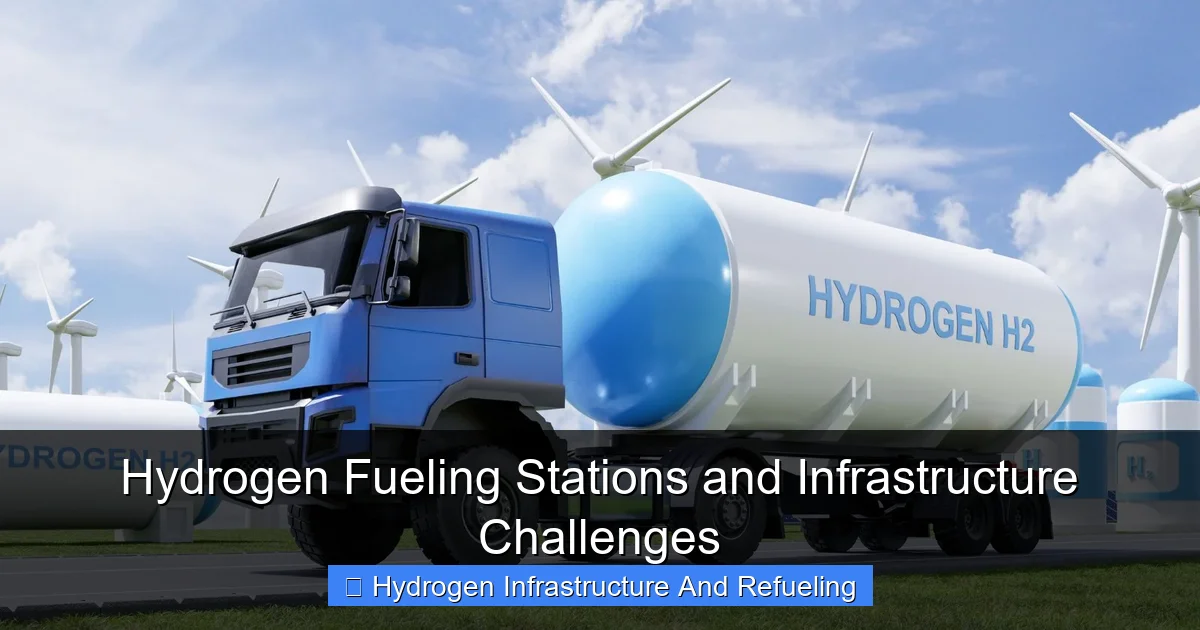
Visual guide about Hydrogen Fueling Stations and Infrastructure Challenges
Image source: hydrogenfuelnews.com
As of 2024, the global hydrogen refueling network is still in its infancy. According to the International Energy Agency (IEA), there are fewer than 1,000 hydrogen fueling stations operating worldwide. The majority are clustered in a few key regions: California leads in the U.S. with over 60 stations, Japan has around 160, and Germany and South Korea are rapidly expanding their networks. China is also investing heavily, with plans to build hundreds of stations in the coming years.
This geographic concentration creates a “chicken-and-egg” problem. Automakers are hesitant to mass-produce FCEVs without a robust refueling network, and energy companies are reluctant to invest in stations without enough vehicles on the road to justify the cost. For example, Toyota’s Mirai and Hyundai’s NEXO are available in limited markets, primarily where hydrogen stations exist. Without broader infrastructure, these vehicles remain niche products.
Types of Hydrogen Fueling Stations
Hydrogen fueling stations come in different forms, depending on their source of hydrogen and how it’s delivered:
- On-site production stations: These generate hydrogen directly at the station using electrolysis (splitting water into hydrogen and oxygen with electricity). If powered by renewable energy, this method produces “green hydrogen,” the most sustainable option. However, on-site production is currently expensive and energy-intensive.
- Delivered hydrogen stations: Most existing stations receive hydrogen via truck from centralized production facilities. This method is more common but adds transportation costs and emissions, especially if the hydrogen is produced from natural gas (gray hydrogen).
- Pipeline-fed stations: In regions with hydrogen pipelines—like parts of the U.S. Gulf Coast and Europe—stations can receive a steady supply directly through pipelines. This is the most efficient method but requires significant upfront investment in pipeline infrastructure.
Each type has trade-offs in cost, scalability, and environmental impact. On-site green hydrogen is ideal but not yet economically viable at scale. Delivered hydrogen is more practical today but less sustainable unless the source is clean.
Real-World Examples of Hydrogen Infrastructure
Let’s look at a few real-world examples to understand how hydrogen infrastructure is evolving:
- California’s Hydrogen Highway: Since the early 2000s, California has been a pioneer in hydrogen infrastructure. The state’s Zero Emission Vehicle (ZEV) mandate has driven investment, with companies like Shell, Air Liquide, and TrueZero building stations across major cities. The goal is to have 200 stations by 2025, supporting thousands of FCEVs.
- Japan’s Hydrogen Society Vision: Japan aims to become a “hydrogen society” by 2050. The government has subsidized over 160 stations and supports hydrogen use in homes, power plants, and transportation. Toyota and Honda are key players, with FCEVs integrated into public transit and taxi fleets.
- Germany’s H2 Mobility Initiative: A public-private partnership has built over 100 stations across Germany, with plans to reach 200 by 2025. The network supports passenger cars, delivery vans, and even hydrogen-powered trains in regions like the Rhine-Main area.
These examples show that progress is possible—but it requires strong government support, industry collaboration, and long-term vision.
Major Infrastructure Challenges
Despite the promise, building a hydrogen refueling network faces significant hurdles. These challenges span technology, economics, safety, and public perception.
High Capital and Operational Costs
One of the biggest barriers is cost. Building a hydrogen fueling station can range from $1 million to $3 million, depending on size and technology. In comparison, a fast-charging EV station costs between $100,000 and $500,000. The high price tag comes from several factors:
- Compression and storage: Hydrogen must be compressed to 700 bar (over 10,000 psi) for vehicle use, requiring specialized, high-strength tanks and compressors.
- Dispensing equipment: Hydrogen dispensers must handle extreme pressures and temperatures, with precise controls to ensure safe, fast refueling.
- Land and permitting: Stations need more space than gasoline pumps due to safety buffers, and zoning laws can delay construction.
- Maintenance and staffing: Hydrogen systems require trained technicians and regular inspections, increasing operational costs.
For comparison, a single Shell hydrogen station in California cost around $2.5 million to build. With such high upfront costs, private companies are hesitant to invest without guaranteed demand.
Hydrogen Production and Sustainability
Even if we build thousands of stations, the environmental benefit depends on how the hydrogen is made. Currently, over 95% of global hydrogen is produced from fossil fuels—primarily natural gas—through a process called steam methane reforming (SMR). This “gray hydrogen” emits significant CO₂, undermining the clean image of FCEVs.
To be truly sustainable, hydrogen must be produced using renewable energy. “Green hydrogen” is made by electrolyzing water using solar, wind, or hydroelectric power. However, green hydrogen accounts for less than 1% of global production today due to high costs and limited renewable capacity.
The solution? Scale up renewable energy and improve electrolyzer efficiency. Countries like Australia, Chile, and Saudi Arabia are investing in massive green hydrogen projects. For example, Australia’s Asian Renewable Energy Hub plans to produce hydrogen using 26 gigawatts of wind and solar power—enough to supply fuel for ships, trucks, and export markets.
Storage and Transportation Challenges
Hydrogen is the lightest and smallest molecule, which makes it tricky to store and transport. It leaks easily, requires high pressure or extreme cold, and can weaken metal pipes over time (a phenomenon called hydrogen embrittlement).
There are three main ways to move hydrogen:
- High-pressure gas tubes: Hydrogen is compressed and transported in tube trailers. This is common for short distances but becomes inefficient over long hauls due to low energy density by volume.
- Liquid hydrogen (cryogenic): Cooling hydrogen to -253°C turns it into a liquid, increasing energy density. However, liquefaction is energy-intensive, and boil-off losses can occur during transport.
- Chemical carriers: Hydrogen can be bonded to other molecules, like ammonia or liquid organic carriers, for easier transport. These can be “cracked” back into hydrogen at the destination. This method is promising but still in development.
Each method has trade-offs in cost, energy use, and safety. For now, most hydrogen is delivered by truck, which limits how far it can travel economically.
Safety Concerns and Public Perception
Hydrogen has a reputation for being dangerous—thanks in part to the 1937 Hindenburg disaster. While modern hydrogen systems are far safer, public fear persists. The reality is that hydrogen is not inherently more dangerous than gasoline or natural gas, but it behaves differently.
Hydrogen is lighter than air, so it disperses quickly if leaked, reducing the risk of pooling and explosion. However, it has a wide flammability range and can ignite with a small spark. That’s why hydrogen stations include multiple safety features:
- Leak detection sensors
- Automatic shut-off valves
- Ventilation systems
- Fire suppression equipment
- Remote monitoring
Regulations like SAE J2601 set strict standards for hydrogen refueling safety. In practice, there have been very few incidents at hydrogen stations, and none have resulted in serious injuries. Still, overcoming public skepticism requires education and transparency.
Regulatory and Policy Barriers
Building hydrogen infrastructure isn’t just a technical challenge—it’s also a regulatory one. Zoning laws, building codes, and permitting processes vary widely by region and can delay projects for months or years.
For example, in some U.S. cities, hydrogen stations are classified as “hazardous facilities,” requiring special permits and large safety setbacks. This can make it hard to site stations in urban areas where they’re needed most.
Governments can help by streamlining regulations, offering incentives, and setting clear standards. California’s Hydrogen Fuel Cell Partnership brings together agencies, companies, and researchers to align policies and accelerate deployment. The European Union’s Hydrogen Strategy aims to install 1,000 hydrogen refueling stations by 2030, supported by funding and regulatory harmonization.
Technological Innovations and Future Outlook
Despite the challenges, innovation is driving progress. New technologies are making hydrogen production, storage, and refueling more efficient and affordable.
Advances in Electrolysis
Electrolyzers—the devices that split water into hydrogen and oxygen—are becoming more efficient and cheaper. Proton exchange membrane (PEM) electrolyzers, in particular, are well-suited for intermittent renewable power because they can ramp up and down quickly. Companies like Plug Power and ITM Power are scaling up production, with costs expected to fall by 60% by 2030.
Mobile and Modular Refueling
Not every location needs a permanent station. Mobile hydrogen refuelers—trucks equipped with compressors and storage tanks—can serve remote areas, construction sites, or event venues. These units can refuel multiple vehicles and return to a central depot for recharging.
Modular stations are another innovation. These prefabricated units can be deployed quickly and expanded as demand grows. They’re ideal for fleet operators, such as delivery companies or transit agencies, that want to transition to hydrogen without waiting for public infrastructure.
Hydrogen Blending in Natural Gas Pipelines
One way to jumpstart hydrogen use is by blending it into existing natural gas pipelines. Studies show that pipelines can safely carry up to 20% hydrogen without major modifications. This “blue hydrogen” approach allows for gradual integration while green hydrogen scales up.
Countries like the UK and the Netherlands are testing hydrogen blends in residential and industrial gas networks. Over time, pipelines could be converted to carry 100% hydrogen, creating a nationwide distribution system.
Hydrogen Hubs and Regional Clusters
Rather than building stations one by one, some regions are developing “hydrogen hubs”—concentrated areas where production, distribution, and use are co-located. These hubs serve multiple sectors: transportation, industry, and power generation.
The U.S. Department of Energy has selected seven regional clean hydrogen hubs across the country, backed by $7 billion in federal funding. These hubs aim to create economies of scale, reduce costs, and demonstrate the viability of hydrogen at scale.
The Path Forward: What Needs to Happen
For hydrogen fueling stations to become as common as gas stations, several things need to happen:
- Increase investment: Governments and private companies must fund infrastructure, research, and pilot projects. Public-private partnerships are key.
- Support green hydrogen: Policies should incentivize renewable-based hydrogen and phase out fossil-based production.
- Streamline regulations: Clear, consistent rules will speed up permitting and reduce costs.
- Educate the public: Transparency about safety and benefits can build trust and acceptance.
- Integrate with other clean technologies: Hydrogen should complement, not compete with, battery electric vehicles. Each has a role in decarbonizing transport.
The transition won’t happen overnight. But with the right mix of innovation, investment, and policy, hydrogen could play a major role in a clean energy future.
Conclusion: A Long Road, But a Worthy One
Hydrogen fueling stations represent a bold step toward a zero-emission transportation system. They offer fast refueling, long range, and zero tailpipe emissions—qualities that make them ideal for certain applications, especially heavy-duty and long-haul transport.
But the road to widespread adoption is long and filled with challenges. High costs, limited production of green hydrogen, storage difficulties, and public skepticism all stand in the way. Building a reliable infrastructure network requires more than just technology—it demands vision, collaboration, and sustained commitment.
The good news? Progress is being made. From California to Japan to Germany, real-world projects are proving that hydrogen infrastructure can work. With continued innovation and support, hydrogen fueling stations could one day be as common as gas pumps, helping us drive toward a cleaner, greener future.
Frequently Asked Questions
How many hydrogen fueling stations are there in the U.S.?
As of 2024, there are over 60 hydrogen fueling stations in the U.S., with the vast majority located in California. A few are also operational in Hawaii and the Northeast, but the network remains limited compared to electric charging stations.
Is hydrogen fuel safe for everyday use?
Yes, hydrogen is safe when handled properly. Modern hydrogen systems include multiple safety features like leak detectors, automatic shut-offs, and ventilation. Hydrogen disperses quickly in air, reducing explosion risks, and strict safety standards govern its use in vehicles and stations.
How long does it take to refuel a hydrogen car?
Refueling a hydrogen fuel cell vehicle takes about 3 to 5 minutes—similar to filling up a gasoline car. This is much faster than charging most electric vehicles, making hydrogen attractive for drivers who need quick turnaround times.
What is green hydrogen, and why is it important?
Green hydrogen is produced by splitting water into hydrogen and oxygen using renewable electricity, such as wind or solar. It’s important because it produces no carbon emissions, making it the most sustainable form of hydrogen and essential for achieving climate goals.
Can hydrogen be transported through existing pipelines?
Yes, but with limitations. Existing natural gas pipelines can carry up to 20% hydrogen without major modifications. For 100% hydrogen, pipelines may need upgrades to prevent leaks and embrittlement, but research is ongoing to make this feasible.
Will hydrogen cars replace electric cars?
Not likely—hydrogen and battery electric vehicles serve different needs. Battery EVs are ideal for short- to medium-range driving, while hydrogen FCEVs excel in long-haul, heavy-duty, and fleet applications. Both will play roles in a decarbonized transport system.