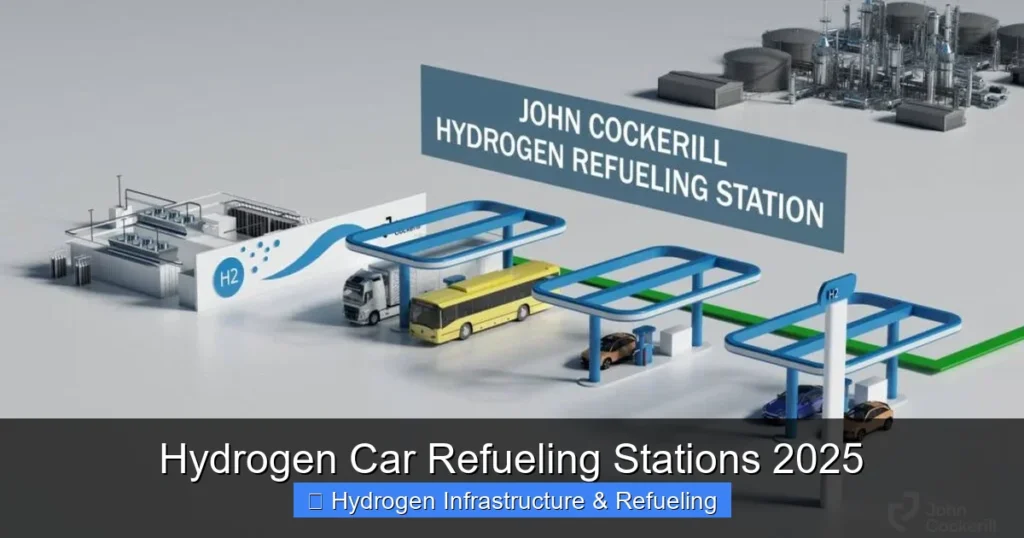
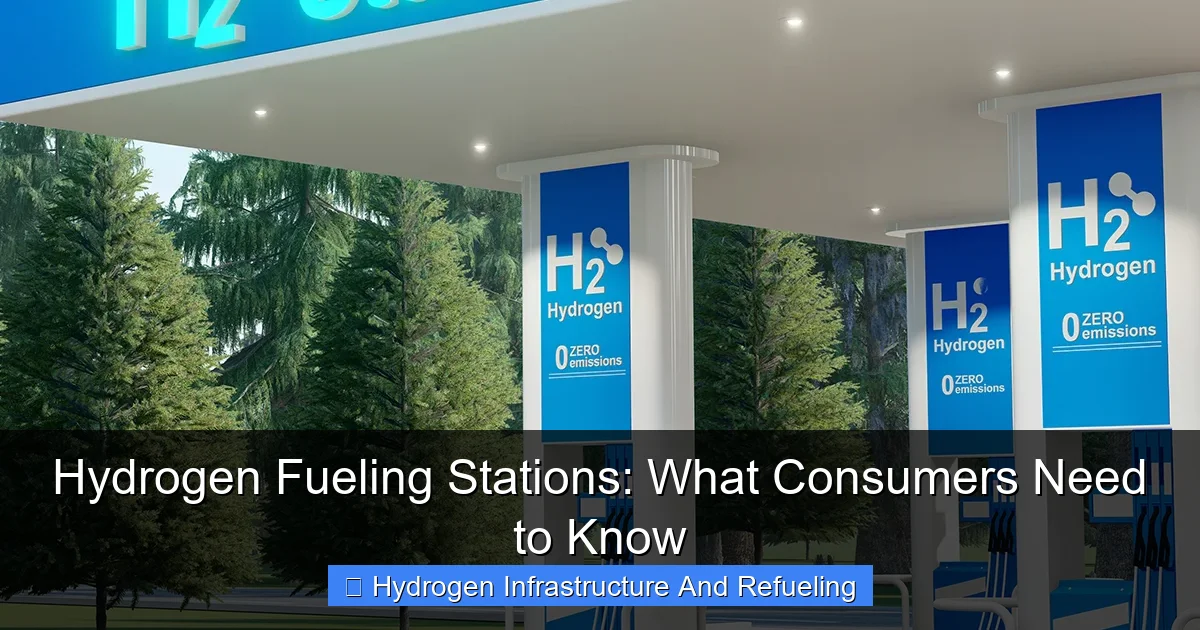
Hydrogen fueling stations are the backbone of the growing hydrogen vehicle market, offering fast refueling and zero emissions. Consumers should understand station locations, costs, safety, and vehicle compatibility before making the switch.
Key Takeaways
- Limited but growing infrastructure: Hydrogen fueling stations are currently concentrated in California and a few other regions, but expansion is underway.
- Fast refueling times: Filling up a hydrogen-powered vehicle takes about 3–5 minutes, similar to gasoline.
- Higher fuel costs: Hydrogen fuel is more expensive per mile than gasoline or electricity, though prices are expected to drop.
- Zero tailpipe emissions: The only byproduct of hydrogen fuel cell vehicles is water vapor, making them environmentally friendly.
- Vehicle compatibility matters: Only fuel cell electric vehicles (FCEVs) can use hydrogen stations—not battery electric or hybrid cars.
- Safety is a top priority: Hydrogen is highly flammable, but strict safety standards and advanced technology minimize risks.
- Government and industry support: Incentives and investments are helping accelerate the development of hydrogen infrastructure.
📑 Table of Contents
What Are Hydrogen Fueling Stations?
Hydrogen fueling stations are specialized refueling facilities designed to supply compressed hydrogen gas to fuel cell electric vehicles (FCEVs). Unlike traditional gas stations or electric vehicle (EV) charging points, these stations deliver hydrogen directly into a vehicle’s onboard tank, where it reacts with oxygen in a fuel cell to produce electricity—powering the car and emitting only water vapor.
Think of a hydrogen fueling station as a hybrid between a gas station and an EV charger. It pumps fuel like a gas station, but the fuel itself is clean and renewable when produced using green methods. The process is simple: you pull up, connect the nozzle, and fill your tank in just a few minutes. No long waits, no cords, and no emissions.
These stations are part of a broader effort to reduce reliance on fossil fuels and cut greenhouse gas emissions. While still in the early stages of development, hydrogen infrastructure is expanding, especially in regions with strong environmental policies and government support. For consumers considering a hydrogen-powered vehicle, understanding how these stations work—and where to find them—is essential.
How Hydrogen Fueling Works
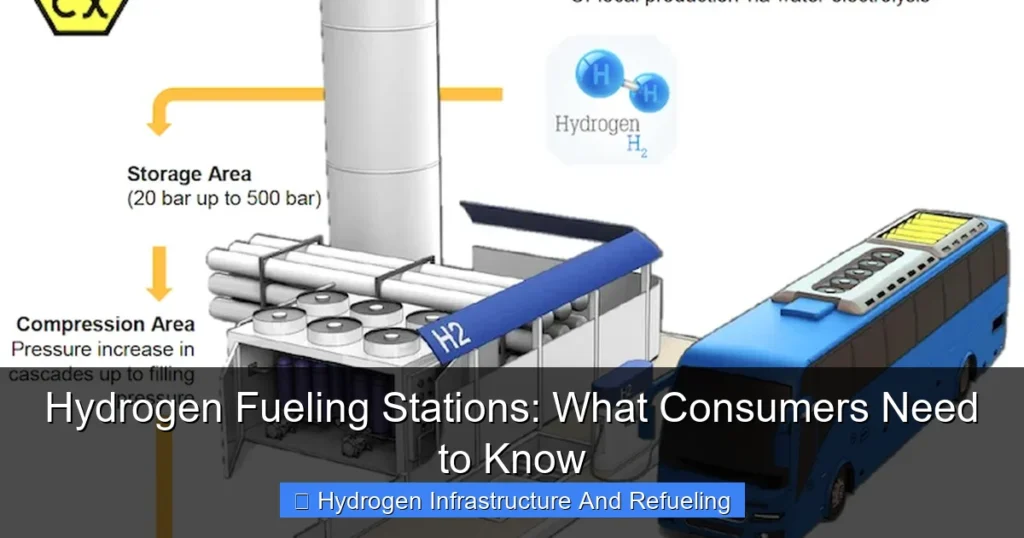
At the heart of every hydrogen fueling station is a dispenser that delivers high-pressure hydrogen gas—typically at 350 or 700 bar (5,000 or 10,000 psi)—into the vehicle’s tank. The process is automated and user-friendly, much like using a gasoline pump. Once the tank is full, the station automatically shuts off, and you’re ready to drive.
The hydrogen is stored on-site in large tanks, often cooled and compressed to maximize efficiency. Some stations generate hydrogen on-site using electrolysis, which splits water into hydrogen and oxygen using electricity. Others receive hydrogen via truck or pipeline from centralized production facilities.
One key advantage of hydrogen refueling is speed. While battery electric vehicles can take 30 minutes to several hours to recharge, hydrogen vehicles can be refueled in under five minutes. This makes them ideal for long-distance travel, fleet vehicles, and commercial transportation, where downtime is costly.
Types of Hydrogen Fueling Stations
Not all hydrogen stations are created equal. There are several types, each serving different needs and scales:
– **Retail stations:** These are the most common and resemble traditional gas stations. Located in urban areas or along highways, they serve individual consumers and are often found in California, Japan, and parts of Europe.
– **Fleet stations:** Designed for commercial use, these stations refuel buses, trucks, or delivery vehicles. They’re usually larger and may operate behind the scenes at depots or logistics centers.
– **Mobile stations:** Temporary or portable units that can be deployed for events, testing, or emergency use. They’re useful in areas without permanent infrastructure.
– **On-site generation stations:** These produce hydrogen directly at the location using renewable energy sources like solar or wind power. They’re more sustainable but require more space and investment.
Each type plays a role in building a resilient hydrogen network. As demand grows, we’ll likely see more hybrid models and innovative designs that integrate with existing fueling infrastructure.
Where Are Hydrogen Fueling Stations Located?
Visual guide about Hydrogen Fueling Stations: What Consumers Need to Know
Image source: blog.burnsmcd.com
Currently, hydrogen fueling stations are sparse compared to gas stations or EV chargers. The majority are concentrated in a few key regions, with California leading the way in the United States. As of 2024, California has over 60 operational public hydrogen stations, with more under construction. Other states like Hawaii, New York, and Connecticut are beginning to develop their own networks, but coverage remains limited.
Globally, countries like Japan, South Korea, Germany, and the United Kingdom are investing heavily in hydrogen infrastructure. Japan, in particular, has made hydrogen a national priority, with dozens of stations supporting its growing fleet of FCEVs.
For consumers, this means that owning a hydrogen vehicle is most practical if you live in or frequently travel through areas with established stations. Long road trips outside these zones can be challenging, as there’s no guarantee of refueling options along the way.
Finding a Station Near You
The good news is that finding a hydrogen station is easier than ever. Several online tools and apps help drivers locate the nearest fueling point:
– **Hydrogen Fuel Cell Partnership (HFCP):** A California-based organization that maintains an up-to-date map of hydrogen stations in the state.
– **PlugShare and Alternative Fuels Data Center (AFDC):** These platforms include hydrogen stations alongside EV chargers and other alternative fuel options.
– **Automaker apps:** Companies like Toyota and Hyundai offer built-in navigation systems in their FCEVs that guide drivers to the nearest hydrogen station.
Before planning a trip, it’s wise to check station availability and hours. Some stations may be temporarily offline for maintenance, and not all are open 24/7. Calling ahead or using real-time status updates can save you from a frustrating dead end.
Future Expansion Plans
The future looks promising for hydrogen infrastructure. Governments and private companies are investing billions to expand the network. In the U.S., the Department of Energy’s Hydrogen Shot initiative aims to reduce the cost of clean hydrogen by 80% within a decade, which could accelerate station deployment.
California’s Zero Emission Vehicle (ZEV) mandate requires automakers to sell an increasing number of clean vehicles, pushing demand for hydrogen stations. The state plans to have 200 stations by 2025 and 1,000 by 2030.
Internationally, the European Union’s Hydrogen Strategy and Japan’s Green Growth Strategy are driving similar growth. With more vehicles hitting the road and stronger policy support, hydrogen stations are expected to become more widespread in the coming years.
How Much Does It Cost to Fuel a Hydrogen Vehicle?
One of the biggest questions consumers have is cost. Right now, hydrogen fuel is significantly more expensive than gasoline or electricity. On average, hydrogen costs between $12 and $16 per kilogram in the U.S. A typical FCEV, like the Toyota Mirai or Hyundai NEXO, has a range of about 300–400 miles and holds around 5–6 kilograms of hydrogen. That means a full tank can cost $60 to $90.
To put that in perspective, driving 300 miles on hydrogen might cost around $75, while the same distance in a gasoline car could cost $30–$45 (depending on fuel prices), and in a battery EV, as little as $10–$15 in electricity.
Why Is Hydrogen So Expensive?
Several factors contribute to the high cost:
– **Production methods:** Most hydrogen today is produced from natural gas (gray hydrogen), which is cheaper but not environmentally friendly. Cleaner methods like electrolysis (green hydrogen) are more expensive due to energy and equipment costs.
– **Transportation and storage:** Hydrogen is difficult to transport and store because it’s a lightweight, low-density gas. It requires high-pressure tanks or cryogenic cooling, which adds expense.
– **Limited scale:** With few vehicles and stations, there’s little economies of scale. As demand grows, costs are expected to fall.
Will Prices Go Down?
Yes—experts predict that hydrogen prices will drop significantly in the next 10–15 years. As renewable energy becomes cheaper and production scales up, green hydrogen could cost as little as $2–$3 per kilogram. Government incentives, such as tax credits under the Inflation Reduction Act in the U.S., are also helping to lower costs for both producers and consumers.
Some automakers are offering free hydrogen for the first few years of ownership to encourage adoption. For example, Toyota provides up to $15,000 in free fuel for Mirai buyers in California. These programs can make hydrogen vehicles more affordable in the short term.
Comparing Costs: Hydrogen vs. Gasoline vs. Electric
Let’s break it down:
| Fuel Type | Cost per Mile (Approx.) | Refueling Time | Emissions |
|—————–|————————-|—————-|———–|
| Gasoline | $0.10–$0.15 | 3–5 minutes | High |
| Battery Electric| $0.03–$0.06 | 30 min–8 hrs | Zero (tailpipe) |
| Hydrogen | $0.20–$0.30 | 3–5 minutes | Zero (tailpipe) |
While hydrogen is currently the most expensive option per mile, its fast refueling and zero emissions make it appealing for certain users. For long-haul trucking, public transit, or regions with limited EV charging, hydrogen may offer a better balance of convenience and sustainability.
Are Hydrogen Fueling Stations Safe?
Safety is a common concern when it comes to hydrogen, and for good reason. Hydrogen is highly flammable and invisible when burning, which can sound alarming. But the reality is that hydrogen fueling stations are designed with multiple layers of safety to protect users and the environment.
How Safe Is Hydrogen?
Hydrogen has been used safely in industrial applications for over a century. It’s lighter than air, so if it leaks, it rises and dissipates quickly—unlike gasoline fumes, which pool near the ground. Modern FCEVs and fueling stations are equipped with advanced sensors, automatic shut-off valves, and ventilation systems to detect and respond to leaks immediately.
In fact, studies by the National Renewable Energy Laboratory (NREL) and other agencies have shown that hydrogen is no more dangerous than gasoline or natural gas when handled properly. The key is rigorous engineering, regular maintenance, and strict safety standards.
Safety Features at Fueling Stations
Hydrogen stations include several safety mechanisms:
– **Leak detection systems:** Sensors monitor for hydrogen leaks and trigger alarms or shut down the station if needed.
– **Emergency shut-offs:** Both the station and the vehicle have emergency stop buttons.
– **Ventilation:** Stations are designed with open layouts and airflow to prevent gas buildup.
– **Training and protocols:** Operators are trained in hydrogen safety, and stations follow strict codes set by organizations like the National Fire Protection Association (NFPA).
Drivers are also trained to handle the fueling process safely. The nozzles are designed to prevent overfilling, and the connection is secure and automatic. You don’t need to worry about sparks or static—modern systems are built to eliminate such risks.
Real-World Safety Record
Despite the fears, there have been very few incidents involving hydrogen fueling stations. Most reported issues are minor, such as sensor malfunctions or communication errors between the vehicle and station. Serious accidents are extremely rare, thanks to the robust safety culture in the hydrogen industry.
As more stations open and more people use them, public confidence is growing. Just like with EVs, familiarity and education will continue to improve perceptions of safety.
Which Vehicles Can Use Hydrogen Fueling Stations?
Not all electric vehicles can use hydrogen stations. Only fuel cell electric vehicles (FCEVs) are compatible. These cars use hydrogen to generate electricity on board, powering an electric motor—similar to how a battery EV works, but with a different energy source.
Popular Hydrogen-Powered Vehicles
As of 2024, the most widely available FCEVs include:
– **Toyota Mirai:** A sleek sedan with a range of up to 400 miles and a luxurious interior. Available in California and select markets.
– **Hyundai NEXO:** A compact SUV with advanced driver-assistance features and a range of about 380 miles.
– **Honda Clarity Fuel Cell:** Discontinued in 2021, but still on the road and supported by Honda’s service network.
These vehicles are designed specifically for hydrogen and cannot be charged like battery EVs. They also can’t run on gasoline or diesel—hydrogen is their only fuel source.
Are Hydrogen Vehicles Right for You?
Hydrogen vehicles are ideal for:
– **Long-distance drivers** who need quick refueling.
– **Fleet operators** like taxi services or delivery companies.
– **People in areas with limited EV charging** but growing hydrogen infrastructure.
– **Eco-conscious consumers** who want zero emissions and fast refueling.
However, they may not be the best choice if:
– You live far from a hydrogen station.
– You’re on a tight budget (due to high fuel costs).
– You prefer the lower operating costs of battery EVs.
It’s also worth noting that hydrogen vehicles are still niche. Resale values can be lower, and service options are limited compared to mainstream EVs or gasoline cars.
Future Vehicle Models
Automakers are expanding their hydrogen offerings. Toyota and Hyundai are investing in hydrogen trucks and buses, while companies like Nikola and Hyzon are developing hydrogen-powered commercial vehicles. In the future, we may see hydrogen-powered trains, ships, and even airplanes.
For passenger cars, new models are expected as infrastructure improves. However, battery EVs currently dominate the market, so hydrogen vehicles will likely remain a smaller segment—at least for the next decade.
The Future of Hydrogen Fueling Stations
The hydrogen economy is still in its infancy, but momentum is building. With climate change concerns and the push for energy independence, hydrogen is gaining attention as a clean, versatile fuel. The expansion of fueling stations is a critical step in making hydrogen vehicles a viable option for everyday consumers.
Government and Industry Support
Governments around the world are investing in hydrogen infrastructure. In the U.S., the Bipartisan Infrastructure Law includes $8 billion for hydrogen hubs—regional networks of production, storage, and distribution. Similar programs exist in the EU, Japan, and Canada.
Private companies are also stepping up. Oil giants like Shell and BP are opening hydrogen stations, while startups are developing innovative production and refueling technologies. Automakers are partnering with energy firms to build stations alongside vehicle sales.
Challenges Ahead
Despite the progress, challenges remain:
– **High upfront costs:** Building a hydrogen station can cost $1–$3 million, compared to $100,000–$500,000 for a fast EV charger.
– **Energy efficiency:** Producing, transporting, and using hydrogen is less efficient than direct electricity use in EVs.
– **Public awareness:** Many consumers still don’t know what hydrogen vehicles are or how they work.
Overcoming these hurdles will require continued investment, education, and innovation.
A Vision for 2030 and Beyond
By 2030, experts predict that hydrogen stations will be common in major cities and along key transportation corridors. Green hydrogen—produced using renewable energy—could become the standard, making the entire system carbon-free.
In the long term, hydrogen could play a key role in decarbonizing hard-to-electrify sectors like aviation, shipping, and heavy industry. For consumers, that means more options, lower costs, and a cleaner planet.
Conclusion
Hydrogen fueling stations represent a promising step toward a sustainable transportation future. While still limited in number and higher in cost, they offer fast refueling, zero emissions, and a glimpse of what’s possible with clean energy. For consumers, the key is understanding where stations are located, how much fuel costs, and whether a hydrogen vehicle fits your lifestyle.
As infrastructure expands and technology improves, hydrogen could become a mainstream fuel option. Until then, it’s worth keeping an eye on developments—especially if you live in a region with growing hydrogen support. Whether you’re curious, eco-conscious, or ready to make the switch, now is the time to learn more about this exciting alternative.
Frequently Asked Questions
How long does it take to refuel a hydrogen vehicle?
Refueling a hydrogen vehicle takes about 3 to 5 minutes, similar to filling up a gasoline car. This is much faster than charging a battery electric vehicle.
Can I install a hydrogen fueling station at home?
Home hydrogen fueling is not currently practical or safe for most consumers. The equipment is expensive, requires significant space, and must meet strict safety codes. Public stations are the best option for now.
Is hydrogen fuel renewable?
Hydrogen can be renewable if produced using clean energy sources like wind or solar (green hydrogen). However, most hydrogen today comes from natural gas (gray hydrogen), which is not renewable.
Do hydrogen vehicles require special maintenance?
Hydrogen vehicles have fewer moving parts than gasoline cars, so maintenance is generally simpler. However, fuel cell systems require specialized service, and technicians with hydrogen training are still limited.
What happens if I run out of hydrogen?
Running out of hydrogen is rare, but if it happens, the vehicle will stop like a gas car. You’ll need to call for roadside assistance to tow it to the nearest station—there’s no “reserve tank” like in some gasoline vehicles.
Will hydrogen stations replace gas stations?
It’s unlikely that hydrogen stations will fully replace gas stations in the near future. They’re more likely to coexist with EV chargers and traditional fuel pumps, serving different types of vehicles and needs.