Hydrogen refueling station partnerships and collaborations are essential for building a reliable, scalable hydrogen infrastructure. By uniting automakers, energy companies, governments, and tech innovators, these alliances drive innovation, reduce costs, and expand access to clean hydrogen fuel across transportation networks.
Key Takeaways
- Strategic partnerships accelerate deployment: Collaborations between automakers, energy firms, and governments speed up the rollout of hydrogen refueling stations.
- Shared investment reduces financial risk: Joint ventures distribute costs, making large-scale infrastructure projects more feasible.
- Technology integration improves efficiency: Partnerships enable the adoption of advanced compression, storage, and dispensing systems.
- Public-private alliances boost public trust: Government-backed initiatives increase consumer confidence in hydrogen as a viable fuel.
- Regional networks support fleet adoption: Focused collaborations in logistics and transit hubs enable hydrogen-powered trucks and buses.
- Global cooperation sets standards: International alliances help harmonize safety, performance, and interoperability standards.
- Innovation thrives in ecosystems: Collaborative R&D fosters breakthroughs in hydrogen production, distribution, and fuel cell efficiency.
📑 Table of Contents
- Introduction: The Rise of Hydrogen Mobility
- Why Partnerships Are Critical for Hydrogen Infrastructure
- Key Players in Hydrogen Refueling Collaborations
- Types of Hydrogen Refueling Station Partnerships
- Real-World Examples of Successful Collaborations
- Challenges and How Partnerships Help Overcome Them
- The Future of Hydrogen Refueling Partnerships
- Conclusion: Collaboration Is the Fuel for the Future
Introduction: The Rise of Hydrogen Mobility
The world is shifting toward cleaner transportation, and hydrogen is emerging as a powerful player in the zero-emission revolution. While electric vehicles (EVs) dominate headlines, hydrogen fuel cell vehicles (FCEVs) offer unique advantages—especially for heavy-duty transport, long-range travel, and fast refueling. But there’s a catch: without a robust network of hydrogen refueling stations, even the most advanced FCEVs can’t reach their full potential.
This is where hydrogen refueling station partnerships and collaborations come into play. Building a hydrogen infrastructure isn’t a job for one company or government alone. It requires a coordinated effort across industries, borders, and sectors. From automakers teaming up with energy giants to cities partnering with tech startups, these alliances are laying the foundation for a hydrogen-powered future. In this article, we’ll explore how these partnerships work, why they matter, and what the future holds for hydrogen mobility.
Why Partnerships Are Critical for Hydrogen Infrastructure
Hydrogen refueling stations are complex, costly, and technically demanding. Unlike gasoline pumps, they require high-pressure storage, cryogenic handling (for liquid hydrogen), and specialized safety systems. A single station can cost anywhere from $1 million to $3 million, depending on capacity and technology. For most companies, building and operating these stations alone is financially risky and operationally challenging.
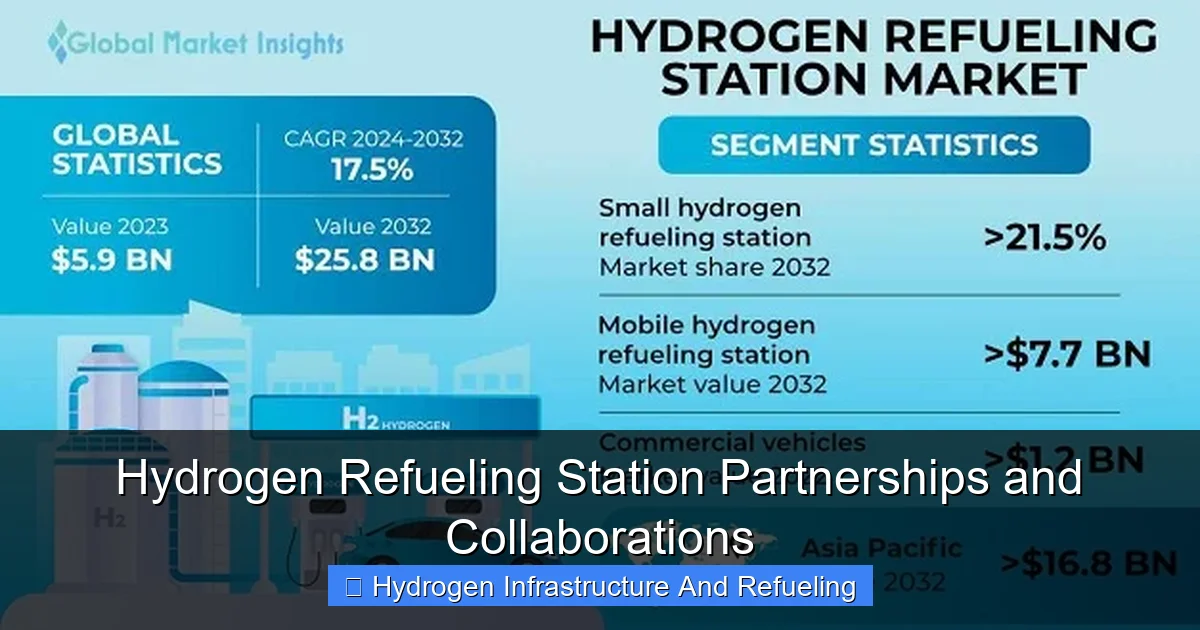
Visual guide about Hydrogen Refueling Station Partnerships and Collaborations
Image source: cdn.gminsights.com
That’s why collaboration is not just helpful—it’s essential. When companies pool resources, share expertise, and align goals, they can overcome barriers faster and more efficiently. Partnerships allow stakeholders to leverage each other’s strengths: automakers bring vehicle demand and customer insights, energy companies provide fuel supply and grid integration, and governments offer funding, policy support, and regulatory guidance.
Reducing Financial and Operational Risk
One of the biggest hurdles in hydrogen infrastructure is the high upfront investment. A single station may serve only a handful of vehicles in the early stages, making it difficult to achieve profitability. By forming joint ventures or consortiums, companies can share the financial burden. For example, a partnership between an automaker and an energy provider might split the cost of station construction, with the automaker guaranteeing a certain number of vehicle purchases and the energy company ensuring hydrogen supply.
Operational risks are also mitigated through collaboration. Hydrogen handling requires specialized training and safety protocols. When multiple organizations work together, they can develop standardized procedures, share best practices, and reduce the likelihood of accidents or downtime. This shared knowledge base accelerates learning and improves overall system reliability.
Accelerating Market Adoption
Partnerships don’t just reduce risk—they also speed up market adoption. When a network of refueling stations begins to take shape, it sends a strong signal to consumers and fleet operators that hydrogen is a viable option. This “chicken-and-egg” problem—where vehicles need stations, and stations need vehicles—can only be solved through coordinated action.
For instance, Toyota’s partnership with Shell and Air Liquide in California helped launch the first commercial hydrogen refueling network in the U.S. By aligning vehicle production with station deployment, they created a self-reinforcing cycle: more stations led to more vehicle sales, which in turn justified further station expansion. This kind of synergy is only possible through deep collaboration.
Key Players in Hydrogen Refueling Collaborations
No single entity can build a hydrogen refueling network alone. Instead, a diverse ecosystem of stakeholders must come together. Let’s look at the main players driving these partnerships.
Automakers: Driving Demand and Innovation
Automakers are often the catalysts for hydrogen infrastructure development. Companies like Toyota, Hyundai, and Honda have invested heavily in FCEV technology and are actively partnering to expand refueling networks. Toyota’s Mirai, for example, was launched alongside a commitment to support hydrogen station development in key markets.
These automakers don’t just sell cars—they help design the infrastructure. They provide input on station layout, dispenser compatibility, and user experience. Their involvement ensures that stations meet real-world needs and are user-friendly for drivers. Additionally, many automakers offer incentives or subsidies to early adopters, further stimulating demand.
Energy Companies: Supplying the Fuel
Energy giants like Shell, BP, and TotalEnergies are increasingly investing in hydrogen production and distribution. These companies bring expertise in large-scale energy logistics, pipeline networks, and fuel retail. By integrating hydrogen into their existing fuel infrastructure, they can leverage economies of scale and reduce costs.
For example, Shell has partnered with Linde and Toyota to develop hydrogen refueling stations in California and Germany. These stations often use on-site electrolysis or pipeline-fed hydrogen, depending on local availability. Energy companies also play a key role in securing renewable hydrogen sources, such as green hydrogen produced from wind or solar power.
Technology and Engineering Firms: Enabling the Infrastructure
Building a hydrogen refueling station requires specialized engineering. Companies like Air Liquide, Linde, and Nel Hydrogen provide the core technology—compressors, storage tanks, dispensers, and safety systems. These firms often act as turnkey solution providers, designing, installing, and maintaining stations for partners.
Their expertise is critical for ensuring reliability and safety. For instance, Air Liquide has developed modular hydrogen stations that can be deployed quickly in urban areas. These plug-and-play units reduce construction time and allow for flexible scaling as demand grows.
Government and Public Agencies: Providing Support and Policy
Governments play a pivotal role in enabling hydrogen infrastructure. Through funding programs, tax incentives, and regulatory frameworks, public agencies help de-risk investments and create a favorable environment for growth. In the U.S., the Department of Energy’s H2@Scale initiative supports research and deployment of hydrogen technologies.
At the state level, California’s Zero-Emission Vehicle (ZEV) mandate and the California Air Resources Board (CARB) have been instrumental in driving hydrogen station development. CARB’s Clean Transportation Program has funded over 100 hydrogen refueling stations, many of which were built through public-private partnerships.
Types of Hydrogen Refueling Station Partnerships
Not all collaborations look the same. Depending on the goals, geography, and stakeholders involved, partnerships can take various forms. Here are some of the most common models.
Joint Ventures: Shared Ownership and Control
Joint ventures (JVs) involve two or more companies forming a new entity to develop and operate hydrogen refueling stations. This model allows partners to share ownership, profits, and decision-making. It’s ideal for long-term, large-scale projects where deep integration is needed.
A notable example is H2 Mobility, a German joint venture between Air Liquide, Linde, OMV, Shell, and TotalEnergies. Launched in 2015, H2 Mobility aims to build a nationwide hydrogen refueling network in Germany. By pooling resources and expertise, the partners have deployed over 100 stations, making Germany one of the most advanced hydrogen markets in Europe.
Public-Private Partnerships: Leveraging Government Support
Public-private partnerships (PPPs) combine government funding and policy support with private sector innovation and efficiency. These collaborations are common in regions where hydrogen infrastructure is still in its infancy and requires significant public investment.
In Japan, the government has partnered with Toyota, Honda, and energy companies to create the “Hydrogen Society” vision. Through subsidies and regulatory support, Japan has built one of the world’s most extensive hydrogen refueling networks, with over 160 stations as of 2023. This model demonstrates how government leadership can catalyze private investment.
Industry Consortia: Collaborative R&D and Standards
Industry consortia bring together multiple stakeholders to tackle shared challenges, such as technology development, safety standards, and market education. These groups often focus on pre-competitive research and setting industry-wide guidelines.
The Hydrogen Council, for example, is a global CEO-led initiative that includes companies like BMW, Hyundai, and Siemens. It advocates for hydrogen adoption, shares best practices, and publishes roadmaps for infrastructure development. While not directly building stations, such consortia create the strategic foundation for partnerships to thrive.
Regional Clusters: Focused Local Deployment
In some cases, partnerships are formed around specific regions or industrial clusters. These localized efforts often target high-demand areas like ports, logistics hubs, or public transit corridors. By concentrating stations in key zones, partners can maximize utilization and demonstrate viability.
In California, the “Hydrogen Highway” initiative brought together automakers, energy companies, and local governments to deploy stations along major transportation routes. This corridor-based approach has enabled hydrogen-powered trucks and buses to operate efficiently between cities like Los Angeles and San Francisco.
Real-World Examples of Successful Collaborations
Theory is one thing—execution is another. Let’s look at some real-world examples where hydrogen refueling station partnerships have made a tangible impact.
Toyota, Shell, and Air Liquide in California
One of the most successful hydrogen partnerships in the U.S. involves Toyota, Shell, and Air Liquide. Together, they’ve built over 40 hydrogen refueling stations across California, supporting the rollout of Toyota’s Mirai sedan. Shell provides the fuel and retail expertise, Air Liquide handles the technology and installation, and Toyota ensures vehicle demand through sales and leasing programs.
This collaboration has created a reliable network that serves both private drivers and fleet operators. It’s also helped reduce the cost of hydrogen fuel through economies of scale and improved production methods. As a result, California now has the most extensive hydrogen refueling infrastructure in North America.
H2 Mobility in Germany
Germany’s H2 Mobility joint venture is a textbook example of how partnerships can scale infrastructure rapidly. With backing from major energy and industrial firms, the consortium has deployed hydrogen stations across major highways and urban centers. The network supports not only passenger cars but also commercial vehicles like trucks and buses.
What makes H2 Mobility unique is its focus on interoperability and user convenience. All stations accept the same payment systems and meet standardized safety requirements. This consistency builds consumer trust and encourages broader adoption.
Hyundai and Hydrogen Council in South Korea
South Korea has emerged as a global leader in hydrogen mobility, thanks in part to strong government-industry collaboration. Hyundai, the country’s largest automaker, has partnered with the government and energy companies to deploy hydrogen refueling stations nationwide. The government has set ambitious targets, including 1,200 stations by 2040.
Hyundai’s NEXO SUV is a key driver of demand, and the company has also supplied hydrogen-powered buses and trucks to public transit agencies. This integrated approach—combining vehicle production, infrastructure, and policy—has made South Korea a model for hydrogen adoption.
Challenges and How Partnerships Help Overcome Them
Despite progress, hydrogen refueling infrastructure still faces significant challenges. High costs, limited supply, and public skepticism remain barriers. But partnerships are uniquely positioned to address these issues.
High Capital Costs
Building a hydrogen station is expensive. However, partnerships allow companies to share the financial load. Joint ventures and PPPs spread risk and attract investment from multiple sources. Additionally, as more stations are built, economies of scale begin to kick in, reducing per-unit costs.
Limited Hydrogen Supply
Not all regions have access to affordable, low-carbon hydrogen. Partnerships with renewable energy providers can help solve this. For example, some stations now use on-site electrolysis powered by solar or wind energy. This “green hydrogen” model reduces emissions and supports energy independence.
Public Awareness and Trust
Many consumers are unfamiliar with hydrogen fuel cells and worry about safety. Partnerships that include public outreach components—such as educational campaigns, test drives, and community engagement—can build trust. When governments and reputable companies endorse hydrogen, it signals credibility.
Regulatory and Standardization Gaps
Inconsistent regulations and lack of global standards can hinder cross-border travel and equipment compatibility. Industry consortia and international collaborations are working to harmonize safety codes, dispenser designs, and fuel quality standards. This coordination ensures that hydrogen infrastructure is interoperable and future-proof.
The Future of Hydrogen Refueling Partnerships
As the world moves toward net-zero emissions, hydrogen is expected to play a growing role in decarbonizing transportation. The future of hydrogen refueling station partnerships will be shaped by several key trends.
Expansion into Heavy-Duty and Commercial Transport
While passenger FCEVs are important, the biggest opportunity for hydrogen lies in heavy-duty applications—trucks, buses, trains, and even ships. These vehicles require high energy density and fast refueling, making hydrogen a better fit than batteries in many cases. Partnerships will increasingly focus on building infrastructure for fleets and logistics hubs.
Integration with Renewable Energy
The future of hydrogen is green. As renewable energy becomes cheaper and more abundant, partnerships will prioritize green hydrogen production. This means closer collaboration between hydrogen developers, wind and solar farms, and grid operators. Stations may even become energy hubs, storing excess renewable power as hydrogen.
Digitalization and Smart Infrastructure
Future hydrogen stations will be smarter and more connected. Partnerships with tech companies will enable features like remote monitoring, predictive maintenance, and mobile app integration. Drivers will be able to locate stations, check availability, and pay seamlessly—just like with EVs today.
Global Expansion and Cross-Border Networks
Hydrogen infrastructure is no longer limited to a few countries. Partnerships are emerging in North America, Europe, Asia, and beyond. As standards converge and technology improves, we’ll see cross-border hydrogen corridors, enabling long-distance travel and international freight.
Conclusion: Collaboration Is the Fuel for the Future
Hydrogen refueling station partnerships and collaborations are not just a nice-to-have—they are the backbone of a clean transportation future. By bringing together automakers, energy companies, governments, and technology providers, these alliances overcome the financial, technical, and logistical challenges of building hydrogen infrastructure.
The success stories from California, Germany, and South Korea prove that when stakeholders work together, progress accelerates. As costs come down, technology improves, and public awareness grows, hydrogen will become a mainstream fuel option—especially for applications where batteries fall short.
The road ahead is long, but the momentum is real. With continued collaboration, innovation, and investment, hydrogen refueling stations will soon be as common as gas pumps. The future of clean mobility isn’t just electric—it’s also hydrogen. And it’s being built, one partnership at a time.
Frequently Asked Questions
What is a hydrogen refueling station partnership?
A hydrogen refueling station partnership is a collaboration between companies, governments, or organizations to build, operate, and maintain hydrogen fueling infrastructure. These alliances combine resources, expertise, and funding to accelerate the deployment of stations and support the adoption of hydrogen fuel cell vehicles.
Why are partnerships important for hydrogen infrastructure?
Partnerships are crucial because hydrogen stations are expensive and complex to build. By sharing costs, risks, and knowledge, partners can deploy infrastructure faster, reduce financial barriers, and create reliable networks that encourage vehicle adoption.
Which companies are leading hydrogen refueling collaborations?
Key players include automakers like Toyota and Hyundai, energy firms like Shell and Air Liquide, and technology providers like Linde and Nel Hydrogen. Governments in California, Germany, and Japan also play major roles through funding and policy support.
How do public-private partnerships help hydrogen stations?
Public-private partnerships combine government funding and regulatory support with private sector innovation and efficiency. This model reduces investment risk, speeds up deployment, and builds public trust in hydrogen as a safe and viable fuel.
Can hydrogen stations support heavy-duty vehicles?
Yes, hydrogen is especially well-suited for heavy-duty transport like trucks and buses due to its high energy density and fast refueling. Many partnerships are now focusing on building infrastructure for commercial fleets and logistics hubs.
What is the future of hydrogen refueling partnerships?
The future includes expansion into green hydrogen production, integration with renewable energy, smart digital features, and global networks. Partnerships will continue to drive innovation, reduce costs, and make hydrogen a mainstream fuel option worldwide.